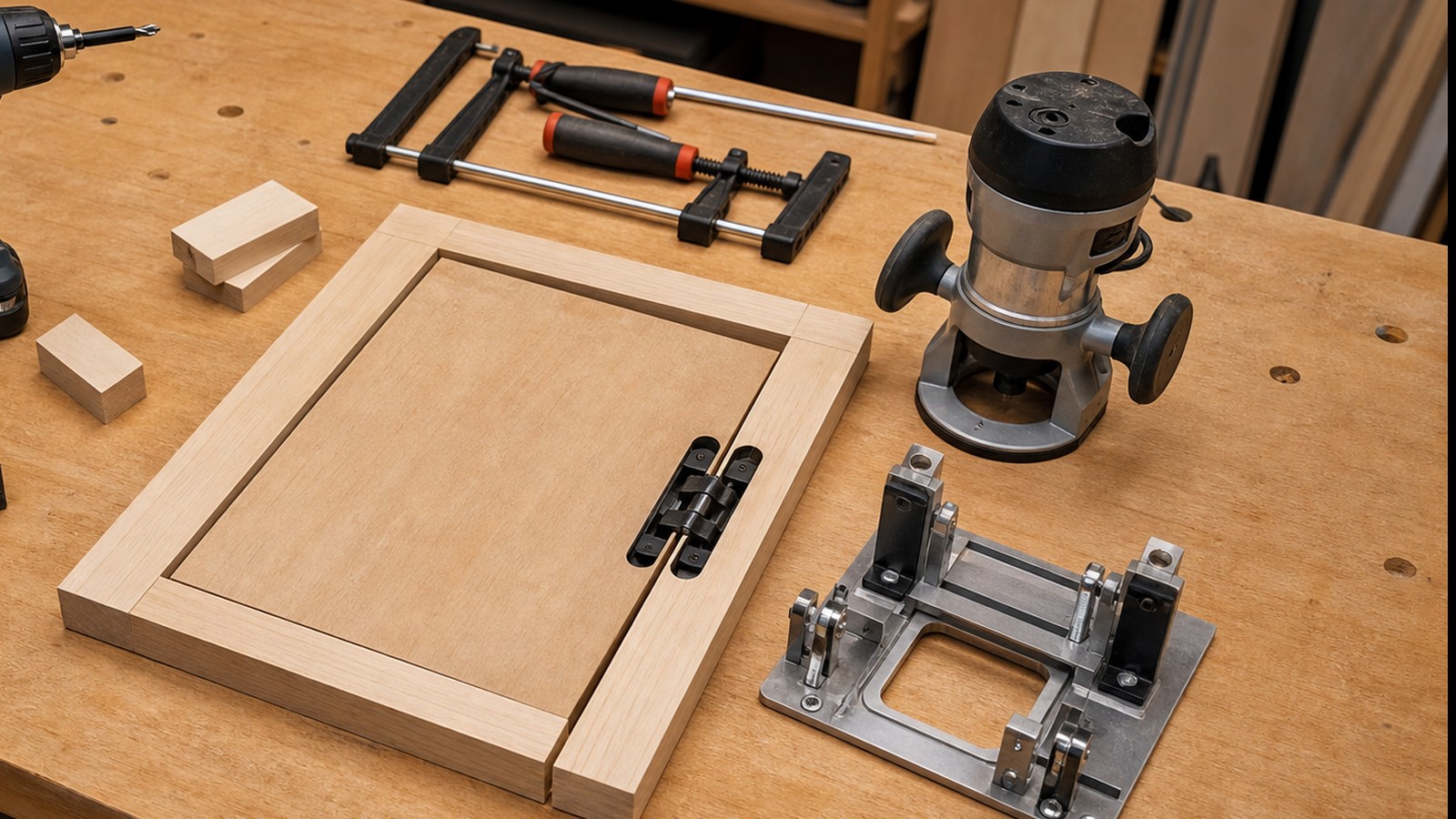
Tools You Need for Concealed Door Projects
Concealed door projects need accurate measuring, straight cutting, strong fastening, careful alignment, and safe finishing tools more than exotic gear.

Where Secrets Are Built Into the Walls
Concealed door projects need accurate measuring, straight cutting, strong fastening, careful alignment, and safe finishing tools more than exotic gear.
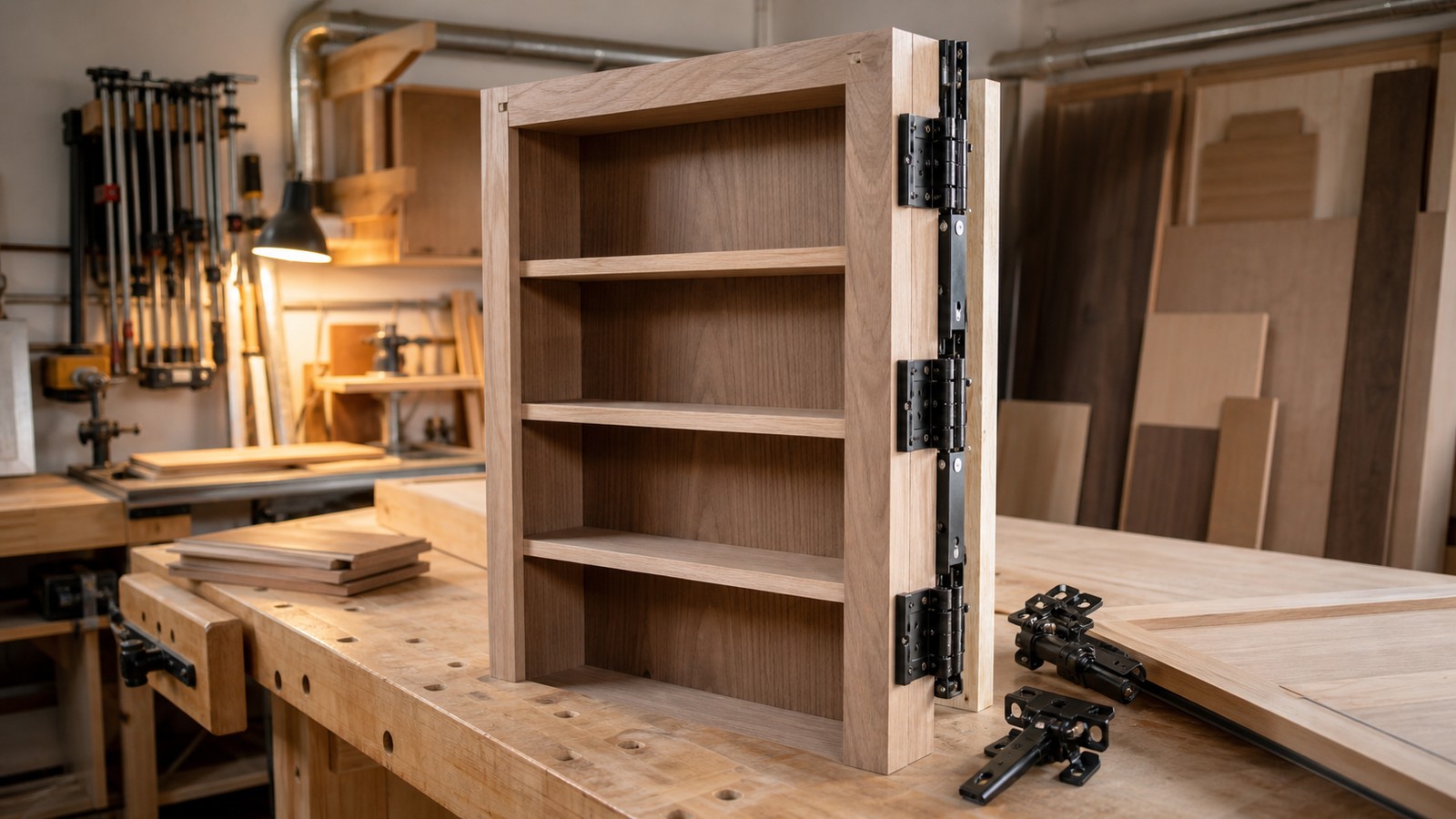
Build a concealed bookshelf door from scratch with practical planning for structure, hinges, shelf weight, clearances, trim, finish, and safety.
Invisible doors with custom finishes can blend into wood, plaster, lacquer, fabric, stone-look panels, wallpaper, and specialty surfaces when finish and function are planned together.
Invisible doors can blend beautifully with wallpaper or wall panels when pattern matching, seams, hardware, edges, lighting, and maintenance are planned before finishing.
Bookshelf doors can hide rooms, storage, offices, and passages while still working as believable shelving when structure, weight, hardware, safety, and styling align.
Paint and wall panels can hide a concealed door beautifully when sheen, reveal lines, trim rhythm, hardware, and touch-up planning are treated as one surface.
Concealed doors with hidden locks need a careful balance of security, safe exit, hardware access, daily usability, and a disguise that does not fail at the latch.
Secret door locks should balance discretion, daily usability, emergency exit, structural strength, and the real security needs of the room behind the door.
Long-lasting hidden doors depend on square framing, stable panels, strong hardware, protected edges, and careful adjustment more than novelty.
Wallpaper can make a door disappear into a wall when the pattern, seams, hardware, edges, and durability details are planned before installation.
The best DIY secret door kits match your opening, skill level, room style, and hardware needs instead of promising a one-size-fits-all hidden entrance.
Retrofitting an existing door into a flush-mount design is possible when framing, wall depth, hinges, trim, and finish transitions are handled carefully.