

Escape rooms thrive on mystery, surprise, and the thrill of discovery—and nothing delivers that moment of excitement quite like the door. In the world of escape room design, doors are never just doors. They are puzzles, illusions, reveals, and storytelling tools that guide players deeper into the experience. From the instant a hidden passage swings open to the shock of realizing a solid wall was an exit all along, door design plays a powerful role in immersion. Escape Room Doors & Designs explore the many ways entrances, exits, and transitions can be cleverly concealed, dramatically revealed, or completely disguised. Secret doors reward curiosity. Concealed and invisible doors challenge perception. Flush-mount doors blend seamlessly into their surroundings, while disguised doors hide in plain sight as bookshelves, mirrors, panels, or scenery. Hidden interior doors create surprise within a room, while hidden exterior doors control pacing, flow, and dramatic reveals between spaces. Each design choice affects gameplay, difficulty, atmosphere, and storytelling. Whether subtle and minimalist or bold and theatrical, these doors are engineered to spark awe, tension, and delight. Step inside and discover how smart door design transforms escape rooms into unforgettable adventures.
A: Yes, but often custom-built for illusion and safety.
A: They’re reinforced but designed to discourage force.
A: Magnetic locks triggered by puzzles.
A: Many are tied to control systems for quick resets.
A: No, but actors can enhance door reveals.
A: With maintenance, many last years.
A: Yes, for realism and theme immersion.
A: Seals and mass help reduce sound bleed.
A: Making doors too obvious or too hard to find.
A: They’re often the most memorable moments.

Secret Doors in Escape Rooms: How They’re Designed
A bookshelf that swings. A wall that slides. A “solid” panel that suddenly breathes open. Escape room secret doors are equal parts illusion, engineering, and storytelling—built to hide in plain sight, open on cue, and survive thousands of eager hands. Step behind the scenes to see how designers make the impossible feel real.
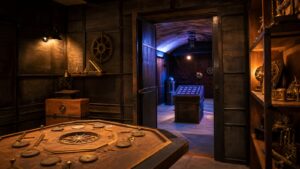
Concealed Doors in Escape Rooms
Concealed doors in escape rooms turn puzzles into movement, giving teams memorable reveals while demanding fairness, safety, and reliable reset.