The Wall Has to Hide the Door
Paint and wall panels are among the most effective ways to hide a concealed door because they turn the door into part of a larger surface. Instead of asking a plain slab to disappear by itself, the wall provides rhythm, shadow, color, and texture that can absorb the opening. This only works when the paint, panel layout, trim, reveals, hardware, and finish sequence are planned together. A mismatched sheen, awkward panel break, thick paint edge, or worn push point can reveal the door quickly. The goal is a wall that looks intentional whether the door is open or closed.
A: Sometimes, but panel lines or shadow joints usually make the disguise stronger.
A: Low-sheen finishes often recede, but durability and touch marks must be considered.
A: No, a consistent intentional shadow line can be more reliable.
A: Yes, if they are planned around the swing, hardware, and clearances.
A: They can, but repeated pressing may mark the surface.
A: Align rails, stiles, and panel sizes so the opening follows the wall rhythm.
A: Yes, if pattern alignment and edge protection are handled carefully.
A: Different sheen reflects light differently even when color matches.
A: Save formulas, samples, sheen notes, and extra wallcovering.
A: The panel rhythm continues beyond the door and the finish ages consistently.
Design the Panel Layout First
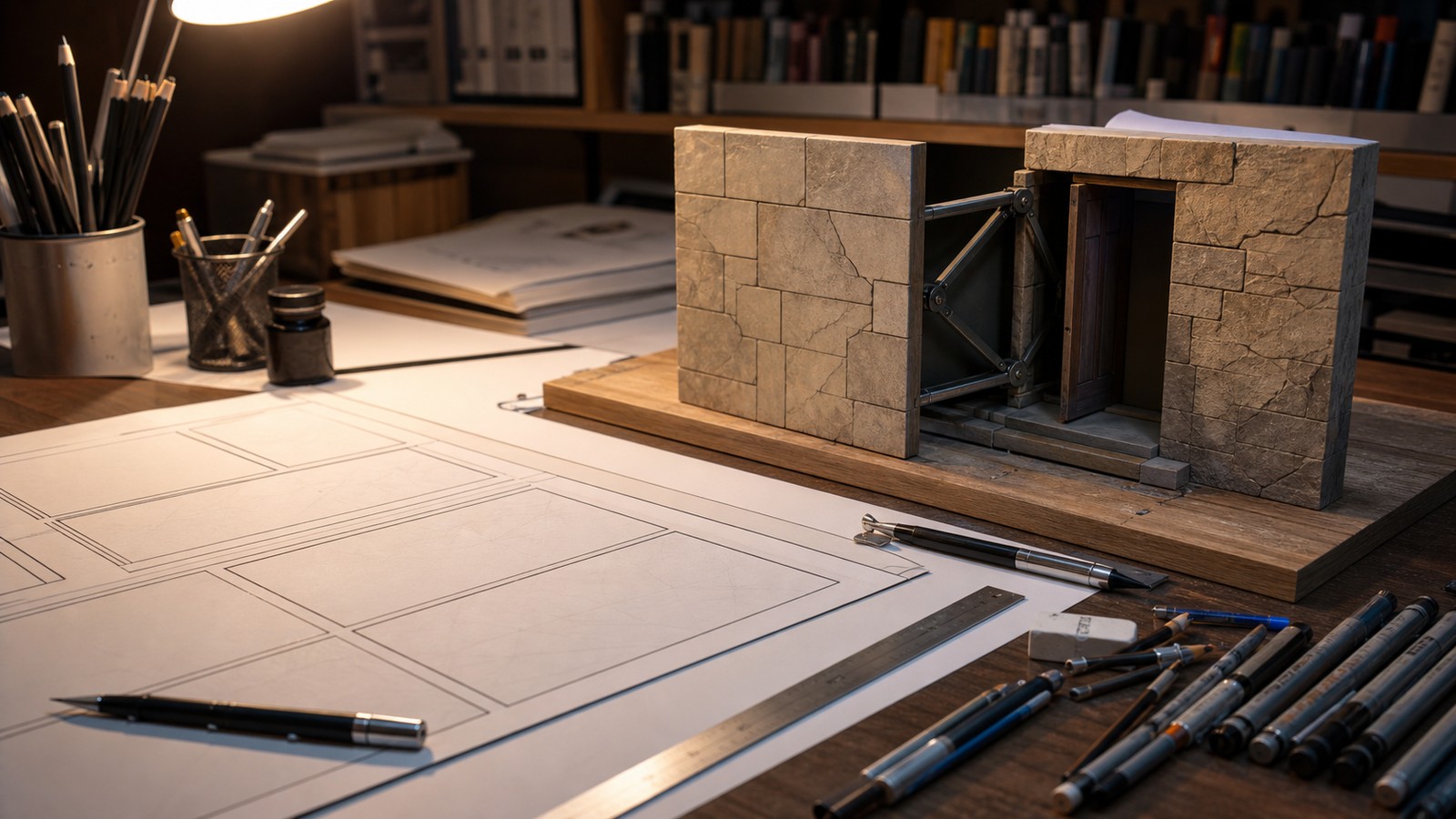
Panel layout should come before the door is framed or finished. The door edges need to land on lines that make sense in the larger wall. If the panel grid ignores the actual opening, the door may look like a patch no matter how carefully it is painted.
Use vertical stiles, rails, battens, wainscoting, or modern panel seams to disguise the reveal. The pattern should continue beyond the door so the opening does not stand alone. A concealed door is easier to hide when the wall has a believable rhythm.
Mock up the layout with tape. Look at it from the main entry, seating areas, hallway ends, and under side light. A panel pattern that seems balanced up close may look awkward from the room’s most common viewpoint.
Choose Paint Sheen Carefully
Paint sheen can make or break a concealed door. Even when color matches, a different sheen can reveal the slab under daylight or lamp light. Walls, trim, and door faces should be sampled together before the final finish is chosen.
Matte and low-sheen finishes often help surfaces recede, but they may show touch marks. Satin or eggshell can be more washable but may highlight unevenness. The best sheen depends on the room, traffic, lighting, and how people will open the door.
Prime and Prepare Like One Surface
A concealed door and the surrounding wall should be prepared as one visual field. Sanding, priming, caulking, filling, and painting should create a consistent surface. If the door face absorbs paint differently from the wall panels, the outline may appear even with a perfect color match.
Use primer suited to the materials. MDF, wood, drywall, trim, and previously painted surfaces may need different preparation. Bare edges should be sealed before finish paint. Paint buildup near reveals should be controlled so the door does not rub.
Preparation also includes dust control. Tiny ridges, roller marks, or caulk smears can catch light along the door edge. A concealed door rewards careful finish work because small defects become clues.
Do not rush final adjustment. The door should operate smoothly before the last coats go on, and it should be checked again after paint cures. Finish thickness can change clearances.
Make Reveals Look Intentional
A concealed door does not need zero gap. It needs a gap that looks intentional. Shadow lines, panel joints, trim breaks, and stile lines can make practical clearance feel like part of the wall design.
Consistent reveals are more convincing than ultra-tight ones. A tight seam that chips or rubs will draw attention. A clean, deliberate shadow line often disappears better because it looks like the other panel joints.
Lighting can expose reveals. Test the door under daylight, lamps, and evening conditions. Side light across a painted wall can make uneven edges obvious.
Use Trim to Carry the Disguise
Traditional trim can hide a concealed door when it is planned as a continuous wall system. Wainscoting, picture-frame molding, chair rails, baseboards, and vertical battens can all cross or frame the door in ways that make the opening less obvious.
Trim should not simply outline the door. If molding stops and starts only around the opening, the disguise fails. The trim pattern needs to belong to the whole wall, with the door integrated into that pattern.
Hide Hardware Without Creating Wear
Hardware should support the paint and panel disguise. Edge pulls, recessed pulls, finger grooves, push latches, magnetic catches, and concealed hinges can all work. The right choice depends on how often the door is used and how durable the finish is.
Push latches look clean but can create dirty touch spots if people press the same painted panel every day. A small recessed pull may preserve the finish better. The most hidden hardware is not always the best choice.
If the door needs a lock, latch, or closer, include it early. Cutting into finished trim and paint later can make the hardware feel like an apology instead of a design detail.
Match Texture Across the Door
Paint color is only one part of camouflage. Texture matters too. A roller texture, brush mark, plaster finish, or sprayed surface should continue across the door and wall as evenly as possible.
If the concealed door uses a different substrate than the wall, it may reflect light differently. Primer, skim coating, or panel material choices can reduce that difference. The goal is for the door face and surrounding panels to age together.
Panel edges should also share the same crispness. A sharp routed MDF panel next to softer old plaster may need careful transition details so the door does not look newer than the wall.
Texture should be checked after the door moves. A flexible panel, rubbing edge, or poorly sealed joint can crack paint or open a hairline seam. The surface has to look consistent while still behaving like a working door.
Consider Wallpaper and Fabric Panels
Painted panels are common, but wallpaper, grasscloth, fabric, and textured wallcoverings can also hide doors. Pattern continuity is critical. A pattern that shifts at the door edge will reveal the opening immediately.
Wallcovering edges need protection near moving seams. A door that rubs can peel paper quickly. Use appropriate primers, adhesives, edge details, and clearances. The more delicate the covering, the more carefully the hardware should be chosen.
Use Color to Reduce Contrast
High contrast exposes edges. If the door face, trim, shadow line, or hardware contrasts sharply with the wall, the opening becomes easier to see. Matching color and reducing unnecessary contrast helps the wall read as one surface.
That does not mean the room must be plain. Rich colors can work beautifully when the whole wall is treated consistently. Deep green, warm white, clay, charcoal, and soft taupe can all hide doors if sheen and panel layout are controlled.
Dark colors can hide shadow lines but may show dust and touch marks. Light colors can feel calm but may reveal gaps under side light. Test samples in the actual room.
Sequence the Work Carefully
Painted concealed doors depend on sequencing. Framing, door hanging, panel layout, hardware installation, priming, caulking, sanding, and final painting should not happen randomly. If hardware is added late or panels are adjusted after finish paint, the disguise can suffer.
Dry-fit the door and panel parts before final finish. Open and close the door repeatedly, check rub points, and confirm that the trim pattern still works. It is much easier to adjust raw material than painted edges.
Protect hardware during finishing. Paint inside concealed hinges, latches, or magnetic catches can change how the door moves. Masking and careful cleanup can prevent a beautiful wall from becoming a sticky door.
Final tuning belongs after paint cures. Doors can feel different once coatings harden and weather changes. A small post-finish adjustment can keep the reveal even.
This sequence also helps with accountability. When carpenters and painters understand the hidden-door goal, they can avoid ordinary shortcuts that would reveal the opening later.
Plan Touch-Ups From the Start
Concealed painted doors need touch-up materials. Save paint formulas, sheen information, primer notes, trim samples, and any panel dimensions. A small scuff on a hidden door can become obvious if the repair does not match.
Touch-up is easiest when the finish system is not overly complicated. If the door uses a custom glaze, multiple sheens, or fragile wallcovering, maintenance becomes harder. Choose a finish that suits the room’s traffic.
Avoid Overworking the Wall
A paneled concealed door should feel architectural, not busy. Too many battens, trim pieces, or color changes can make the wall look restless. The panel pattern should be strong enough to hide the opening but calm enough to support the room.
Let the wall have a clear hierarchy. Larger panels can hide big openings, smaller trim can refine proportions, and simple paint can unify the surface. The best disguise often comes from restraint.
Restraint also makes maintenance easier. A simple panel layout can be repainted or touched up cleanly, while a complicated wall full of narrow pieces may collect dust and chips. Concealment should simplify the room, not create a fragile finish.
If the wall already has strong architectural character, use that character rather than adding more. Existing trim, plaster texture, or panel proportions may provide enough camouflage with only small adjustments.
Let the Finish Do the Quiet Work
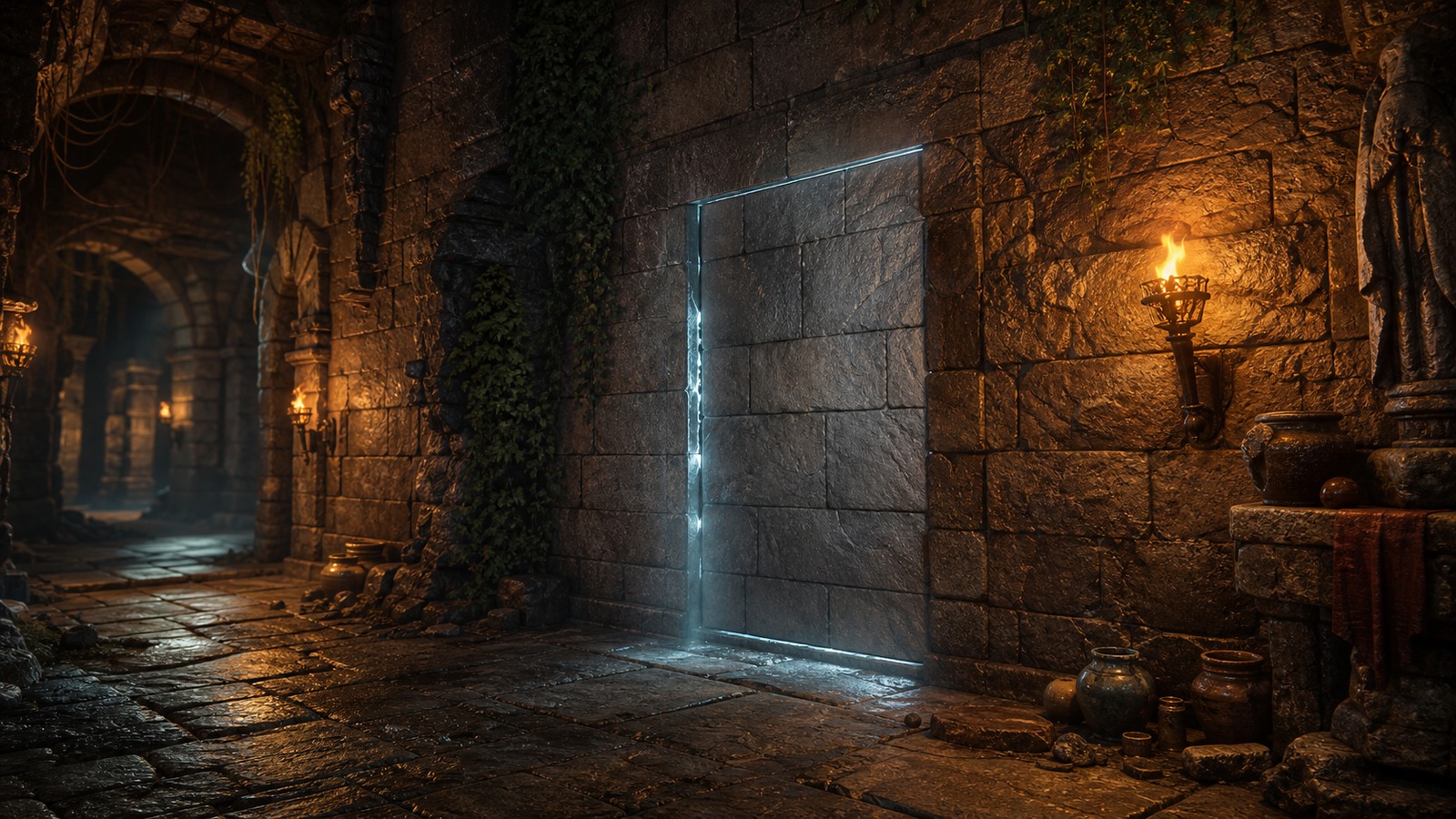
Paint and wall panels hide a concealed door by making the door part of a believable surface. The seam becomes a panel joint, the color continues, the sheen stays consistent, and the hardware avoids drawing attention.
When the finish is planned well, the wall looks calm rather than tricky. People notice the room, not the door. That is the point of using paint and panels: the concealment happens through ordinary architectural language.
The final test is time. If the door still blends after months of use, touch-ups, light changes, and daily contact, the paint and panel strategy has done its job.
That long-term test rewards practical choices. Durable paint, clean reveals, touch-friendly hardware, and repairable trim may not sound dramatic, but they are what keep the hidden door convincing after real use.
A concealed door should not need perfect conditions to disappear. It should blend in morning light, evening lamplight, and ordinary household traffic because the wall was designed as a complete surface.
That is why the best paint-and-panel solutions feel calm rather than clever. They do not ask people to admire the trick; they let the room keep its proportions, color, and rhythm without interruption.
If the finish can be maintained by a future painter or homeowner, the design becomes more resilient. A concealed door that depends on impossible touch-ups will eventually reveal itself.
Paint and panels are ordinary materials, but in the right sequence they can do subtle work. They turn a functional opening into a wall that still feels whole.
That subtle work is often what makes the room feel more expensive. The door does not need to call attention to itself; the value is in the uninterrupted surface, the calm trim rhythm, and the absence of awkward visual breaks.
When homeowners remember that, decisions become clearer. Choose the panel layout that makes the whole wall better, the sheen that survives touch, and the hardware that protects the finish. The door will hide more naturally through daily light and use after installation and careful touch-up work.