

There’s something endlessly fascinating about spaces that hide in plain sight. Secret passages have long captured the imagination—from medieval castles with escape tunnels to modern homes with hidden doors that vanish into walls. Today’s designs transform secrecy into sophistication, merging advanced engineering with architectural elegance. Imagine walking down a polished hallway where a seamless panel opens to reveal a concealed library or a flush-mount door that leads to an exterior garden hideaway. Each doorway tells a story of creativity and control, giving homeowners both privacy and a touch of wonder. Within the world of Secret Hallways, you’ll discover the spectrum of stealth—from Invisible Doors and Concealed Portals to modern Hidden Interior and Exterior entries that blend perfectly into their surroundings. These are not just pathways—they’re experiences that redefine what a home can be: mysterious, masterful, and utterly unforgettable.
A: Match or exceed local code minimums for corridors; wider feels safer and quieter.
A: Yes—plan framing offsets, utilities reroutes, and finish continuity from the start.
A: Bend the entry and continue the wall finish through the turn to hide destination cues.
A: Low-level step/cove lights on sensors; avoid bright downlights at the entry plane.
A: Use seals at portals, soft materials, and staggered framing; full isolation needs design.
A: Provide low-velocity supply/return with hidden grilles; prevent pressure snaps on doors.
A: Yes—layer access control and sightline breaks; always preserve safe egress.
A: Quiet, durable, low-gloss surfaces with tactile edge cues at turns and steps.
A: Simple framed bypass with basic finishes is budget-friendly; actuated panels and bespoke millwork raise costs.
A: Compact remodels can be days; complex routes with integrated mechanisms may run weeks.
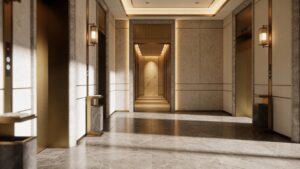
Hidden Hallways and Secret Passages in Luxury Hotels
Behind polished marble walls and velvet-lined corridors lies a hidden world that makes luxury hotels truly unforgettable. From secret passageways to unseen service halls, these concealed spaces protect privacy, preserve elegance, and keep every guest experience feeling effortless, exclusive, and just a little mysterious.