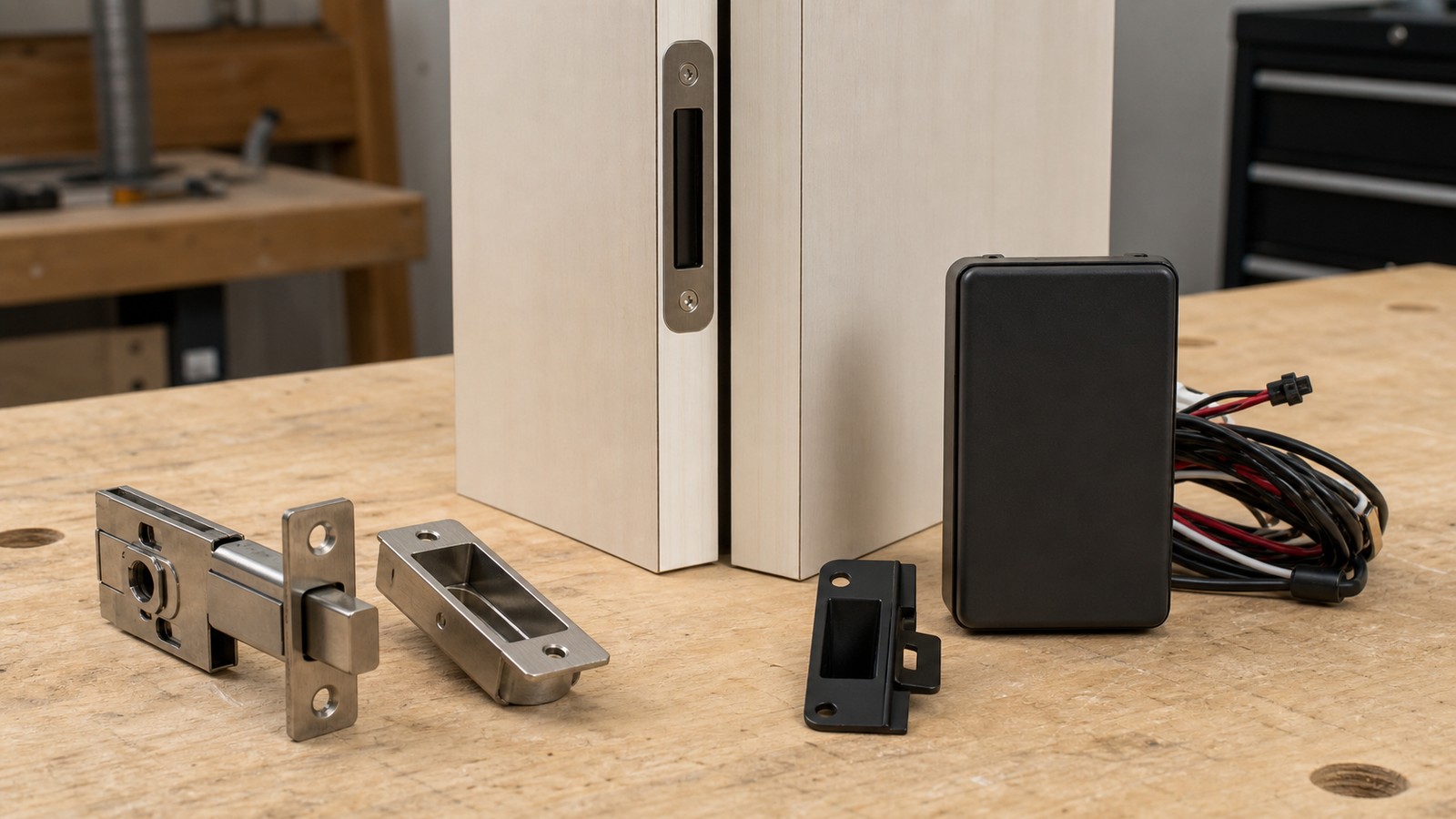
Hidden doors have long fascinated homeowners, architects, and designers alike. From their historic presence in medieval castles and secret societies to their contemporary reinvention in modern residences, hidden doors embody a sense of mystery and wonder. They combine the thrill of discovery with the practicality of everyday utility, creating features that are both artistic and functional. In today’s homes, hidden doors are more than whimsical novelties—they are practical solutions to common challenges. They provide seamless ways to manage storage, enhance safety, and infuse surprise into daily living. The charm lies in their ability to blend invisibly into the architecture while offering an experience that is both personal and imaginative. For homeowners seeking to balance elegance, efficiency, and intrigue, hidden doors offer an unmatched opportunity to rethink how space is designed and enjoyed.
A: A paint-grade flush door with concealed hinges and a magnetic latch.
A: Often yes—add blocking, swap the jamb, and patch finishes carefully.
A: Not if loads are limited, shelves are shallow, and hardware is properly rated.
A: Solid cores, perimeter gaskets, and multi-point latching.
A: Push-to-open keeps faces clean; add a micro pull if accessibility demands it.
A: Yes with slow swing, finger guards, tamper-resistant latches, and inside release.
A: Pair concealment with rated locks and reinforced frames; follow local laws.
A: Exact paint match, grain-matched veneer, wallpaper wrap, or slat continuation.
A: Simple retrofits: a weekend; complex disguised builds: several days to weeks.
A: Annual hinge torque checks, seal refresh, and touch-up paint on high-wear edges.
Hidden Doors for Discreet Storage
One of the most practical uses of hidden doors is the concealment of storage spaces. In luxury penthouses, suburban homes, and even compact city apartments, hidden storage ensures that style is never compromised by clutter. A paneled wall in a living room may open to reveal a closet filled with games, blankets, or seasonal decorations. Cabinet doors in a kitchen may swing aside to uncover a full pantry, keeping supplies organized yet invisible.
The benefit of using hidden doors for storage lies not only in aesthetics but also in efficiency. Homes designed with minimalism in mind often rely on seamless lines, uninterrupted walls, and clean finishes. Traditional doors interrupt this visual flow, but hidden entrances preserve it while providing necessary utility. The result is a space that feels curated, polished, and perfectly balanced.
Hidden doors for storage also create an element of delight in daily life. Opening what appears to be an ordinary wall panel to find a neatly arranged space behind it transforms a simple household task into an experience of discovery. This small surprise adds a layer of personality and charm to the home, reminding residents that design can be both practical and enchanting.
Creating Hidden Pantries in Kitchens
The kitchen is one of the most common and effective spaces for hidden doors. As the center of activity in many homes, kitchens require significant storage, yet homeowners often want to maintain a sleek and elegant appearance. Hidden pantry doors offer the perfect solution.
Cabinetry disguised as part of a wall may open to reveal an expansive pantry stocked with essentials. This design preserves the clean lines of the kitchen while ensuring easy access to supplies. In larger homes, hidden pantry doors may lead to entire service kitchens, allowing staff to prepare meals without disrupting the main dining area. For homeowners who love to entertain, this design balances beauty with practicality, ensuring that gatherings remain seamless and stylish.
Hidden pantry doors also offer a sense of intrigue for guests. What appears to be a continuous wall of cabinetry suddenly becomes a gateway to an entirely new room. This element of surprise elevates the kitchen beyond utility into artistry, turning everyday tasks into experiences.
Bedrooms with Secret Closets and Retreats
Bedrooms are intimate spaces where hidden doors can heighten the sense of sanctuary. A wardrobe may serve as an entrance to a hidden dressing room, keeping clothing, jewelry, and personal items neatly tucked away. A paneled wall may conceal a retreat within a retreat, such as a reading nook, meditation space, or private lounge.
For children, hidden doors in bedrooms inspire creativity and joy. A disguised entrance leading to a playroom becomes a stage for adventure and imagination. For adults, these hidden features emphasize discretion and privacy. The ability to close off a personal space completely transforms the bedroom into a realm of relaxation and security.
Hidden bedroom doors also speak to the emotional impact of design. They embody the idea that a home is not just about function but about creating experiences that inspire. To step through a hidden door in one’s bedroom is to be reminded that luxury and imagination can exist even in the most personal corners of the home.
Concealing Home Offices and Workspaces
With the rise of remote work, home offices have become indispensable. Yet many homeowners prefer to keep their professional lives separate from their personal ones. Hidden doors make this balance possible by allowing offices to disappear when the workday ends.
A hidden door disguised as a bookcase in a living room may open into a private office, complete with desk, storage, and technology. A wall panel in a hallway may conceal a workspace that remains invisible when not in use. This flexibility allows homeowners to maintain uncluttered living environments while ensuring productivity.
The psychological benefits are just as important as the practical ones. Closing a hidden office door at the end of the day signals a transition from work to rest, helping individuals separate professional responsibilities from personal relaxation. In this way, hidden doors contribute not only to aesthetics but also to well-being.
Entertainment and Surprise Spaces
Few features captivate guests more than hidden entertainment areas. Imagine leading friends into a lounge, then revealing a disguised bookcase that opens to a private bar or home theater. These hidden doors transform entertaining into an experience, adding drama and delight to social gatherings.
Entertainment spaces concealed behind hidden doors often become the most memorable parts of a home. They provide an element of performance, where hosts surprise guests with unexpected rooms filled with fun and luxury. Whether it is a music studio, a wine-tasting room, or a home cinema, the reveal is as impactful as the space itself.
The surprise factor also contributes to a sense of exclusivity. Guests feel privileged to be let into a hidden part of the home, creating lasting memories of the occasion. For homeowners, these concealed entertainment areas showcase personality and creativity, ensuring that their home remains unforgettable.
Hidden Doors for Safety and Security
Beyond storage and entertainment, hidden doors serve vital protective purposes. Panic rooms, vaults, and secure chambers are often integrated into luxury residences using disguised entrances. A bookcase, mirror, or panel may conceal a room designed to keep residents safe in emergencies.
The security advantages of hidden doors lie in their invisibility. Unlike reinforced steel doors that draw attention, hidden doors blend into the architecture, making them difficult for intruders to locate. In many cases, this discretion provides better protection than overt security measures.
Modern panic rooms are far from barren. They are often equipped with advanced technology, communication systems, and comfortable furnishings. Hidden doors ensure these rooms remain both accessible to homeowners and invisible to outsiders, providing peace of mind without disrupting the elegance of the home.
Wine Cellars and Collector’s Rooms
For wine enthusiasts, hidden doors offer the perfect way to elevate a collection. A paneled dining room wall may open into a climate-controlled cellar lined with racks of rare vintages. A bookcase in a study may conceal a collector’s room filled with art, memorabilia, or rare books. These hidden spaces transform collections into experiences, showcasing them in dramatic, memorable ways.
The act of leading guests into a hidden cellar or gallery is as important as the collection itself. It creates a sense of theater, elevating hospitality into storytelling. Hidden collector’s rooms reflect both the homeowner’s passion and their commitment to preserving treasures in an environment of security and beauty.
Hallways and Transitional Areas with Hidden Utility
Hallways, often overlooked in design, become magical when integrated with hidden doors. A smooth expanse of paneling may open into a laundry room, storage area, or even an entire wing of the home. By concealing utility spaces, hallways maintain their elegance, functioning as galleries for art or design without interruption.
These designs highlight the versatility of hidden doors. They prove that concealment is not just for grand gestures but also for everyday needs. By integrating hidden doors into transitional spaces, homeowners can maintain order, discretion, and sophistication throughout the entire house.
Engineering Seamless Design
The beauty of hidden doors lies in their seamlessness. Modern engineering has made it possible to create doors that are flush with walls, cabinetry, or mirrors, opening silently and smoothly. Concealed hinges, pivot systems, and magnetic latches ensure flawless operation without compromising the illusion.
Materials play an equally important role. Custom finishes allow hidden doors to match surrounding surfaces with precision, whether in wood, stone, or textured plaster. The craftsmanship required reflects the highest standards of design, ensuring that hidden doors are not simply tricks but integral parts of the architecture.
This level of detail distinguishes hidden doors as features of true sophistication. They demonstrate that luxury lies not only in what is seen but in what is concealed, in the precision of design and the perfection of execution.
Technology Meets Concealment
Smart home technology has revolutionized the possibilities for hidden doors. Biometric scanners, smartphone apps, and voice-activated systems now allow for entrances that are both secure and convenient. Imagine a mirror door that opens only with a fingerprint scan, or a bookcase that responds to voice command.
These innovations bring hidden doors into the future, blending timeless intrigue with cutting-edge functionality. They ensure that concealment is not just about aesthetics but also about personalization, allowing homeowners to tailor experiences to their preferences. In luxury homes, technology enhances the drama of hidden doors while ensuring safety and practicality.
Emotional Impact and Storytelling
Perhaps the greatest gift of hidden doors is their ability to create emotional connections. They inspire wonder, curiosity, and delight. Guests remember the moment they stepped through a disguised entrance into a new world. Children cherish the magic of secret playrooms. Homeowners find joy in everyday surprises that make their homes feel alive with personality.
This emotional dimension elevates hidden doors beyond design into storytelling. They remind us that homes are not merely functional spaces but stages for memories and experiences. Hidden doors symbolize creativity, individuality, and the timeless human love of discovery.
Final Reflections: When Function Meets Fantasy
Hidden doors represent the perfect blend of practicality and imagination. They conceal storage with elegance, provide safety with discretion, and add surprise that transforms homes into experiences. Whether disguising a pantry, a private retreat, or a secure chamber, hidden doors prove that design can be both functional and enchanting.
In a world where efficiency and minimalism dominate, hidden doors remind us that fantasy still has a place in daily life. They invite us to embrace curiosity, creativity, and sophistication, proving that the best homes are not only lived in but explored. Behind every hidden door lies not just a room, but a story waiting to be told.