A Bookshelf Door Has to Behave Like Furniture and a Door
Building a concealed bookshelf door from scratch is a satisfying project because the finished piece feels like custom millwork, storage, and theater at the same time. The challenge is that it cannot be treated as an ordinary bookcase or an ordinary interior door. It has to swing or pivot smoothly, carry shelf weight without sagging, keep reveal lines tight, and still look believable when closed. A good build starts with the hidden-room fantasy, but it succeeds through careful measurements, structural support, hardware selection, and a finish that makes the bookshelf look as if it has always belonged to the wall.
A: Yes, if the opening is simple, the door stays light, and hardware is chosen carefully.
A: Shallower shelves are usually easier to swing and keep aligned.
A: Usually not for a loaded bookcase; use hardware rated for the real weight.
A: Choose the direction with the clearest arc and safest access.
A: Make reveal lines look like intentional cabinet or trim joints.
A: They can, but the structure and hardware must be sized for that load.
A: Magnetic or roller catches are simple, though heavy doors may need stronger options.
A: Yes, because users still see and operate that side.
A: Use help for structural framing, heavy doors, or egress-sensitive spaces.
A: Stable movement, consistent reveals, useful shelving, and a finish that matches the room.
Start With the Opening, Not the Shelves
The rough opening tells you what the bookshelf door can realistically become. Measure the width, height, wall thickness, floor level, ceiling clearance, and nearby obstructions before sketching shelf spacing. A door that looks beautiful on paper can fail if it hits trim, furniture, flooring transitions, or a low ceiling light.
Check the surrounding wall as well. A bookshelf door loads the opening differently from a hollow-core door because the leaf is deeper and heavier. If the opening feels weak, out of square, or patched together, plan for reinforcement before you buy visible materials.
Decide Whether the Door Will Swing or Pivot
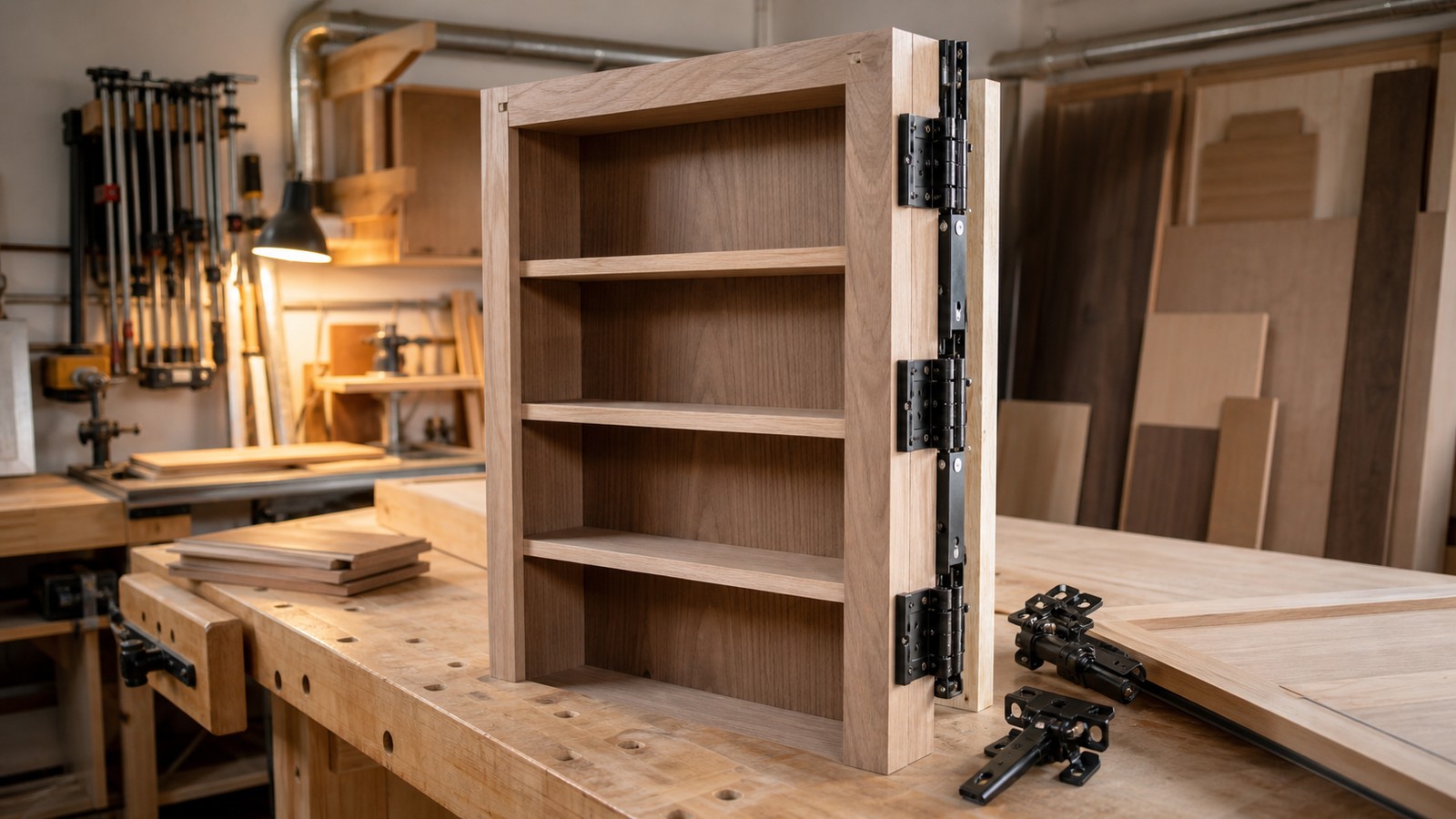
Most DIY bookshelf doors use either a heavy-duty hinge approach or a pivot approach. Hinged doors feel familiar and can be easier to understand, but the shelf depth creates leverage that ordinary hinges cannot handle. Pivot systems can carry weight elegantly, yet they require more exact layout because the pivot point changes how the bookcase clears the jamb.
Think about the room on both sides. A door that swings outward may need floor space in the public room, while an inward swing may steal space from the hidden room. The best direction is usually the one that gives the door a full path without forcing users to shuffle around furniture.
Do not choose the hardware only by appearance. Load rating, adjustability, installation tolerance, and service access matter more than how invisible the hinge looks in a catalog photo.
Build a Stiff Carcass Before Adding Disguise
The hidden door begins as a cabinet-like carcass that must resist racking. Use straight material, square corners, solid joinery, and a back or cross-bracing strategy that keeps the shelf box from twisting every time it moves. A weak carcass will make perfect trim lines impossible.
Keep Shelf Depth Under Control
Deep shelves look generous, but they make a concealed bookshelf door heavier and harder to swing. Books, objects, and thick wood all sit away from the hinge or pivot, increasing leverage. For many home projects, a shallower shelf that suggests a built-in bookcase is more reliable than a deep storage unit that strains the hardware.
Plan what the shelves will actually hold. Decorative objects, paperbacks, and a few framed items are different from rows of heavy hardcovers. If the door must carry real book weight, upgrade the structure and hardware instead of hoping the finished piece will behave politely.
Frame the Opening for the Load
The hinge side or pivot side needs a solid anchor. That may mean adding blocking, replacing weak jamb material, tying into studs, or building a hidden structural frame behind the trim. The goal is to transfer the door’s weight into framing, not into finish boards.
This work is not glamorous, but it protects the project. A concealed bookshelf door that slowly pulls away from the wall will announce itself with widening gaps, rubbing shelves, and hardware movement.
Reinforcement also gives you more freedom in finishing. When the structure is stable, the cosmetic reveals can stay fine and consistent.
Mock Up the Swing Path
Before committing to final shelf depth and trim, mock up the swing with scrap material or cardboard. Mark the pivot point, the far front corner of the shelf, and the floor arc. This simple test can reveal collisions that a flat drawing hides.
Use Reveals as Part of the Disguise
A concealed bookshelf door does not have to be gapless. It has to make its gaps look intentional. Align reveal lines with nearby built-in shelves, vertical stiles, shadow grooves, or casing details so the operating perimeter reads as ordinary joinery.
This is where the project becomes design work. A slightly wider shadow line can disappear if it matches the rest of the built-in composition, while a tiny uneven gap in the wrong place can give the door away. Consistency beats microscopic tightness.
Plan the Latch Before the Finish
A bookshelf door needs a way to stay closed without advertising the trick. Magnetic catches, roller catches, touch latches, concealed bolts, or mechanical releases can work depending on the weight and use. The latch should be strong enough to resist drift but simple enough for everyday users.
Think about emergency access. If the concealed room can be occupied, someone inside should be able to open the door easily. The more secret the outside release becomes, the more important the inside release becomes.
Test the latch with weight on the shelves. A catch that feels fine on an empty carcass may behave differently when the door is loaded.
Set Clearances With Flooring in Mind
Flooring can ruin an otherwise clean build. Thick rugs, thresholds, uneven hardwood, and seasonal movement can make the bottom of the bookshelf rub. Leave enough clearance for real conditions, then hide that clearance with a toe-kick shadow, base detail, or intentional bottom reveal.
Make the Back Side Useful Too
The hidden-room side is easy to neglect because guests may never see it, but the user will. Finish the back with a clean panel, handle, lighting switch access, or simple shelving depending on the room’s purpose. A secret door should not feel unfinished once it has done its reveal.
If the back side faces a narrow room, keep projections minimal. A proud handle, loose shelf lip, or decorative molding can snag clothing or limit the swing. Hidden design should still respect daily movement.
Finish the Bookshelf Like Built-In Millwork
Paint or stain is what finally sells the disguise. Match sheen, color, grain direction, trim style, and caulk lines to the surrounding architecture. If the door is the only perfect object in an imperfect older room, it may stand out more than a slightly aged finish would.
Use books and objects thoughtfully. A few believable items can break up the face of the door, but overloaded shelves add weight and create moving clutter. Secure anything that could slide when the door opens.
Lighting also matters. Harsh light across the front will reveal uneven gaps. Softer wall washing or shelf lighting can make the built-in feel intentional.
Test the Door Loaded, Empty, and Repeatedly
A concealed bookshelf door should be tested in the conditions it will actually face. Open it empty, load it gradually, adjust the hardware, then cycle it many times. Listen for rubbing, watch for sag, and inspect fasteners after the first serious use.
Know When a Pro Should Handle Part of It
DIY does not require doing every operation alone. If the wall is structural, the opening is irregular, the door will be very heavy, or the concealed room affects egress, bring in a carpenter or qualified contractor for the risky pieces. You can still build shelves, finish trim, and handle the aesthetic work around professional framing or hardware installation.
The strongest bookshelf doors do not depend on luck. They combine a delightful reveal with boring reliability: square framing, proper hardware, stable shelves, clear operation, and a reason for the room beyond. Build those fundamentals first, and the hidden entrance will feel like magic without behaving like a fragile trick.
Plan for Adjustment After the First Season
Wood movement, house settling, and shelf loading can change a bookshelf door after the exciting first week. Leave access to hinge or pivot adjustments so you can correct a rubbing latch side or widening top gap later. Concealed work should be serviceable, even if the service points are hidden from casual view.
Seasonal adjustment is especially important in older homes. Floors may not be level, walls may not be flat, and humidity can make painted edges feel tighter than they did during installation. A small amount of planned adjustability keeps those normal changes from turning into a visible failure.
Keep records of hinge locations, hardware model numbers, paint colors, and latch parts. Future maintenance becomes far easier when you are not reverse-engineering your own project.
Use Shelf Styling to Protect the Illusion
The objects on the shelves should help the bookcase look real without making it hard to operate. Mix a few books, small objects, and open space so the shelf face feels lived in. Avoid stacking fragile items near the outer edge where movement is most dramatic.
Think About Sound and Feel
A concealed bookshelf door should sound solid, not hollow or rattly. Felt bumpers, properly adjusted catches, tight shelf joinery, and secure objects can make the door close with confidence. The tactile impression matters because users judge the door the moment they touch it.
If the door feels wobbly, people will treat it like a novelty. If it moves smoothly and closes quietly, the reveal feels intentional. That difference comes from small details rather than expensive drama.
Do a Final Safety Walkthrough
Before calling the build complete, walk through the project as a guest, a child, a person carrying something, and someone inside the hidden room. Confirm that fingers stay clear of pinch points, the inside release is obvious, shelves do not spill, and the swing path is free. A secret door is still a door, and it has to respect the people using it.
Good safety checks do not weaken the magic. They let the magic last because the door can be used without nervousness. The most satisfying bookshelf entrance is one people can enjoy repeatedly, not one they are afraid to touch.
Also consider how the door behaves when the room is dark or when someone is in a hurry. The release should be reachable, the path should be predictable, and the door should not require a delicate sequence that only the builder understands. A concealed bookshelf door can be clever without becoming cryptic.
When the final walkthrough feels uneventful, that is a good sign. The surprise belongs to the reveal, not to the basic operation. A scratch-built bookshelf door earns its charm by becoming dependable enough that the hidden part feels natural.
Let the First Build Guide Future Upgrades
Your first scratch-built bookshelf door will teach you which details deserve more time next round. You may learn that lighter shelves are worth the restraint, that trim alignment matters more than fancy triggers, or that a better latch would make the whole piece feel calmer.
Those lessons are valuable. A finished door is not only an entrance; it is a working prototype for every hidden feature you may build later. Treat it as both a room upgrade and a hands-on record of what your house, tools, and patience can support.