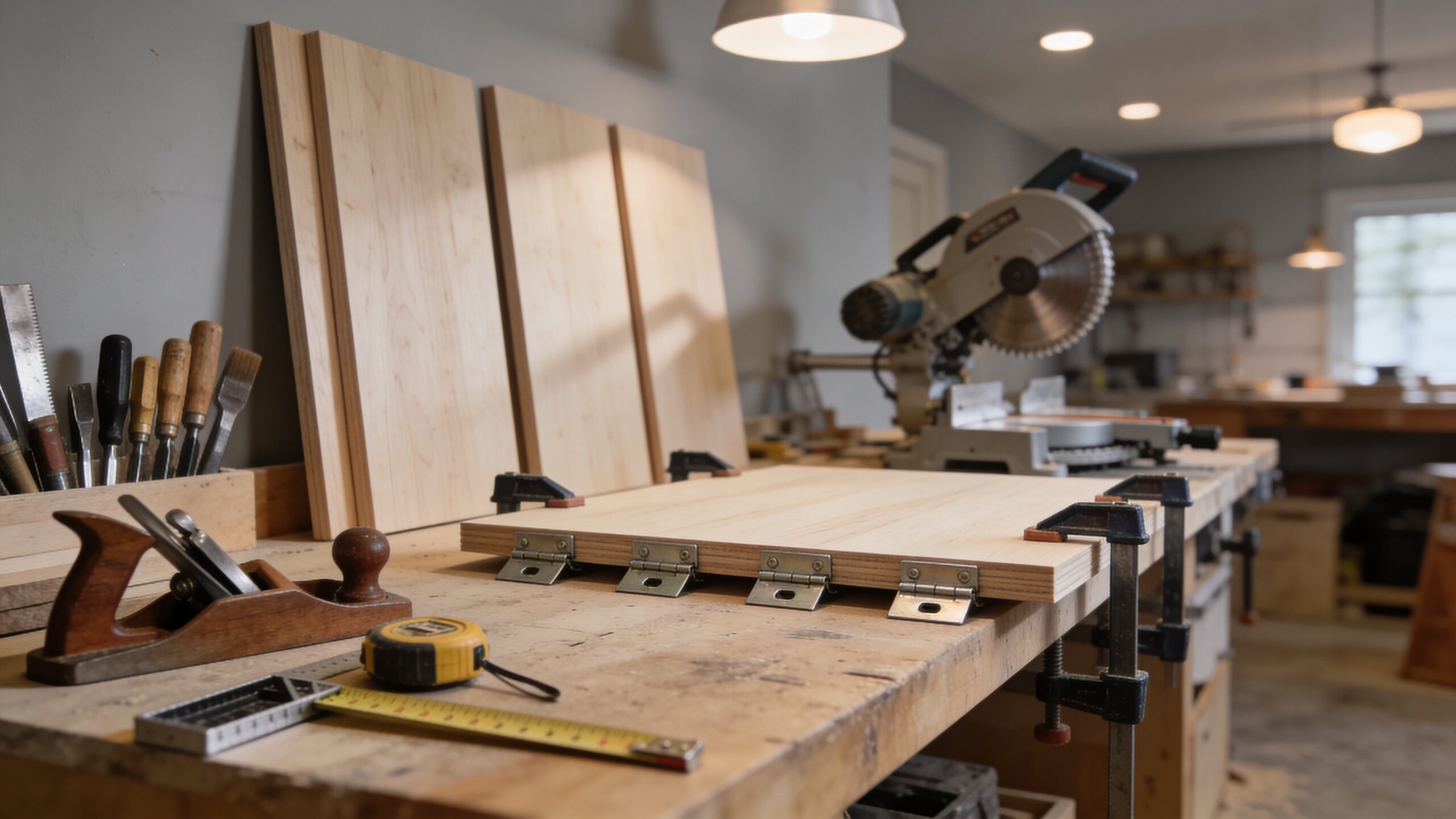
A Kit Can Simplify the Project, Not Think for You
DIY kits for secret doors can save time, reduce guesswork, and give homeowners access to hardware that would be difficult to assemble from scratch. A good kit can turn a bookcase, mirror, cabinet panel, or wall opening into a cleaner hidden entry. The best kit is not simply the most dramatic one online. It is the one that fits the opening, carries the finished weight, matches the room, and gives the installer enough support to build safely. The buying decision should start with the doorway and the person installing it.
A: They can be, especially when the kit matches the opening and includes reliable hardware.
A: A pre-cut bookcase or cabinet-style kit with detailed instructions is usually easier.
A: Small kits may be manageable, but heavy doors usually need a second person or professional help.
A: Some do, but existing trim, wall thickness, and floor level still need checking.
A: Buying before measuring the real finished opening and swing path.
A: Yes, if the finish, trim, and surrounding wall are planned carefully.
A: Sometimes, but they often require more skill, tools, and finish labor.
A: They can if overloaded or installed with undersized hardware.
A: Yes, any occupiable room needs safe and understandable exit.
A: Compare fit, weight rating, instructions, support, and finish compatibility before price.
Start With the Type of Secret Door
DIY kits usually fall into a few broad categories: bookcase doors, mirror doors, cabinet-style doors, flush wall doors, pivot panels, and hardware-only kits for custom builds. Each type solves a different problem. A bookcase kit creates a believable piece of furniture. A flush kit favors minimal walls. A mirror kit suits bedrooms, closets, and dressing areas.
Do not buy the kit before deciding what the room needs to look like when the door is closed. A dramatic bookcase door may be wrong for a narrow hallway. A sleek flush panel may feel too plain in a traditional den. The kit should support the room’s disguise.
Also think about what is behind the door. Storage, a hobby room, a safe room, a play space, and a pantry all have different access needs. The more often the door opens, the more important easy operation becomes.
Measure the Opening Carefully
Secret door kits are less forgiving than ordinary doors because reveals, clearances, and swing paths are part of the disguise. Measure rough opening width, finished opening width, height, wall thickness, floor level, trim, baseboards, and nearby furniture before choosing a kit.
Many kit problems begin with optimistic measurement. An opening that is out of square, a floor that slopes, or a baseboard that blocks swing clearance can turn a simple install into a carpentry project. Write down real dimensions, not the size you hope the opening is.
Check the swing direction and the hidden room side as well. A door that clears the hallway may still hit shelves, stairs, or storage inside. The kit should work for both sides of the opening.
If the manufacturer provides tolerance ranges, read them closely. A kit that fits only perfect conditions may not be the right choice for an older home.
Bookcase Kits Offer a Believable Disguise
Bookcase kits are popular because shelves give the door an obvious reason to exist. They work well in studies, living rooms, basements, libraries, and hallways where furniture feels natural. A loaded bookcase can hide seams and make the opening feel like a built-in.
Weight is the main issue. Books and decor add more load than many people expect. The kit should be rated for the finished condition, not just the empty shelf. Hinges, pivots, casters, and anchoring details matter.
Depth also affects usability. Very shallow shelves may not look convincing, while very deep shelves can become heavy and awkward. A good kit balances appearance, storage, and movement.
Bookcase kits often require careful finishing. If the shelf unit does not match nearby trim or cabinetry, it can look like a door trying to be furniture rather than a built-in that happens to open.
Styling matters after installation too. A bookcase door should not be overloaded on one side or filled only with objects chosen to hide seams. A natural mix of books, bins, and decorative pieces helps the unit feel believable. Keep the heaviest items low and close to the hinge or pivot recommendations so the door remains balanced.
Hardware-Only Kits Need More Skill
Some kits provide hinges, pivots, latches, and instructions but leave the door slab or wall panel to the builder. These can be excellent for custom designs, but they demand more carpentry judgment. The installer must build a straight, strong, properly sized panel.
Hardware-only kits are best for confident DIYers or projects with professional help. They offer flexibility, but they do not solve finish carpentry, wall repair, or panel construction automatically.
They also require more decision-making about the finished face. The builder has to choose whether the door becomes a bookcase, flush panel, mirror, cabinet, or wall section. That freedom is useful, but it can become overwhelming if the room style and opening details are not already settled.
Look Closely at Instructions and Support
A secret door kit should include clear installation guidance, hardware specifications, and support for common problems. Good instructions explain framing, hinge placement, clearances, shimming, latch adjustment, and finish sequencing. Vague instructions are a warning sign.
Look for real diagrams, dimensional charts, and troubleshooting steps before buying. If a kit seller cannot explain how the door should be framed or adjusted, the installer may be left guessing at the hardest moments.
Customer support matters because hidden doors often need tuning. A small reveal issue, latch problem, or swing conflict can stop the project. Access to replacement parts and knowledgeable support can make a kit more valuable than a cheaper option.
Reviews are useful when they mention the installer’s skill level and the type of wall. A glowing review from a professional carpenter may not mean the kit is beginner-friendly. A critical review from someone with an out-of-square opening may reveal limits that matter to an older house. Read for conditions, not only star ratings.
Material Quality Affects the Finished Feel
Kit materials range from basic MDF to solid wood, plywood, metal frames, and specialty hardware. The right level depends on the room. A basement playroom may not need the same finish quality as a formal library, but every secret door needs enough stability to move reliably.
A flimsy kit can feel disappointing even if it technically works. Doors that flex, rattle, sag, or scrape will not feel secret in a satisfying way. They will feel unfinished.
Pay attention to shelf thickness, backing panels, hinge grade, fasteners, and finish surfaces. The parts you do not notice in product photos often decide whether the kit survives daily use.
Ask how the kit will feel after it is painted, loaded, and used for a few months. A lighter-duty product may be fine for occasional storage, but a daily office or pantry door deserves stronger parts. Durability is part of the experience, not just a specification.
If possible, compare installed examples rather than only product renderings. Real projects reveal shelf sag, reveal gaps, finish quality, and how the door sits inside a room. Those clues are more useful than a perfect studio photo.
Plan the Finish Before Assembly
Some DIY kits arrive unfinished, while others come primed, painted, stained, or laminated. Unfinished kits give more design freedom but require more work. Pre-finished kits save time but may not match the room.
Think about paint sheen, trim profiles, wallpaper, paneling, flooring, and nearby cabinetry before installation. A kit that looks good on a workbench can look disconnected once placed in a finished room.
Finishing parts before final assembly can help, but some touch-up is almost always needed after adjustment. Protect moving hardware from paint buildup, especially around hinges and latches.
The best kit installations look integrated. The secret door should feel like part of the wall or furniture plan, not a separate product inserted into the room.
Safety Should Not Be Optional
A secret door still has to behave like a safe door. It should open smoothly, close predictably, and allow exit from the hidden side. If the room can be occupied, do not create a situation where someone could be trapped.
Heavy bookcase kits deserve special care. They should be anchored, balanced, and adjusted so they do not tip, slam, or sag. Children, pets, and guests change the risk profile.
If the door leads to stairs, mechanical equipment, storage, or a room with limited ventilation, consider lighting, access, and emergency use. A kit is only successful if the space behind it remains safe.
Budget Beyond the Kit Price
The price on the kit is only one part of the project. Add shipping, extra trim, paint, wall repair, flooring adjustments, tools, fasteners, and possible professional help. Hidden doors often need finish work around the opening.
A cheaper kit can become expensive if it requires extensive modification. A more complete kit can be worth it if it reduces mistakes and includes dependable hardware.
Shipping and handling can also affect the final result. Large panels and shelf parts may arrive damaged if packaging is weak, and replacement parts can delay the project. Before ordering, confirm delivery access, return policies, and whether the components can be moved safely to the installation area.
Budget time as well as money. A kit may assemble quickly on paper but still require several rounds of fitting, painting, drying, adjusting, and touch-up. Secret doors depend on small tolerances, so rushing the final steps can make a good kit look clumsy.
Choose for Your Skill Level
Some kits are friendly to patient beginners. Others assume accurate carpentry, framing, and finish skills. Be honest about your tools and comfort level. A secret door is not the best place to learn every skill at once.
Beginner-friendly kits usually have clearer tolerances, pre-cut parts, simpler hardware, and stronger support. Advanced kits may offer better concealment or custom design but require more adjustment.
There is no shame in hiring help for framing, hinge routing, or final tuning. Many homeowners can finish and style the door themselves while letting a pro handle the critical movement details.
The Best Kit Fits the Room
The best DIY secret door kit is the one that disappears into your specific room and keeps working after the novelty fades. It should match the opening, support the finished weight, suit your skill level, and leave a door that feels natural to use.
Instead of buying the most surprising option, buy the most appropriate one. A well-chosen kit makes the project less mysterious in all the right ways, so the finished door can keep the mystery where it belongs.
That is what separates a satisfying DIY kit from a novelty purchase. The kit should reduce uncertainty while leaving enough room for the room’s style. When fit, finish, hardware, and support all line up, the hidden door feels like a clever part of the home rather than a weekend experiment that never quite settled.
Before ordering, imagine the closed door on an ordinary day. If it looks natural, opens comfortably, and does not demand constant explanation, the kit is probably heading in the right direction. A good DIY kit should make the room feel more resolved, not make the homeowner apologize for a complicated feature. The best installations become ordinary in the nicest way: useful, quiet, and ready to surprise only when someone chooses to share them. That daily ease is worth more than any single clever product photo. A kit should lower the project’s risk while still leaving the finished room feeling personal. Choose the kit that makes success repeatable, not merely possible. That is the practical heart of a good DIY choice.