

There’s something electrifying about the sound of a latch clicking open beneath your feet — the quiet promise of a secret waiting below. Trapdoor Passages capture that timeless sense of curiosity, merging clever engineering with architectural elegance. Once used for escape routes, hidden storage, and secret cellars, today’s trapdoors redefine modern design with hydraulic lifts, smooth hinges, and flush finishes that disappear seamlessly into the floor. Beneath polished hardwoods or sleek stone tiles lies the thrill of discovery: a hidden wine room, a private study, or even a concealed tunnel entrance. Every trapdoor is both a mystery and a mechanism — a blend of artistry, precision, and function. They invite a moment of wonder, transforming the ordinary act of walking across a room into the start of an adventure. Trapdoor Passages remind us that beneath every surface, there’s another story waiting to be revealed — one step at a time.
A: Design to meet or exceed the surrounding floor live load plus impact at the edge.
A: Yes—add headers and trimmers; verify utilities routing and load paths before cutting.
A: Minimum clear around 24–30 inches for ladders; more for stairs and carrying items.
A: Absolutely—use torsion-box substrates for stone and laminated, walkable glazing for glass.
A: Use soft-close assists, gasketed perimeters, and felt-backed inlays under the skin.
A: Manual with tuned counterbalance is reliable; motorization adds convenience with safety sensors.
A: Use compression gaskets, drip edges, corrosion-resistant hardware, and positive drainage.
A: Provide low-velocity supply/return; interlock lid-open with boost mode where needed.
A: Basic manual hatch can be modest; custom engineered lids, finishes, and operators increase cost.
A: Annual checks on hinges/struts, latch alignment, gasket compression, and lighting/sensor operation.

Trapdoors: Hidden Entrances in Floors and Ceilings
Trapdoors transform ordinary spaces into extraordinary experiences. From concealed cellars to hidden lofts, these floor and ceiling entrances offer both security and style. With roots in history and eyes on modern innovation, trapdoors embody timeless intrigue and practical design, turning homes into spaces filled with mystery and sophistication.

How to Build a Secret Trapdoor in a Wooden Floor
A practical guide to planning, framing, hinging, trimming, and finishing a secret trapdoor so it feels solid underfoot and disappears into a wooden floor.
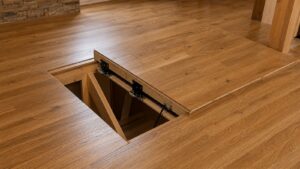
How to Build a Concealed Trapdoor in the Floor
A concealed trapdoor in the floor needs structural planning, safe access, flush finishes, strong hardware, and code-aware design before disguise.