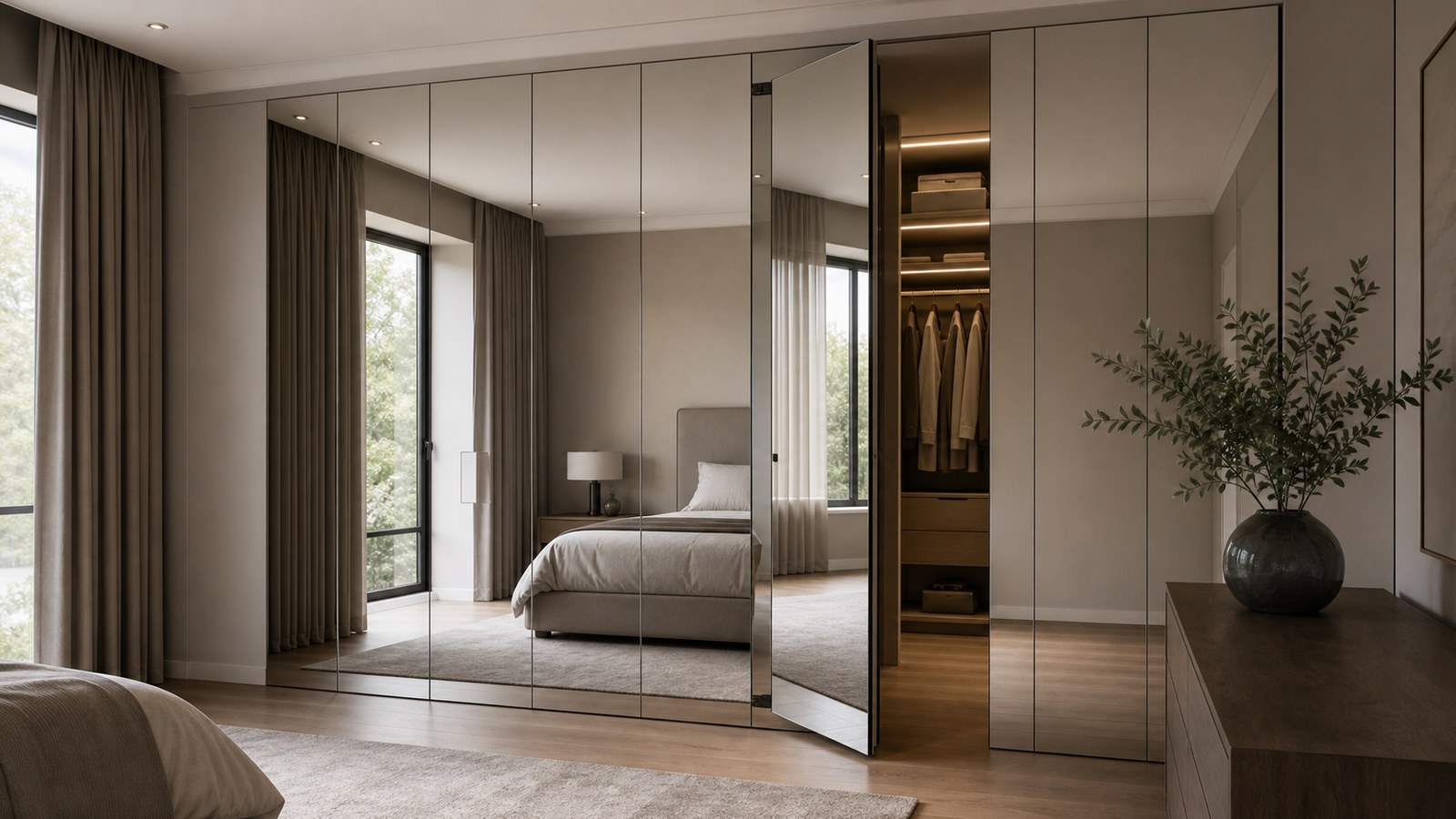
The allure of hidden doors is timeless. For centuries, people have been captivated by the idea of a doorway disguised within its surroundings, leading to a secret space that only the initiated can access. From the chambers of castles to the pages of mystery novels, concealed entrances evoke curiosity and imagination. In modern homes, this fascination has evolved into sleek, stylish, and functional solutions that integrate seamlessly with contemporary architecture. Among the most elegant and versatile of these solutions are mirror hidden doors. Mirror hidden doors bring together two beloved design elements: the practicality and visual enhancement of mirrors with the intrigue of concealed entryways. They not only create the illusion of expanded space but also serve as clever disguises for storage, offices, or private retreats. Their dual nature—being both decorative and functional—makes them one of the most sophisticated and creative ways to incorporate hidden doors into any home.
A: Not if the wall is flat, the reveal is tight (1–3 mm), and lighting avoids harsh grazing.
A: Acrylic is lighter/safer; glass is crisper and more scratch-resistant—choose by size and usage.
A: Yes for specialty spaces, but ensure correct lighting ratios and privacy requirements.
A: Specify proper mirror backing, sealed edges, and avoid steam hitting raw perimeters.
A: Push-to-open latches keep faces clean; add a micro edge-pull if accessibility or leverage is needed.
A: Yes—size and thickness drive weight; confirm hinge/pivot ratings and add stiffeners as needed.
A: Use tempered/laminated mirror or acrylic, soft-close motion, and finger-safe clearances.
A: Absolutely—include demister pads, corrosion-resistant backing, and humidity-tolerant adhesives.
A: Ammonia-free cleaner, microfiber cloth, and no abrasives on edges or backing.
A: Higher than paint-grade panels due to glazing, backing, and hardware; size drives price most.
Why Mirrors Are Ideal for Concealment
Mirrors have long been used in design to reflect light, create depth, and enhance the sense of openness within a room. These qualities make them natural candidates for hidden doors. When installed as a full-length panel or wall feature, a mirror effectively distracts the eye, drawing attention away from the possibility of a door. Guests admire the reflective surface without ever suspecting it conceals an entrance.
The reflective quality also helps mirror hidden doors integrate into nearly any style. In small apartments, they visually expand space by making rooms appear larger and brighter. In grand residences, they add an element of refinement and drama, becoming statement pieces in their own right. The balance between aesthetic contribution and concealment is what makes them uniquely effective. Unlike other hidden doors that rely purely on blending in, mirror doors actively enhance their surroundings while keeping secrets tucked away.
Modern Mechanisms Behind the Magic
What makes mirror hidden doors work so seamlessly is the advancement of engineering and hardware design. Concealed hinges, pivot mechanisms, and magnetic latches ensure that these doors operate quietly and smoothly without interrupting the illusion. In many modern installations, the door fits flush against the wall, so no frame or edge gives away its presence.
Some mirror hidden doors employ sliding systems, allowing the reflective surface to glide effortlessly aside to reveal a passage. Others use pivot hinges for dramatic swing entrances. With high-quality hardware, the door can handle the weight of the mirror while remaining balanced and functional. This marriage of technology and artistry is what transforms mirror hidden doors from novelties into reliable, everyday features of luxury and modern living.
Mirror Hidden Doors in Bedrooms
Bedrooms are intimate spaces, and mirror hidden doors can elevate them into true sanctuaries. A full-length mirror is already a common feature in bedrooms, often used for dressing and enhancing light. By converting the mirror into a disguised entrance, homeowners gain privacy and intrigue without compromising style.
One of the most popular applications is concealing a walk-in closet. Guests entering the bedroom see only a beautiful mirror, unaware that it leads into a well-organized dressing room. In larger bedrooms, mirrors can conceal private retreats—quiet nooks for reading, meditation, or even wellness spaces. For couples, hidden dressing areas accessed through mirror doors create an elegant sense of separation between sleeping and personal preparation zones.
The elegance lies in the duality: a mirror that serves its expected purpose while guarding an entirely separate world behind it. For bedrooms, this combination of functionality and mystery creates an unmatched sense of luxury.
Bathrooms and Dressing Rooms with Mirror Doors
Bathrooms and dressing areas are particularly suited for mirror hidden doors. In these spaces, mirrors are expected features, so their role as concealment feels entirely natural. A mirror wall might open into a private dressing room, ensuring continuity of design while offering convenience. In larger master suites, a hidden mirror door may lead from the bathroom to a spa-like retreat with a sauna, steam room, or massage area.
Mirror doors in bathrooms also serve a practical purpose. They reflect light, brightening spaces that may not always benefit from natural illumination. When paired with elegant finishes like marble, tile, or wood, they contribute to a polished and luxurious atmosphere. Concealing storage or secondary entrances behind them ensures that the bathroom remains uncluttered and serene.
Living Rooms and Lounges with Reflective Secrets
In living rooms and lounges, mirrors are often used to enhance décor and provide a sense of openness. When integrated into hidden doors, they become captivating focal points. A large wall mirror can disguise an entrance to a private study, library, or entertainment space. Guests admire the reflective feature, never realizing it conceals a secret.
These hidden doors serve both aesthetic and functional roles. They preserve the flow of design while keeping certain areas discreet. In luxury homes, a mirror hidden door in a lounge might lead to a wine cellar, cigar room, or speakeasy-style bar. The reveal becomes part of the entertainment, adding an element of theater to hosting.
The reflective nature also adds glamour to living rooms, catching light from chandeliers, fireplaces, or natural windows. When combined with concealed entry, the result is a living space that feels both expansive and filled with delightful possibilities.
Hallways with Hidden Elegance
Hallways, often overlooked as transitional areas, become dramatic stages when fitted with mirror hidden doors. A long corridor lined with mirrors not only feels brighter and larger but may conceal entrances to storage areas, laundry rooms, or private wings of the home.
By disguising utility areas behind reflective surfaces, hallways maintain their elegance without compromising function. Guests walking through the corridor see only sophistication, unaware of the hidden world just beyond the mirror. For grand estates, this design creates an aura of intrigue, transforming simple passageways into experiences of discovery.
Kitchens and Dining Areas with Seamless Concealment
While mirrors are less common in kitchens, hidden mirror doors can still be used creatively. In modern dining areas, a mirrored wall may hide a wine cellar or service pantry. This ensures that the dining space retains its formality and elegance while keeping practical areas accessible.
In smaller urban homes, mirrored panels can expand the feel of compact kitchens while also disguising storage. By doubling as both design enhancement and concealed entry, these doors maximize space efficiency. For homeowners who prioritize both aesthetics and utility, kitchens and dining rooms become showcases of sophistication with the addition of mirror hidden doors.
Safety, Security, and Subtlety
Mirror hidden doors are not limited to decorative or practical uses; they also serve important roles in security. Panic rooms, vaults, or secure chambers can be concealed behind mirrors, ensuring that these areas remain discreet. Unlike heavy reinforced doors that draw attention, a mirror looks natural and unassuming, making it one of the most effective disguises.
In luxury homes, where security is paramount, mirror hidden doors strike the perfect balance between subtlety and safety. They offer peace of mind without disrupting design. By combining elegance with discretion, they remind us that security can be refined and stylish, not just functional.
The Role of Technology in Modern Mirror Doors
As smart home technology advances, mirror hidden doors have become more sophisticated. Biometric locks, fingerprint scanners, and smartphone controls now allow these doors to open only for authorized users. In some designs, mirrors double as smart mirrors, providing information, weather updates, or lighting controls when activated.
This integration of technology transforms mirror doors into futuristic features. They become not just entrances but interactive panels that contribute to the daily rhythm of the household. For homeowners seeking both innovation and elegance, mirror hidden doors represent the cutting edge of design.
Craftsmanship and Materials That Matter
The success of mirror hidden doors depends on craftsmanship. Because mirrors are heavy, the supporting hardware must be carefully engineered for durability and balance. Skilled carpentry ensures that the door sits flush with its surroundings, maintaining the illusion of continuity.
Materials used in framing, finishes, and hinges play crucial roles. High-quality wood, metal, or composite supports allow the mirror to withstand frequent use without compromising safety. Finishes can be tailored to match surrounding décor, ensuring seamless integration. The craftsmanship involved reflects the artistry of hidden doors, turning them into features of true refinement.
Emotional and Experiential Impact
Perhaps the most compelling aspect of mirror hidden doors is their emotional resonance. They do more than hide rooms; they inspire curiosity, delight, and storytelling. Guests remember the moment they realized a mirror was more than it seemed. Homeowners find daily joy in the act of stepping through a reflective surface into a private world.
These experiences enrich the home, transforming it from a place of residence into a place of discovery. They remind us that living spaces are not only for function but also for wonder. Mirror hidden doors embody this philosophy, offering elegance, secrecy, and surprise in equal measure.
Mirror Hidden Doors in Commercial Spaces
While mirror doors are beloved in residences, they also have applications in commercial settings. Upscale hotels use them to conceal staff areas or private suites. Restaurants may hide exclusive dining rooms behind mirrored panels. Spas and wellness centers often employ them to preserve privacy while maintaining serene aesthetics.
For homeowners inspired by these applications, the lesson is clear: mirror hidden doors are versatile. They can be adapted to any environment where elegance and discretion are valued. By borrowing ideas from commercial design, residential spaces can achieve a new level of sophistication.
Final Reflections: The Beauty of Disguise
Mirror hidden doors embody the perfect union of form and function. They are reflective surfaces that brighten and expand rooms, yet they also conceal secret passages, private retreats, and secure chambers. Their beauty lies in their duality—visible and invisible, practical and enchanting.
As architecture evolves, mirror hidden doors remain timeless. They offer a way to preserve seamless design while adding layers of personality and intrigue. They transform bedrooms into sanctuaries, bathrooms into spas, hallways into galleries, and living rooms into stages of discovery.
In the end, mirror hidden doors remind us that the most elegant designs are those that surprise us, blending imagination with utility. They prove that every room can hold a secret, and every home can carry a story, hidden in plain sight, behind the polished surface of a mirror.