Security Should Be Hidden but Never Confusing
Adding locks and security to a secret door is a different challenge from locking an ordinary door. The hardware should protect the room, preserve the disguise, and still let trusted people use the opening naturally. A visible keypad or bulky deadbolt can reveal the secret immediately, while an overly clever hidden release can become frustrating or unsafe. The right approach starts with the purpose of the room: storage, valuables, tools, records, wine, a private office, or a safe room all require different levels of protection and exit planning.
A: Yes, but the lock and frame should be planned together.
A: Any occupiable hidden space needs reliable exit from inside.
A: They can be, if power backup and mechanical override are planned.
A: Often it is better to avoid visible keypads and use a subtler release.
A: Yes, a lock is only as strong as the structure holding it.
A: Recessed contacts and concealed wiring can monitor the door discreetly.
A: Choose releases and locks that prevent unsafe trapping or accidental access.
A: Yes, test batteries, alignment, latch action, and override access regularly.
A: It can be discreet, but serious security needs stronger locking behind it.
A: The door stays discreet, opens safely for trusted users, and resists the risks that actually matter.
Define What You Are Protecting
Before choosing a lock, name the risk. A secret pantry does not need the same hardware as a room holding documents, collections, tools, or defensive supplies. A child-resistant storage space has different needs from a room meant to delay a determined intruder.
Security planning should be proportional. Too much hardware can make the door obvious and inconvenient. Too little can create a false sense of protection. The lock should match the value, risk, and use pattern of the space.
Also consider who needs access. One homeowner, several family members, occasional guests, service technicians, or emergency responders may all affect the best solution. A secret door can be discreet without being impossible for trusted people to operate.
Keep Safe Exit Non-Negotiable
If a person can occupy the space behind the secret door, they need a reliable way out. Do not create a hidden room that locks from the outside only unless the space is never entered. Inside release is a safety requirement, not a luxury feature.
The inside release should be understandable in low light and under stress. A disguised exterior can pair with a more obvious interior handle. The hidden side of the door does not need to be mysterious to the person inside.
Ventilation, lighting, communication, and emergency access may also matter depending on the room. Security should never turn concealment into a hazard.
This is especially important for offices, hobby rooms, wine rooms, and storage spaces large enough to enter. A person may step inside for only a minute and still need a simple way to leave. The safer design is usually one that hides complexity on the public side and keeps the private side direct.
Choose the Least Obvious Lock Type
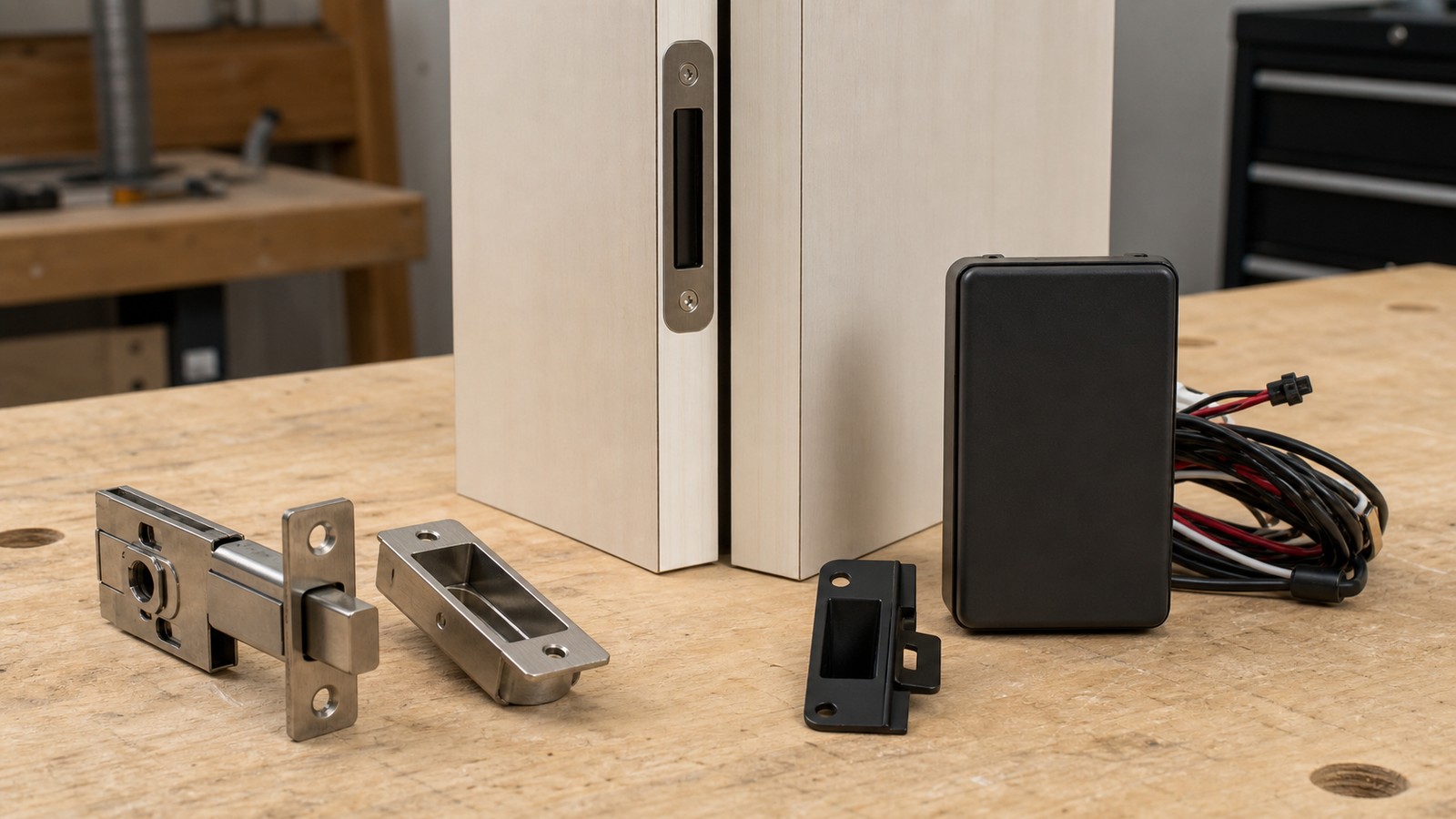
Secret doors can use several locking approaches: concealed deadbolts, magnetic locks, electromechanical releases, hidden cabinet locks, keyed edge locks, RFID systems, smart relays, or mechanical latches disguised in millwork. Each option has strengths and risks.
Mechanical locks are often simpler and more reliable. Electronic locks can be convenient but need power planning, backup access, and careful concealment. Magnetic locks may be strong, but they must be installed with safety and code expectations in mind.
The lock should disappear into the design rather than call attention to itself. A tiny edge cylinder may be less noticeable than a keypad. A release hidden in a shelf may suit a bookcase door. A concealed contact may suit a paneled wall.
Avoid choosing hardware only because it looks dramatic. The best lock is the one that works every day and fails safely when something goes wrong.
Think about service before committing to a lock type. Batteries, wiring, strike plates, and mechanical parts eventually need access. A lock that is beautifully hidden but impossible to maintain can become the weakest part of the door. Good security is discreet, but it is not unreachable.
Reinforce the Frame, Not Just the Door
A strong lock on a weak frame is not real security. The jamb, blocking, strike area, hinges, and surrounding wall need to support the lock. Reinforcement is especially important for heavy doors, secret rooms, and openings in standard interior framing.
Use long fasteners into framing where appropriate, add blocking behind strikes, and make sure hinge screws have real bite. If the door is a bookcase or paneled wall, the structure carrying the lock may be hidden behind finish material. That hidden structure still has to be strong.
Reinforcement should not ruin the disguise. Plan it before finish work so plates, strikes, and brackets do not appear as afterthoughts.
Protect the Hinge Side
Security often focuses on the latch side, but the hinge side can be vulnerable. Exposed hinge pins, weak screws, or unsupported pivots can undermine the lock. Concealed hinges, security hinges, non-removable pins, or reinforced pivots may be appropriate depending on the design.
Heavy hidden doors need hinge support for both function and security. If the door sags, the latch may stop engaging fully. A secure door must stay aligned.
Use Access Control Thoughtfully
Electronic access can be useful when several people need entry or when the door is part of a larger security system. RFID, concealed switches, smart locks, relay-controlled releases, or biometric devices can all be considered, but each adds complexity.
Power failure matters. If the lock depends on electricity, plan backup power or a mechanical override. The override should be hidden enough to preserve the secret but reachable enough for the owner.
Privacy matters too. Smart devices may collect data, need network access, or require updates. A simple mechanical solution may be better for some homes.
Add Alarms Without Advertising the Door
Alarm contacts can monitor a secret door without changing its appearance. Recessed contacts, concealed wiring, vibration sensors, or room sensors can alert the homeowner if the door opens. These features can be especially useful for valuable storage or private rooms.
Keep wiring serviceable. Hidden does not mean inaccessible. If a contact fails, the repair should not require destroying the finished wall.
Coordinate alarm features with the lock. A door that is opened frequently needs a system that will not become annoying. A rarely used secure room can tolerate more deliberate arming habits.
Alarm planning should happen before finish carpentry whenever possible. Fishing wires through a completed hidden wall can create damage that is difficult to repair invisibly. Even wireless sensors need a battery path, a mounting location, and a way to test them without revealing the door.
False alarms are part of security design. If the secret door protects a room used every day, the system should account for routine opening and closing. A well-placed contact, sensible notification setting, and clear arming habit can make the alarm helpful instead of irritating.
Hide the Release in a Believable Place
Classic secret doors often use a book, panel, object, or trim detail as the release. That can work if the action feels natural and the mechanism is reliable. A release should be hidden from casual view, not hidden from the people who need it.
Choose a location that fits the room. A shelf release belongs in a bookcase. A magnetic touch point may suit a clean wall. A discreet edge pull may be better for a storage door used often.
Do not make the release fragile. If the disguised object breaks, the door may become difficult to open. The clever part should still be built like hardware.
Repeatability matters more than theatrical surprise. The owner should be able to open the door the same way every time, without guessing how hard to press or where to pull. If the release feels inconsistent, people will tug at the wall and damage the very disguise they are trying to preserve.
Balance Secrecy and Fire Safety
Some secret doors sit in locations where code, egress, or fire separation matters. Locks should not block required exit paths or interfere with rated assemblies. If the hidden room is occupied, safe exit is essential.
For complex rooms, safe rooms, garages, or rated openings, involve a qualified professional. Security details that feel smart in isolation can create hazards if they conflict with life safety.
Even when a formal rating is not involved, the same mindset helps. A secure hidden door should not make it harder to leave during smoke, power failure, or panic. If a lock makes the room feel clever but less safe, it is the wrong lock.
Think through who might be inside the room when something goes wrong. A guest, child, or service person may not understand a disguised mechanism. Clear inside operation is a quiet but essential part of responsible security.
Security planning should also respect local requirements. Some openings cannot be locked or concealed in certain ways, and some rooms need specific egress or fire-rated behavior. Checking those limits early protects both the household and the finished design.
Test Normal and Stress Use
Test the lock when calm and when acting quickly. Can the owner open it with full hands? Can someone inside exit without instructions? Does the door latch every time after closing? Does the lock still work if the door settles slightly?
Test power loss for electronic systems. Test low-light conditions. Test after the door has been painted or loaded with shelves. Security hardware often reveals problems only after the finish work is complete.
Keep spare keys, override instructions, and service records in a secure but findable place. A secret door should not become a secret from its owner during a malfunction.
Maintain the Security System
Locks, batteries, contacts, hinges, and latches need periodic attention. A hidden lock that is never tested may fail when it matters. Schedule simple checks for alignment, battery life, fasteners, and release operation.
Watch for finish buildup around lock parts. Paint or stain can interfere with small tolerances. If the door starts needing force, adjust it before the lock or frame is damaged.
Keep the maintenance routine private but not mysterious. A short note in a secure home file can record battery type, override location, hinge model, and alarm contact position. That information can be invaluable after years pass or when another trusted person needs to service the door.
Security should be tested after any finish work, seasonal adjustment, or hardware change. A door that latched perfectly before repainting may behave differently after new material builds up at the edge. Small checks keep the system trustworthy.
Let Security Stay Quiet
The strongest secret-door security is often quiet and layered. The door is discreet, the frame is reinforced, the lock is reliable, the hinge side is protected, and the alarm system works without visible clutter. No single feature has to announce itself.
That quietness is the point. Good security supports the purpose of the hidden room while keeping daily use safe and understandable. The secret should feel controlled, not complicated.
When the lock, frame, release, and alarm strategy are chosen together, the door becomes more secure without becoming louder. The best result is a hidden entrance that trusted users can operate confidently and casual observers have no reason to study. That confidence is important: security that feels fussy often gets bypassed, while security that fits the room and routine is much more likely to be used consistently. The quieter the system feels in daily life, the more dependable it usually becomes. Good secret-door security is calm enough to use every day and serious enough to matter when tested. That balance is worth planning before any hardware is ordered. It turns security into a habit rather than a hassle.