Secret Doors Keep Changing Because Secrecy Keeps Changing
The evolution of secret doors from ancient to modern times is not a straight march from crude stone slabs to smart hidden panels. It is a story of changing motives. People have hidden doors for ritual control, household service, survival, privacy, storage, political power, entertainment, security, and design elegance. As materials and hardware improved, the forms changed, but the core question stayed familiar: how can a doorway serve the people who know it is there while remaining quiet to everyone else?
A: Many early hidden or restricted doors controlled access, storage, ritual, defense, or authority.
A: They combine practical concealment with the cultural idea of hidden knowledge.
A: Improved hinges, pivots, latches, and machining made larger reliable hidden doors possible.
A: Some are, but many serve storage, privacy, design simplicity, or entertainment.
A: Only when they are reliable, secure, and supported by backup access.
A: Minimal interiors already favor continuous surfaces, shadow gaps, and hidden hardware.
A: A hidden door still needs purpose, context, reliable movement, and controlled attention.
A: It can encourage gimmicks if the reveal matters more than daily use.
A: Likely quieter integration, better materials, smart access, and stronger usability.
A: Secret doors evolve because the things people want to protect or simplify keep changing.
Ancient Doors Controlled Permission
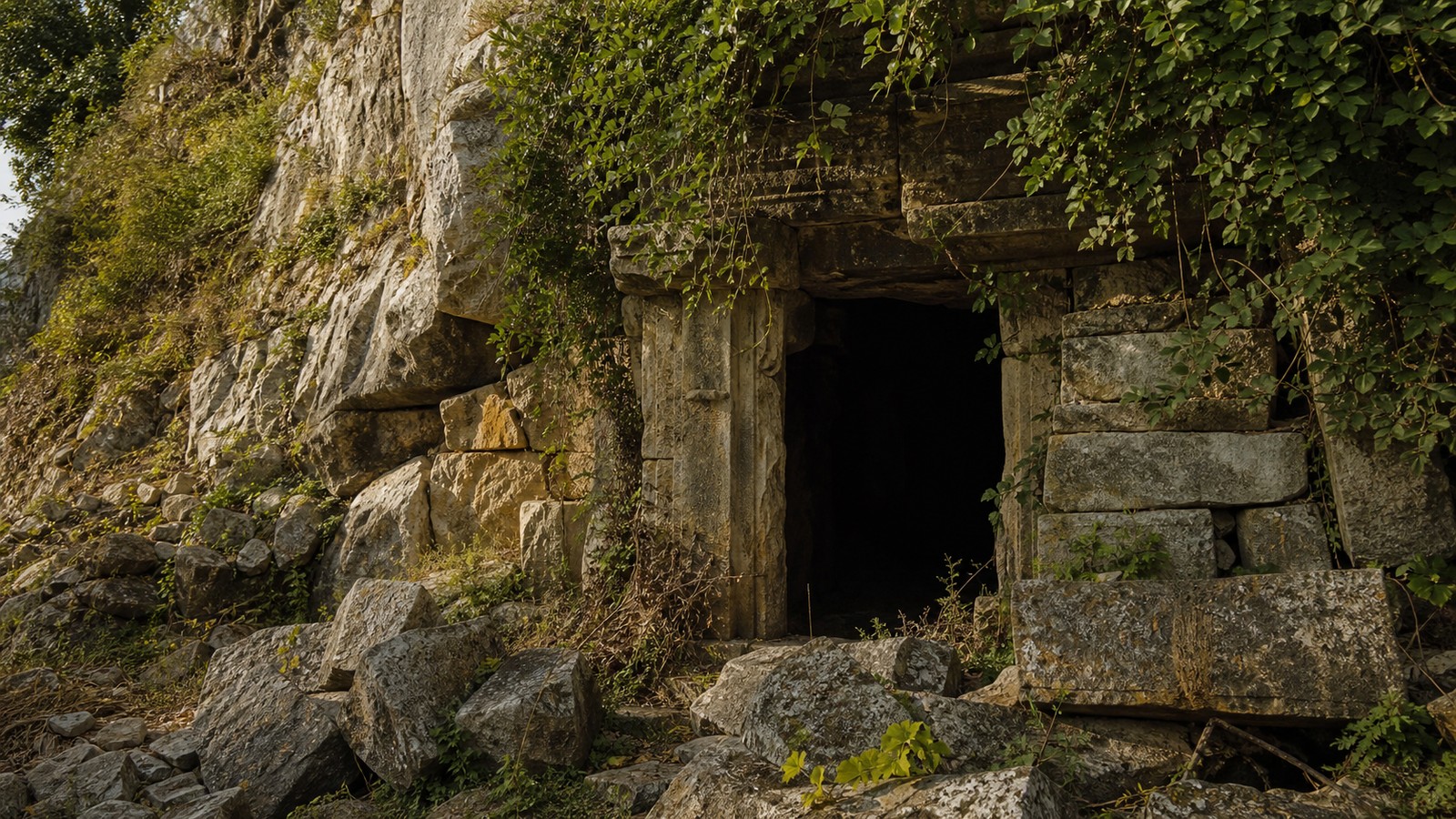
In ancient settings, secret or restricted doors often controlled access more than they created surprise. Temples, palaces, tombs, fortifications, and underground settlements used thresholds to separate public, private, sacred, defensive, and storage zones. The hidden door helped define who could pass, when, and with what knowledge.
Materials were heavy and local: stone, timber, earth, brick, and metal fittings. Concealment came from mass, shadow, alignment, and restricted knowledge. The mechanism might be simple, but the social meaning could be complex.
Medieval Buildings Added Defense and Hierarchy
Castles, monasteries, manor houses, and fortified towns expanded the role of hidden access. A concealed stair could support private movement, retreat, storage, or service. A narrow passage inside a thick wall could help residents move without using public routes. These doors were tied to hierarchy as much as danger.
Medieval and early fortified buildings remind us that secrecy often followed power. The people who controlled the plan controlled movement. Hidden doors allowed certain residents, servants, guards, or religious communities to move through layers that outsiders did not understand.
At the same time, many routes were practical rather than dramatic. A service stair, garderobe access, storage door, or chapel route might become legendary later because the social world that explained it disappeared.
Renaissance and Early Modern Houses Refined Discretion
As domestic architecture became more formal, hidden doors helped manage ceremony and household labor. Paneled rooms, libraries, staircases, closets, and service corridors allowed households to separate public display from private work. The door could be disguised within wainscoting, shelves, tapestries, or cabinetry.
Bookcase Doors Became Cultural Icons
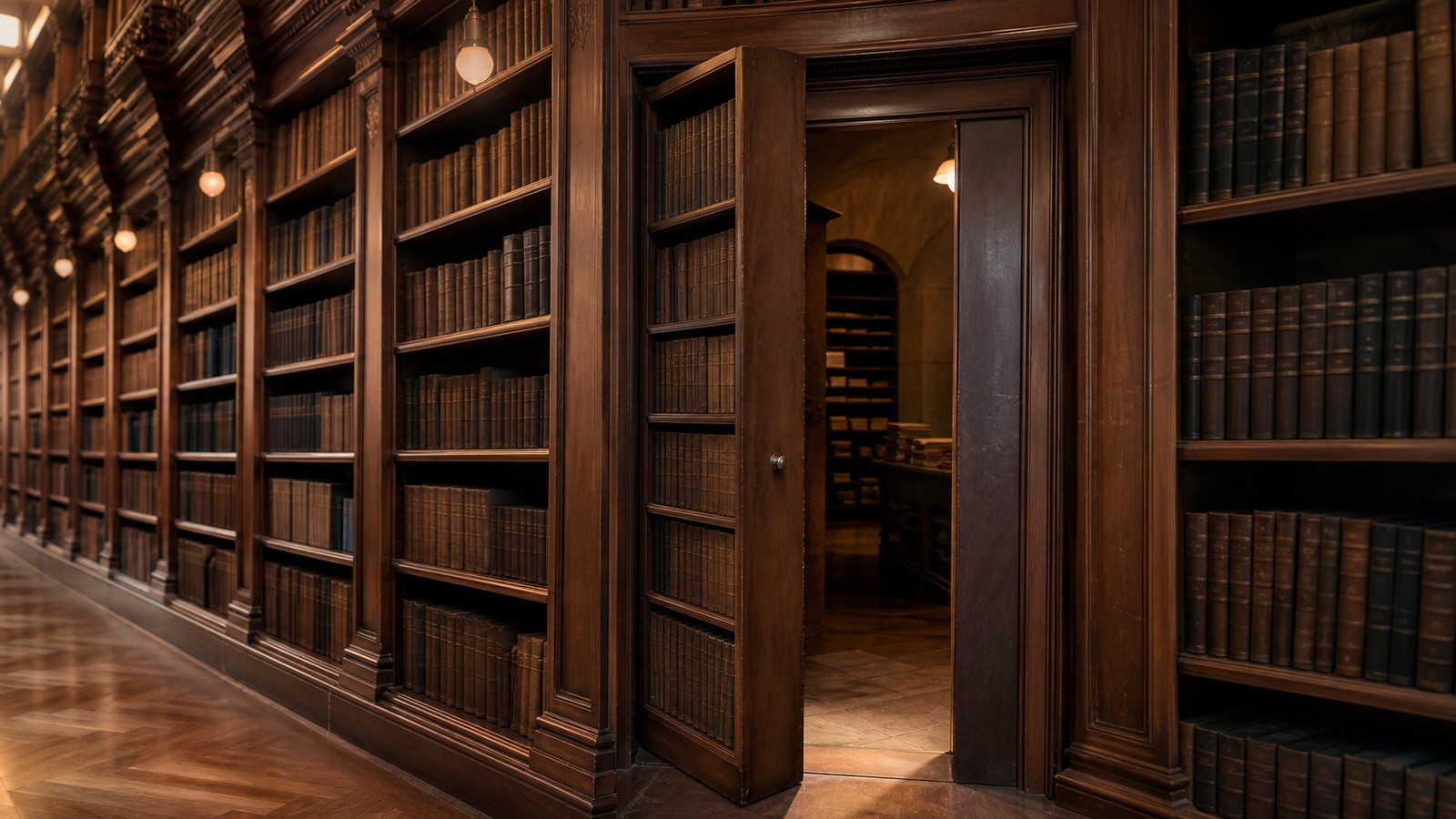
The bookcase door became one of the most enduring secret-door types because it combines practicality with imagination. Shelves break up the outline of the door, books provide visual cover, and the idea of hidden knowledge fits the library setting. It feels both useful and symbolic.
As carpentry improved, bookcase doors could become smoother, stronger, and more integrated. Better hinges, pivots, joinery, and latches allowed larger panels to move with less visible hardware. The hidden door became a craft problem as much as a secrecy problem.
Industrial Hardware Changed What Was Possible
The industrial era brought more standardized metal hardware, improved hinges, ball bearings, precision machining, and eventually specialty concealed-door systems. These developments made heavier, smoother, and more reliable hidden doors possible for homes, businesses, theaters, institutions, and secure rooms.
Standardization also changed access. A hidden door no longer required a master craftsperson inventing every part from scratch. More builders could use reliable pivots, concealed hinges, magnetic latches, touch latches, and later engineered kits.
This did not remove the need for design judgment. Better hardware can carry a door, but it cannot make the disguise believable by itself. The surrounding wall still matters.
Modernism Made Flush Doors Appealing
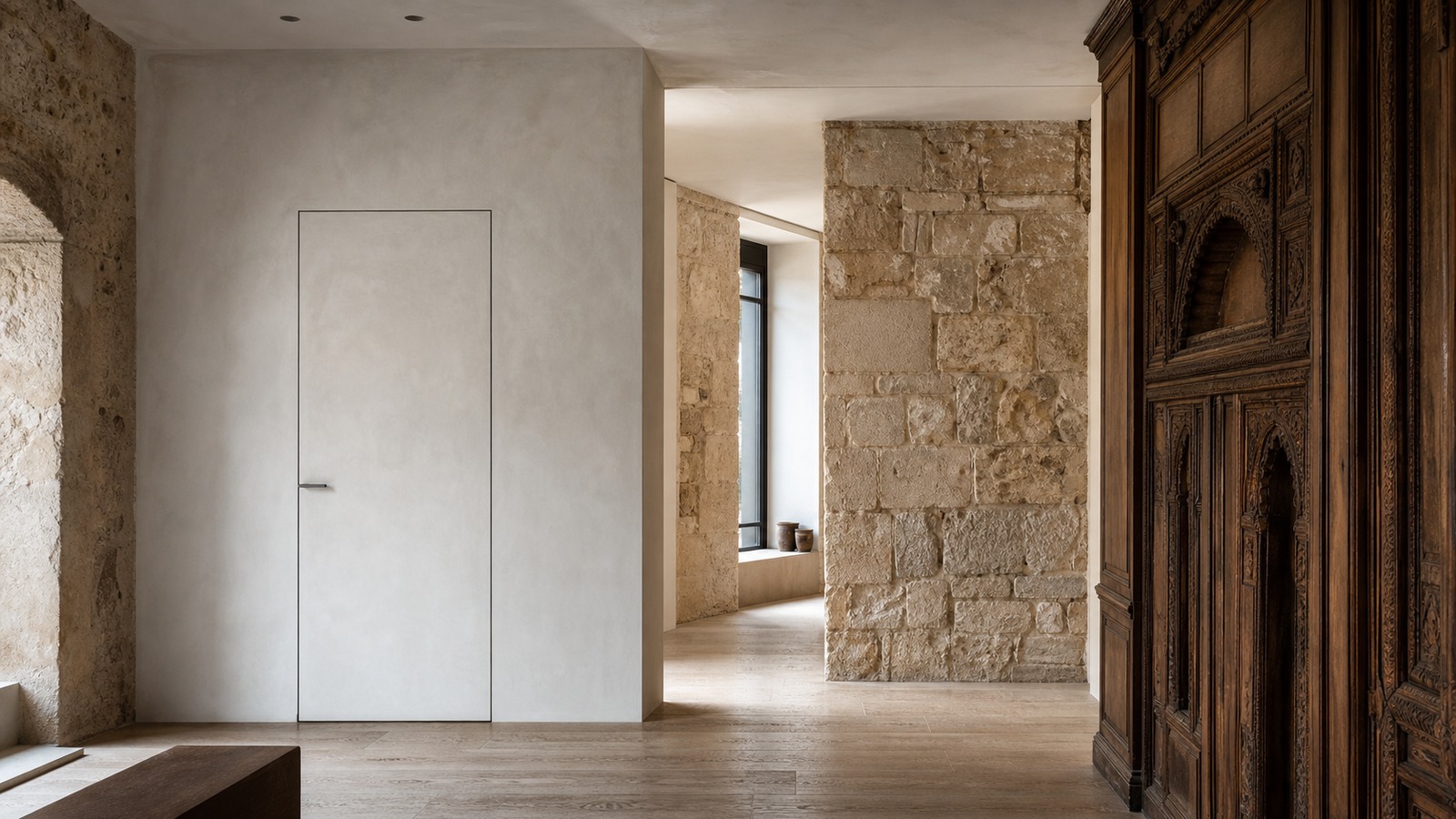
Modern architecture made the flush hidden door feel natural. Clean walls, minimal trim, flat panels, continuous surfaces, and shadow gaps all support concealed access. In a modern room, a secret door may not need shelves or props. It can hide by becoming a plane.
Security and Safe Rooms Added New Purposes
Modern hidden doors often serve security, privacy, and storage. Homeowners may hide safe rooms, wine cellars, offices, panic rooms, utility areas, gun safes, or private collections. Commercial spaces may conceal records rooms, staff routes, server access, or service areas.
These doors bring higher expectations. A hidden security door should be discreet, but also strong, reliable, code-aware, and easy for authorized people to use. Visual concealment cannot substitute for appropriate construction and planning.
Smart Access Changed the Interface
Electronic locks, biometric readers, hidden switches, RFID systems, smart-home controls, and monitored access have changed how hidden doors are opened. The door can now be concealed physically while the access method becomes digital. That can be convenient, but it introduces dependencies on power, maintenance, cybersecurity, and backup access.
Modern technology is useful only when it supports the room’s purpose. A smart hidden door that fails during an outage or confuses the people who need it is not smarter than a well-placed mechanical latch.
The best modern systems combine convenience with fallback. They acknowledge that secrecy is not only a reveal; it is a daily access habit.
Design Culture Made Secret Doors More Mainstream
Hidden doors are no longer limited to palaces, castles, or spy fiction. They appear in residential design, boutique hotels, offices, libraries, game rooms, media walls, mudrooms, and storage projects. Social media has also made dramatic reveals more visible.
That popularity is a mixed blessing. It brings better products and more creative ideas, but it can also encourage generic tricks. A hidden door should still belong to the room, solve a problem, and work well after the first video.
The Best Principles Have Not Changed
Across history, the strongest secret doors share a few principles. They fit the setting, serve a real purpose, move reliably, and control attention. The materials change. The hardware changes. The reasons shift from ritual to service, defense, privacy, entertainment, or security. But the doorway still has to make sense.
The Future Is Quieter Than It Looks
Future secret doors will likely use better hardware, lighter materials, integrated sensors, improved acoustic control, and smarter access systems. Yet the most successful designs may become quieter, not flashier. As hidden doors become more common, the novelty of the reveal will matter less than the quality of integration.
That is a healthy direction. A secret door should not rely entirely on surprise. It should improve the room every day by organizing storage, privacy, safety, or movement. The future of the secret door may be less about theatrical entrances and more about spaces that feel cleaner, calmer, and more adaptable because access has been designed with care.
The long history of secret doors suggests that concealment never disappears. It simply changes form. Every era finds something it wants to protect, stage, simplify, or keep private. The hidden doorway follows those needs, borrowing the materials and technology of its time while keeping the old pleasure of a wall that opens.
What the Timeline Teaches Designers
The history of secret doors is useful because it separates durable principles from period style. Stone passages, paneled domestic doors, bookcase reveals, industrial pivots, flush modern walls, and smart access systems can look completely different, yet they succeed or fail for related reasons. The door must fit its setting, answer a real need, and move in a way that feels trustworthy. When any one of those elements is missing, the design becomes a curiosity instead of a lasting architectural feature.
That lesson is easy to overlook because secret doors attract fantasy. A designer may begin with the image of a dramatic reveal and only later ask how the door will be used, maintained, secured, or explained by the room around it. History suggests the better order is reversed. Start with the pressure: privacy, storage, service, ritual, defense, hospitality, or visual calm. Then choose the form that makes that pressure easier to manage.
The best historical examples also show that hidden doors are never isolated objects. They belong to routes, habits, hierarchies, and stories. A palace panel is connected to ceremonial life, a monastery stair to restricted community movement, a service door to labor, and a modern flush panel to a desire for uncluttered rooms. Understanding that context keeps contemporary hidden doors from becoming shallow imitations of older romance.
Modern builders have more tools than any earlier era, but the extra tools do not remove judgment. A smart lock, concealed hinge, acoustic seal, or engineered slab is only successful when it supports the room’s purpose. The timeline from ancient thresholds to modern systems points toward one simple standard: a secret door should feel inevitable when closed and reasonable when opened. Everything else is decoration.
Old Motives Still Shape New Rooms
Even the newest hidden doors carry older motives inside them. A modern safe room echoes defensive retreat. A flush pantry door echoes household service and storage. A concealed office borrows from traditions of private study, while a hotel speakeasy door borrows from performance, exclusivity, and controlled discovery. The materials may be engineered and the hardware may be refined, but the emotional needs remain familiar.
This continuity is why secret doors remain so adaptable. They can be serious or playful, private or hospitable, protective or decorative. What changes is the balance of those motives in a particular building. A family home may need visual calm and storage. A boutique hotel may want surprise and atmosphere. A museum may need staff access that does not interrupt an exhibit. The same broad idea becomes different architecture when the purpose changes.
Understanding the evolution of secret doors therefore helps designers avoid imitation for its own sake. The point is not to recreate a castle passage, a library panel, or a spy-film reveal unless the room genuinely asks for it. The better goal is to inherit the discipline behind those examples: control attention, respect use, choose materials honestly, and let the hidden route belong to the life of the place.
The Oldest Question Remains Practical
Across eras, the practical question is simple: who should know where this opening is, and what should happen when they use it? Ancient builders answered through restricted thresholds and heavy materials. Later houses answered through paneling, service corridors, and craft. Modern projects answer with pivots, flush walls, specialty hardware, and access systems. The vocabulary changes, but the doorway still organizes knowledge.
That is why the evolution of secret doors is not only a design history. It is a history of how people manage privacy, authority, labor, safety, and delight through space. Every hidden entrance asks the building to keep one experience quiet while allowing another to function. When that exchange is honest and well made, the secret door feels less like a trick from the past and more like a living architectural tool. The most advanced version of the idea may not announce itself through technology at all. It may simply make a room cleaner, a route more discreet, a collection better protected, or a household easier to use. History gives the hidden door romance, but daily usefulness gives it staying power. That continuity is the real evolution: each generation changes the mechanism, yet the best doors still begin with a human need and end with a space that works better because access has been thoughtfully concealed. In that sense, the secret door keeps surviving because it is adaptable, not because it is mysterious. Its future will belong to that same practical imagination, guided by purpose before spectacle and patient craft.