Bookshelves Make Secrecy Feel Believable
Secret doors in famous libraries feel almost inevitable. Libraries already arrange knowledge by access: public reading rooms, staff offices, archives, rare-book vaults, closed stacks, conservation labs, study rooms, and storage areas. A bookcase door or discreet panel fits naturally into that world because shelves are already thresholds between what is visible and what is protected. The romance is obvious, but the practical logic is just as strong. A library hidden door can protect materials, guide staff movement, preserve quiet, and make a building’s deeper layers feel connected to the act of reading.
A: Libraries already use shelves, archives, closed stacks, and controlled access.
A: Yes, if hardware, load, alignment, and quiet operation are carefully designed.
A: They may use discreet doors, but preservation and security matter more than drama.
A: Books, old buildings, silence, and restricted rooms naturally encourage imagination.
A: Yes. Practical circulation often becomes romanticized over time.
A: Materials, concentration, staff workflow, storage, or a room's historic character.
A: Use shelf rhythm, strong hardware, quiet latches, and restrained detailing.
A: No. Restricted doors may protect collections, staff spaces, or safety systems.
A: A reveal that feels connected to reading, research, and preservation.
A: The door turns the idea of hidden knowledge into a physical experience.
The Library Is Built on Controlled Access
A library may look open, but it is full of boundaries. Some books are on public shelves, some are retrieved by staff, some require appointments, and some are stored in controlled climates. This layered access makes secret doors feel at home. The architecture is already teaching visitors that knowledge has rooms behind rooms.
That does not make libraries secretive in a negative sense. Boundaries protect materials, support research, preserve quiet, and help staff manage collections. A hidden door can be one of the architectural tools that keeps those boundaries elegant rather than harsh.
Bookcase Doors Work Because Shelves Already Move the Eye
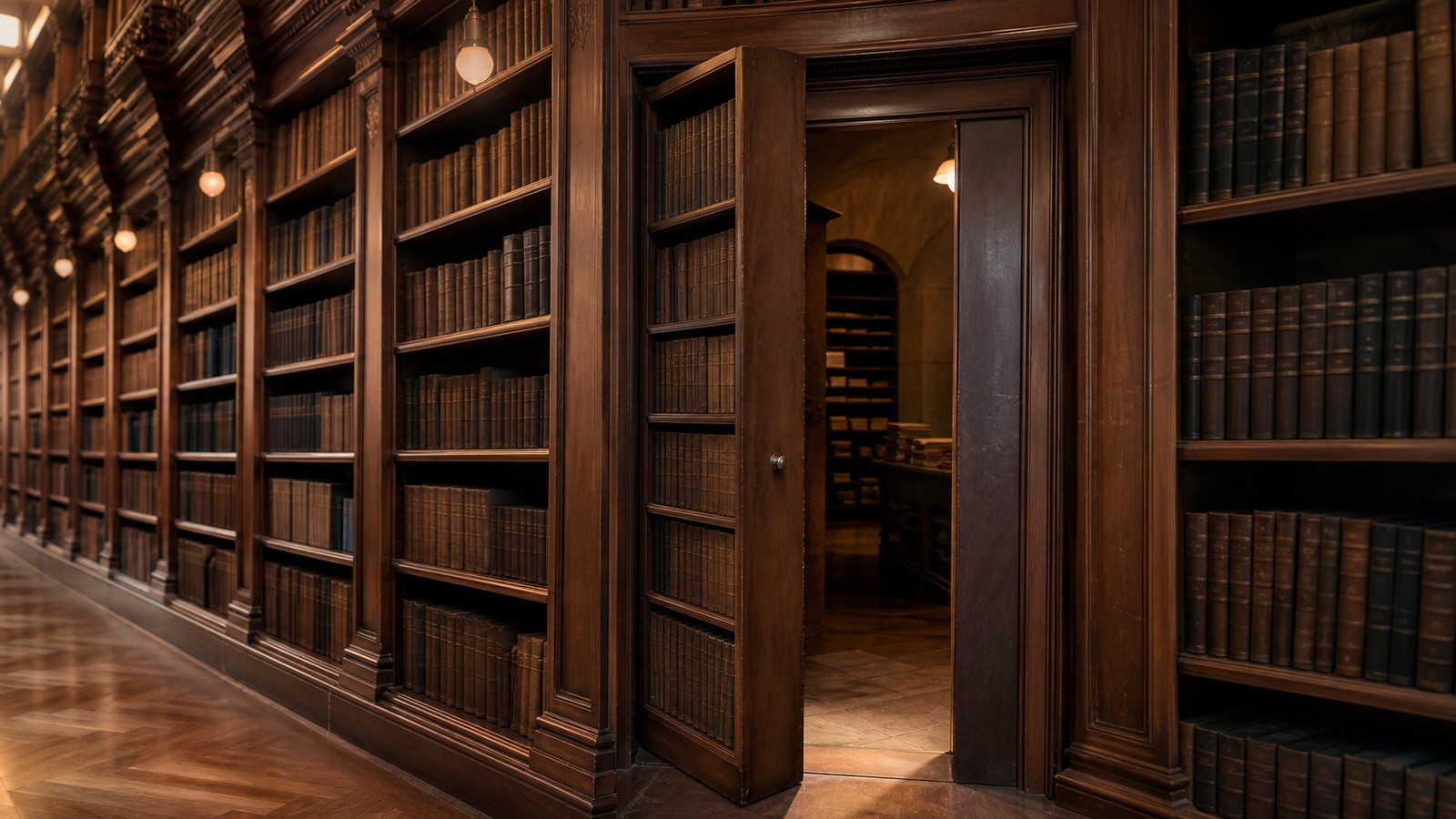
A wall of books is one of the best disguises for a door because it is visually busy in an acceptable way. Spines, shelves, shadows, vertical divisions, and varied depths break up the surface. The eye expects repetition, so a carefully aligned opening can disappear inside it.
Bookcase doors also carry cultural meaning. They suggest private studies, old houses, scholarly retreats, and stories where knowledge opens hidden paths. A library does not have to work hard to justify the fantasy. The setting already supplies it.
Still, a convincing bookcase door needs discipline. Shelves must align, loads must be controlled, hardware must carry weight, and the door should not sag under books. The romance depends on carpentry.
Libraries are unforgiving places for weak details because readers linger. A visitor may stand near a shelf for several minutes, scanning spines and noticing gaps. A secret door in a library must hold up under slow attention.
Rare-Book Rooms Need Quiet Protection
Many famous libraries protect rare books, manuscripts, maps, prints, letters, photographs, and archives in restricted rooms. Doors to these spaces may be discreet, secure, or integrated into surrounding architecture. The goal is not drama; it is preservation.
Staff Routes Keep Reading Rooms Calm
Large libraries require constant staff movement. Books are retrieved, returned, cataloged, repaired, digitized, and transported between public and private areas. Discreet doors let that work happen near reading rooms without turning the room into a corridor.
Quiet movement is part of library etiquette. A hidden or understated door can reduce interruption, especially in historic reading rooms where a modern service entrance would feel visually loud. The building protects concentration by keeping operations just out of sight.
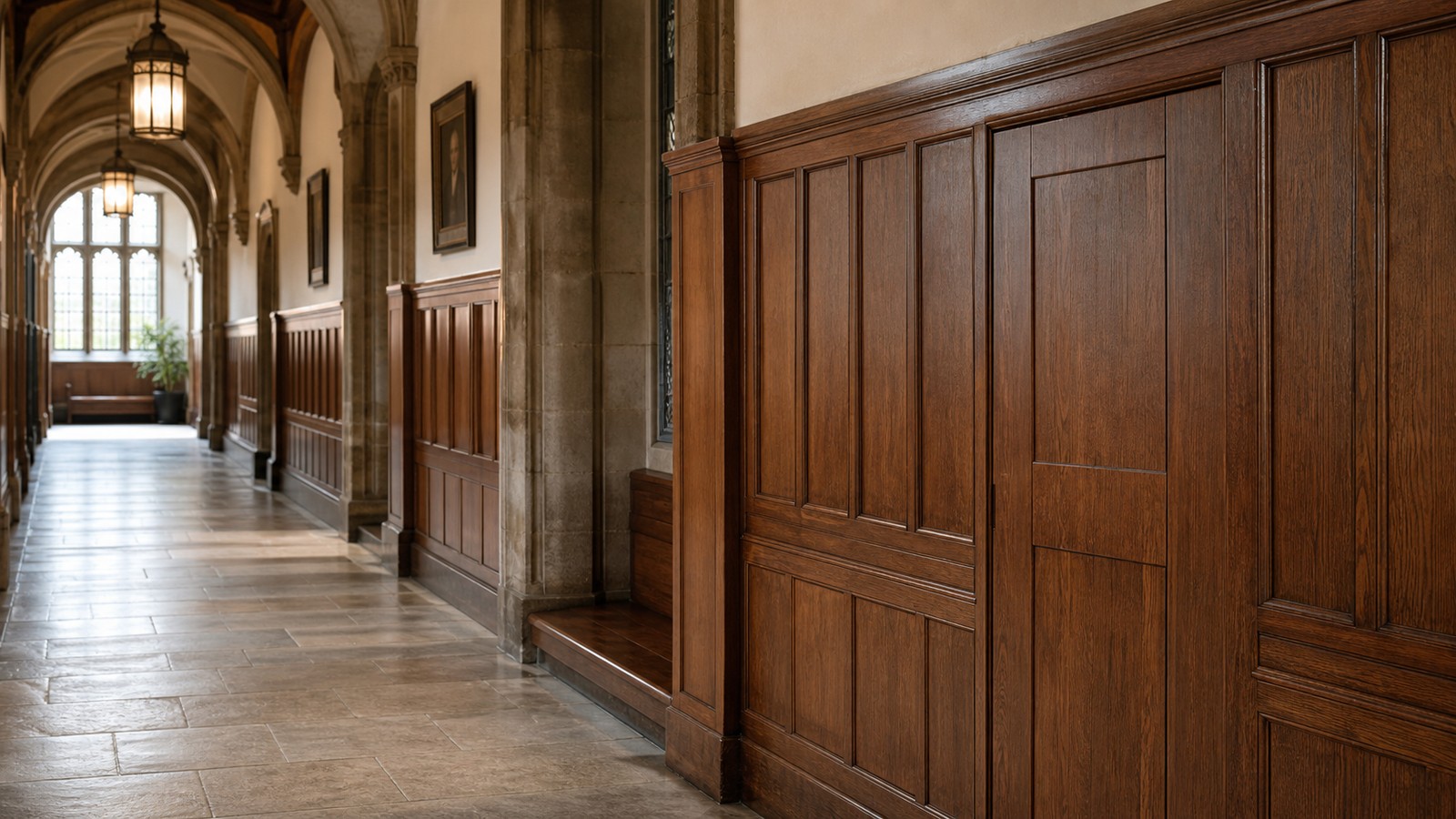
The best library doors are not necessarily invisible. They may be simply modest: paneled, flush, aligned with shelving, or tucked behind a desk area. Their restraint suits the room.
Archives Are Hidden for Good Reasons
Archives and special collections often require controlled temperature, humidity, light, handling, and security. A concealed door can be part of that controlled environment, but it must work with modern systems. Romantic secrecy cannot replace preservation standards.
Researchers may experience the boundary as part of the ritual of study. Requesting material, waiting for staff, entering a supervised room, or seeing a closed stack door can make the archive feel protected and serious. The hidden threshold reinforces care.
Famous Libraries Collect Legends
Any grand library with old shelves, closed rooms, and historic architecture will attract stories of hidden passages. Some are true, some are exaggerated, and some come from ordinary staff doors turned into legend. The library setting makes rumors easy to believe because books and secrecy already feel connected.
Designing Hidden Doors for Libraries
A library hidden door should begin with load and movement. Books are heavy, shelves are deep, and readers may lean, browse, or pull nearby volumes. Hardware must support the finished weight, and the door should be easy for authorized users to operate without damaging materials.
Acoustics matter too. A squeaking hinge or rattling latch feels especially intrusive in a quiet reading room. Soft-close movement, solid construction, and careful alignment can make the door feel library-appropriate.
Lighting can either hide or reveal the opening. Shelf shadows are helpful, but uneven lighting may expose a gap. The best design considers the door at reading height, from seated views, and under the room’s normal lamps.
Finally, the hidden access should not steal attention from the books. A library door can be delightful, but the room’s deeper purpose is reading, research, and preservation. The secret should serve that purpose.
Closed Stacks Make the Idea Plausible
Closed stacks are not secret in a theatrical sense, but they make hidden doors believable because they establish that some areas are reserved for staff or researchers. A discreet stack door can feel mysterious to visitors while remaining completely practical to librarians.
This is one reason library secret doors feel less forced than many other hidden features. The concept matches real library operations. Knowledge is public, but its care often happens behind controlled access.
Preservation Should Outrank Novelty
When a library adds or restores a hidden door, preservation should come first. Old shelves, historic paneling, fragile floors, and rare materials deserve protection. A dramatic reveal is not worth damaging the room’s fabric or risking collection stability.
The Secret Door Extends the Reading Experience
A secret door in a library is powerful because it turns reading into architecture. The same movement that opens a book seems to open the room. A shelf becomes a threshold, a wall becomes a question, and the library feels as if it has another chapter waiting beyond the visible one.
That feeling should be handled with restraint. The door does not need to perform loudly. It can simply suggest that knowledge has depth, that collections require care, and that quiet rooms may contain more routes than they show.
The lasting charm is not only fantasy. It is the fit between function and imagination. Libraries really do protect, classify, restrict, reveal, and preserve. A hidden door makes that invisible work tangible.
Why Libraries Make the Best Secret-Door Stories
Libraries combine silence, order, old materials, and curiosity. Those qualities make a hidden door feel natural rather than arbitrary. When a bookcase opens or a panel swings inward, the reveal seems to follow the building’s own logic. The library has always promised another layer of knowledge. The secret door simply gives that promise a hinge.
The Door Should Protect the Library’s Quiet Intelligence
A hidden door in a famous library should not feel like a carnival trick. It should feel like part of the building’s quiet intelligence. The room already asks visitors to move softly, handle books with care, respect restricted areas, and understand that knowledge sometimes requires procedure. A concealed shelf or panel belongs in that atmosphere when it supports those same values.
This is why library secret doors can be both practical and poetic. The practical side protects archives, supports staff routes, separates rare materials, and preserves the calm of reading rooms. The poetic side lets the architecture behave like a book: closed at first, then opened by someone who knows where to begin.
Good library design also resists overexposure. If every visitor is encouraged to treat shelves as puzzles, the room loses dignity and staff lose control. A hidden door can be interpreted, demonstrated, or preserved without turning the whole library into a scavenger hunt. The secret should deepen respect for the place.
That restraint is especially important in famous libraries, where the building may already be an attraction. Tourists, researchers, students, and staff use the same architecture in different ways. Hidden access has to support all of those experiences without making the room feel unstable or theatrical.
The best library secret door therefore has a double life. To authorized users, it is a reliable threshold. To visitors, it is a hint that the visible shelves are only part of the institution’s work. That hint is enough. It keeps the library mysterious without weakening its purpose.
A Hidden Door Should Make Reading Feel Deeper
The strongest library secret doors do not distract from reading; they extend the mood of reading into the building itself. A shelf that opens suggests that knowledge has depth, sequence, and guarded rooms. The architecture begins to behave like the collection: ordered on the surface, richer when opened carefully.
That metaphor works because libraries are not just storage buildings. They are places where people negotiate access, attention, silence, memory, and trust. A hidden door can make those invisible negotiations visible for a moment. It shows that the institution is full of thresholds, some physical and some intellectual.
When handled with restraint, the secret door becomes one of the library’s best teaching tools. It reminds visitors that preservation and discovery are partners. Some things are hidden so they can survive long enough to be read, studied, and shared well.
The Library Door Is a Promise of More
A secret door in a famous library keeps working on the imagination because it promises that the visible collection is not the end of the story. Beyond the public shelf may be staff labor, rare materials, conservation tools, catalogs, archives, or simply another quiet room. That promise fits the library’s deepest identity. Libraries teach that knowledge is entered gradually, with guidance, patience, and care. A hidden door gives that idea a physical shape, which is why the image of a shelf swinging open remains so enduring. The door also honors the labor behind access. Readers encounter calm rooms and ordered shelves, but librarians protect that calm through cataloging, conservation, retrieval, and rules that keep materials available for the future. A concealed threshold can make that hidden labor feel architectural, giving the institution’s quiet work a memorable edge. It also gives visitors a way to imagine the collection as larger than the room they can see. That imagined depth is part of why famous libraries remain emotionally powerful long after the first view.
The Best Library Secrets Stay Quiet
A library hidden door does not need to announce itself to be meaningful. Its restraint suits the room. The more quietly it belongs to the shelves, panels, and reading rituals around it, the more convincing it becomes when someone finally understands what it is.
That quietness protects the library from becoming a theme set. The door can delight without weakening the seriousness of study. It can suggest hidden knowledge while still honoring cataloging, preservation, staff labor, and the calm attention that libraries are built to protect. The best version feels like a library first and a secret second, which is exactly why the reveal has such staying power. It turns curiosity back toward the books instead of away from them, preserving the room’s deeper purpose. The mystery serves reading, not the reverse, and that restraint is the magic of it all.