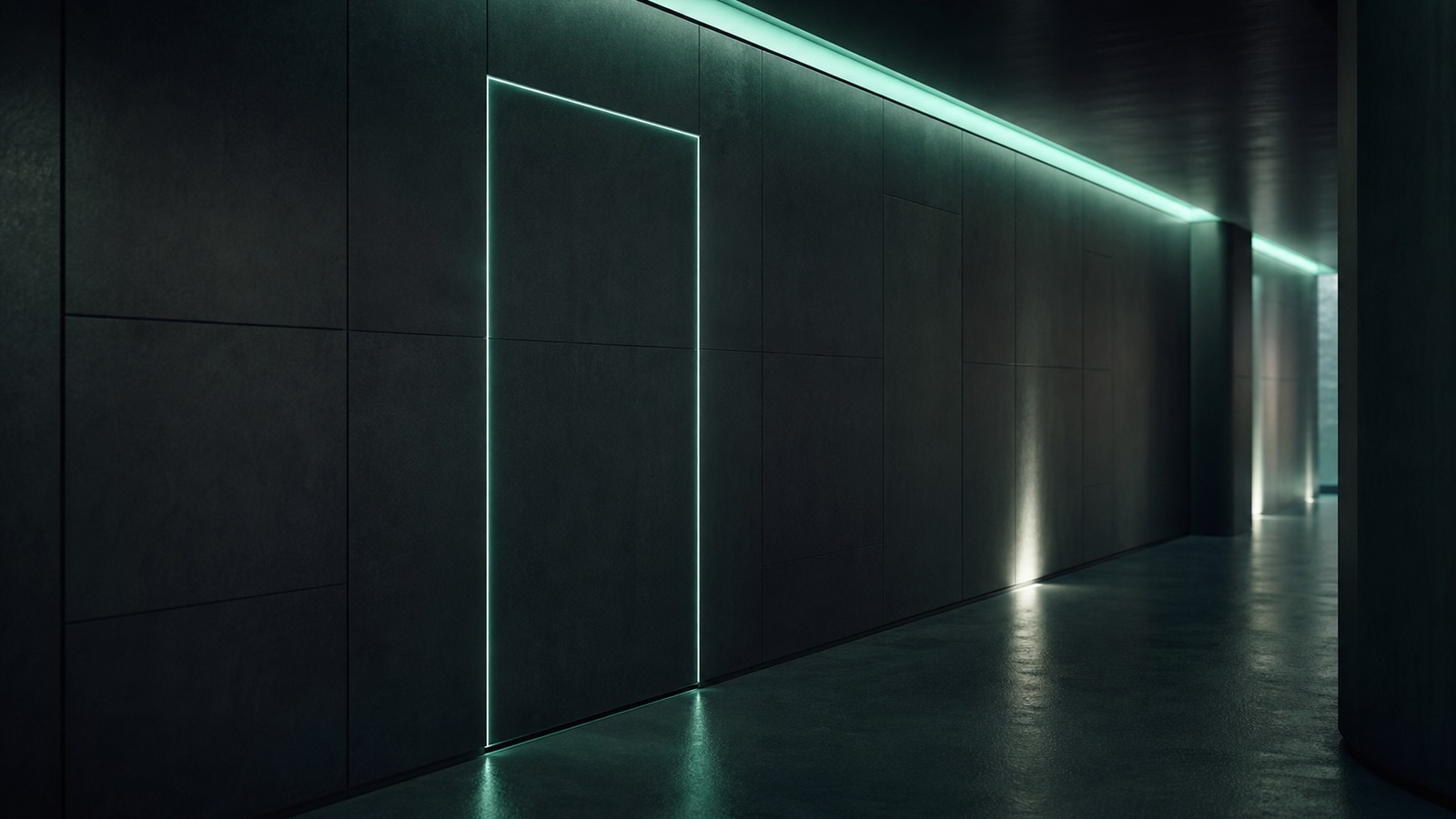
Why Secret Doors Matter in Science Fiction
Secret doors have always held a special place in science fiction because they combine mystery, technology, and imagination in a single dramatic device. A hidden entrance is never just a way from one room to another. In science fiction, it often signals that the world is deeper than it first appeared, that power is concealed behind polished surfaces, and that knowledge is reserved for those who know where to look. From spaceship corridors and imperial fortresses to hidden rebel bases and secret laboratories, concealed passageways help define the emotional texture of futuristic storytelling.
A: They combine mystery, technology, and suspense while making futuristic worlds feel layered and alive.
A: They often symbolize hidden knowledge, restricted power, covert identity, or access to forbidden truth.
A: They appear in both, but space opera tends to use them more dramatically and mythically.
A: They look sleek, efficient, and technologically advanced while keeping walls visually seamless.
A: No—they also show up in ruins, palaces, labs, bunkers, temples, and hidden urban spaces.
A: Integrated design, logical access systems, and technology that matches the world’s overall aesthetic.
A: Yes—they serve the same storytelling role by hiding access, cargo, tools, or information.
A: Because they turn familiar space into mystery and promise that the world is deeper than it seems.
A: Absolutely—they often reveal who is trusted, who is excluded, and what a character is hiding.
A: They unite visual spectacle with narrative surprise, making them endlessly adaptable across generations.
The Appeal of the Hidden Threshold
Part of the excitement of secret doors comes from the idea of crossing a threshold into a different reality. A wall slides open, a panel lifts silently, or a disguised hatch reveals a command center, escape tunnel, or forbidden archive. That moment transforms an ordinary environment into a layered world full of secrets. In science fiction, where advanced architecture and invisible technology are already part of the visual language, hidden doors feel natural. They embody the genre’s fascination with systems operating beneath the surface, from starships hiding engineering bays to galactic empires concealing their most dangerous plans.
Secret Doors as Storytelling Engines
Writers and filmmakers use secret doors because they instantly create momentum. A hidden entrance can launch a chase scene, reveal a betrayal, uncover ancient knowledge, or show how a character has prepared for danger. In science fiction, these moments often do more than surprise the audience. They reveal the structure of power. Who knows where the hidden passage is? Who built it? Who is excluded from it? A concealed door is often a map of hierarchy, indicating who has access to truth, security, or control.
Star Trek and the Architecture of Discovery
Few franchises are more closely associated with exploration than Star Trek, and that makes its use of secret spaces especially fascinating. Star Trek is full of visible corridors, open bridges, and transparent mission structures, but it also thrives on the unexpected compartment, concealed mechanism, or hidden chamber. Whether aboard a Federation starship, a Romulan vessel, a Borg cube, or an alien outpost, hidden spaces often represent the unknown within the known. Even on ships that appear highly ordered, there is always the possibility that something exists just beyond the wall panels.
Hidden Spaces on Starships
On a starship, every inch of space is supposedly planned and accounted for, which makes the discovery of a hidden section especially powerful. Secret compartments on ships can serve tactical, diplomatic, or ethical purposes. They might hide contraband, shelter refugees, conceal surveillance equipment, or store dangerous experiments. In Star Trek, the clean geometry of future design often makes the appearance of a concealed panel feel even more dramatic. A smooth metallic wall opening without warning turns familiar order into sudden uncertainty.
Secret Doors and Moral Complexity in Star Trek
What makes secret doors compelling in Star Trek is that they often raise questions about ideals. The Federation presents itself as open, rational, and principled, so concealed spaces can suggest compromise, deception, or emergency necessity. A hidden lab or covert compartment may imply that even enlightened societies keep secrets when survival is at stake. That tension is central to science fiction. The hidden door becomes a symbol of the gap between what a civilization says about itself and what it actually does when pressured by war, fear, or ambition.
Alien Worlds and Concealed Knowledge
Beyond starships, Star Trek frequently uses secret doors in ruins, temples, research stations, and alien structures. These are not merely architectural tricks. They are often gateways to cultural memory or suppressed truth. A concealed chamber on an ancient planet can contain technology too powerful to use, records of a vanished civilization, or the key to understanding a conflict. In these moments, hidden doors function like archaeological reveals. They turn physical exploration into intellectual discovery and give science fiction its unique blend of wonder and suspense.
Star Wars and the Drama of the Hidden Passage
If Star Trek often treats secret doors as gateways to knowledge and ethical ambiguity, Star Wars treats them as instruments of myth, rebellion, and survival. The Star Wars universe is filled with secret entrances, hidden bunkers, disguised compartments, and masked routes through castles, ships, and desert dwellings. These hidden spaces are part of the saga’s larger visual language, where every corridor can become an ambush site and every fortress may contain an unseen path. Secret doors in Star Wars do not simply hide rooms. They hide destinies.
Secret Doors and the Rebel Spirit
The rebellious heart of Star Wars makes concealed architecture especially meaningful. Hidden doors are part of how underdogs survive against larger, more powerful forces. Rebel bases, smuggler compartments, and covert tunnels express ingenuity in the face of oppression. When a hidden passage opens in a moment of crisis, it reinforces one of the saga’s most enduring themes: power does not always belong to the side with the biggest ships or strongest armies. Sometimes it belongs to those who know the hidden routes, the quiet exits, and the secret mechanisms others overlook.
The Empire, Control, and Concealed Access
Secret doors in Star Wars are not only tools of resistance. They are also tools of control. Imperial and elite spaces often contain hidden chambers, restricted passages, and private access points that reflect hierarchy. In a palace, fortress, or command center, a concealed door can separate rulers from everyone else. It can lead to interrogation rooms, strategy chambers, escape tunnels, or vaults of forbidden information. These hidden routes reinforce the idea that authoritarian systems thrive on restricted access. In this way, the secret door becomes political architecture.
Smugglers, Rogues, and Concealed Compartments
Science fiction secret doors are rarely limited to walls. In Star Wars especially, hidden compartments in ships, cargo holds, and speeders are part of the genre’s broader love affair with concealed mechanisms. Smugglers survive because they can hide things in plain sight. A false floor, sliding panel, or disguised maintenance hatch is a portable secret door, and it reflects the improvisational nature of frontier science fiction. These concealed spaces suggest a world where rules are strict, surveillance is constant, and survival depends on finding literal and metaphorical gaps in the system.
Technology Makes Secret Doors Feel Plausible
One reason secret doors work so well in science fiction is that advanced technology makes them feel believable. In fantasy, a hidden door might rely on magic or ancient craftsmanship. In science fiction, it can rely on biometric locks, pressure sensors, magnetic rails, holographic camouflage, voiceprint recognition, seamless materials, or responsive architecture. The genre makes concealment look elegant. A smooth wall can split open with silent precision. A control panel can vanish until touched. A mechanical reveal can feel both futuristic and entirely practical.
The Beauty of Seamless Design
Science fiction loves surfaces that appear pure, minimal, and intelligent. That aesthetic makes secret doors especially satisfying. In futuristic worlds, concealment is often integrated into the design rather than tacked onto it. A hidden door may disappear into a starship wall, a geometric hallway, a palace façade, or an industrial bulkhead. This seamlessness turns architecture into a performance. The audience enjoys the reveal because it breaks the illusion of total control and exposes the machinery beneath. A perfect wall is never just a wall in science fiction.
Secret Doors as Symbols of Identity
Hidden entrances also resonate because they reflect how science fiction characters live. Many of the genre’s heroes and villains lead double lives. They conceal affiliations, loyalties, histories, and intentions. The secret door mirrors that inward concealment. A rebel who knows the hidden tunnel, a captain who discovers a sealed section, or a ruler who retreats behind a disguised panel all embody the same idea: identity is layered, and truth is often hidden behind appearances. In that sense, concealed architecture is not just scenic design. It is character psychology turned into space.
The Thrill of Controlled Revelation
Science fiction depends on revelation. Great stories in the genre do not explain everything immediately. They withhold, hint, and then unveil. Secret doors fit this rhythm perfectly. They allow the world to reveal itself in stages. A corridor suggests one reality. A hidden panel opens, and the audience sees a second. Then a locked chamber reveals a third, deeper level of meaning. This layered structure is one reason secret doors remain so powerful across decades of science fiction storytelling. They make space itself participate in suspense.
Beyond Star Trek and Star Wars
Although Star Trek and Star Wars are two of the most recognizable examples, secret doors appear throughout science fiction in many forms. Dystopian stories use hidden entrances for resistance cells and surveillance rooms. Cyberpunk settings hide server vaults, black-market labs, and encoded passageways behind neon facades. Space operas use concealed hangars, royal escape routes, and hidden vaults of ancient technology. Even quieter science fiction stories rely on hidden rooms to create tension between public systems and private truths. The concealed doorway remains one of the genre’s most versatile visual and narrative tools.
Why Audiences Never Tire of Them
Audiences continue to love secret doors because they promise that reality is richer than it seems. Science fiction, at its core, asks viewers and readers to imagine unseen systems shaping the visible world. Secret doors make that idea tangible. They offer a literal entry point into mystery. They suggest that the universe is layered, that technology can create wonder, and that answers may be waiting just behind the surface. That emotional promise is timeless, whether the setting is a Federation vessel, a desert outpost, or a moon-sized battle station.
Secret Doors and the Future of Sci-Fi Design
As science fiction continues to evolve, secret doors remain visually fresh because designers keep reinventing them. New generations of filmmakers and artists imagine concealed entrances made from reactive glass, shifting metals, programmable walls, and holographic skins. Yet the core appeal remains unchanged. A hidden door is exciting because it combines control and surprise, structure and mystery, engineering and imagination. It gives physical form to one of science fiction’s central ideas: the future is never fully visible at first glance.
The Enduring Legacy of the Hidden Portal
From Star Trek’s ordered starships to Star Wars’ mythic battlegrounds, secret doors have become one of science fiction’s most memorable recurring motifs. They shape suspense, reveal character, deepen worldbuilding, and embody the genre’s fascination with what lies beneath polished surfaces. Whether they lead to forbidden labs, rebel tunnels, concealed command rooms, or forgotten relic chambers, they remind us that science fiction is not just about the worlds we can see. It is about the hidden systems, buried truths, and secret possibilities waiting to be discovered when the wall finally slides open.