The Hideout Door Protects the Double Life
Concealed doorways in superhero hideouts are compelling because superhero stories often depend on double identity. There is the ordinary person and the heroic role, the public room and the secret base, the familiar house and the extraordinary work hidden nearby. A concealed doorway makes that split architectural. It lets a bedroom, garage, mansion, apartment, cave, lab, or workshop become the threshold between daily life and mission life. The door is not only a cool feature. It protects identity, creates anticipation, and makes the hidden life feel spatially real.
A: They protect identity and separate ordinary life from mission life.
A: It turns a familiar room into the threshold of a hidden world.
A: Yes. They must handle trusted members, equipment, emergencies, and visitors.
A: Yes. If enemies find the route, the hero's private world is exposed.
A: A small entrance to a large base makes the hidden life feel bigger.
A: Dual-use rooms, clever storage, lighting, and purposeful concealment.
A: Only when reliable, safe, and genuinely useful.
A: Crossing the threshold marks movement between public and private selves.
A: A disguise that ignores the room, access needs, or safety.
A: A concealed doorway should protect purpose, not just create spectacle.
Secret Identity Needs a Threshold
Superhero stories often ask one character to live two lives. A concealed doorway helps separate those lives without requiring constant explanation. The ordinary room remains ordinary to visitors, neighbors, coworkers, or family members who are not supposed to know the truth. Behind the hidden threshold, another role begins.
This separation makes the hero’s secret feel tangible. The character does not only change clothes or attitude; they cross into a space built for the hidden side of life.
That is why hideout entrances are so satisfying. They turn identity into architecture.
Homes Become More Than Homes
Many superhero hideouts begin with domestic disguise. A closet, garage, library, basement, barn, study, elevator, or workbench may conceal the route to equipment, vehicles, suits, computers, or training space. The home has a second function.
This makes the ordinary setting more interesting. Every shelf, stair, cabinet, or wall may be part of the hidden system. The audience learns to read domestic space with suspicion and delight.
Team Bases Need Controlled Access
Team hideouts have a different problem. They need to welcome trusted members while keeping enemies, reporters, civilians, or random visitors out. A concealed doorway can become the first layer of access control, even when the story later adds technology, passwords, or alarms.
The Entrance Creates the Transformation Beat
A superhero entering the hideout often changes the energy of the story. The concealed doorway opens, and the character moves from ordinary life into preparation, planning, training, or recovery. The threshold becomes a transformation beat.
Films, comics, and animation use that beat visually. A dull room may give way to glowing equipment. A small door may open to a huge base. A quiet hallway may lead to a vehicle bay. The reveal says that the hero’s life is larger than the public sees.
That contrast is central to the fantasy. The hidden doorway makes scale feel surprising.
Hideouts Need Practical Logic Too
Even a fantastical hideout benefits from practical logic. How does equipment enter? How is noise contained? Where does power come from? How do vehicles leave? Who maintains the space? A concealed doorway that ignores every practical question can feel less satisfying, even in a comic-book world.
The best hideout entrances answer just enough of those questions to feel grounded. A garage entrance may explain vehicles. A service elevator may explain heavy equipment. A cave route may explain isolation. Story worlds do not need building permits, but they do need internal logic.
That logic makes the fantasy stronger. The audience can believe in the hidden base because the entrance belongs to the life around it.
Good concealment serves the world, not just the reveal.
Villains Can Find the Door Too
A concealed hideout doorway also creates vulnerability. If an enemy discovers the threshold, the secret life is exposed. This risk gives the door narrative tension. It is both protection and potential weakness.
Technology Signals Trust and Control
Superhero hideouts often use advanced access systems: scans, codes, hidden controls, voice recognition, or specialized devices. These elements signal trust and control. Only the right people can enter the hidden layer.
In real homes, access technology should be handled with restraint. Smart locks, sensors, and automation can be useful, but they need backup plans and simple operation. A superhero hideout can fail dramatically for plot; a home office door should not.
The practical lesson is to match security to the actual need. Not every concealed doorway requires a biometric ritual.
Concealed Doorways Create Scale Surprise
Superhero stories love the contrast between small entrance and vast base. A shelf opens to a laboratory. A garage wall reveals a tunnel. A simple elevator descends into a command center. The doorway makes the hidden world feel larger than the visible building should allow.
This scale surprise is one of the genre’s pleasures. It suggests resources, preparation, and imagination beyond ordinary limits.
Identity Protection Can Become Isolation
Superhero hideouts often carry emotional tension. A concealed doorway protects identity, but it can also symbolize secrecy from loved ones, isolation, and the burden of hidden responsibility. The door is thrilling, but it may also mark a life divided.
That symbolic depth keeps hideout entrances from being only toys. They show the cost of keeping two worlds separate.
When a character finally invites someone through the doorway, the moment often matters because it represents trust. The hidden base becomes a shared truth.
The Best Hideout Door Matches the Hero
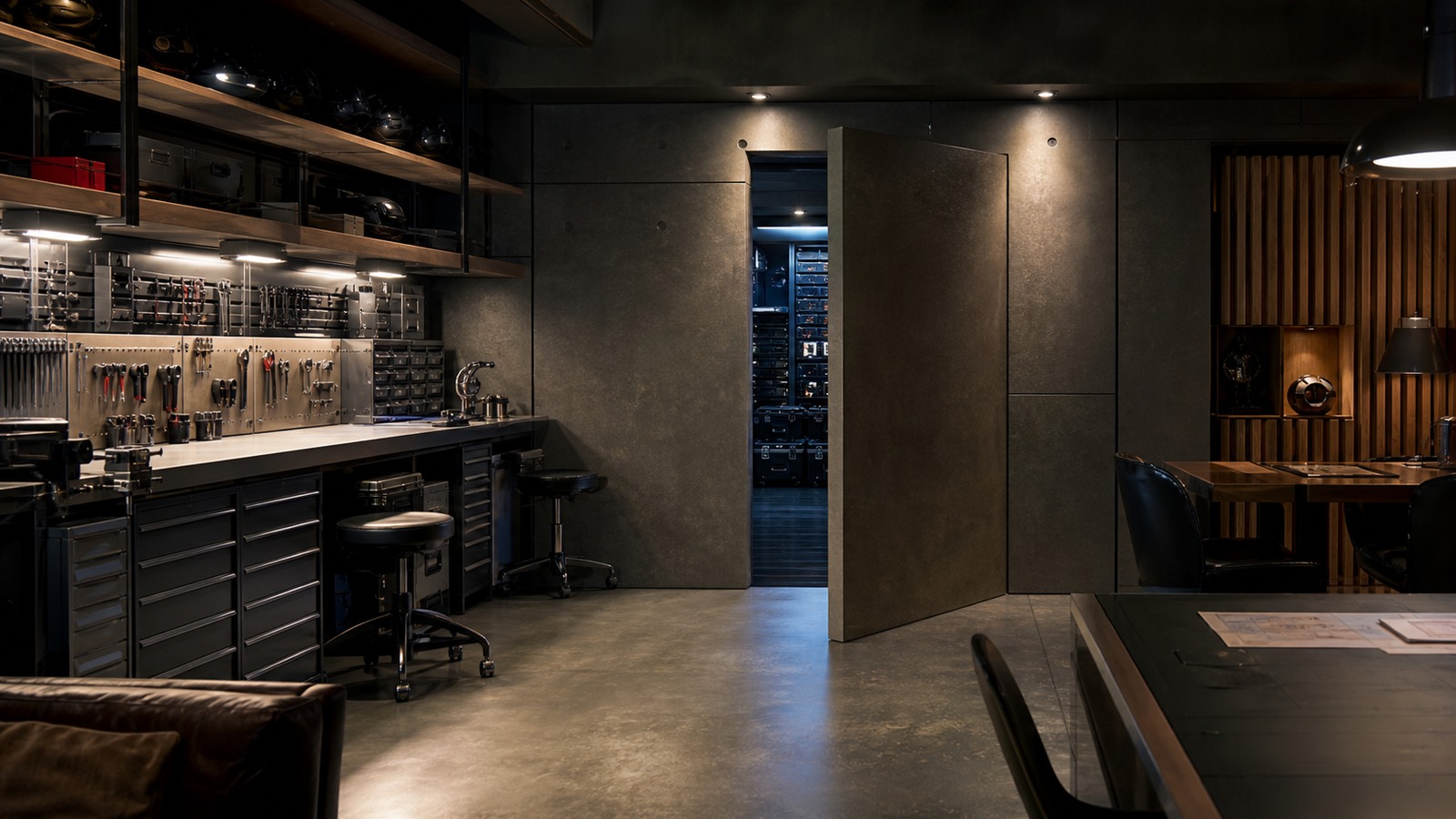
A hero’s concealed doorway should reflect the character. A tech-focused hero may use sleek panels and controlled lighting. A street-level hero may use rough service doors and improvised routes. A wealthy hero may hide access behind refined architecture. A magical hero may use thresholds that feel symbolic rather than mechanical.
Real Homes Can Borrow the Dual-Use Idea
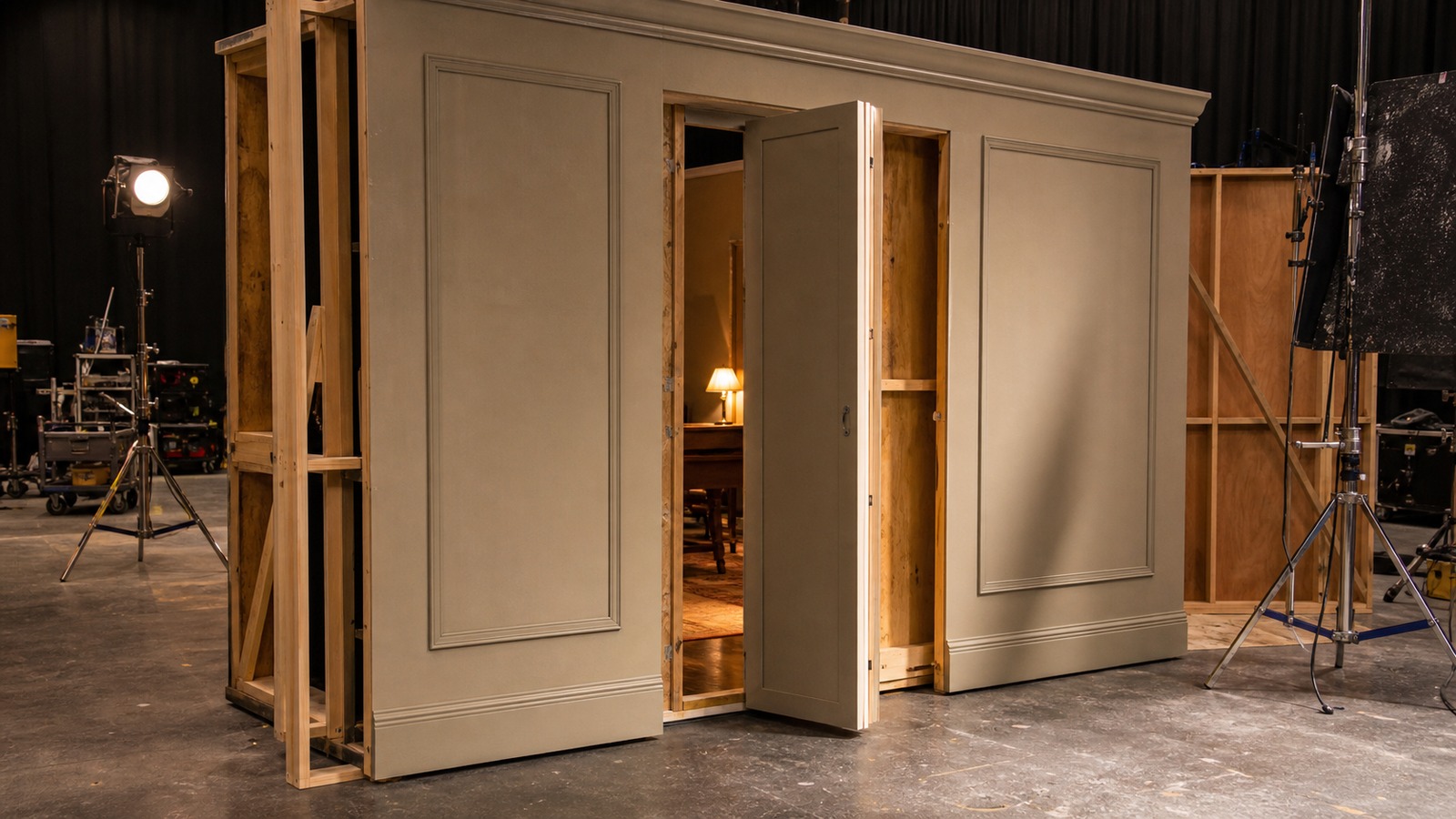
Most people do not need superhero hideouts, but they do understand dual-use spaces. A home office behind shelves, a gym behind a panel, a hobby room behind a cabinet wall, or a storage room behind a flush door can help daily life feel calmer while preserving a sense of discovery.
The key is to define the hidden room’s purpose clearly. Superhero stories hide mission life; real homes may hide focus, play, collections, equipment, or clutter. Concealment should support that purpose.
Hideout Entrances Need Responsible Boundaries
Superhero stories sometimes blur private security, surveillance, and secrecy. In real design, hidden doors should respect household safety, legal requirements, guest clarity, and emergency access. A concealed doorway can be playful without becoming confusing or unsafe.
That boundary matters because fantasy can make hidden access seem simple. Real people need to know how to exit, how to get help, and how to maintain the door.
A well-designed concealed doorway can still feel exciting while remaining understandable to the people who depend on it.
The Hideout Door Makes Ordinary Life Larger
Concealed doorways in superhero hideouts endure because they make ordinary life larger. A normal room is not only a room. It is the cover for another identity, another responsibility, another scale of action. The door gives that hidden life a precise place to begin.
That is the fantasy at its most appealing. Anyone might have a second layer. Any familiar wall might open. The superhero hideout doorway takes the wish for a private, purposeful, extraordinary space and turns it into architecture.
Every Reveal Is Also an Invitation
When a superhero hideout opens, the audience is invited into trust. The concealed doorway says that the story is ready to show what has been protected. Equipment, plans, suits, vehicles, memories, failures, and hopes may all live beyond the threshold.
That invitation is why these doors remain memorable even when the mechanics are impossible. They let viewers cross from public identity into private purpose. In a genre built on hidden strength, the concealed doorway is the perfect architectural symbol: a quiet surface with power behind it.
The invitation can be intimate or spectacular. A single friend stepping through a hidden closet entrance can matter as much as a team entering a vast command center. What matters is that the threshold marks trust. The hidden room stops being only a secret and becomes a shared responsibility.
The Hideout Door Makes Responsibility Spatial
Superhero stories often deal with responsibility that cannot fit comfortably into ordinary life. The concealed doorway gives that pressure a location. On one side are school, work, family, neighbors, and routines. On the other side are plans, tools, suits, injuries, choices, and consequences. The doorway is where those two lives meet.
That is why hideout entrances can feel emotional even when they are surrounded by gadgets. They represent the cost of keeping people safe, the strain of secrecy, and the desire for a place where the hidden self can be understood. A concealed doorway may look like a cool reveal, but it also carries the loneliness and discipline of a divided life.
Real homes can borrow this idea gently. A concealed studio, gym, reading room, or workshop can give a person a threshold into focused purpose without pretending to be a comic-book base. The door can help separate roles, protect concentration, and make a private pursuit feel valued. The superhero fantasy is oversized, but the human need for a purposeful hidden room is easy to recognize.
The doorway also creates a return path. The hero must come back through it, leave the mission room, and re-enter ordinary life with whatever happened on the other side. That return is part of the emotional architecture. A hidden threshold is not only about escape from daily life; it is about carrying responsibility back into it.
The Strongest Hideouts Feel Personally Specific
A memorable superhero hideout is not just a room full of impressive equipment. It reflects the person or team who uses it. The concealed doorway should do the same. A scientific hero may have an entrance that feels precise and experimental. A neighborhood protector may use a humble service route. A mythic hero may cross a threshold that feels symbolic rather than mechanical. The doorway prepares the audience for the kind of hidden life beyond it.
This specificity is valuable for real design too. A concealed hobby room, office, studio, or retreat should reflect the person who uses it, not only the trend that inspired it. The door can be quiet, playful, rustic, polished, or technical, but it should feel connected to the room’s purpose. When it does, the reveal becomes more than a surprise. It becomes a small declaration that this hidden space belongs to someone’s real inner life.
The Best Hideout Threshold Holds Both Worlds
A superhero hideout doorway is memorable because it has to hold both worlds at once. It must protect the ordinary cover and still promise the extraordinary space beyond. If the cover is too weak, the secret identity feels fragile. If the hidden base is too detached, the hero’s daily life loses emotional weight.
The best versions keep that tension alive. The doorway belongs to the home, workshop, office, or cave, but it also hints at another scale of responsibility. It is believable as a surface and exciting as a threshold.
That balance is useful outside superhero fiction. A concealed room in a real house should not feel disconnected from the life around it. It should hold privacy and belonging together, giving the hidden space a reason to exist inside the larger home. The reveal should feel personal, not merely impressive, and quietly useful over time, through ordinary days and changing needs ahead, too.