A Hotel Secret Works Best When It Feels Like a Gift
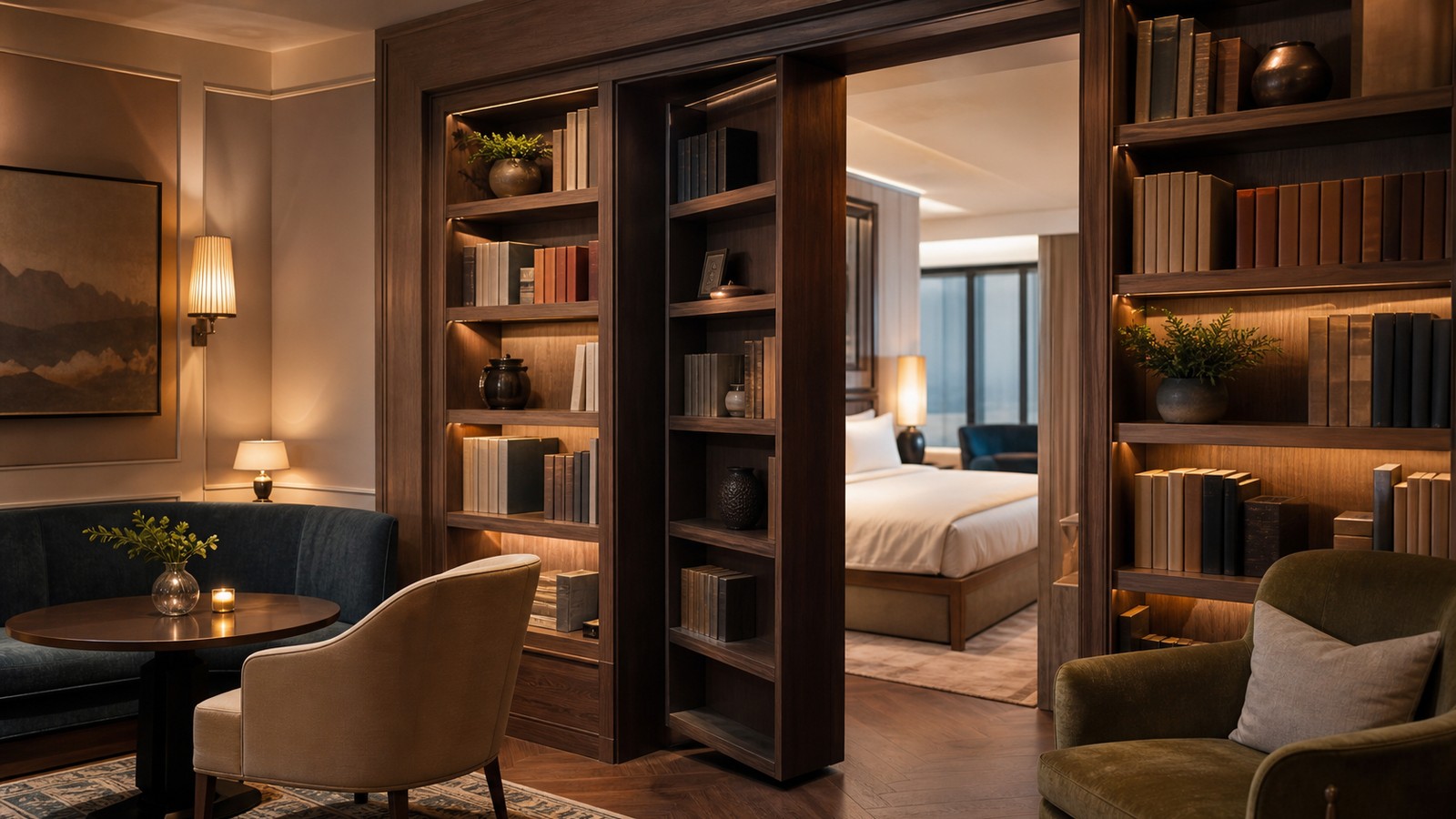
The coolest secret hotel rooms around the world are not cool only because they are hidden. They work because the reveal feels earned by the building, the brand, the guest experience, and the room beyond the door. A bookcase that opens to a suite, a wardrobe that conceals a private bar, a paneled hallway leading to a reserved dining room, or a quiet stair to a rooftop room can make hospitality feel personal. The secret should not feel like a gimmick pasted onto a lobby. It should feel like the hotel has saved one of its best moments for guests who know where to look.
A: The reveal, room quality, privacy, safety, and hotel personality all have to work together.
A: No. Smaller boutique properties can use thoughtful hidden access in modest ways.
A: Yes. Emergency exits, alarms, ventilation, and staff access still matter.
A: They create an easy story of privacy, reading, and discovery.
A: Yes, unless the design has a fresh reason, setting, or guest experience.
A: A room or amenity that feels as considered as the reveal itself.
A: Often yes, because service flow should not disturb guest privacy.
A: They should work with existing layers and preserve important fabric.
A: Poor sound control, awkward instructions, flimsy hardware, or an underwhelming destination.
A: Make the secret feel like hospitality, not just a trick.
Secret Rooms Turn Arrival Into Experience
Hotels already think carefully about arrival. The entrance, lobby scent, lighting, check-in sequence, hallway music, and room reveal all shape how a guest feels. A secret room adds another layer to that sequence. Instead of only receiving a key, the guest crosses a threshold that feels private, playful, or exclusive.
The best versions are controlled but not confusing. Guests should feel delighted, not stranded. Staff should be able to explain access gracefully, and the route should be safe, comfortable, and intuitive once revealed. The secret is part of hospitality, so it has to welcome rather than test.
A hidden hotel room also changes memory. People may forget an ordinary corridor, but they remember the moment a panel opened, a shelf moved, or a quiet door led to an unexpected suite. The reveal becomes part of the stay’s story.
Disguise Should Match the Hotel’s Personality
A boutique hotel might hide a room behind library shelves. A restored historic property might use paneled walls or old service doors. A modern hotel might prefer flush millwork, concealed pivots, or a seamless acoustic panel. The right secret door depends on the hotel’s design language.
Privacy Is More Important Than Novelty
Secret hotel rooms often promise privacy, but privacy has to be real. Sound separation, secure access, discreet staff procedures, lighting control, and clear emergency exits matter more than a clever reveal. A beautiful hidden door will disappoint guests if noise leaks through it or if service constantly interrupts the room’s quiet.
This is especially true for private dining rooms, suites, bars, spa rooms, and members-only spaces. The guest is not only buying surprise. They are buying the feeling of being protected from the public pace of the hotel.
Historic Hotels Have Natural Advantages
Older hotels often contain former service stairs, dumbwaiter shafts, staff corridors, private parlors, and altered room connections. These features can inspire secret rooms because the building already has layers. A hidden suite in a historic property feels convincing when it grows from those inherited conditions rather than ignoring them.
Preservation adds responsibility. A secret-room concept should respect historic fabric, not destroy it for novelty. If original paneling, doors, or circulation survive, the design can celebrate them while adapting the space for modern safety and comfort.
This balance is where many memorable hotel secrets live. Guests feel the romance of an older building, but they also expect modern climate control, security, cleanliness, accessibility, and service. The hidden door has to bridge both eras.
A poorly integrated secret can make a historic hotel feel staged. A well-integrated one makes the building feel like it is still sharing its own story.
Speakeasy-Style Entries Need Fresh Thinking
Hidden bars and speakeasy-inspired rooms have become familiar in hospitality design. The idea still works when the concept is specific, but it can feel tired when every door relies on the same password, bookcase, or unmarked hallway. The coolest secret rooms now need more than imitation.
Service Flow Decides Whether the Room Works
A secret hotel room may look effortless to guests, but staff need practical routes. Housekeeping, food service, maintenance, security, and emergency response all require access that does not undermine the room’s privacy. If staff have to fight the hidden door every day, the concept will wear out quickly.
Good design separates guest drama from staff efficiency. The guest may experience one memorable reveal, while staff use a simpler service path or a reliable concealed access point. Both experiences need planning.
The Cool Factor Comes From Restraint
The most sophisticated hotel secrets are often quieter than people expect. A perfect reveal can be subtle: a panel aligned with wainscoting, a mirror that opens to a dressing room, a bookcase that leads to a small lounge, or a wardrobe door that hides a coffee bar. The guest senses intention without being hit with theatrical clutter.
Restraint also helps the room age well. Trendy tricks can become dated, but good materials, sound hardware, careful lighting, and a genuine reason for concealment remain appealing. The room should still feel good after the first social media moment has passed.
Hotels should remember that guests sleep, work, dress, eat, and rest in these rooms. The secret door is only one moment. The space beyond it has to be comfortable for the whole stay.
Safety Has to Be Visible to Staff
A secret hotel room cannot hide from life-safety requirements. Emergency exits, sprinklers, alarms, accessibility needs, ventilation, and staff access all have to be handled clearly. Guests may enjoy the concealed entry, but they should never be uncertain about how to leave in an emergency.
What Guests Actually Remember
Guests remember secrets that feel personal. A hidden breakfast room, a private library suite, a tucked-away spa chamber, or a concealed rooftop lounge can feel special because it changes the scale of the hotel. The property stops feeling like a public machine and starts feeling like a place with private chapters.
The reveal should also reward the guest with something worthwhile. If the hidden door leads to a cramped or ordinary room, the trick collapses. The best secret hotel rooms make the destination feel at least as considered as the entrance.
Designing a Secret Worth Returning To
A cool secret hotel room is not only discovered once. It should still feel satisfying on the second night, the next morning, and the next visit. That means the hardware works smoothly, the path feels safe, the room is comfortable, and the secrecy supports the guest’s mood rather than interrupting it.
The lasting appeal is intimacy. Hotels are public buildings full of strangers, schedules, and staff movement. A secret room gives guests a temporary sense of being let into a quieter layer. When that feeling is supported by good design, the hidden door becomes more than a reveal. It becomes hospitality in architectural form.
Return value matters. A guest who uses the hidden door repeatedly should not become annoyed by it. The route should still feel easy with luggage, at night, after dinner, and during checkout. If the door only works as a first impression, the hotel has designed a photo opportunity rather than a room.
The Secret Should Make the Stay Feel More Human
The best secret hotel rooms create a sense of being personally considered. A guest feels that the property has offered a room with a slightly different relationship to the public hotel around it. That might mean a quieter lounge, a hidden breakfast nook, a small library, a private terrace, or a suite reached through a paneled passage. The reveal matters because it changes the emotional scale of the stay.
This human quality is easy to lose if the design becomes too mechanical. A door that opens with a flashy trick but leads to a generic room can feel hollow. A modest concealed panel leading to a comfortable, beautifully detailed space can feel far more special. Hospitality is measured in the quality of the welcome, not the complexity of the mechanism.
Hotels also have to think about different guests. Some people love surprise; others need clarity. Some arrive tired, with bags, children, or mobility needs. A secret room should still be legible and respectful. Staff can preserve the delight while making sure no guest feels embarrassed, confused, or unsafe.
That balance is what separates a memorable hidden hotel room from a gimmick. The secret is allowed to be fun, but it has to remain generous. When the reveal supports comfort, privacy, service, and a strong sense of place, the hidden door becomes part of the hotel’s character rather than a detachable stunt.
The Reveal Should Not Outshine the Room
The hidden entrance may be the part guests talk about first, but the room has to carry the experience after the door closes. A suite still needs excellent bedding, intuitive lighting, good acoustics, storage, comfortable seating, and a bathroom that works beautifully. Surprise cannot compensate for weak hospitality fundamentals.
This is why the coolest hotel secrets are often designed from the inside out. The team starts with the feeling the guest should have once inside, then designs the threshold to support it. A private library suite might need quiet and warm materials. A hidden spa room might need softness and privacy. A concealed dining room might need service access that never breaks the mood.
When the room leads and the door follows, the secret feels mature. Guests get both the moment of discovery and the comfort of a space worth discovering. That combination is what makes a hidden hotel room memorable beyond the first photograph.
Coolness Is Really Confidence
The coolest secret hotel rooms feel confident enough not to overexplain themselves. They do not need a complicated ritual, a forced password, or a theatrical announcement. The door opens, the space beyond feels considered, and the guest understands the point immediately. That confidence comes from good hospitality basics: comfort, privacy, proportion, lighting, service, and a room that belongs to the property. When those basics are strong, the hidden entrance becomes a graceful flourish rather than the whole performance. It also gives staff a clearer role. They are not actors in a forced scene; they are hosts helping the guest enter a more private layer of the property. That distinction keeps the secret from feeling silly and lets the experience remain warm, polished, and genuinely memorable. A hotel secret should age like a favorite detail rather than a one-time joke. Guests should enjoy telling the story, but they should also want to return to the room when nobody is watching.
A Secret Room Should Still Feel Effortless
The test of a secret hotel room comes after the reveal. The guest should be able to move in and out comfortably, call for service, find lights, sleep well, and leave safely. If the hidden entrance makes any of that harder, the cool factor fades quickly.
Effortlessness is hard work for the hotel. It requires good hardware, trained staff, thoughtful housekeeping, clear emergency planning, and a destination worth protecting. When those pieces are in place, the hidden door becomes a quiet pleasure that supports the stay instead of distracting from it. The guest remembers the secret because everything after it still feels easy, private, comfortable, and thoughtfully hosted from arrival through checkout. That is when the hidden room earns its mystique and keeps it for good afterward.