Spy Films Make Concealed Doors Feel Like Intelligence
Iconic concealed doors in spy films are more than stylish entrances. They are part of the genre’s language of access, control, deception, and revelation. A hidden panel in an office, a sliding wall in a lair, a disguised elevator, or a secret passage behind a luxury surface tells the audience that information is being managed. Spy stories are built on what people know, what they hide, and who gets to cross the threshold. A concealed door makes that invisible contest visible in a single architectural move.
A: They make secrecy, access, and identity visible in one architectural move.
A: It often shows insider knowledge, control, or a second identity.
A: Many are exaggerated for timing, style, and visual clarity.
A: The threshold makes hidden power feel theatrical and controlled.
A: Silence can suggest precision, while heavy sound can suggest force.
A: Yes, if they prioritize reliability, safety, and restraint.
A: It fits the room, the story world, and the access rules.
A: They turn access into a test of knowledge or identity.
A: Overcomplicated gadgets that make daily use harder.
A: Concealed access feels smartest when it solves a real strategic need.
The Door Separates Public Cover From Secret Work
Spy films often begin with surfaces: a formal office, hotel suite, embassy room, laboratory, club, or elegant apartment. The concealed door lets the film split that surface from the hidden operation behind it. What appears social or respectable becomes technical, dangerous, or strategic once the wall opens.
This is why the device suits espionage so well. A spy narrative depends on double meanings. The room has a cover identity, and the door reveals the second identity. Architecture behaves like a character with a secret.
Access Is the Real Drama
In spy films, the question is often not whether a door exists, but who can open it. A concealed entrance may respond to a code, object, biometric gesture, hidden switch, timed sequence, or insider knowledge. The mechanism dramatizes access control.
The audience reads that access as status. The person who knows the trigger belongs to the hidden world. The person searching for it is outside the system. When the wrong person opens it, the story changes immediately.
That makes concealed doors useful for suspense. Every threshold becomes a test of identity.
Villain Lairs Need Theatrical Thresholds
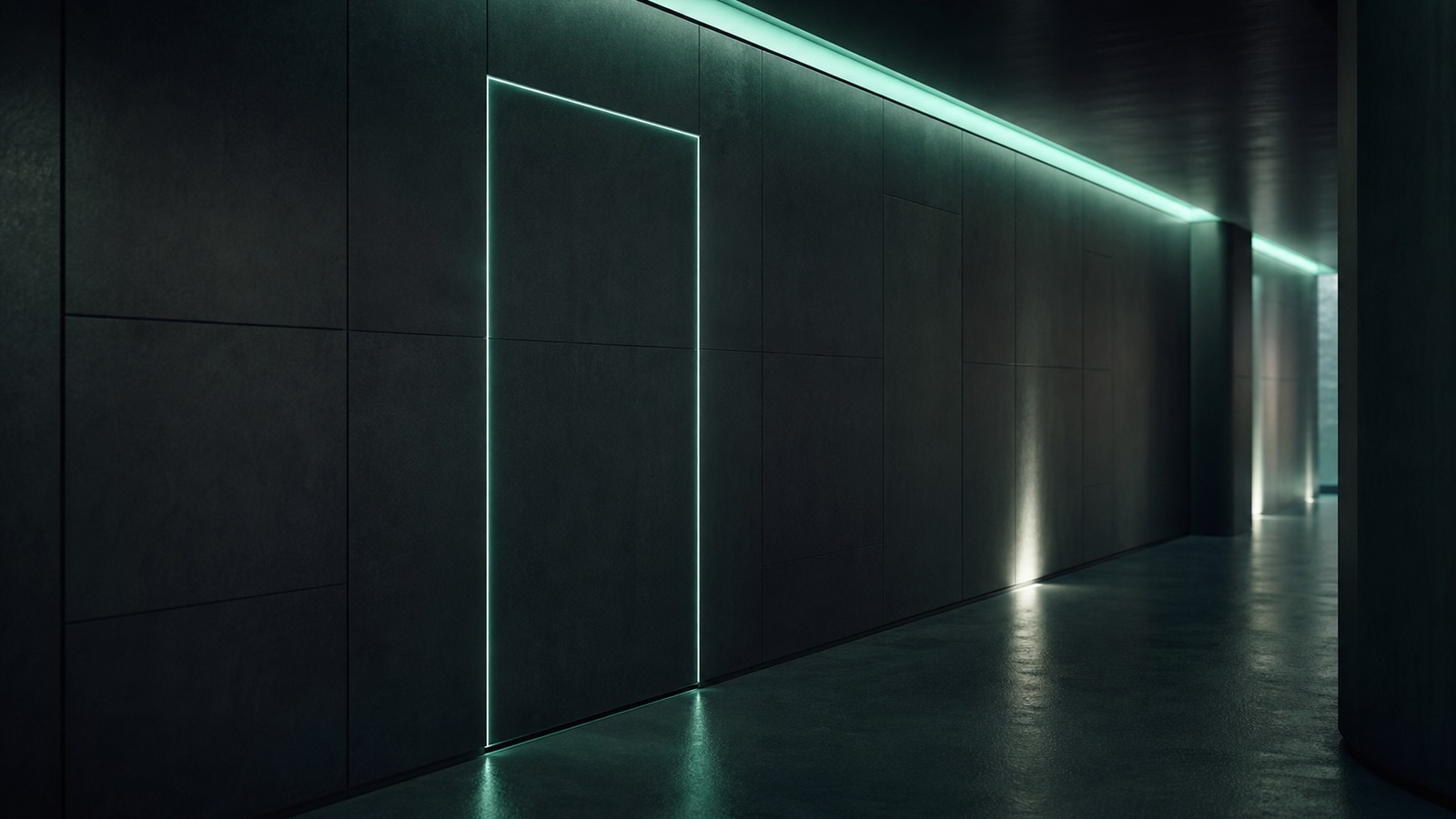
Spy-film villains often live or operate in spaces that are larger, stranger, and more controlled than ordinary rooms. A concealed door helps introduce that world. The reveal can make the lair feel engineered, secretive, expensive, or psychologically theatrical before the villain even speaks.
Gadgets Make the Door Feel Clever
Spy films love mechanisms because mechanisms externalize intelligence. A door that opens through a ring, chess piece, hidden button, voice cue, pressure plate, or optical device tells the audience that someone has anticipated intrusion. The trigger is part of the pleasure.
Real concealed doors rarely need that level of theatrical access. In a home or office, the best trigger is usually simple, reliable, and understandable to authorized users. Film can make access a performance because the scene is short. Real life has to repeat the action calmly.
Silence Can Be More Suspenseful Than Noise
A spy-film concealed door may open with a soft mechanical whisper instead of a heavy rumble. Silence suggests precision, wealth, and danger. It makes the space feel engineered for secrecy.
Sound choices tell viewers what kind of spy world they are entering. A heavy industrial door suggests a bunker or weapons room. A smooth panel suggests luxury intelligence. A rough hatch suggests improvisation or escape.
Good production design coordinates sound with material. Glass, steel, wood, stone, and fabric all imply different kinds of hidden access, even when the mechanism is fictional.
The result is a door the audience remembers as much by feeling as by appearance.
Concealed Doors Create Misdirection
Spy films rely on misdirection. A character watches the obvious door while someone enters through a hidden panel. A pursuer runs down the hall while the target disappears into a service route. A room seems empty until the camera reveals a wall seam.
The Best Spy Doors Are Integrated Into Routine
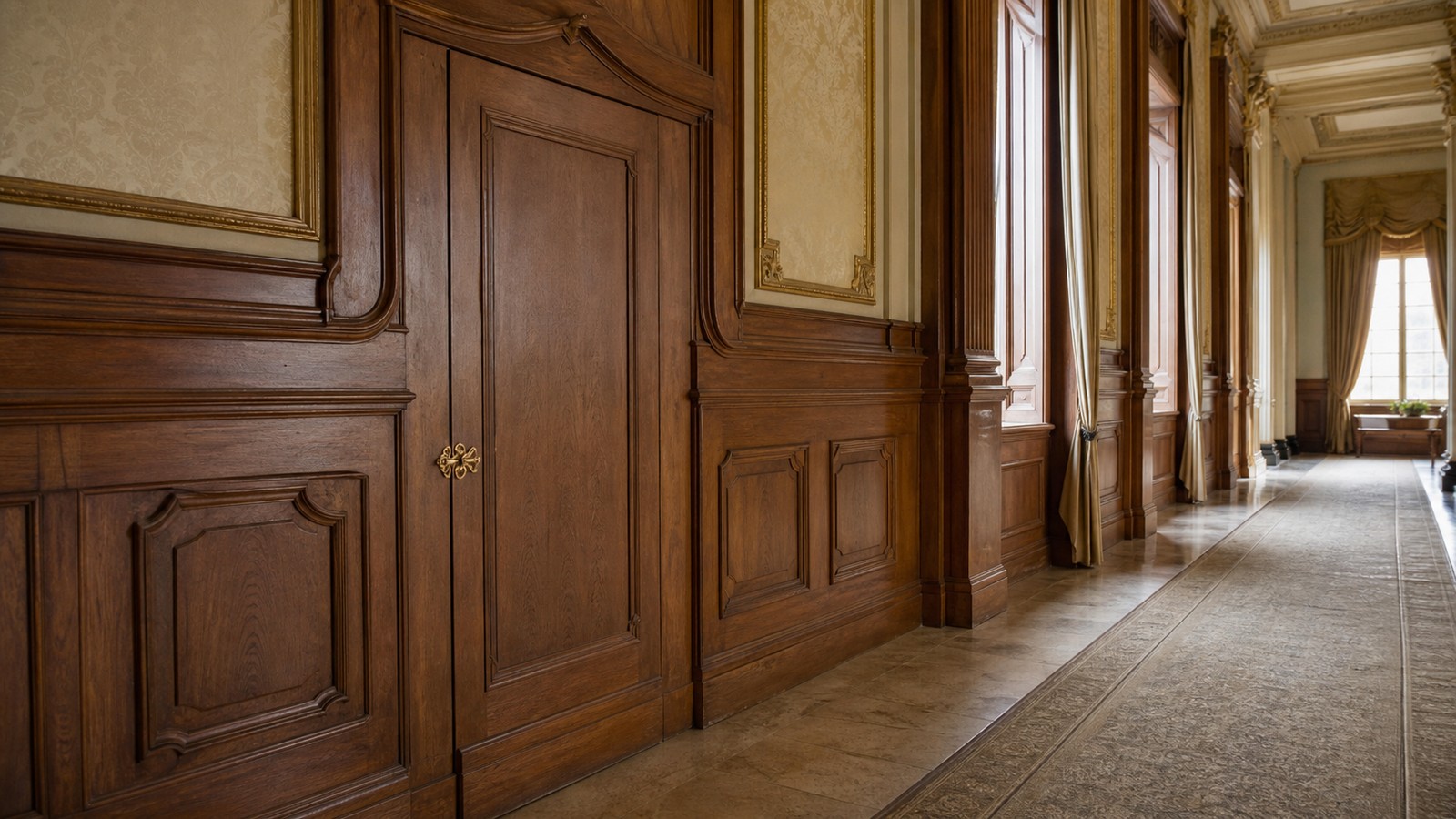
The most convincing spy-film doors are not always the flashiest. A hidden entrance can feel more believable when it sits inside a routine: an office shelf, a private elevator, a security vestibule, a hotel closet, or a service wall. The normal setting makes the secret more plausible.
This is a useful design principle beyond movies. Concealed doors work best when they borrow credibility from the room. If the disguise has a practical reason to exist, the hidden access feels less forced.
Spy films exaggerate the stakes, but the architectural lesson is sound. A door that belongs to the environment can hide more convincingly than a door designed only to impress.
Identity Is Often Tested at the Threshold
Spy stories are obsessed with identity. Characters carry false names, forged papers, disguises, passwords, and shifting loyalties. A concealed door can turn identity into a physical test: only the recognized person passes.
That test can be serious or playful. It may involve advanced technology, a secret phrase, or a tiny domestic gesture. The point is that the door decides who belongs in the hidden layer.
Real Security Is Less Cinematic
Actual secure access depends on policies, procedures, surveillance, locks, trained staff, and emergency planning. A concealed door may be one part of that system, but it is not the system. Spy films compress security into a memorable mechanism because cinema needs clear symbols.
That compression is fun, but it can distort expectations. A real hidden office, records room, or safe area should prioritize code compliance, reliable locking, user training, and maintenance. The door should not become a fragile gadget.
The strongest real-world lesson from spy films is not to add complexity. It is to understand how access shapes the experience of trust.
Luxury Surfaces Make Secrecy Feel Powerful
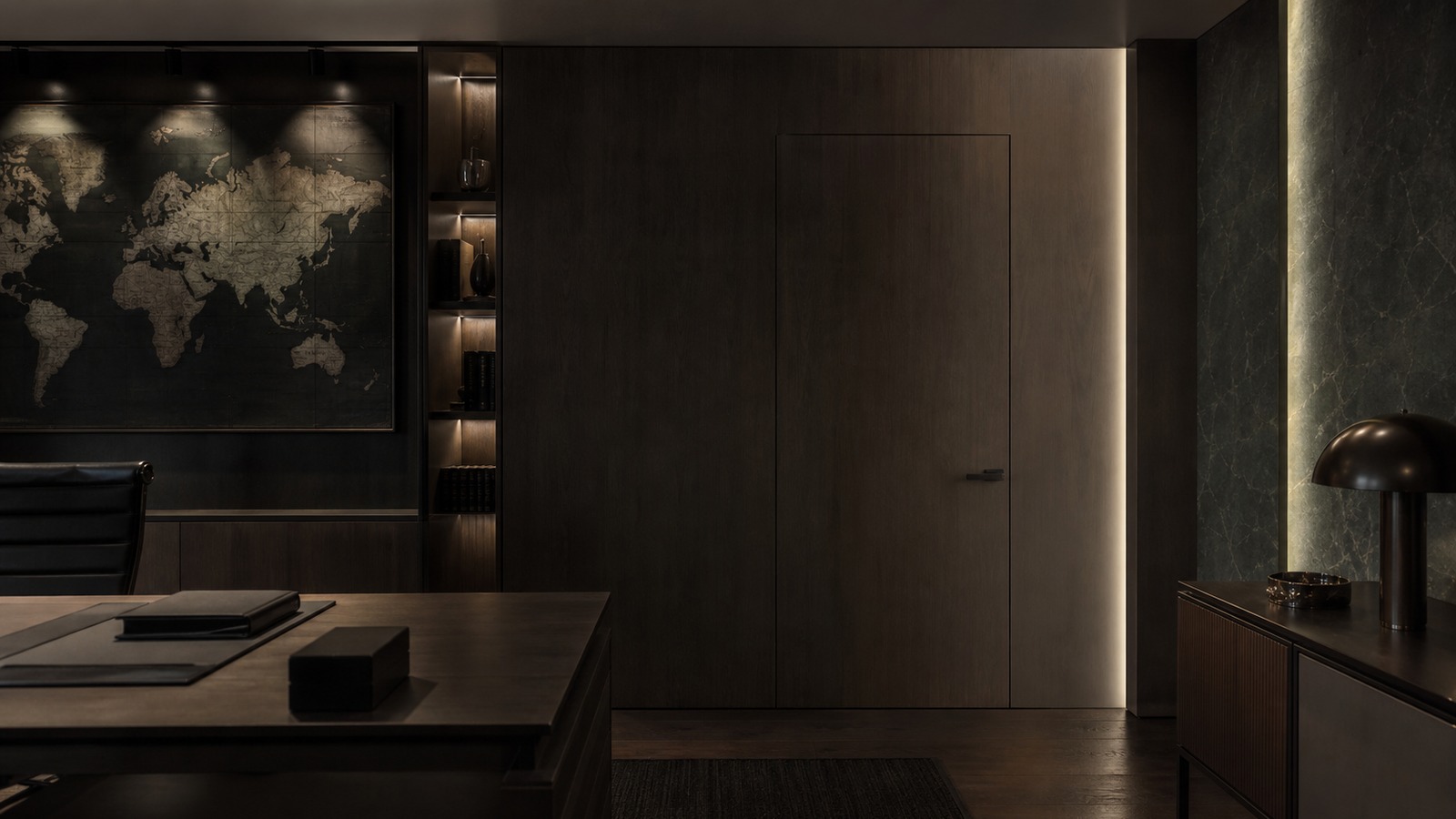
Spy films often hide doors in polished wood, stone, metal, glass, or leather-clad rooms because luxury suggests control. A concealed door in a refined environment says that secrecy is part of the architecture, not an improvised trick.
Every Spy Door Has a Timing Problem
For suspense to work, the concealed door must open at the right moment. Too soon, and the surprise evaporates. Too late, and the audience may feel manipulated. The timing must connect to character knowledge, danger, or discovery.
Set designers, editors, actors, and sound teams all contribute to that timing. The door may be a physical prop, but the reveal is a collaborative beat.
This is why the most memorable spy-film concealed doors feel inevitable after they open. The clue was there, the room was ready, and the story needed the threshold at exactly that moment.
Spy Films Turn Architecture Into Strategy
The concealed door is strategic in spy cinema. It controls approach, exit, surprise, privacy, and information. It gives the room a tactical second layer, even when the design is wildly unrealistic.
That strategic quality explains why the device remains iconic. Spy stories are about hidden routes through visible systems. A concealed door gives that idea a body.
The Best Takeaway Is Restraint
Anyone designing a real concealed door after watching spy films should keep the fantasy in proportion. The movie version can inspire mood, material continuity, and a satisfying reveal. It should not inspire unsafe mechanisms, confusing access, or overcomplicated triggers that fail during ordinary use.
A good hidden home office, media room, cellar, or secure closet can feel quietly cinematic without imitating a lair. Use strong hinges, simple access, durable finishes, and lighting that makes the hidden room feel worth entering.
The spy-film door is memorable because it suggests intelligence. In real design, intelligence means solving the problem elegantly, not proving that the door can perform a trick.
The Genre Needs a Wall That Knows More
Spy films keep returning to concealed doors because the genre needs spaces that know more than they reveal. A visible door is too honest. A concealed door has strategy built into its surface.
When the wall opens, the audience gets the pleasure of access. They have been admitted, briefly, into the secret layer. That feeling is central to spy cinema: the thrill of seeing behind the cover story and discovering that the room was part of the mission all along.
The Spy Door Is a Promise of Competence
A concealed door in a spy film suggests that someone has planned ahead. The room is not accidental. The route is not improvised. The person who controls the threshold has anticipated surveillance, pursuit, privacy, and escape. That promise of competence is one of the genre’s great pleasures. Viewers enjoy watching spaces behave as if they were designed for strategy.
The promise can belong to heroes, agencies, or villains, which makes the device morally flexible. A hidden passage may save a life, trap an intruder, protect a secret, or conceal a threat. What matters is that the door turns intelligence into a material fact. The wall itself participates in planning.
Real spaces can borrow the competence without copying the fantasy. A hidden records room, studio, or secure storage area feels smarter when the access is simple, the surface is resolved, and the route beyond has a clear purpose. The best spy-film lesson is that concealment should look prepared. It should make the room feel more capable, not merely more mysterious.
The Best Spy Reveals Respect the Cover Story
A spy-film concealed door works best when it respects the cover story of the visible room. If the scene is set in a formal office, the hidden entrance should grow from files, paneling, shelving, or private circulation. If the scene is in a nightclub, hotel, or gallery, the disguise should borrow from service routes, decorative walls, or backstage logic. The reveal feels sharper when the audience realizes the ordinary setting was doing double duty.
This is also where production design can separate a memorable spy door from a generic one. The surface should not only hide the opening; it should express the cover identity. A room designed around diplomacy, luxury, research, or criminal wealth will hide its door differently. That difference gives the scene texture and helps the concealed route feel owned by the world.
The same principle applies to real projects. A hidden door should not be imported from a fantasy catalogue without regard for the room. The best version begins with the visible story: what is this space trying to be, and what kind of hidden access would naturally belong there? Once that answer is clear, concealment becomes design rather than decoration.
Spy cinema is most persuasive when the cover story is good enough to survive before and after the reveal. The room should still make sense once the secret is known. If the only interesting thing about the space is the hidden door, the scene loses depth. If the visible setting already has purpose, the concealed route becomes an extra layer of intelligence.
Concealment Is the Genre’s Architecture of Trust
Every spy story asks who can be trusted with information. The concealed door turns that question into a route. Someone knows the passage, someone guards it, someone searches for it, and someone may be betrayed by it.
That is why the device remains iconic. It gives the genre a physical language for secrecy that viewers can understand instantly. When the wall opens, trust has changed shape. The audience knows that access is never neutral in a spy story; every hidden route belongs to someone, and every threshold can become leverage when identities begin to shift under pressure. The door is small, but the betrayal can be enormous.