
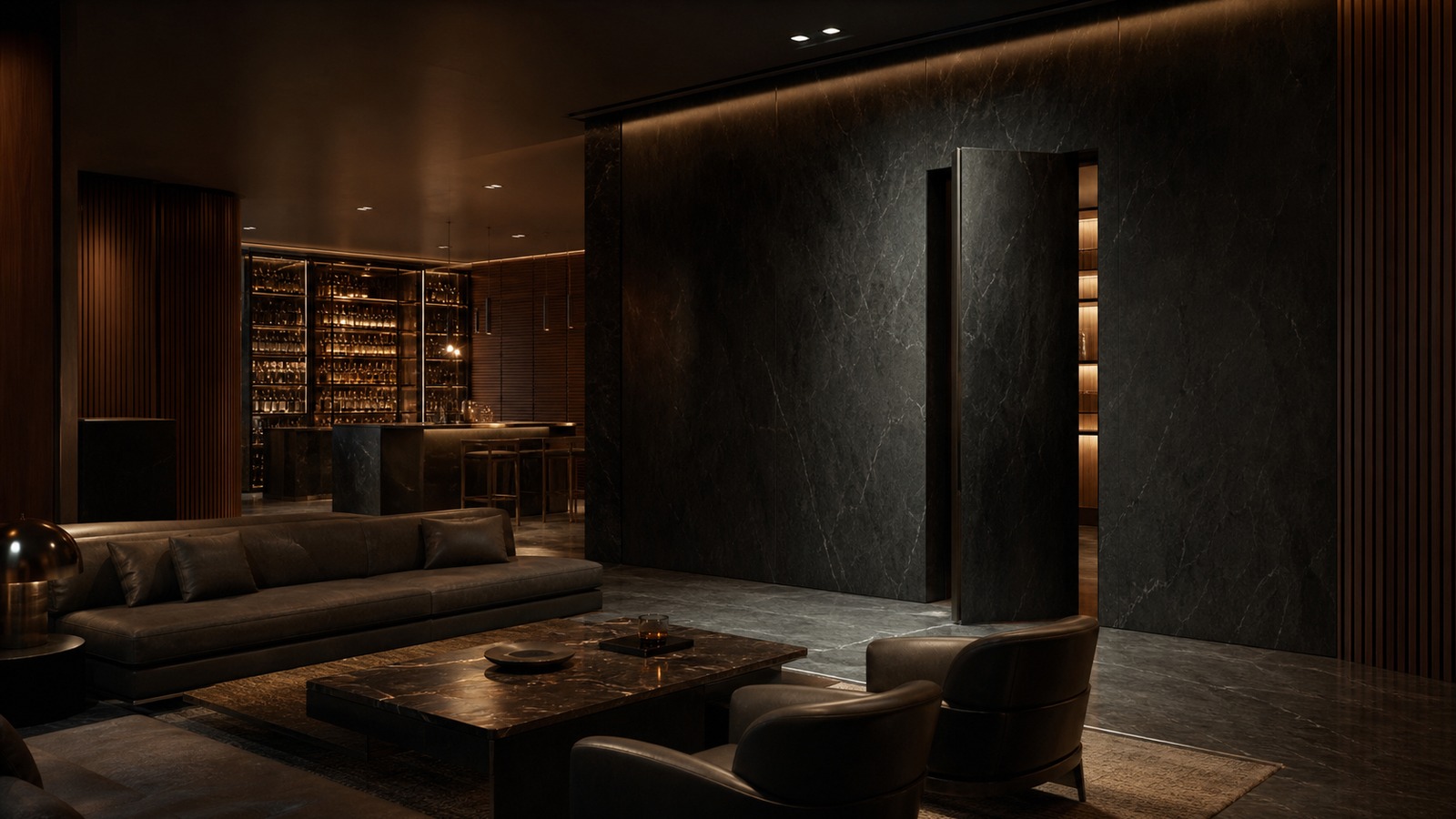
Bond-Style Concealment Is Elegant and Dangerous
Concealed entrances in James Bond’s world have a particular flavor. They are rarely only practical. They tend to combine luxury, danger, spectacle, control, and confidence. A wall may open inside a refined office, a villain’s retreat may reveal a hidden route, or a polished surface may slide aside to expose a space of strategy and risk. The appeal is not just that the entrance is hidden. It is that concealment feels designed by people with money, power, taste, and secrets worth protecting.
A: They combine elegance, danger, control, and secret access.
A: They are often theatrical, but the best ones still serve story logic.
A: Precise materials, calm movement, lighting, and a purposeful hidden space.
A: The reveal shows control over environment and access.
A: Yes, if the design stays reliable, safe, and restrained.
A: Overcomplicated triggers and mechanisms that become annoying after the reveal.
A: A polished entrance creates expectations that the hidden room must satisfy.
A: Beautiful surfaces often hide strategic or dangerous spaces.
A: No. Precision and coherence can feel smarter than gadget behavior.
A: Controlled drama works better than empty spectacle.
The Bond Door Has Style Before It Moves
In a Bond-like world, the concealed entrance usually belongs to a carefully styled room before it ever opens. Wood, stone, metal, glass, leather, and dramatic lighting create an atmosphere of control. The reveal works because the visible surface already feels expensive and intentional.
This is different from a rough hidden hatch or improvised escape panel. Bond-style concealment is polished. It says that secrecy is part of the design budget, not a last-minute cover-up.
That polish is central to the fantasy. The hidden door is not only a way in; it is a statement about the person or organization behind it.
Villains Use Entrances as Theater
Villain spaces in Bond’s world often treat entrances as theater. A concealed door may open slowly, reveal a larger room, or frame a character’s entrance with calm menace. The threshold tells the audience that the villain controls the environment.
That theatrical quality is useful because Bond stories often contrast elegance with threat. A beautiful surface opens to a dangerous purpose. The more refined the entrance, the sharper the tension can feel.
Secret Access Defines Insider Status
Bond stories often separate insiders from outsiders through access. The person who knows the hidden entrance understands the system. The person looking for it is behind. A concealed doorway becomes a marker of belonging, authority, or vulnerability.
Luxury Makes the Mechanism Feel Inevitable
In a Bond-style environment, the mechanism often feels smooth because luxury supports the illusion. A silent panel, sliding wall, or disguised elevator seems plausible when surrounded by precision materials and immaculate maintenance. The room has already told viewers that expensive engineering is possible.
For real design, this points to an important truth. A concealed entrance needs the surrounding finishes to justify it. A hidden door in a high-end paneled room should move with the same refinement the surface promises. If the action feels cheap, the whole illusion weakens.
Bond-style entrances succeed when the visual promise and the physical movement agree. The wall looks deliberate, and the reveal feels deliberate too.
The Entrance Often Reveals a Larger System
A concealed Bond entrance rarely leads to a simple closet. It usually reveals a command room, route, lair, lab, garage, vault, or briefing space. The doorway is a small part of a larger hidden system.
That is why the reveal can feel so satisfying. The entrance suggests that the world is deeper and more organized than it first appeared. A single panel becomes evidence of planning.
Real hidden doors can use this lesson at a smaller scale. The space beyond should feel intentional. A concealed wine cellar, office, library, or media room should reward the reveal with purpose, not emptiness.
The hidden entrance sets an expectation; the room beyond has to answer it.
Bond Concealment Blends Glamour and Control
The Bond aesthetic often makes control look glamorous. A concealed entrance is part of that equation. It turns restricted access into something sleek, almost seductive, while still reminding viewers that secrecy can be dangerous.
Gadget Logic Needs Restraint in Real Homes
Bond-inspired entrances can tempt homeowners toward complicated switches, motorized panels, and dramatic reveals. Some of those ideas can work, but only when planned carefully. Real homes need emergency access, maintenance, simple operation, and hardware that will not become frustrating after the novelty fades.
The smarter takeaway is not to imitate every gadget. It is to borrow the sense of polish: clean lines, coherent materials, quiet operation, and a reveal that feels considered.
A real Bond-inspired concealed door should feel confident, not fussy. The more often it is used, the more important that distinction becomes.
Hidden Entrances Shape the Villain’s Psychology
In Bond’s world, villain architecture often reveals personality. A concealed entrance can suggest paranoia, theatrical ego, technical mastery, or a desire to control how others enter the space. The door becomes part of characterization.
A rough secret door might suggest desperation. A lavish one suggests resources and self-mythology. A clinical sliding panel suggests systems and surveillance. Production design can say all of this before dialogue catches up.
Thresholds Make Briefings Feel Official
Bond-style concealed entrances are not only for villains. They can also make institutional spaces feel controlled and formal. A hidden access point to a briefing room, equipment space, or secure office suggests procedure, clearance, and specialized knowledge.
These thresholds make bureaucracy feel cinematic. A meeting is not just scheduled; it is entered through a layer of access.
That transformation is one reason the franchise’s design language has influenced how audiences imagine secret organizations. Architecture becomes a ritual of admission.
The Best Entrances Have a Sense of Occasion
A concealed entrance in Bond’s world often has ceremony. It does not simply open; it reveals. The pacing, light, sound, and framing make the threshold feel important. The audience is meant to register the moment.
Real Bond-Inspired Design Should Be Quieter
In a real home, the Bond influence works best when it becomes quieter. A paneled wall that opens to a private study, a stone surface that hides a wine room, or a cabinet run that conceals a secure closet can feel sophisticated without becoming theatrical.
The key is to keep the proportions human. The door should serve the homeowner’s life, not force every entry to feel like a scene. Elegance comes from fit, finish, and reliability.
That is where Bond-style fantasy can mature into good design. The inspiration remains, but daily use keeps it grounded.
The World Behind the Door Must Earn the Reveal
Because Bond-style concealed entrances are so polished, they create high expectations. The room beyond should feel more resolved, not less. Lighting, material transition, acoustics, and circulation all need thought.
If the hidden entrance opens to a cluttered storage room, the fantasy collapses. If it opens to a beautifully organized office, cellar, lounge, or collection space, the reveal feels justified.
Concealment Is Part of the Bond Myth
Concealed entrances fit James Bond’s world because the entire myth depends on surfaces. A dinner jacket may hide danger. A luxury hotel may hide surveillance. A civilized room may hide a mission. The door is one more elegant surface with a second meaning.
That second meaning is why the device remains so appealing. It gives the audience the pleasure of discovering that polish can be strategic. The room is beautiful, but it is also prepared.
In the Bond imagination, that preparation is everything. The concealed entrance says that someone expected the hidden layer to matter, and designed accordingly.
The Best Lesson Is Controlled Drama
Bond-style concealed entrances teach controlled drama. The door should not be loud for its own sake. It should create anticipation, reveal a purposeful space, and express the character of the room. Whether on screen or in a home, concealment works best when style and function move together.
That is the lasting appeal of Bond’s hidden thresholds. They make secret access feel refined, dangerous, and inevitable. A wall opens, and the world becomes more glamorous, more risky, and more carefully designed than it appeared a moment before.
Bond Doors Make Secrecy Feel Designed
The most distinctive thing about Bond-style concealed entrances is that they make secrecy feel designed rather than improvised. A hidden route may be dangerous, but it is rarely shabby. It belongs to a world where private access is upholstered, engineered, lit, and choreographed. The finish quality tells the audience that the secret has existed for a while and that powerful people expected to use it.
This makes the concealed entrance feel less like a trick and more like a culture. In Bond’s world, hidden access is part of how institutions, villains, and luxury spaces operate. The doors are not accidents in the architecture. They are rituals of entry, showing who belongs in the room and who remains outside the performance.
For real design, that idea translates into coherence. A Bond-inspired door should not be a random gadget added to an unrelated room. It should grow from the materials, lighting, proportions, and purpose of the space. When everything agrees, the entrance can feel dramatic without feeling ridiculous. It becomes a controlled moment of style, which is the Bond lesson at its best.
The Bond Entrance Always Manages Image
In Bond’s world, a concealed entrance manages image as carefully as it manages access. It can make an organization look composed, a villain look untouchable, or a private room feel more exclusive than the public space outside. The door is part of the performance of confidence. It tells guests, enemies, and viewers that someone has arranged the scene before they arrived.
That image-making is why the entrances often feel ceremonial. The hidden surface does not merely open; it announces a shift in status. A person crosses from guest to insider, from observer to participant, from visible luxury to hidden intent. The reveal is a social event as much as an architectural one.
Real interiors can use that idea without imitating espionage. A concealed study door can mark a shift into focus. A wine room can feel more intimate when its entry is integrated into millwork. A private lounge can feel special when the threshold is calm and deliberate. The Bond influence is strongest when it teaches designers to manage arrival with confidence and restraint.
That restraint is crucial because Bond-style design can easily slide into parody. The difference between sophisticated and silly is often proportion. A concealed entrance should feel as though it belongs to the room’s whole identity, not as though it was added to make every visitor perform astonishment.
The Bond Fantasy Works Because It Is Ordered
Bond-style concealed entrances appeal because they make secrecy feel ordered. The hidden route is not chaotic; it is aligned, lit, finished, and controlled. Even danger arrives through a composed threshold.
That order is the useful lesson for real projects. A concealed door can add drama, but the drama should be disciplined. The door should open cleanly, the room beyond should be ready, and the whole sequence should feel planned rather than improvised. Bond-inspired design fails when it borrows only the glamour and forgets the precision. The most persuasive hidden entrance is not the loudest one; it is the one that makes refinement, secrecy, and purpose feel like parts of the same decision. When the threshold is calm, the room feels more powerful than any gadget could make it. That calm confidence is the real luxury behind the fantasy, and the reason it still looks stylish today in memory afterward.


