Palace Hidden Entrances Protected Both Privacy and Performance
Royal palaces and their hidden entrances reveal how architecture supports power behind the scenes. A palace is never only a beautiful residence. It is a stage for ceremony, a workplace for staff, a security problem, a family home, and a political symbol. Hidden or discreet entrances helped rulers, attendants, guards, servants, guests, and household members move through those roles without collapsing them into one public route. The concealed door in a palace often protected privacy, timing, service, and authority at once.
A: They supported privacy, service, ceremony, security, and controlled movement.
A: No, many were known to staff or insiders but hidden from public view.
A: Paneling preserved symmetry and let necessary doors blend into formal rooms.
A: Yes, service circulation often kept labor out of ceremonial spaces.
A: Some retreat routes existed, but legends often grow beyond evidence.
A: Discreet garden entrances allowed private movement away from formal rooms.
A: Yes, practical building access can look mysterious on tours.
A: Different doors and routes reflected status, permission, and visibility.
A: Yes, rulers, governments, restorers, and museums alter access meanings.
A: They combine glamour, labor, privacy, security, and the theater of power.
Ceremony Needed Backstage Movement
Royal ceremony depends on arrival, timing, and controlled visibility. A monarch or dignitary may appear through a grand doorway, but that appearance is supported by private rooms, staff preparation, security checks, and service routes. Hidden entrances make the public moment look effortless.
The grander the ceremony, the more important the unseen circulation becomes. Palaces are full of spaces that serve the performance without becoming part of it.
Private Stairs Protected Daily Life
Rulers and royal households needed ways to move between apartments, chapels, gardens, galleries, offices, and service areas without crossing public rooms. Private stairs and discreet doors could shorten routes and protect personal movement.
These passages were not always secret to the staff. They were hidden from public ceremony or general visitors. Palace privacy often means selective visibility rather than complete secrecy.
A small stair behind paneling could be ordinary to insiders and mysterious to everyone else.
Service Entrances Made Splendor Possible
Palaces require labor: cooking, cleaning, heating, carrying, lighting, repairing, guarding, and preparing rooms. Hidden service entrances let this work happen without disturbing formal spaces. The beauty visitors admire often depends on movement they never see.
Security Needed Multiple Routes
Royal residences have always needed controlled access. Hidden entrances could help guards move, protect retreat routes, separate public visitors from private apartments, or give trusted staff a way to respond without using ceremonial doors. Security and etiquette overlapped.
A discreet entrance could be valuable precisely because it did not look important. In palaces, the obvious door is often ceremonial; the useful door may be quiet.
Political Power Used Architecture
Who could enter which room, by which door, and in whose presence mattered. Palaces turned movement into rank. A hidden entrance could allow private audiences, discreet consultation, or separation between formal and informal access.
This does not mean every palace door carried intrigue. It means circulation supported hierarchy. Hidden entrances helped the palace manage who was seen, who waited, and who arrived without announcement.
Architecture quietly enforced social distance.
Staff Knew the Palace Differently
Servants, guards, clerks, and attendants often knew routes that visitors never noticed. Service corridors, back stairs, hidden doors, and secondary entrances formed a practical map beneath the ceremonial one. A palace can contain two buildings in one: the public palace and the working palace.
Hidden Garden Entrances Changed Mood
Palace gardens, terraces, and courtyards offered retreat from formal rooms. Discreet entrances to gardens could support private walks, informal meetings, or controlled movement away from crowds. Landscape and architecture worked together to shape privacy.
A garden door might not be hidden by a mechanical trick. It might be screened by hedges, walls, colonnades, or changes in level. Palace concealment often uses beauty as camouflage.
Paneling Made Doors Disappear
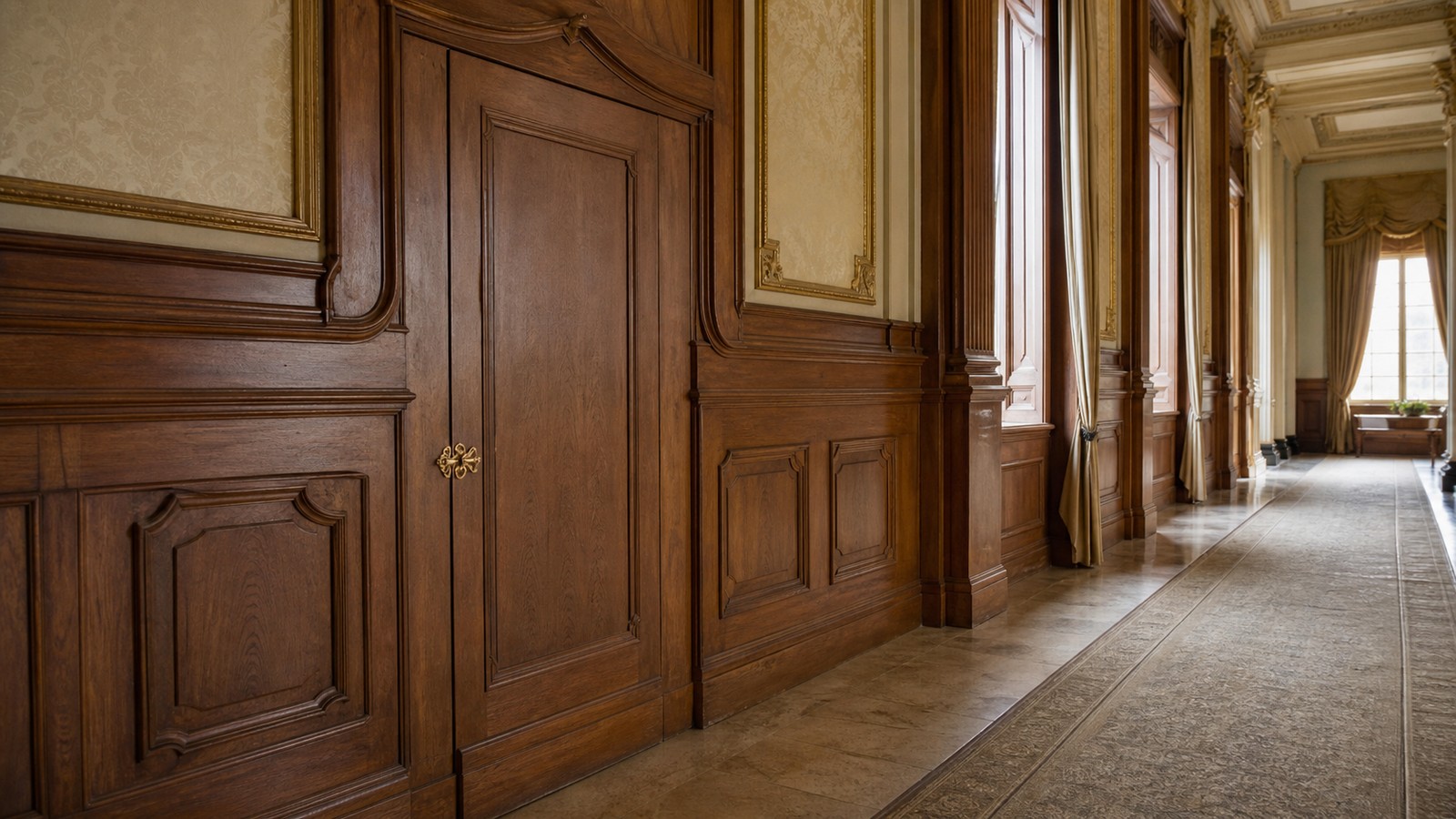
Ornate paneling, mirrors, tapestries, bookcases, and wall treatments could make private doors blend into rooms. In formal interiors, a visible service door might disturb symmetry. Concealed doors preserved the design while allowing necessary movement.
This is one reason palace hidden doors can look so elegant. They belong to the room’s decorative order.
The design goal was not always secrecy; sometimes it was visual dignity.
Retreat Routes Could Become Legends
Stories of royal escape routes and hidden tunnels are common. Some discreet routes were real and practical; others grew through rumor, later rebuilding, or political storytelling. Palaces attract legends because power and privacy invite speculation.
Maintenance Access Was Everywhere
Large palaces needed access to fireplaces, roofs, attics, storage, kitchens, galleries, and mechanical systems. Discreet doors kept maintenance out of ceremonial sight. The more complex the palace, the more secondary access it required.
Modern visitors may mistake these practical routes for secret political passages. Sometimes they were both useful and private, but everyday building operation explains many hidden entrances.
Symmetry Encouraged Concealed Doors
Formal palace rooms often depend on symmetry. If one side needed a real door and the other side did not, designers might use matching panels, false doors, or concealed openings to preserve balance. The room’s beauty shaped the door’s visibility.
A concealed entrance could therefore be an aesthetic solution. It allowed the palace to function without breaking the order of the interior.
This blend of design and utility is one of the pleasures of palace architecture.
Not All Hidden Entrances Were Royal Secrets
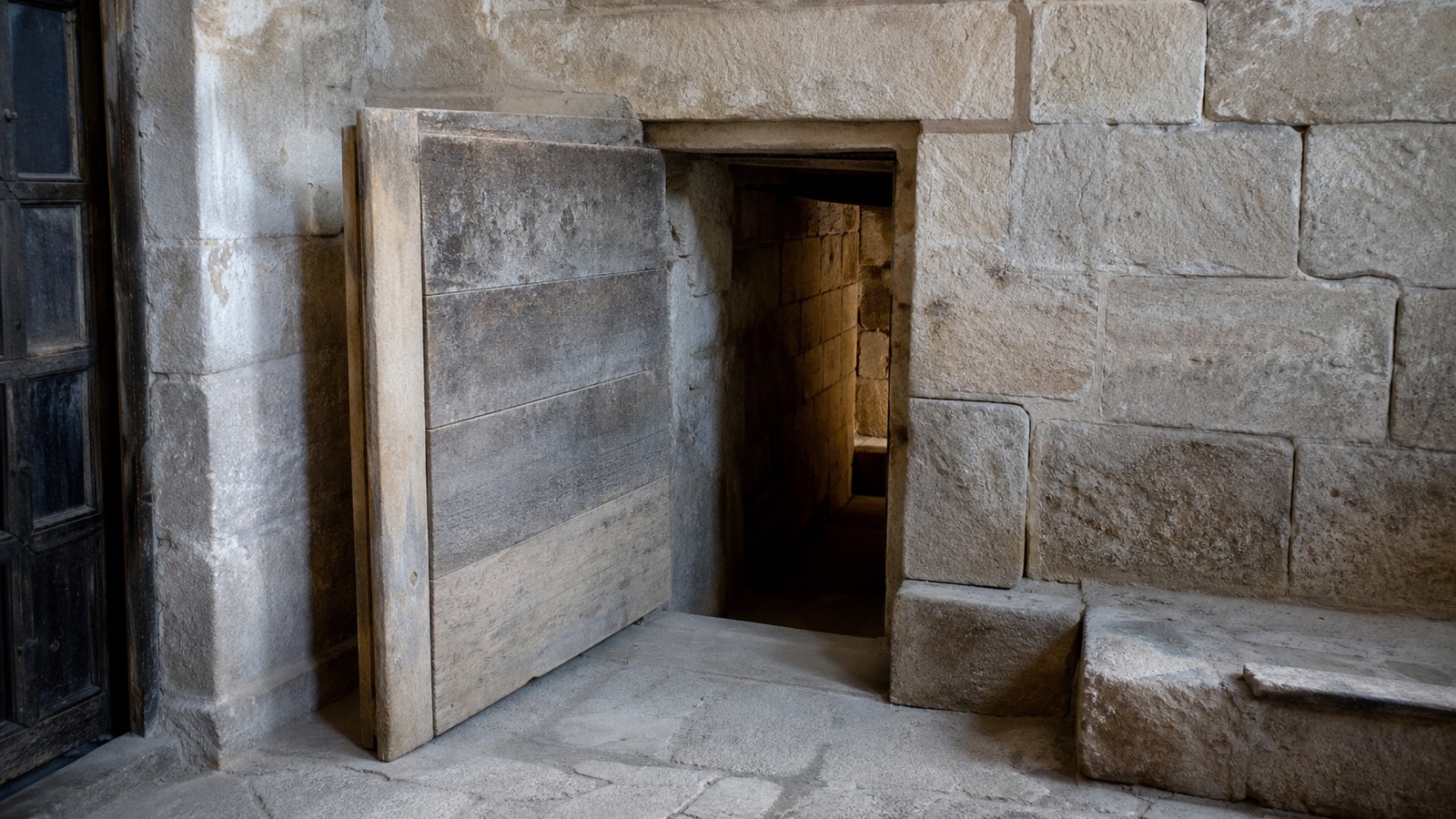
Some were staff doors. Some were service stairs. Some were later additions. Some were hidden only because modern tours focus on grand rooms. Treating every discreet entrance as intrigue can erase the labor that kept the palace alive.
Access Changed With Each Regime
Palaces are often altered by different rulers, governments, restorers, and museums. A private route may become public, a service door may be blocked, or a concealed entrance may be restored for visitors. The meaning of the door changes with the building’s political life.
This makes palace hidden entrances especially layered. They can tell stories about monarchy, staff, revolution, tourism, preservation, and changing ideas of privacy.
Hidden Entrances Humanize the Palace
Grand palaces can feel distant until their hidden routes reveal ordinary movement. Someone carried meals, lit fires, fetched garments, guarded corridors, whispered advice, or slipped into a garden. Concealed entrances remind us that power still depended on bodies moving through rooms.
That human scale makes them compelling. The secret door is not just a trick in a wall; it is a trace of how people navigated ceremony and daily life.
Behind the facade, the palace had to work.
The Best Palace Secrets Are Often Practical
Royal hidden entrances fascinate because they sit between glamour and function. They preserve symmetry, protect privacy, support staff, enable security, and make ceremony appear effortless. They also show how architecture can control attention in a building where being seen is part of power.
A palace hidden entrance is rarely only one thing. It is a door for movement, a device for etiquette, a tool for labor, and sometimes a path for retreat. That complexity is why these entrances still feel alive long after the ceremonies they served have ended.
Imagine the Palace on a Working Day
A palace tour often emphasizes state rooms, art, and grand axes, but the building had to operate hour by hour. Fires needed tending, meals needed moving, letters needed carrying, guards needed posting, and private residents needed ordinary routes. Hidden entrances helped keep that daily machinery from overwhelming the formal image.
This working-day view makes the concealed door less like a novelty and more like infrastructure. It supported the public illusion of effortless order.
Palace beauty was maintained by movement that usually stayed out of sight.
Notice Who Was Allowed to Be Invisible
Many palace hidden entrances served staff whose labor was essential but not meant to interrupt ceremony. Their invisibility was part of the social order. Studying those routes can reveal as much about rank and labor as about royal privacy.
Private Movement Could Be Political
A quiet entrance to an apartment, garden, or audience room could affect who met whom, who waited, and who was seen entering. In court life, visibility carried meaning. Discreet access could protect personal privacy, but it could also shape influence.
That political dimension makes palace concealed doors especially layered. They were practical routes inside a building where movement itself could send a message.
Restoration Changes Palace Secrets
When palaces become museums, hidden doors may be opened, labeled, roped off, or restored for interpretation. The route that once kept labor invisible may become a highlight. This change is useful for visitors, but it transforms the original function.
A good reading keeps both moments in mind: the palace as a working court and the palace as a preserved site. The door belongs to both histories now.
That double life is part of why palace hidden entrances remain compelling.
Palace Concealment Was the Architecture of Control
The hidden entrance in a royal palace controlled timing, status, privacy, and service. It helped decide who appeared, who waited, who worked unseen, and who could retreat. Few architectural features say so much with so little visible surface.
Hidden Entrances Protected Staff as Well as Royals
It is easy to focus only on rulers, but palace hidden entrances also shaped the lives of workers. Back stairs, service doors, and discreet corridors allowed staff to move efficiently, avoid ceremonial interruption, and perform demanding labor with some order. Their routes were part of the palace’s social machinery.
Those paths can be uncomfortable reminders of hierarchy, but they are historically important. They show how elegance depended on people who were expected to be present and invisible at the same time.
Read Palaces as Systems, Not Rooms
A single ornate room can hide the complexity of the palace around it. Hidden entrances become clearer when the building is read as a system of ceremony, residence, labor, security, gardens, storage, and politics. Each discreet door helped the system shift between those modes.
This systems view makes the architecture feel alive. A concealed door was not just a charming surprise in paneling; it was a small control point in a building designed around visibility.
Royal palaces needed hidden entrances because power required both display and concealment. The monarch had to be seen at the right moment, staff had to work before and after that moment, and private life had to exist behind public grandeur. The hidden door made that choreography possible.
The Palace Door Was Small, but the System Was Large
A hidden entrance in a palace can look like a minor detail, especially when surrounded by gilding, staircases, galleries, and gardens. Yet that small opening may explain how the whole building functioned. It could connect the formal room to the service world, the public route to the private apartment, or the ceremonial image to the human routine behind it. Palaces depended on those transitions. Without them, every meal, meeting, security concern, and private movement would collide with the formal image the building was built to project. The hidden entrance is therefore a practical key to palace power. It shows that grandeur needs backstage circulation, and that control often lives in the smallest thresholds. The quiet door is where public majesty and private necessity meet.
Palace Hidden Entrances Reward Slow Looking
A visitor who pauses at panel joints, side stairs, service doors, and garden thresholds begins to see the palace as a working organism. The grand rooms remain impressive, but the hidden circulation explains how that impressiveness was maintained.
That slower view makes royal architecture more human. Hidden entrances reveal not only privilege, but also labor, privacy, vulnerability, and the constant effort required to make power appear effortless in daily life and ceremony.