
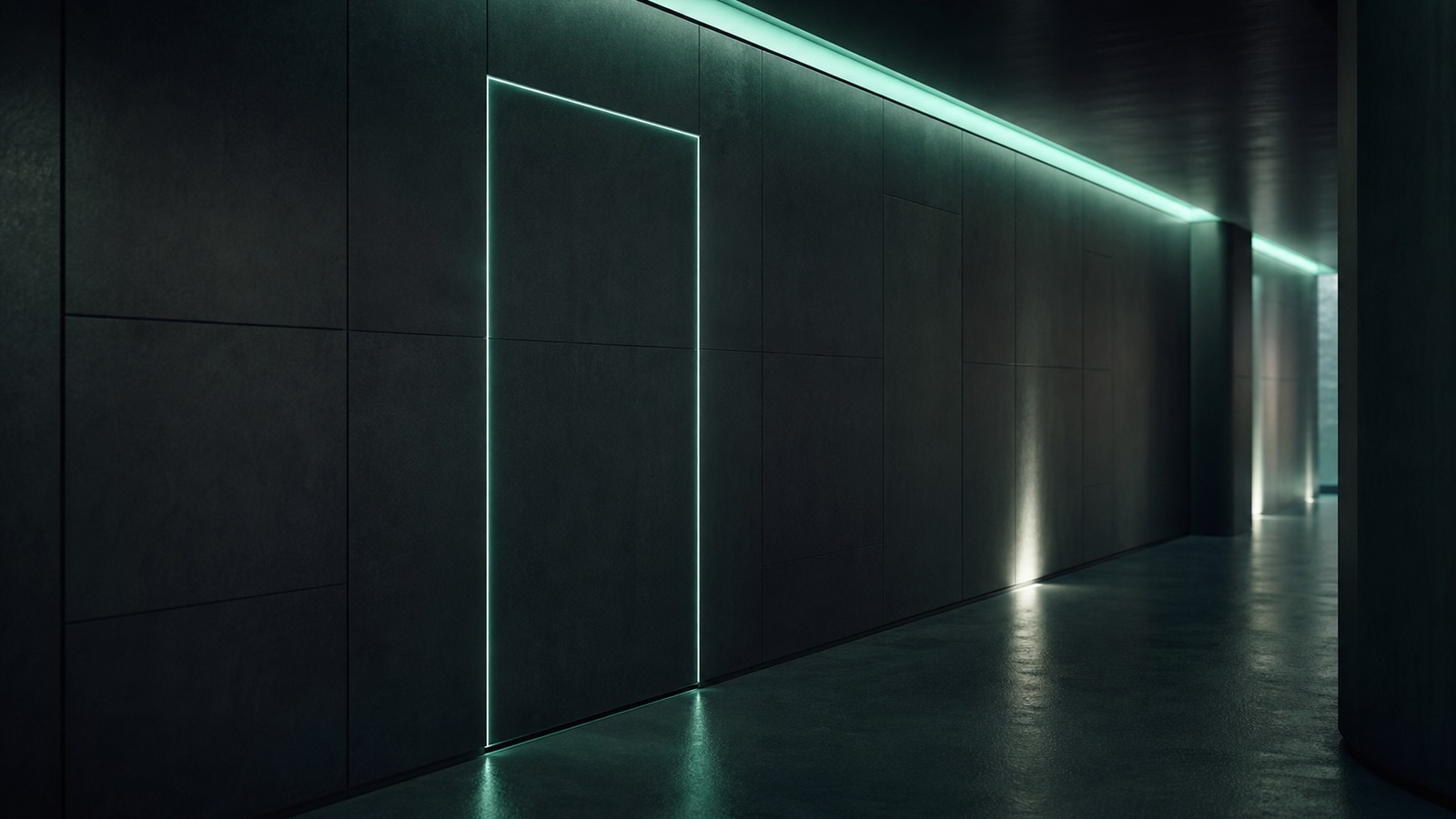
Sci-Fi Doors Hide More Than Rooms
Concealed doors in The Matrix and sci-fi cinema often hide more than physical rooms. They hide systems, realities, permissions, identities, and truths about how the world works. A doorway may open inside a simulated environment, a futuristic corridor, a corporate lab, a spaceship, or a city controlled by technology. The threshold is not only architectural. It is philosophical. Sci-fi concealed doors ask whether the visible world is trustworthy, who controls access, and what changes when someone learns how to pass through a hidden layer.
A: They make hidden systems, permissions, and realities visible.
A: They often involve technology, perception, or world rules rather than woodwork.
A: It links thresholds with reality, awakening, control, and choice.
A: They make doors feel like part of a controlled system.
A: Yes. Access rules reveal hierarchy, surveillance, and rebellion.
A: Flush calm, integrated lighting, and purposeful hidden storage.
A: Only if they serve the design and remain reliable.
A: Color tells viewers what kind of hidden system lies beyond.
A: Yes. In controlled worlds, hidden access can become resistance.
A: Who controls access, and what changes when someone learns to open it?
The Threshold Becomes a Question About Reality
Science fiction often uses doors to ask what kind of world the character is living in. A concealed doorway can reveal that a room is part of a simulation, a laboratory, a spacecraft, a surveillance system, or a controlled social order. The door opens, and reality becomes less stable.
That is why concealed doors suit stories influenced by digital worlds and constructed realities. They turn doubt into architecture. The character can literally cross from one level of understanding to another.
In this kind of cinema, the hidden door is not only a secret entrance. It is a challenge to perception.
The Matrix Made Access Feel Philosophical
The Matrix helped make thresholds feel connected to awakening, control, and choice. Doors, rooms, corridors, and exits can operate like interfaces between layers of reality. A concealed or unexpected doorway may feel less like carpentry and more like a rule in a system.
That is a major difference from traditional mansion or castle secrets. In sci-fi, the door may not simply be hidden by woodwork. It may be hidden by code, authority, perception, or the limits of what a character believes is possible.
Futuristic Surfaces Make Seams Suspicious
Sci-fi interiors often use seamless walls, glowing panels, dark glass, brushed metal, and smooth corridors. Those surfaces make concealment feel natural because the architecture already looks controlled and engineered. A door can disappear into the system.
Access Control Is Worldbuilding
In sci-fi cinema, concealed doors often reveal how a society or system controls movement. Who can enter the lab? Who can reach the ship core? Who has clearance to the archive? Who knows the hidden exit from the simulation? The door’s rules explain the world.
This is why access control is more than a plot device. It shows hierarchy, surveillance, rebellion, corporate power, military order, or technological dependence. A concealed door can tell viewers who holds authority before anyone says it aloud.
Good worldbuilding makes those rules consistent. If a door opens through a scan, code, implant, gesture, or system override, the story should make that access feel connected to the broader logic of the world.
Hidden Doors Can Signal System Glitches
Some sci-fi stories use concealed or unexpected doors to suggest that the visible environment is unstable. A hallway changes, a room appears where none should exist, or a surface opens in a way that violates ordinary expectation. The door becomes evidence that the world has rules the character has not learned.
This kind of reveal can be unsettling because it changes the audience’s trust in space. If the wall can open, what else has been hidden? If the route appears only to certain people, what controls perception?
Spaceships Need Practical Concealment Too
Not every sci-fi concealed door is philosophical. Spaceships, stations, colonies, and labs also need storage, maintenance access, escape routes, airlocks, and technical rooms. Concealed panels can keep futuristic sets clean while implying complex systems behind the walls.
That practical layer helps the world feel real. A spacecraft with no maintenance access would be hard to believe. A clean panel that opens to wiring, equipment, or emergency supplies suggests design depth.
The best sci-fi sets balance sleek surfaces with practical hints. Viewers sense that the world continues behind the visible wall.
That makes the concealed door part of production design credibility.
Rebellion Often Needs Hidden Routes
Sci-fi rebels, hackers, fugitives, and resistance groups often use hidden doors because controlled worlds restrict movement. Concealed access becomes a tool for escaping surveillance, entering forbidden systems, or protecting communities outside official view.
The Door Can Be an Interface
In futuristic stories, a concealed door may behave like an interface. It responds to identity, code, voice, touch, proximity, or system permission. The physical wall becomes part of a digital network.
This changes the emotional meaning of the door. It is no longer only locked or unlocked. It is authorized, denied, hacked, overridden, or reprogrammed. The threshold becomes a negotiation with the system.
Modern smart homes echo this idea in smaller ways. Hidden doors with electronic access can be useful, but they need reliable backups, privacy awareness, and clear user control. Sci-fi makes the interface dramatic; real design has to make it dependable.
Color and Light Define the Hidden Layer
Sci-fi cinema often uses color to separate worlds. Green, blue, red, white, or cold metallic light can make a concealed doorway feel technological, artificial, dangerous, clinical, or transcendent. The light beyond the door tells viewers what kind of system they are entering.
That technique is powerful because sci-fi spaces can be abstract. Color gives the threshold emotional direction.
Concealed Doors Express Control and Escape
A sci-fi concealed door can represent control when it restricts access, surveillance when it responds to authority, or escape when a character learns how to open it. The same door can be oppressive or liberating depending on who controls the mechanism.
This dual meaning gives sci-fi doors unusual tension. The threshold is part of the system, but it may also become a weakness in the system.
That is why hidden access is so useful in stories about artificial realities and technological power. Every controlled surface may contain a route out.
Real Design Can Borrow the Seamless Calm
Homeowners may not want a sci-fi corridor, but they can borrow the idea of seamless calm. Flush wall doors, hidden pantries, concealed media rooms, and integrated storage can make a modern home feel more organized and less visually busy.
Avoid Letting Technology Become the Whole Story
Sci-fi can make a door seem impressive because it glows, scans, slides, or responds to invisible systems. Real concealed doors need more than technological mood. They need good proportions, safe access, durable materials, and a reason to be hidden.
A smart lock or motorized panel should support the user’s life. If it makes entry slower, maintenance harder, or failure more stressful, the design has borrowed the wrong lesson from cinema.
The better lesson is integration. Technology should disappear into the experience as gracefully as the door disappears into the wall.
Sci-Fi Doors Make Worlds Feel Programmable
In science fiction, concealed doors often imply that space is programmable. A wall can become an exit, a corridor can shift meaning, and a room can reveal another system behind it. That makes architecture feel less fixed than in ordinary realism.
This programmable feeling is central to films about simulation, artificial intelligence, corporate control, and future cities. The door is a sign that reality has settings.
The Matrix and Sci-Fi Keep Asking Who Has the Key
The deepest question behind sci-fi concealed doors is not only what lies beyond them. It is who has the key, who wrote the rule, who can break it, and who is kept outside. The threshold becomes political, philosophical, and emotional at once.
That is why these doors remain so memorable. They are not merely hidden panels in futuristic walls. They are moments when a character discovers that the world has been arranged by someone, and that access can be challenged.
When a concealed sci-fi door opens, it can feel like awakening. The room beyond may be dangerous, but it proves the visible world was incomplete. For this genre, that revelation is everything.
The Future Door Is Really About Choice
Sci-fi concealed doors endure because they make choice visible. Enter the hidden room, stay in the known corridor, accept the system, or look for another route. The door gives abstract freedom a physical location.
That is the link between The Matrix, futuristic thrillers, space stories, and cyberpunk worlds. Concealed access asks whether a character will accept the surface or test it. The audience leans in because the same question is human: what if the world has another layer, and what if we can learn how to open it?
The Hidden Interface Changes the Viewer
Concealed doors in sci-fi do more than move characters. They train viewers to question surfaces. A clean corridor may hide an archive, an elevator may hide a system override, and a blank wall may contain the route out. Once the audience learns that the world can conceal interfaces, every surface becomes more interesting.
This is especially powerful in stories shaped by simulations and digital control. The door does not only separate rooms; it exposes the logic of the environment. The character who finds the threshold begins to read the world like a system rather than a backdrop.
That shift is why sci-fi concealed doors remain memorable after the visual novelty fades. They suggest that awareness changes access. The door was there before, but it mattered only when someone learned how to perceive it. For a genre concerned with technology, identity, and freedom, that is a perfect architectural metaphor.
The Seam Is Where the System Shows
Sci-fi concealed doors often become visible at the seam between control and escape. The surface looks perfect until someone notices a pattern, interruption, code, light change, or permission gap. That seam tells the audience that the system is not total. It has joints, rules, failures, and possible openings.
This makes the door hopeful even in dark futuristic worlds. A controlled environment may be powerful, but the hidden threshold suggests that control can be read, tested, and sometimes broken. The character who finds the door is not only lucky; they are learning how the world is made.
For real architecture, the lesson is quieter but useful. Seamless design should not erase human understanding. A concealed door can be beautifully integrated while still being usable, safe, and legible to the people who need it. Sci-fi turns that tension into philosophy; good design turns it into daily grace.
The most satisfying sci-fi reveals therefore do two things at once. They make the system feel larger and less absolute. A hidden door proves that someone designed the world, but it also proves that design can be interpreted. The threshold becomes a place where obedience gives way to perception. That is why these doors feel different from ordinary secret passages. They do not only ask where the hidden room is. They ask who wrote the rules of the visible world, who benefits from them, and who might learn to step outside them. In that sense, every concealed sci-fi door is a small argument for awareness, resistance, and the possibility of another route beyond the frame, even when the corridor looks complete and final to everyone else watching nearby in silence together.


