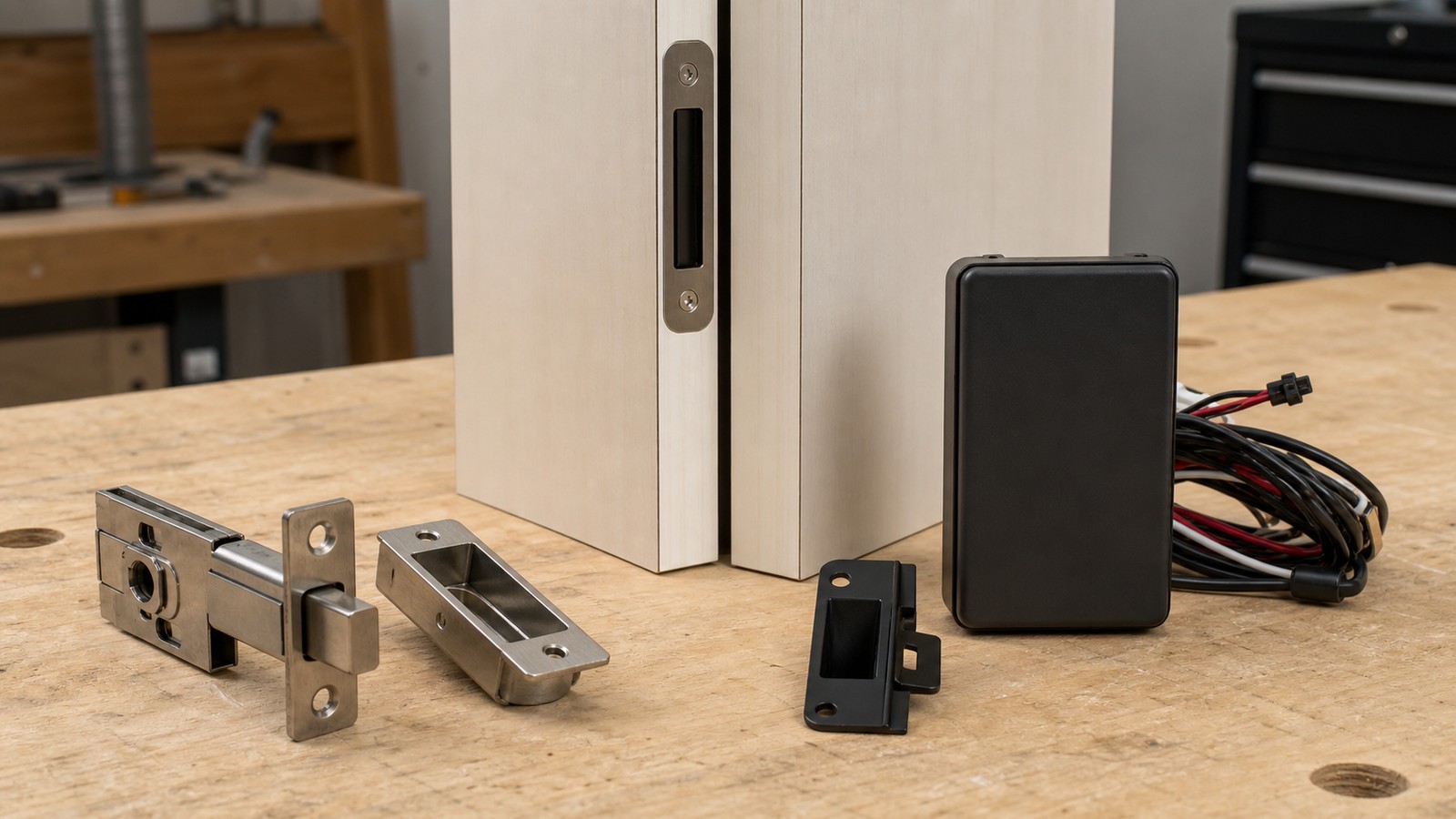
Hidden Locks Need Reliability More Than Mystery
Concealed door locks, mechanical vs. electronic, should be compared by how safely and reliably they control access, not by which one feels more dramatic. Mechanical locks can be simple, durable, and understandable during a power failure. Electronic locks can offer convenience, remote control, or cleaner hidden releases, but they add batteries, wiring, programming, and backup requirements. The right choice depends on the door’s purpose, who needs access, how often the opening is used, and what should happen when something fails.
A: Not automatically; they add convenience but also power and maintenance concerns.
A: No, simple mechanical locks can be reliable, discreet, and easy to service.
A: Electronic systems need a planned backup or manual override.
A: No, occupied spaces need obvious and reliable exit operation.
A: Usually it is better for closure or privacy than serious security.
A: Only when the door, frame, hinges, and access routine support that goal.
A: They can help in some cases, but codes and power need management.
A: The one that authorized users can operate comfortably and maintain reliably.
A: They are best for light-duty concealment with a practical backup.
A: Use expert help for security rooms, life-safety concerns, wiring, or heavy doors.
Start With the Door’s Real Purpose
A concealed pantry, private office, storage closet, and security room do not need the same lock. Some hidden doors only need a catch that keeps the panel closed. Others need privacy. A few need stronger access control. Define the purpose before comparing lock types.
Over-locking a simple room can create frustration, while under-locking an important space can create false confidence. The lock should match the consequence of unwanted access.
Mechanical Locks Are Easier to Understand
Mechanical locks work through physical parts: latches, bolts, catches, keys, levers, pulls, releases, and strikes. Their main advantage is clarity. If the mechanism is maintained and accessible, users can often understand how it operates without software, batteries, or connectivity.
Mechanical systems can also be discreet. A hidden edge pull, disguised cabinet latch, keyed cylinder placed in an expected detail, or interior thumb turn can control access without announcing the door. Simplicity can be elegant.
The weakness is that mechanical locks still need solid support. A strong lock in a weak frame is not a strong system.
Electronic Locks Add Convenience and Failure Modes
Electronic concealed locks can use keypads, fobs, sensors, smart controls, magnetic releases, or powered strikes, depending on the design. They may help when the release needs to be hidden or when multiple authorized users need access. They can also reduce visible hardware.
Plan Backup Access Before Choosing Electronics
Any electronic system needs a plan for dead batteries, power loss, failed components, lost credentials, software issues, or changed users. Backup access should be discreet but real. A hidden door that cannot be opened during a failure is a problem, not a feature.
For occupied rooms, life safety must lead. People inside should not depend on a powered or secret method to exit. The inside operation should be direct and reliable.
Compare Maintenance Honestly
Mechanical locks need lubrication, alignment, screw checks, and occasional adjustment. Electronic locks need those things plus battery replacement, wiring inspection, credential management, and component troubleshooting. Neither option is maintenance-free.
The best choice is the one the owner will actually maintain. A simple mechanical latch checked twice a year may outperform an electronic system nobody monitors. Convenience should not hide neglect.
If the door protects valuables or people, maintenance routines should be written down and shared with trusted users.
Think About Noise
Some mechanical latches click, clunk, or rattle. Some electronic strikes buzz or snap. In a concealed door, sound can reveal what sight hides. Test the lock in the actual wall if possible, especially in quiet rooms.
Hide the Release Without Hiding the Exit
The outside release may be subtle, but the inside release should be obvious when someone can occupy the hidden space. This distinction is crucial. Concealment is fun from the public side; confusion is dangerous from the private side.
For storage-only spaces, a simpler release may be acceptable. For rooms, offices, basements, or any area a person might enter, make the exit path direct.
Match the Lock to the Door Structure
Locks depend on frame strength, strike support, door-core stability, and reveal control. Mechanical deadbolts need proper strike reinforcement. Magnetic locks need power and appropriate release logic. Cabinet-style catches need accurate alignment. No lock can compensate for a flimsy door.
Before choosing the lock, inspect where it will fasten and how force travels into the wall. The concealed door is a system.
Heavy or security-sensitive doors deserve professional review. Lock choice alone is not a security plan.
Use Electronics Carefully Around Privacy
Electronic access can create records, credentials, app dependencies, or remote permissions. Some homeowners like that control; others prefer mechanical privacy. Consider who manages access and what happens when a phone, fob, code, or account changes.
Avoid Novelty Releases for Important Doors
Secret books, hidden switches, magnets, and disguised triggers can be charming for light-duty concealment. They are less appropriate when reliable access matters. A release that feels clever during a tour may become annoying during daily use.
If a novelty trigger is used, pair it with a practical backup. Hidden doors should delight without making access fragile.
Consider Power and Wiring Early
Electronic locks may need batteries, low-voltage wiring, transformers, relays, access controls, or protected cable paths. Those decisions affect framing, service access, and finish work. Do not bury electronics behind a completed concealed wall without a maintenance plan.
Battery-powered systems need reachable compartments. Wired systems need safe installation and may require professional help. Wireless controls need realistic expectations about signal, updates, and long-term support.
Electronics can be useful, but they should never be treated as invisible magic.
Mechanical Locks Can Be Visually Quiet
Mechanical does not have to mean obvious. Edge pulls, flush bolts, cabinet catches, hidden thumb turns, and disguised key access can blend into trim or furniture patterns. Often the cleanest solution is a mechanical one integrated thoughtfully.
Security Needs Layers
If the purpose is serious security, lock choice is only one layer. The concealed location, door core, frame reinforcement, hinge side, strike support, alarm strategy, lighting, and access routine all matter. A hidden electronic lock on a weak panel is not enough.
For high-value or life-safety uses, consult qualified professionals. DIY comparisons can help with vocabulary, but they cannot certify a secure opening.
Choose for the Person Who Uses It Tired
The best lock should work when the user is tired, carrying something, in low light, or in a hurry. If the door is used daily, the release should be comfortable and repeatable. If the lock is rarely used, the access method should be memorable and documented.
This practical test cuts through the mechanical-versus-electronic debate. The winning lock is the one that remains safe and understandable under ordinary conditions.
Invite the right users to test it before final finish. Their confusion is valuable feedback.
Mechanical vs. Electronic Is Not a Status Contest
Electronic locks can feel modern, and mechanical locks can feel old-fashioned, but neither is automatically better. The better choice is the one that supports the door’s purpose with fewer unacceptable risks. Sometimes that means a robust mechanical latch. Sometimes it means an electronic release with a carefully planned backup. Sometimes it means no real lock at all, just a quiet catch.
Concealed doors succeed when access feels intentional. Choose the lock by reliability, safety, maintenance, structure, and user behavior. Mystery is optional. Operation is not.
Choose the Simplest Reliable State
For many concealed doors, the best lock is the simplest one that meets the need. A pantry may need only a quiet catch. A private office may need a mechanical privacy lock. A high-value storage area may need a more serious system with professional input. Complexity should be earned by the risk, not added for style.
This keeps the door easier to maintain and easier to explain to authorized users. It also reduces the number of failure points hidden behind a finished wall. The more important the door is, the more carefully every added feature should justify itself.
Simple does not mean weak. It means the lock, frame, user routine, and backup plan are aligned without extra drama.
Plan for User Changes
People move, roommates change, staff roles shift, and family needs evolve. Mechanical keys, electronic codes, fobs, and app permissions all need a changeover plan. A concealed door can become a security gap if old access methods are forgotten after the people who used them have moved on.
Keep Serviceability Above Secrecy
A hidden lock still needs service. Batteries, screws, strikes, wiring, and moving parts should be reachable without destroying the disguise. If the cleanest design makes maintenance nearly impossible, it is probably too clean for long-term use.
Good serviceability can be discreet. Removable trim, hidden-side access, labeled private notes, and planned backup entry all preserve the look while protecting the function. The lock should stay as dependable in year three as it felt during the first reveal. Serviceability also protects security, because a lock that cannot be maintained will eventually be bypassed, propped open, or ignored. A concealed lock should make good habits easier, not tempt users into shortcuts.
Test Failure Modes Before Trusting the Lock
A concealed lock should be tested in the ways it might fail. Remove power from an electronic system, simulate a dead battery, try the mechanical backup, check the latch after slight door movement, and confirm inside exit without the normal outside release. Testing failure is more useful than testing only the perfect scenario.
Mechanical locks need the same honesty. Try the key after the door has been adjusted, test the thumb turn from inside, and check whether the bolt still lands cleanly in the strike. A simple lock can still fail if the door shifts.
These tests should happen before final trim makes access difficult. They may reveal the need for a simpler system or a clearer backup path.
Make Ownership of Access Clear
Concealed locks are easy to complicate when several people need entry. Decide who holds keys, codes, fobs, apps, or backup knowledge. If the access plan depends on one person, the door may become inconvenient or unsafe when that person is away.
Use Professional Help for Wiring or Serious Security
Low-voltage wiring, integrated access control, alarms, and high-security rooms are not just design choices. They can affect safety, reliability, and legal responsibilities. If the lock system moves beyond simple hardware, qualified help is often the responsible choice.
A concealed door can still feel personal with professional input. In fact, the best electronic or security-sensitive systems often look simple because the complicated work was handled correctly behind the scenes. That simplicity is reassuring. Users do not need to see every relay, wire, or reinforcement detail; they need the door to open for the right people, stay closed when expected, and fail in a planned, understandable way.
Review Access After Installation
The lock decision should be reviewed after people have lived with the door. Daily use may reveal that the release is too slow, the code is shared too casually, the mechanical key is stored poorly, or the backup method is not clear. Real habits are better evidence than design intentions.
Make changes while the system is still familiar. Update codes, move backup access, tune the latch, or simplify the release if needed. A concealed lock is successful when the right people use it consistently without inventing workarounds.
That ongoing review keeps access control from becoming theater and keeps the hidden door useful after the novelty fades, even as household routines and access needs change.