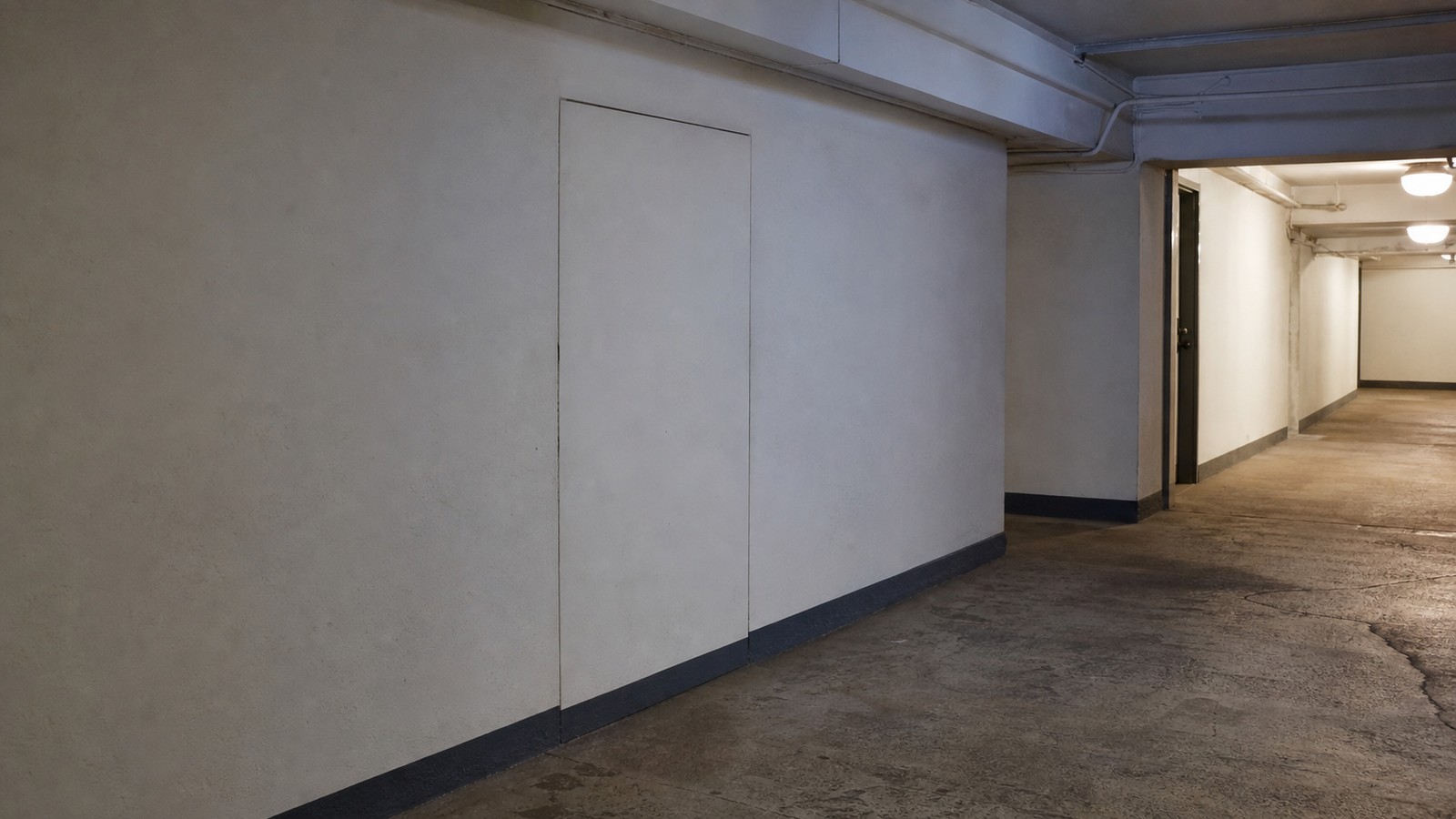
Urban Legends Hide Mystery Inside Everyday Places
Concealed entrances in modern urban legends are compelling because they place mystery in ordinary surroundings: schools, hotels, malls, apartment buildings, subway stations, hospitals, theaters, offices, storm drains, and old downtown blocks. The hidden door is not in a distant castle. It is supposedly behind the wall, beneath the stair, past the service corridor, or under the street people use every day. These stories blend real building complexity with rumor, memory, anxiety, and the thrill of believing the familiar city has a secret layer.
A: They place mystery inside familiar everyday buildings and routes.
A: Students know the building closely but remain excluded from many staff spaces.
A: Yes, ordinary restricted routes can become dramatic when their purpose is unknown.
A: Images and comments can detach a doorway from local context and amplify claims.
A: Yes, it may preserve a real feature while distorting its purpose.
A: Legends also preserve atmosphere, memory, and emotion, not only facts.
A: Use records, maps, local expertise, and authorized access.
A: Safety, property rights, legal limits, and preservation may all be at stake.
A: They suggest that ordinary places have hidden layers.
A: Enjoy the folklore while keeping evidence and safety in view.
Everyday Settings Make Legends Stronger
An urban legend works best when the setting feels close. A rumor about a secret entrance in a school basement or hotel corridor feels more immediate than a story set in a remote ruin. The place is familiar enough for listeners to imagine checking it themselves.
Concealed entrances fit this closeness. They suggest that the ordinary building is incomplete, that another route exists just beyond the public path. The legend becomes a way to make daily surroundings feel charged.
That charge is often emotional. People remember fear, curiosity, dares, friendships, and warnings connected to the hidden place.
The entrance becomes part of local identity.
Service Corridors Become Story Fuel
Modern buildings contain many routes the public does not use: utility rooms, staff halls, maintenance doors, loading areas, roof access, and mechanical spaces. These are ordinary, but their restricted status gives legends room to grow.
Schools Generate Doorway Folklore
Schools are especially rich sources of hidden-entrance legends because students inhabit them intensely but never fully control them. Locked closets, old stairwells, tunnels between buildings, stage doors, boiler rooms, and roof hatches can all become part of student mythology.
The stories often change with each class. A maintenance route becomes a secret punishment room, a sealed stair becomes a ghost story, and a basement corridor becomes a tunnel to another building. The details shift, but the feeling remains.
These legends express how young people experience institutions: partly familiar, partly restricted, and full of rules they did not create.
Hotels and Theaters Invite Backstage Myths
Hotels and theaters already have public and private layers. Guests see lobbies, rooms, stages, and corridors; staff use service elevators, laundry routes, backstage doors, storage rooms, and mechanical spaces. The division makes hidden-entrance legends easy to imagine.
Some stories have practical roots. A former service passage, old speakeasy entrance, or disused stair may become a tale of celebrities, escapes, ghosts, or secret parties. The legend dresses real circulation in drama.
Transit Spaces Feel Like Hidden Networks
Subways, rail stations, parking structures, pedestrian tunnels, and utility corridors naturally suggest hidden systems. People know there are routes they cannot see: maintenance tracks, closed platforms, service rooms, ventilation shafts, and staff-only passages.
This knowledge gives urban legends a foundation. The city really does have hidden infrastructure. The story begins when that infrastructure is given a dramatic destination or secret purpose.
Transit legends often spread because commuters pass the same locked doors repeatedly. Repetition makes the unknown feel personal.
A door glimpsed every day becomes a question that never gets answered.
The city trains people to wonder.
Online Maps Change the Legend
Modern legends now spread through photos, forums, short videos, map screenshots, and comment threads. A blurry doorway or old tunnel image can travel far beyond the neighborhood where the story began.
Verification Needs Local Context
Urban legends should be checked with local history, building records, old maps, renovation dates, and permission from property owners or institutions. A concealed entrance story may contain a real feature but a false explanation. Context separates those layers.
Local workers often know more than rumor does. Facilities staff, archivists, preservationists, theater technicians, hotel employees, and longtime residents can explain routes that look mysterious from the outside.
That explanation should not be treated as a disappointment. It can turn folklore into a better story about how the place actually works.
The legend may still matter as social memory.
Safety Limits Are Part of the Tale
Many urban legends function as warnings. Do not open the basement door. Do not enter the tunnel. Do not explore the sealed stair. The hidden entrance becomes a boundary between curiosity and danger.
Those warnings can be sensible even when the legend is exaggerated. Restricted spaces may contain hazards, security concerns, fragile materials, or legal limits.
Urban Legends Preserve Atmosphere
A legend can preserve how a place feels, even when the facts are wrong. A school basement may not contain a secret tunnel, but it may still feel strange, echoing, and off-limits. A hotel service stair may not hide a famous escape, but it may still suggest another life of the building.
This emotional truth explains why legends survive corrections. They are not only claims about facts. They are stories about how people experience hidden parts of shared spaces.
The concealed entrance carries atmosphere from one storyteller to the next.
Trespass Can Damage Real Places
The excitement of urban legends should not become trespass. Hidden entrances can lead to unsafe or private areas, and exploration can damage buildings, disrupt workers, or create serious risk. The best way to investigate is through authorized tours, archives, interviews, and public records.
The Ordinary City Still Feels Layered
Modern urban legends endure because the city really is layered. Pipes, cables, maintenance rooms, old foundations, basements, sealed storefronts, service corridors, and forgotten renovations sit behind the public view. A concealed entrance gives that layering a face.
The legend may exaggerate, but it starts from an intuition that is true: everyday places are deeper than they look. Buildings contain work, history, and routes that most people never notice.
That intuition keeps people listening. The hidden door is the city’s wink.
It says that even familiar blocks may still have stories tucked behind them.
The trick is to enjoy the story without losing respect for evidence and safety.
Construction Changes Restart Old Stories
Renovations can revive urban legends. When walls are opened, floors are cut, or old service areas are exposed, people get a glimpse of the building’s hidden structure. That glimpse can restart rumors that had faded for years.
Youth Culture Uses Doors as Challenges
For students and teenagers, a concealed or restricted entrance can become a dare. The story is not only about what lies beyond the door; it is about bravery, belonging, and rule-testing. The threshold becomes a social object.
That social function helps explain why the facts can change while the legend survives. One class tells the story as a ghost route, another as an escape tunnel, another as a hidden room. The real point is the shared thrill.
Urban legends often preserve the feeling of being near a boundary more than they preserve exact details.
Workers Often Hold the Plain Answer
Maintenance workers, custodians, theater crews, hotel staff, transit employees, and building managers often know the practical explanation for a legendary entrance. They may know which door reaches a pump room, which stair was sealed, or which corridor serves deliveries.
Listening to those explanations can improve the legend rather than kill it. The story gains real texture when the building’s labor is included.
Legends Can Protect Dangerous Places
Some hidden-entrance legends function as informal safety warnings. A tunnel is said to be haunted, cursed, or forbidden, and the story keeps people away from a place that may actually be structurally unsafe or legally restricted.
This does not mean every warning is accurate, but the protective role is worth noticing. Communities sometimes turn risk into story because story travels faster than policy.
The concealed entrance becomes a boundary marker. It tells people where curiosity should slow down.
Respecting that boundary can be the wisest way to enjoy the legend.
A False Story Can Still Map Anxiety
Even when an urban legend is factually wrong, it can reveal what people worry about: institutions, abandoned spaces, hidden labor, unsafe infrastructure, surveillance, exclusion, or changes in the neighborhood.
Better Local History Improves the Legend
The best version of a hidden-entrance legend is often the one enriched by local history. Old maps, employee memories, preservation reports, and public archives can show how the route actually worked while leaving room for the story’s atmosphere.
This approach respects both folklore and evidence. It does not mock the legend, and it does not surrender to it. It lets the concealed entrance become a doorway into community memory.
That is a better ending than simply proving people wrong.
Folklore Turns Doors Into Community Memory
A concealed entrance in an urban legend often matters because people keep telling the story. The tale becomes part of how a neighborhood, school, theater, or hotel remembers itself. Whether the original claim is true or not, the door becomes a shared image.
Read carefully, these legends can reveal what communities fear, desire, and notice. They show how restricted architecture becomes folklore when people need a place to put mystery close to home.
That closeness is what separates urban legends from distant myths. The hidden entrance is said to be in a hallway someone has walked, under a street someone crosses, or behind a wall someone passes every week. The story turns routine movement into potential discovery.
It also gives communities a way to talk about change. A sealed door may stand in for a lost business, a closed school wing, an old transit route, or a neighborhood history that feels partly erased. The concealed entrance becomes a handle for memory.
The best response is not to strip the legend of all atmosphere. It is to add context, protect safety, and let the story reveal why people needed it. Folklore can be inaccurate and meaningful at the same time.
When handled that way, the hidden urban entrance becomes more than a dare. It becomes a local archive made of rumor, architecture, and shared attention.
That archive is fragile because it depends on retelling. Once a building is demolished, renovated, or renamed, the legend may be the only trace left of how people felt about its hidden spaces. The concealed entrance keeps a piece of that atmosphere alive.
For that reason, urban legends deserve careful listening even when they need correction. They can point toward real maintenance routes, lost businesses, unsafe voids, or simply the emotional geography of a neighborhood. The hidden door becomes a clue to both place and memory. It tells us where people sensed that the public version of a building was incomplete, and where they needed a story to hold that feeling. That story may be exaggerated, but it can still preserve a community’s curiosity about the spaces it shares, and about the histories those spaces might conceal. The legend keeps attention attached to place, which is why it survives across retellings and across generations of local storytellers who keep asking what else is hidden nearby in plain sight today.
The best local storytellers know this instinctively. They keep the mood of the legend alive while allowing the facts to become sharper. A concealed entrance does not have to remain unexplained to remain meaningful; sometimes the explanation gives the story a deeper home.