Small Budgets Work Best When the Door Stays Simple
Budget-friendly concealed door projects under $500 are possible when the design respects what the money can actually solve. The strongest low-cost projects usually reuse an existing door opening, keep the moving leaf light, and let paint, trim, shallow panels, or clever visual rhythm do most of the hiding. The mistake is trying to build a dramatic secret room system on a materials budget that belongs to a weekend finish project. A better plan is to spend where motion, safety, and alignment matter, then use modest surface choices to make the closed door look ordinary.
A: Yes, when the project reuses an existing opening and avoids heavy custom mechanisms.
A: Put money into safe movement, dependable latching, surface prep, and final fit.
A: A shallow shelf disguise is more realistic than a fully loaded bookcase door.
A: Yes, especially when the wall, trim, and door are treated as one surface.
A: A flush closet or pantry door with matched trim is often the easiest start.
A: Exterior doors usually need better weather control and may exceed a small budget.
A: Keep a reserve for primer, shims, screws, caulk, filler, and latch changes.
A: Even reveals, matching sheen, clean trim, and smooth operation do the heavy lifting.
A: Only with reversible choices and clear permission for any fastening or finish changes.
A: Heavy doors, structural work, and occupied hidden rooms need more cautious planning.
Begin With a Door That Already Works
The cheapest concealed door is usually the one that starts with a reliable existing opening. If the jamb is square enough, the hinges are secure, and the door closes without scraping, you already own the most expensive part of the project: a functional passage. A budget design can then focus on disguising that passage instead of rebuilding it.
That does not mean every old door is ready. Check swing clearance, latch behavior, floor rub, and whether the frame moves when the door closes. If those basics are weak, spend the first dollars on repair before any decorative disguise.
Spend First on Movement, Not Drama
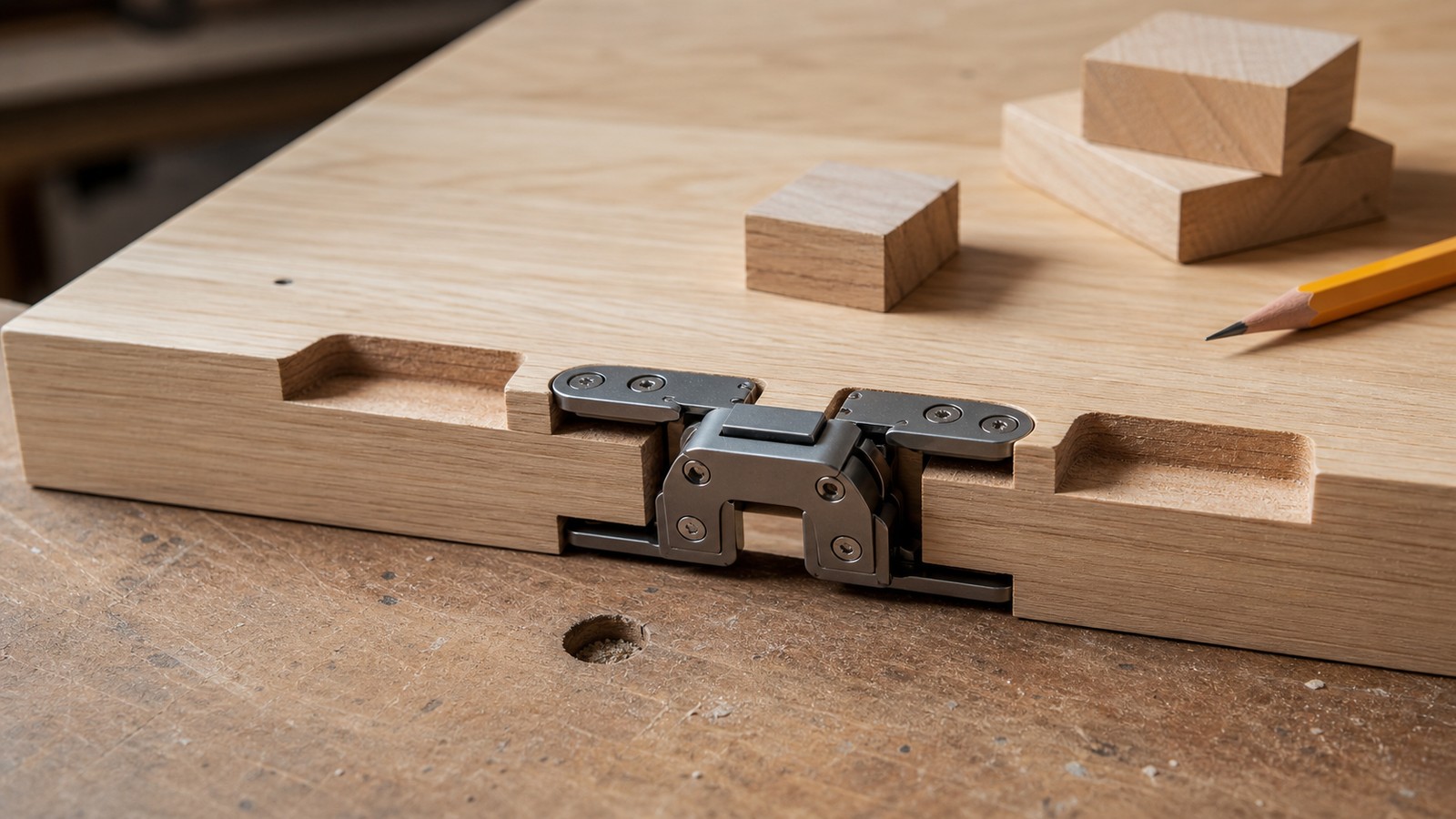
Hidden doors fail quickly when the operating parts are treated as leftovers. A low budget can still support dependable hardware if the door remains light and the design does not ask the hinges to carry shelves, stone, thick paneling, or heavy mirrors. Choose the motion style before buying trim or paint.
For many homeowners, ordinary hinges with careful reveal management are more realistic than elaborate pivots. A flush latch, ball catch, magnetic touch latch, or discreet edge pull may be enough. The goal is a door that opens smoothly every time, not a magic trick that needs a shove.
Hardware is also where measurements matter most. Cheap parts become expensive when they force rework, so check door thickness, swing direction, jamb depth, fastener location, and clearances before ordering.
Use Paint as a Concealment Tool
Paint is the friendliest budget material because it can flatten visual interruptions. Painting the door, trim, jamb, and surrounding wall the same color can reduce the contrast that normally announces an opening. A matte or eggshell finish may soften seams better than a glossy surface that catches every edge.
Let Trim Create a Larger Pattern
A concealed door becomes easier to hide when the door seam is only one line inside a larger wall composition. Applied molding, simple battens, picture-frame trim, or vertical slats can make the operating gaps look like part of the room. This approach works especially well in hallways, offices, playrooms, and dens where decorative millwork already feels natural.
The trick is restraint. If the trim pattern suddenly becomes busy only around the secret door, the wall tells on itself. Carry the same spacing past the opening so the hidden panel does not look framed for attention.
Keep Shelf Disguises Shallow
Bookshelf doors are tempting, but loaded shelves can quickly break a small budget. Full bookcase doors need stronger structure and more careful hardware than a flat panel. A more affordable version uses shallow fixed shelves beside the opening and a lighter shelf-like face on the door.
Decorative objects should be secured or kept minimal. A few light pieces can create the illusion of storage without turning the moving door into furniture. If the door is used often, the shelf face should feel calm rather than crowded.
Budget shelf disguises also need a plan for cleaning. Dusty objects, tilted decor, and scuffed edges can make the disguised section stand out faster than the seam itself.
Avoid Projects That Require Wall Surgery
Moving framing, electrical wiring, plumbing, ducts, or structural members can push a project beyond a simple budget almost immediately. The safest under-$500 ideas usually stay on the surface: paint, trim, shallow paneling, small latches, and cosmetic alignment. Once the design enters the wall, the cost risk changes.
Use Panel Materials Carefully
Thin plywood, hardboard, MDF, beadboard, and lightweight wall panels can all help disguise a door, but each behaves differently. Some need primer on both sides, some swell near moisture, and some show every fastener if rushed. Test scraps before committing the whole door face.
Weight is the constant limit. A panel that feels harmless in your hand can add meaningful stress once it covers a full door. If the existing hinges already look small, upgrade the support before adding more material.
Make the Release Obvious From the Hidden Side
Budget concealment should never create a trap. If the door leads to a room someone can enter, the inside release must be simple, visible, and reliable. A hidden latch that feels clever from the hallway may feel alarming from the other side.
This is especially important for closets, playrooms, offices, basements, and any space a guest might use. The outside can be subtle, but the inside should be direct. Good hidden doors feel fun because they are safe first.
Ventilation and lighting belong in the same conversation. If the concealed area is more than storage, make sure the room behind the door can be used comfortably.
Let Salvaged Materials Do Quiet Work
Leftover trim, spare paint, reclaimed shelf boards, and unused cabinet pulls can stretch a small budget. The best salvaged pieces are the ones that repeat materials already present in the room. Repetition makes the project look intentional rather than patched together.
Budget for the Unseen Supplies
Screws, primer, wood filler, caulk, sandpaper, adhesive, shims, touch-up brushes, and replacement blades rarely make the dream board, but they decide how polished the result looks. Leaving money for small supplies keeps the finish from becoming rushed at the end.
It is also wise to leave a small contingency. A hidden door is unusually sensitive to alignment, and one extra trip for better fasteners or a different latch can save the project. Spending every dollar before testing the swing is a false economy.
Know When the Budget Is Too Tight
Some concealed door ideas are not realistic under $500. Heavy bookcase doors, motorized releases, exterior hidden entrances, structural changes, and high-security rooms usually need more money and professional judgment. Calling those projects expensive is not discouraging; it is honest planning.
A smaller version can still be satisfying. A painted flush closet, a panel-hidden pantry, a trim-camouflaged office door, or a low-profile under-stair access panel can feel special without pretending to be a luxury installation.
The best budget project chooses one strong trick and executes it cleanly.
Test the Door Before Final Finish
Dry-fit the panels, operate the latch, check the gaps, and open the door several times before caulking or final painting. Hidden doors often reveal their problems only after movement. A seam that looks perfect while closed may rub when the door swings.
Use Lighting to Reduce Suspicion
Uneven shadows can make a disguised opening stand out. A small change in lamp placement, hallway brightness, or wall-wash lighting may help the hidden door blend with nearby surfaces. Good lighting does not have to be expensive; it just needs to treat the concealed section like the rest of the room.
Avoid spotlighting the release point or the operating seam. If a guest’s eye is drawn to one brighter edge, the concealment loses its calm. Budget designs benefit from even, ordinary light.
A Modest Door Can Still Feel Magical
The delight of a concealed door does not come only from expensive hardware. It comes from the moment a normal-looking surface behaves differently. A well-painted closet panel, a trim line that opens, or a quiet shelf face can create that moment with limited materials.
Under $500, success depends on refusing unnecessary complexity. Keep the opening functional, keep the weight low, spend on reliable movement, and let finish details carry the disguise. When the closed wall looks natural and the door opens without fuss, the project feels much more expensive than it was.
That balance is the real win. The hidden door should not feel cheap, but it should feel honest about the budget. A carefully limited project can become one of the most memorable details in a home precisely because it turns ordinary materials into a small surprise.
Choose One Room to Benefit First
A small budget stretches farther when the concealed door solves a real room problem. A pantry that disappears into cabinet trim, a laundry closet that quiets a hallway, or a home office door that blends into paneling gives the project a practical reason. When the hidden opening improves daily life, the modest finish choices feel intentional rather than merely inexpensive. That focus also prevents the project from growing into several half-finished ideas competing for the same money.
Plan the Reveal Before Buying Decorative Parts
Many budget projects begin with a pile of attractive trim and no decision about how the door will actually open. Reverse that order. Decide whether the user will push, pull, press a latch, or grip an edge, then place the decorative work around that motion. The release point should feel natural to the hand and should not require bending, guessing, or moving fragile decor every time the door is used.
This planning can also save money by eliminating unnecessary pieces. If a simple edge pull fits the room, there may be no reason to buy a complex touch latch. If the seam already lands inside a trim pattern, extra paneling may only add weight. A clearer reveal usually leads to a cheaper and cleaner build.
Accept Maintenance as Part of the Budget
Concealed doors move, and moving finishes need touch-ups. Keep paint, stain, spare trim, extra fasteners, and latch notes together after the project is complete. A hidden door that can be adjusted and repaired cheaply will stay attractive longer than one that spent every dollar on the first reveal. Budget work is not lower quality when maintenance is planned; it is simply more honest about how real homes behave.
Check the door after the first week, then again after a season. New trim can settle, hinges can loosen, and painted edges can polish where fingers touch them. These are not failures if they are corrected early. They are part of turning a weekend project into a durable feature.
That follow-through is often what separates a clever cheap door from a good affordable door. The project should still make sense after the excitement of the reveal has passed.
Let the Budget Shape the Style
A low-cost hidden door looks strongest when the design embraces modest materials instead of imitating a luxury installation poorly. Painted panels, restrained trim, and careful reveals can feel more sophisticated than a bargain version of a heavy bookcase or motorized entrance. If the budget leads to a simpler style, let that simplicity become the visual strength of the room. The most convincing small-budget projects look edited, not deprived. That restraint is what lets the surprise feel deliberate, and it keeps the project from apologizing for the money it did not spend.