The Oldest Hidden Doors Are Usually Evidence, Not Certainty
The oldest known concealed doors in history cannot be ranked like a simple invention timeline. Ancient builders often worked in stone, timber, earth, plaster, and reused materials that later collapsed, were looted, or were restored by people with different priorities. What survives is evidence: blocked passages, disguised slabs, sealed tomb corridors, priestly access routes, fortress posterns, and architectural lines that suggest controlled movement. The story is less about one first secret door and more about an old human need to protect, separate, surprise, and manage access.
A: Usually no; the evidence is incomplete and interpretation depends on context.
A: No, many controlled access through slabs, screens, sealed passages, or removable barriers.
A: Tombs often used concealed or sealed routes to protect sacred and valuable spaces.
A: Many sacred complexes used restricted circulation, though evidence must be interpreted carefully.
A: Not necessarily; some were symbolic rather than functional passages.
A: Timber and light materials often decay, leaving fewer clues than stone.
A: Yes, curtains, plaster, screens, or stored objects could hide access for limited periods.
A: Small posterns and sally ports could support quiet defensive movement.
A: Hidden spaces invite stories, especially when evidence is fragmentary.
A: Both manage privacy, power, safety, and controlled knowledge of access.
Why the First Example Is Hard to Prove
Concealed doors are difficult to identify after centuries because concealment depends on context. A stone slab that looked invisible in a plastered corridor may look obvious after excavation. A blocked doorway may have been hidden, sealed, repaired, or simply abandoned. Archaeology has to read the surrounding structure carefully.
This uncertainty makes cautious language important. The oldest surviving evidence may not be the oldest use. Many early hidden doors were probably made from materials that did not survive well enough to prove the trick.
Tombs Offer Some of the Strongest Clues
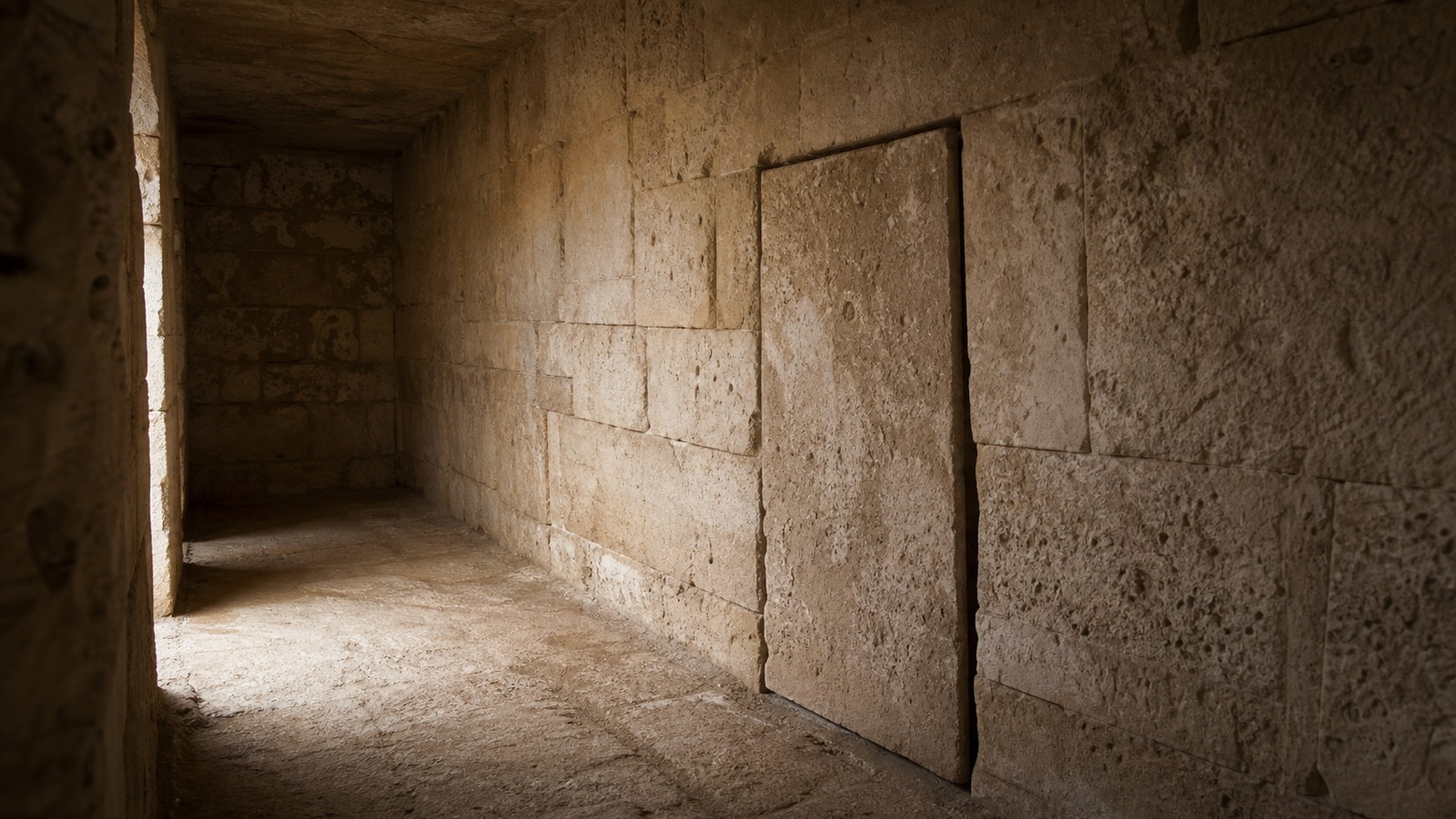
Ancient tombs often used blocking stones, false corridors, sealed chambers, and disguised thresholds to protect burial spaces. These features were not always doors in the modern hinged sense, but they controlled access and concealed movement. A carefully sealed passage could serve the same purpose as a hidden door: it prevented casual entry and protected a sacred or valuable interior.
Tomb architecture also had ritual meaning. A passage might divide the living world from the dead, conceal offerings, or make the burial chamber harder to violate. The hidden opening was both practical and symbolic.
Looting complicates interpretation. Some ancient concealment methods are known because they failed, were bypassed, or were broken open long ago.
Temples Used Access as Part of Authority
In many ancient sacred buildings, not every space was meant for every visitor. Priests, attendants, rulers, and initiated groups often moved through restricted zones. Concealed or controlled entrances could help separate public ritual from private preparation.
Palaces Needed Privacy and Service Movement
Early palaces were not only grand halls. They were working complexes with servants, guards, storage, private rooms, and ceremonial routes. Hidden or less visible doors could help staff move quietly, protect valuables, or separate ruler access from public display.
Some of these entrances may have been concealed only from certain viewpoints. A door hidden from a ceremonial court might be obvious from a service corridor. Concealment has always depended on who is supposed to notice.
Fortifications Developed Defensive Hidden Access
Defensive architecture created another old reason for concealed doors. Small postern gates, sally ports, escape routes, and screened passages allowed movement without opening a main gate. In a siege, the location of an entrance could become a matter of survival.
These doors were often hidden by terrain, walls, turns, darkness, or architectural mass rather than by decorative disguise. The principle was the same: access was valuable because it was hard to see, hard to reach, or hard to interpret.
Military concealment tends to leave different evidence than domestic secrecy. It may appear as a narrow passage, angled gate, or oddly placed opening rather than a dramatic secret panel.
False Doors Complicate the Story
Some ancient structures include false doors or symbolic doorways that were not meant for ordinary passage. These features can resemble concealed entrances to modern eyes, but their purpose may have been ritual, funerary, or decorative. Not every door-like form hid a room.
Materials Affected What Survived
Stone thresholds, carved jambs, and blocking slabs survive better than timber hinges, plaster disguises, reed screens, or fabric covers. This means the archaeological record may overrepresent stone-built cultures and underrepresent lighter building traditions. The oldest actual hidden doors may have disappeared completely.
That imbalance is important. A clever concealed wooden panel in an ancient house would be almost invisible to history if the building burned, rotted, or was rebuilt. Surviving evidence favors durable architecture, not necessarily the full range of ancient creativity.
Concealment Could Be Temporary
Some early concealed openings may have been hidden only during specific moments. A removable screen, temporary plaster layer, stored goods, curtain, or blocking stone might conceal access for a ritual, burial, defense, or political event. Permanent mechanisms were not always necessary.
This changes how we think about the oldest examples. A concealed door could be a recurring practice rather than a permanent object. The trick may have lived in procedure as much as in hardware.
Temporary concealment is harder to prove, but it fits many ancient needs.
Myth and Archaeology Often Get Mixed
Stories about ancient hidden doors can grow quickly. A blocked passage becomes an escape tunnel; a service route becomes a royal secret; a ritual chamber becomes a mystery room. These stories may contain fragments of truth, but they should be separated from physical evidence.
Mechanisms Were Probably Simple
The oldest concealed doors did not need modern hinges or complicated locks. Sliding stones, pivoting slabs, wooden panels, removable barriers, weighted covers, and hidden latches could all control access with simple physics. The genius was often in placement, not machinery.
A door hidden behind a turn, shadow, panel rhythm, or ritual screen could work without a dramatic mechanism. Ancient builders understood sightlines, mass, and human expectation.
Secrecy Was Often About Hierarchy
Hidden or restricted access reinforced social order. Some people could enter, others could not. A ruler, priest, guard, servant, or initiate might know the route while ordinary visitors saw only a wall, shrine, storage face, or guarded threshold.
That hierarchy is one reason concealed doors feel ancient. They are not just technical devices; they express who controls knowledge and movement.
In this sense, hidden doors are as much cultural artifacts as architectural details.
Preservation Can Change What We See
Excavation, restoration, museum presentation, and tourism can make once-hidden openings visible. Labels, lighting, removed plaster, and stabilized masonry may reveal the doorway while erasing the original experience of concealment. Visitors often see the evidence after the secret has been opened.
Oldest Does Not Always Mean Most Sophisticated
Early concealed doors may have been crude by modern standards and still effective. A hidden slab, tight passage, or masked service opening could accomplish its purpose with very little hardware. Sophistication should be judged by the need it solved.
Ancient secrecy often relied on limited knowledge, controlled access, darkness, ritual restriction, and architectural mass. In those settings, a simple concealed entrance could be extremely powerful.
Look for Purposes, Not Just Openings
The best way to understand early concealed doors is to ask why the access was hidden. Was it protecting a tomb, controlling sacred space, moving servants, defending a wall, storing treasure, or preserving privacy? Purpose helps separate meaningful concealment from ordinary construction change.
Purpose also keeps the topic grounded. Hidden doors are exciting, but the oldest examples were practical responses to real problems. They protected bodies, goods, rituals, rulers, and communities.
That practicality is what links ancient concealed access to modern hidden doors.
The Oldest Hidden Doors Still Feel Familiar
Even without naming one definitive first example, the ancient pattern is recognizable. People wanted some routes known only to a few, some spaces shielded from casual eyes, and some thresholds protected by more than a visible barrier. Concealed doors answered those desires in stone, wood, plaster, darkness, and custom.
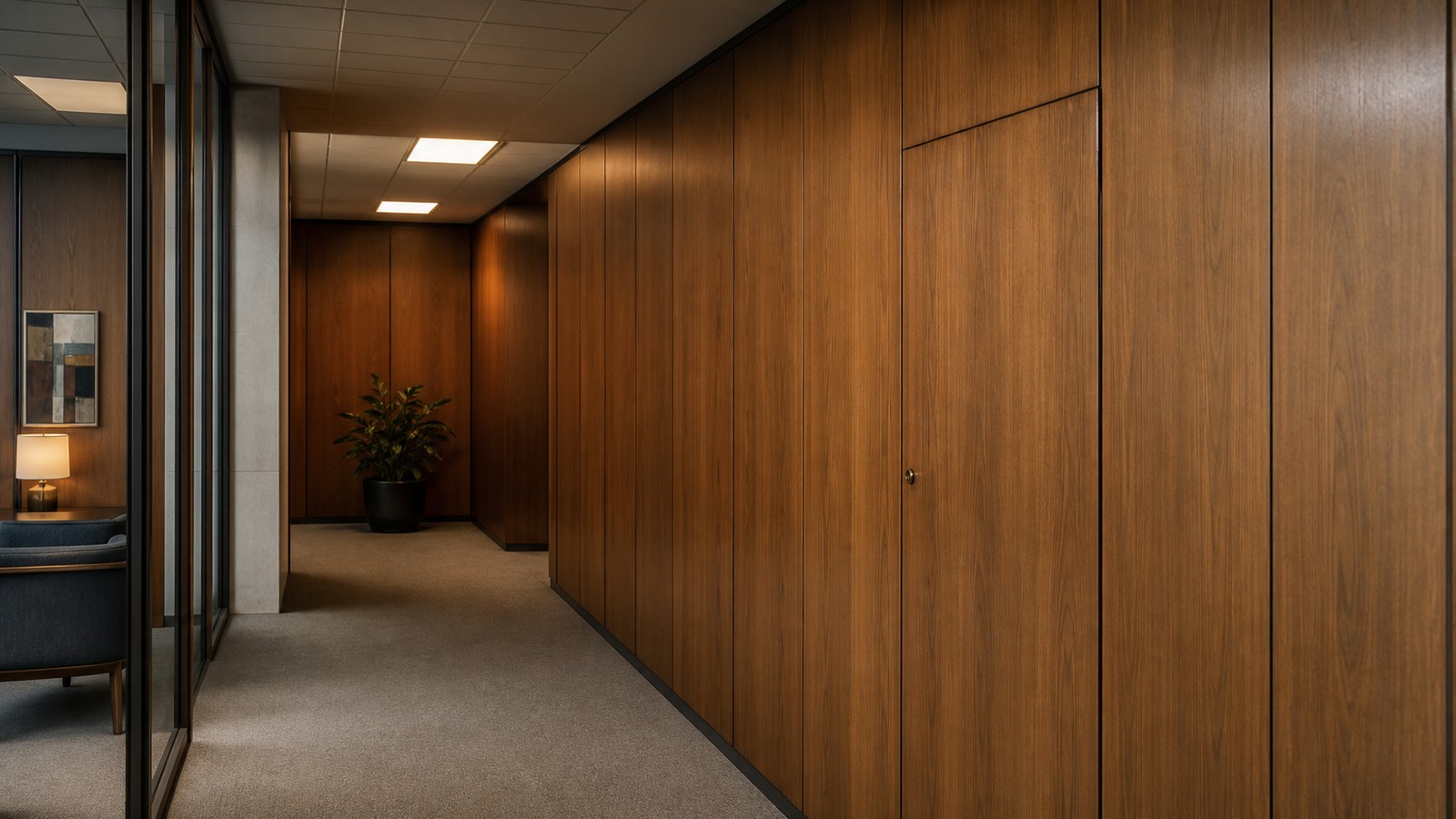
The surviving evidence is incomplete, but the impulse is clear. Hidden access is as old as architecture’s relationship with privacy, power, safety, and wonder. That is why ancient concealed doors still feel surprisingly modern: they solve an old problem the human eye still understands.
Think of Concealment as a Spectrum
The earliest concealed doors probably ranged from fully hidden sealed passages to ordinary-looking side access that only insiders used. Some were meant to disappear completely, while others were simply not emphasized. This spectrum matters because ancient buildings did not always divide access into public and secret as neatly as modern stories do.
A passage could be hidden from a visitor, familiar to a priest, guarded by a servant, and obvious to a builder. Concealment was relational. It depended on role, permission, lighting, and knowledge.
That idea helps prevent overstatement. The oldest hidden doors were not always magic tricks; many were controlled thresholds inside complex social worlds.
Read Doorways With Surrounding Rooms
A possible concealed entrance means more when its surrounding rooms explain why it existed. A blocked corridor near a burial chamber, a small opening beside a sanctuary, or a hidden stair near a defensive wall has a different meaning than an isolated gap in masonry. Context gives the doorway its story.
Notice How Power Travels Through Plans
Ancient buildings often placed important people, sacred objects, and stored wealth behind layers of access. A concealed door could be one layer among many: courtyard, vestibule, threshold, passage, chamber, and final barrier. Each layer controlled who moved deeper into the site.
This layered access appears in many cultures because the problem is universal. The deeper the space, the more controlled the knowledge becomes. Concealed doors helped make that control architectural.
Avoid Treating Ancient Builders as Primitive
Simple mechanisms can be extremely sophisticated when they fit the setting. A sliding slab may look crude beside a modern hinge, but if it used mass, darkness, and ritual restriction effectively, it was excellent design. Ancient builders understood material behavior, sightlines, labor, and human expectation.
The oldest concealed doors should not be judged only by mechanical complexity. They should be judged by how well they protected the space, managed attention, and served the community that built them.
That respect makes the history richer. It lets us admire old access design without forcing it into modern categories.
The Search Is Still Open
New discoveries, reinterpreted sites, and improved documentation may change which examples are considered among the oldest. That uncertainty is part of the fascination. Concealed doors belong to a history where absence, damage, and survival all shape what can be known.
Modern Hidden Doors Inherit Ancient Questions
Today’s concealed doors use different hardware, but they still answer old questions. Who should know about this entrance? What should be protected? Should the door disappear completely or simply recede from attention? Ancient builders faced similar choices with far fewer materials, and their solutions remind us that concealment begins with purpose.
This continuity is why the oldest examples feel relevant. A stone-blocked tomb passage and a modern hidden office door are not the same object, but both use architecture to manage knowledge. The material changed; the human problem remained.
Evidence Rewards Patience
Old concealed doors are most interesting when they are not forced into tidy answers. A cautious reading can hold several possibilities at once: ritual privacy, security, storage, status, repair, or later alteration. That patience protects the history from becoming a simple list of wonders.
It also makes each surviving clue more valuable. A worn threshold, a blocked corridor, or a sealed slab may not tell the whole story, but it can open a careful conversation about how people moved and what they guarded.
The oldest known concealed doors are therefore best understood as fragments of a much larger practice. Their mystery is not only what lies behind them; it is how much human intention survives in a doorway at all.