
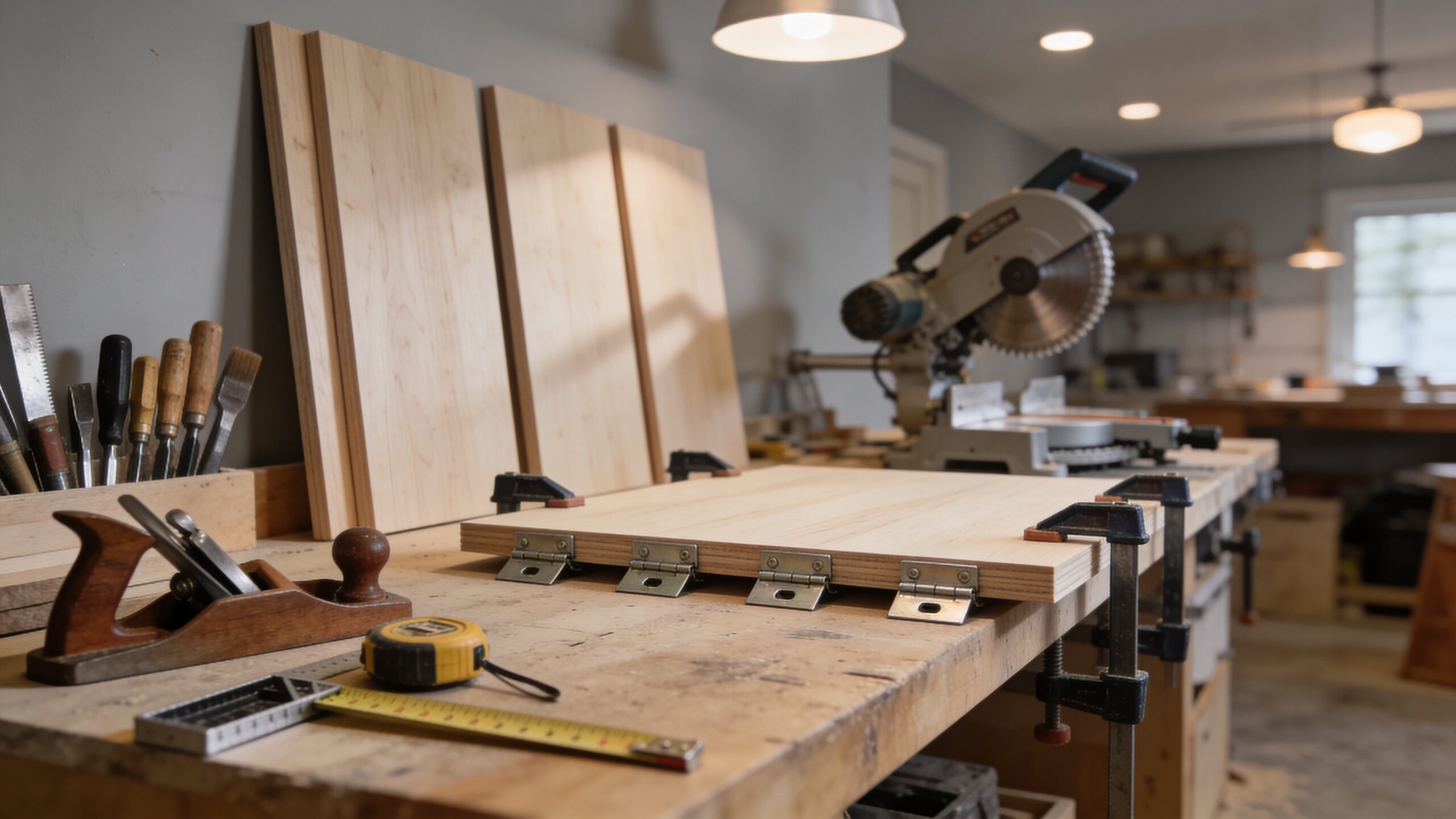
Introduction: Turning an Ordinary Wall into a Hidden Passage
A secret door is one of those home projects that instantly changes the feeling of a room. It can make a library feel cinematic, turn a pantry into a seamless part of the kitchen, hide a home office behind clean wall paneling, or transform a basement entrance into something that feels like it belongs in a mystery novel. But behind every smooth reveal and invisible entry is a carefully planned toolkit. Building a secret door at home is not just about hiding a doorway. It is about precision, weight control, alignment, framing, hardware, finish work, and safety. The tools you choose determine whether the finished project feels polished and reliable or awkward, sagging, and obvious. With the right tools, even a DIY builder can create a hidden door that looks intentional, opens smoothly, and blends naturally into the surrounding space.
A: A laser level is one of the most important because alignment controls the illusion.
A: Not always, but a router makes hinge recesses, grooves, and clean trim details much easier.
A: Yes, a simple panel or bookshelf door can be built with a saw, drill, level, clamps, and quality hardware.
A: A level, square, clamps, structural screws, proper blocking, and weight-rated hinges or pivots all help.
A: A table saw gives the cleanest repeatable cuts, while a circular saw with a guide also works well.
A: An oscillating multi-tool is excellent for trimming drywall, baseboards, and tight areas.
A: Concealed hinges, pivot hinges, magnetic latches, and touch latches are common hidden-door choices.
A: Use screws for structural strength and nails mainly for trim or decorative finish pieces.
A: Use consistent reveals, matching finish, panel lines, trim rhythm, wallpaper, slats, or shadow gaps.
A: Hire help for structural changes, electrical work, fire-rated openings, exterior doors, or heavy custom systems.
Start with the Measuring Tools
Every successful secret door begins with measurement. Unlike a standard door, a hidden door depends on tight reveals, flush surfaces, and clean visual lines. A small measuring mistake can make the door rub, expose a shadow gap, or break the illusion entirely. That is why your first essential tools are a quality tape measure, a laser measure, a speed square, a framing square, and a long level. A laser level is especially valuable because secret doors often need to align with wall panels, bookshelves, trim lines, baseboards, or ceiling details. If the hidden door is disguised as a wall panel, even a slight tilt will stand out. Accurate measuring tools help you map the opening, check the floor for slope, confirm the wall is plumb, and plan where hinges, pivots, shelves, latches, and trim will sit before you cut a single board.
Planning Tools: Sketches, Templates, and Layout Gear
Before you start cutting, you need a plan. A secret door should be designed on paper first, even if it is a simple sketch. Graph paper, a pencil, painter’s tape, and a straightedge can help you visualize the door size, swing direction, clearance, and disguised face. If you are building a bookshelf door, you will need to calculate shelf depth, load weight, and the exact location of the pivot or hinge line.
Painter’s tape is one of the most underrated layout tools for this project. You can tape the outline of the door directly onto the wall and floor to test scale and movement. This helps you see whether the door will hit furniture, trim, lighting fixtures, or adjacent walls. For more advanced builds, cardboard templates can help you test hardware placement before drilling into finished material.
Essential Cutting Tools for Clean, Accurate Work
A secret door requires clean cuts because rough edges make gaps more visible. The most useful cutting tools include a circular saw, miter saw, table saw, oscillating multi-tool, jigsaw, and utility knife. A circular saw is excellent for sheet goods such as plywood or MDF, while a miter saw is ideal for trim, face frames, and shelf pieces. A table saw gives the cleanest repeatable cuts when building a bookshelf, slat wall, or paneled door.
An oscillating multi-tool is especially helpful when retrofitting a secret door into an existing wall. It can trim baseboards, cut small sections of drywall, notch trim, or make precise plunge cuts in tight spaces. A jigsaw is useful for curved or irregular cuts, while a sharp utility knife helps score drywall, veneer, wallpaper, or thin paneling. The cleaner the cut, the easier the door is to disguise.
Drilling and Fastening Tools
Once your pieces are measured and cut, you need tools that can assemble the door securely. A cordless drill and impact driver are two of the most important tools for this project. The drill handles pilot holes, countersinking, boring, and hardware installation. The impact driver helps drive screws into framing, plywood, hardwood, and structural blocking without wearing you out.
You will also want a set of drill bits, driver bits, countersink bits, Forstner bits, and possibly a hole saw. Concealed hinges may require precise cup holes. Magnetic latches, push latches, and cable pass-throughs may require clean recesses. If you are installing pivot hardware, you may need larger boring bits to create accurate holes in the top and bottom rails. Good fastening tools keep the door strong while helping the hardware sit flush.
Framing Tools for Strength and Stability
A secret door is only as good as the structure around it. Even the most beautiful hidden panel will fail if the frame is weak, twisted, or poorly supported. Basic framing tools include a hammer, pry bar, stud finder, reciprocating saw, framing nailer, clamps, and a level. You may also need a chalk line to mark long, straight layout lines across the wall or floor.
A stud finder helps you locate existing studs before cutting into a wall or anchoring heavy hardware. A pry bar helps remove trim or casing cleanly. A reciprocating saw can cut framing lumber during major modifications, though it should be used carefully. If your secret door is heavy, such as a full bookshelf, you may need to add blocking or reinforce the opening. Strong framing prevents sagging, rubbing, and long-term alignment problems.
Clamps: The Quiet Heroes of Secret Door Building
Clamps may not seem exciting, but they are essential for building a secret door that stays square. Bar clamps, pipe clamps, corner clamps, and spring clamps help hold pieces together while glue dries, screws are driven, or hardware is aligned. Without clamps, pieces can shift slightly during assembly, creating uneven reveals and warped faces.
For bookshelf doors, clamps help keep the cabinet box square. For flush panel doors, they help hold skins, rails, stiles, and trim in position. For slat-wall or decorative panel doors, clamps keep each strip aligned while you attach it. A secret door requires patience, and clamps give you the control needed to build slowly and accurately.
Sanding and Surface Prep Tools
A hidden door needs to disappear into its surroundings, which means the finish matters just as much as the structure. Sanding tools help smooth edges, blend seams, and prepare surfaces for paint, stain, veneer, or wallpaper. A random orbital sander is one of the best choices for larger surfaces, while sanding blocks are useful for corners, trim, and delicate finish work. You may also need wood filler, spackle, caulk, a putty knife, and a sanding sponge. These are not power tools, but they are essential finishing tools. Small nail holes, screw heads, seams, and gaps must be filled and sanded carefully. The goal is to prevent the door from catching the eye. A rough seam or uneven paint texture can reveal the secret before the door ever moves.
Hardware Tools for Hinges, Pivots, and Latches
Secret door hardware is more specialized than standard door hardware. Depending on the design, you may use concealed hinges, pivot hinges, Soss-style hinges, bookshelf-door pivots, magnetic touch latches, roller catches, soft-close dampers, or hidden locks. To install these properly, you need the right tools: chisels, a router, hinge templates, a mallet, a drill guide, and precision marking tools.
A router is especially useful for recessing hinges, creating channels, cutting clean edges, and making hardware pockets. Chisels allow you to fine-tune hinge mortises by hand. A drill guide can help keep holes straight when installing pivot hardware. Hidden doors depend on smooth movement, and smooth movement depends on hardware installed at the correct depth, angle, and location.
The Router: A Secret Door Builder’s Best Friend
If there is one tool that can elevate a hidden door project from basic to professional, it is the router. A router can cut hinge recesses, trim panel edges, create grooves for wall paneling, shape decorative profiles, and make precise channels for wiring or LED strips. With the right bit, it can turn plain material into custom architectural detail.
For secret doors disguised as panel walls, routers are excellent for creating shadow gaps and reveal lines. For bookshelf doors, routers can create dados and rabbets that strengthen the shelf structure. For mirror or art-panel doors, routers can recess backing material so the front surface stays flush. It is a tool that rewards careful setup and steady hands.
Finishing Tools for Paint, Stain, and Seamless Camouflage
A secret door must match its environment. If the wall is painted, the door should match the same color, sheen, and texture. If the wall has paneling, the door needs matching grain direction, spacing, and trim alignment. Finishing tools may include paint rollers, brushes, a sprayer, stain pads, masking tape, caulk guns, veneer rollers, and wallpaper smoothing tools.
A paint sprayer can create a smooth, professional finish, especially on large flush panels or built-in bookshelf doors. Rollers and brushes are better for matching existing wall texture. A caulk gun helps close tiny seams where trim meets wall surfaces. The right finishing tools help the door blend in instead of looking like a separate object attached to the wall.
Tools for Building a Hidden Bookshelf Door
A bookshelf secret door is one of the most popular hidden door styles because it feels classic and practical. To build one, you need tools for cabinet-style construction. A table saw, circular saw, miter saw, drill, clamps, pocket-hole jig, level, and square are extremely useful. A pocket-hole jig can help assemble shelves and face frames with hidden fasteners.
Because a bookshelf door can become heavy quickly, you must think carefully about weight. The tools you use should help create a strong but balanced structure. Plywood is often more stable than solid wood for large panels, and adjustable shelves should be planned with load limits in mind. The right tools allow you to build a shelf that looks full and convincing without overloading the hinges.
Tools for a Flush Wall Panel Door
A flush wall panel door is sleek, modern, and subtle. It hides by matching the surrounding wall surface. This style depends heavily on precision. You will need a laser level, circular saw or table saw, router, clamps, drill, sanding tools, and finishing supplies. The most important challenge is keeping the door face even with the wall plane. This type of door often uses concealed hinges or pivot hardware. The reveal around the door must be consistent, narrow, and intentional. If the wall has vertical panel lines, the secret door should follow that rhythm. If the wall is smooth drywall, the door surface should be painted and textured to match. The tools must help you control both structure and appearance.
Tools for a Mirror, Art, or Decorative Panel Door
Some secret doors are disguised as mirrors, artwork, or decorative panels. These designs can be easier because the disguise is visual rather than structural. You may need a drill, level, anchors, French cleat system, frame-building tools, adhesive, clamps, and finishing tools. If the panel is heavy, proper mounting hardware is essential.
A mirror door requires special care because glass adds weight and risk. You may need mirror adhesive, safety backing, and hardware rated for the full load. Art-panel doors may use lightweight frames and concealed hinges. Decorative doors can be covered in wood slats, acoustic panels, faux stone, or fabric. The tools you choose depend on the disguise, but the same rule applies: the door must move safely and sit cleanly.
Safety Tools Every Builder Should Use
Secret door projects involve cutting, drilling, sanding, lifting, and sometimes modifying walls. Safety tools are not optional. Eye protection, hearing protection, gloves, dust masks, a respirator, knee pads, and proper lighting should be part of the setup. If you are cutting drywall, sanding paint, or working in an older home, respiratory protection becomes even more important.
You should also use a voltage tester before cutting into walls. Hidden electrical lines can be dangerous. If the project involves wiring, smart locks, sensors, or lighting, follow local electrical rules and consider hiring a licensed professional. A secret door should be fun and impressive, but it should never compromise safety, fire egress, or structural integrity.
Choosing the Right Fasteners and Adhesives
Fasteners and adhesives are part of the toolkit too. Wood screws, structural screws, brad nails, finish nails, construction adhesive, wood glue, and threaded inserts may all play a role. The right fastener depends on the material and load. A lightweight panel may only need finish nails and adhesive, while a heavy bookshelf door needs screws and hardware anchored into solid framing.
Wood glue is excellent for permanent joints, especially in cabinet-style construction. Construction adhesive can help attach decorative panels or reinforce assemblies. Brad nails are useful for trim, but they should not be trusted for structural loads. Secret doors move, and movement creates stress. Strong fastening keeps the project reliable over time.
Smart Features and Specialty Tools
Modern secret doors can include smart locks, magnetic sensors, LED lighting, remote releases, and hidden switches. For these features, you may need low-voltage wiring tools, wire strippers, a multimeter, fish tape, cable clips, and a small screwdriver set. These tools help install electronics cleanly and safely.
Smart features should enhance the experience without making the door unreliable. A hidden touch latch or magnetic release may be enough for most homeowners. More advanced systems should include a manual override so the door can still open if batteries die or power fails. The best secret doors feel magical, but they should still be practical.
The Final Adjustment Tools
After the door is built and installed, the final step is adjustment. This is where patience matters. You may need shims, a screwdriver, hex keys, a level, a plane, sanding blocks, and a pry bar. Small adjustments can make the difference between a door that scrapes and one that glides.
Secret doors often need repeated testing. Open it, close it, check the reveal, adjust the hinge, test the latch, and repeat. Look at the door from different angles and lighting conditions. A hidden door is not finished when it simply opens. It is finished when it opens smoothly, closes securely, and disappears when shut.
Conclusion: The Right Tools Make the Secret Work
Building a secret door at home is a project where imagination meets craftsmanship. The idea may begin with mystery, but the result depends on measuring accurately, cutting cleanly, framing securely, installing hardware precisely, and finishing beautifully. Each tool plays a role in making the illusion believable. Whether you are building a hidden bookshelf, a flush wall panel, a mirror entrance, or a concealed pantry door, the best toolkit is one that supports precision and patience. A secret door should not feel like a trick. It should feel like part of the home, quietly waiting for the right person to notice how extraordinary it really is.


