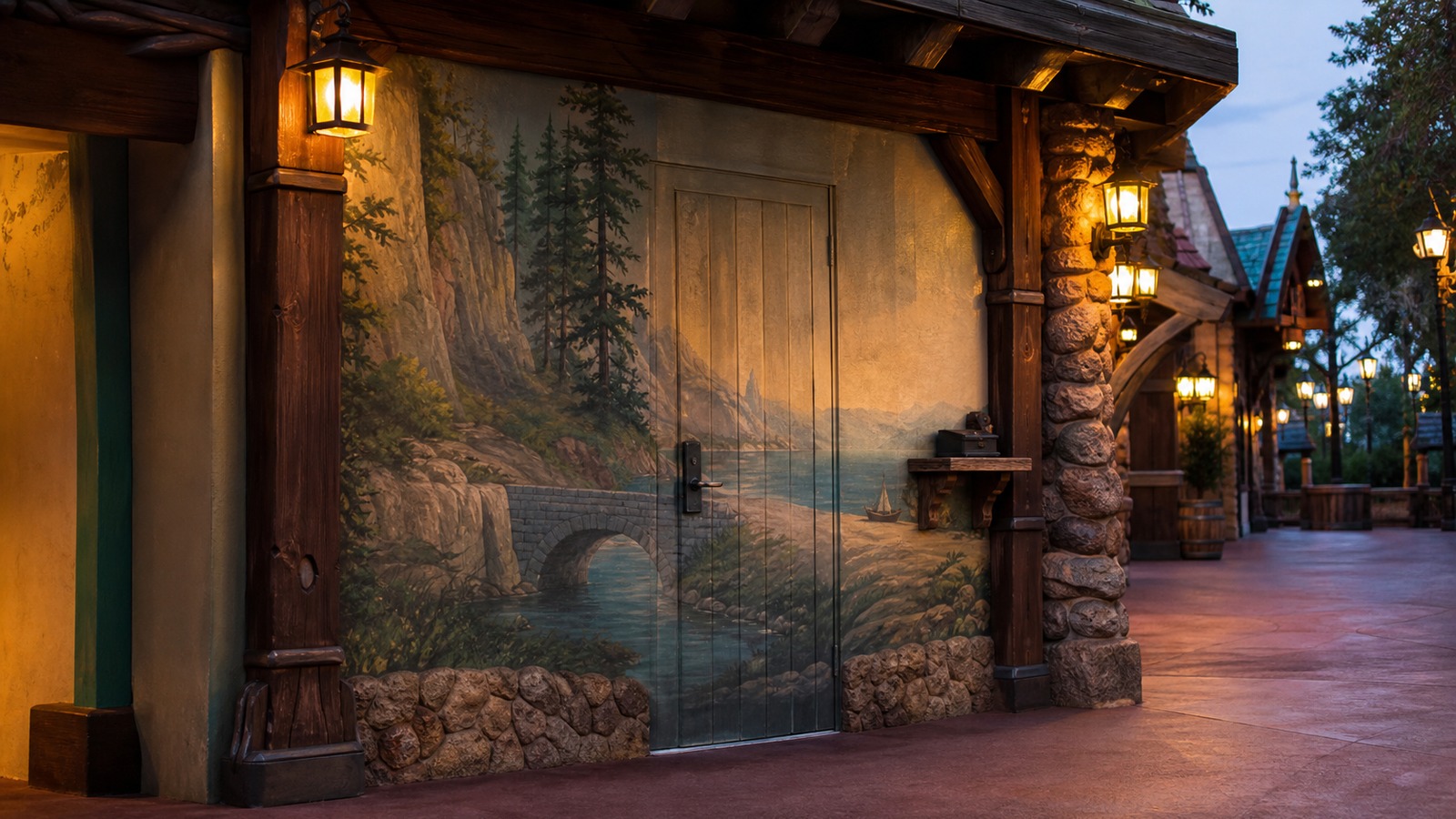
Secret doors have always stirred a sense of wonder. They embody mystery, surprise, and the thrill of discovery. In architecture, they may serve practical purposes—concealing storage, providing escape routes, or protecting valuables. But on screen, they do far more: they transport us into worlds of magic, espionage, or suspense. When a character pulls a candlestick, slides a bookshelf, or presses a hidden panel, the audience leans forward, eager to see what lies beyond. In movies and television, secret doors are more than design elements. They are storytelling devices. They create dramatic tension, reveal hidden truths, and elevate ordinary settings into extraordinary realms. Whether in Gothic mansions, superhero lairs, or comedic sketches, these concealed passages symbolize the unknown—and our desire to explore it.
A: Classics include Young Frankenstein, Batman (’66), and countless Scooby-Doo episodes.
A: Usually lightweight foam over wood/steel frames, sculpted and painted to look real.
A: Hidden guides, marks, and tactile cues; sometimes a crew op triggers it off-camera.
A: Bearings, dampers, and ADR/foley—editors remove unwanted noise.
A: Yes, but design for weight, clearances, and safety—and comply with local building codes.
A: Both—practicals for actor interaction; VFX for impossible moves or scale.
A: Props trigger hidden switches/air valves; electronics stay accessible for resets.
A: Often a static set with moving doors; the “lift” motion is camera/VFX magic.
A: Narnia, Scooby-Doo, and many modern adventure series keep it playful.
A: Productions angle mirrors, use antireflective glass, or cheat with non-reflective scenic “mirror.”
The Gothic Legacy of Secret Passages
Secret doors gained early prominence in horror and Gothic films, where sprawling mansions and castles often contained hidden chambers. These settings were built for atmosphere, and concealed entrances amplified the sense of unease. Audiences came to expect that behind every flickering candlelight and creaking corridor lay a passage waiting to be discovered.
In films adapted from Gothic literature, such as Rebecca or Jane Eyre, secret doors reinforced the idea that grand estates often hid dark secrets. Their presence reflected the characters’ emotional lives—concealed traumas, unspoken histories, or forbidden loves. These cinematic doors were less about functionality and more about metaphor, showing that what is hidden in architecture often mirrors what is hidden in the heart. Television picked up on this tradition in shows featuring haunted mansions and spooky mysteries. The hidden door became a visual shorthand for suspense and surprise, ensuring that even the most mundane hallway might conceal a revelation.
The Iconic Bookcase Entrance
Perhaps the most famous form of secret door on screen is the swinging bookcase. From early mystery films to contemporary action franchises, the image of a bookcase sliding open to reveal a hidden passage has become iconic. The trope is so enduring that audiences instantly recognize it, even before the characters step inside.
One of the best-known examples is in Young Frankenstein (1974), Mel Brooks’ comedic homage to classic horror. In one memorable scene, a character pulls a candlestick, and the entire bookcase rotates to reveal a hidden passage. The gag is played for laughs, but it simultaneously pays tribute to the Gothic tradition of concealed entries. Bookcase doors have appeared in countless other films and shows, often serving as the gateway to laboratories, dungeons, or lairs. Their appeal lies in their duality: they are objects of intellect and culture, yet they mask a hidden world of action or secrecy. Every time a bookcase swings open, it plays on the audience’s fascination with what lies behind knowledge and appearances.
Spy Films and High-Tech Concealment
Secret doors are central to the world of espionage cinema. In James Bond films, they appear in villainous lairs, government facilities, and safe houses. Often operated by high-tech mechanisms, these doors represent the intersection of secrecy and innovation. One moment the wall is smooth and impenetrable; the next, it slides aside to reveal a control center or arsenal.
In Kingsman: The Secret Service (2014), secret doors are used to spectacular effect. A bespoke tailor shop in London conceals a secret spy organization. Panels slide open to reveal elevators, weapons caches, and hidden meeting rooms. The juxtaposition of mundane storefront and high-tech headquarters plays on the spy genre’s central theme: that appearances can deceive.
Television has also embraced this trope, from Mission: Impossible to Alias. In these series, the reveal of a hidden entrance never fails to generate excitement. Secret doors provide the perfect visual metaphor for espionage itself: layers of deception, identities concealed, and truths waiting to be uncovered.
Comedy and the Playfulness of Hidden Entrances
Not all secret doors are used for suspense or intrigue. In comedy, they become tools for humor and surprise. Shows like Scooby-Doo turned the idea of hidden passages into a running gag, with characters routinely stumbling through trapdoors or revolving walls. The predictability of the gag only added to its charm, reinforcing the playful nature of secret doors. Sitcoms have also used hidden entrances for comedic effect. In Friends, Joey and Chandler’s entertainment center once doubled as a place for hiding, turning furniture into a makeshift secret door. While not as elaborate as those in Gothic mansions or spy films, these moments highlight the universal joy of concealed spaces. Comedy reveals another aspect of secret doors: their ability to delight. Even when played for laughs, they remind audiences that homes and objects can hold surprises, and that discovery can be joyous as well as suspenseful.
Fantasy Worlds and Magical Gateways
In fantasy cinema, secret doors transcend architecture to become portals to other worlds. One of the most beloved examples is The Chronicles of Narnia: The Lion, the Witch and the Wardrobe (2005), where a wardrobe opens into the magical land of Narnia. While technically not a traditional architectural door, the wardrobe functions as the ultimate secret entrance—ordinary on the outside, extraordinary within.
Similarly, in Harry Potter and the Sorcerer’s Stone (2001), the hidden entrance to Diagon Alley exemplifies the magical use of concealment. By tapping bricks in the right sequence, a wall opens to reveal a bustling wizarding marketplace. These moments capture the childlike wonder of discovery, turning architecture into an adventure.
Television has also embraced magical hidden doors. In Game of Thrones, concealed passages within castles often determined the fate of characters, allowing for escapes, assassinations, or secret meetings. These doors added layers of intrigue to the already complex political narrative, proving that even in fantasy, architecture can shape destiny.
Horror films frequently use secret doors to heighten tension. Unlike fantasy or comedy, where discovery brings wonder or laughter, horror turns concealment into a source of dread. When characters stumble upon a hidden panel or trapdoor, the audience knows that danger lies ahead.
In The Others (2001), hidden entrances within a mansion reinforce the eerie atmosphere, suggesting that the house itself holds dark secrets. In Parasite (2019), a contemporary thriller with horror elements, the discovery of a hidden basement door changes the entire narrative, exposing layers of deception and class conflict. The reveal is shocking precisely because it takes place in what appeared to be an ordinary modern home. Television horror also uses secret doors to chilling effect. In American Horror Story, haunted houses are riddled with concealed spaces, each holding grim surprises. The secret door becomes a metaphor for the unknown lurking within familiar spaces, intensifying the fear factor.
Superheroes and the Architecture of Identity
Superhero stories rely heavily on secret doors to reinforce themes of dual identity. Heroes often maintain ordinary exteriors while concealing extraordinary interiors. Nowhere is this clearer than in Batman films, where Wayne Manor hides the Batcave behind secret doors and elevators. From the 1960s television series to modern adaptations like The Dark Knight, these entrances remain central to the mythos.
Superman stories also feature secret entrances, particularly in depictions of the Fortress of Solitude. Although not always disguised in the traditional sense, these hidden sanctuaries reflect the superhero’s need for privacy and transformation. The architecture itself becomes part of the hero’s identity, with secret doors acting as thresholds between ordinary and extraordinary lives. Marvel films have embraced this tradition as well. In Black Panther (2018), Wakanda is concealed behind advanced technology, with hidden entrances protecting its secrets from the outside world. These designs embody the superhero genre’s fascination with concealment, secrecy, and the boundaries between worlds.
Secret Doors as Metaphors
One reason secret doors are so enduring in film and television is their metaphorical power. They represent transitions—between safety and danger, ignorance and knowledge, the ordinary and the extraordinary. When a character steps through a secret door, they cross a threshold not just physically but emotionally and narratively. In mysteries, the hidden door symbolizes revelation, exposing what was once concealed. In comedies, it represents delight, turning the familiar into the unexpected. In horror, it embodies dread, forcing characters into the unknown. And in fantasy, it reflects imagination itself, transforming wardrobes, walls, or paintings into gateways of wonder.
These metaphors resonate because they reflect universal human experiences. We all carry secrets, search for hidden truths, and crave discovery. Secret doors make these experiences tangible, turning them into physical, cinematic moments that audiences never forget.
The Emotional Impact on Audiences
The power of secret doors in movies and television lies in their ability to stir emotion. For viewers, the reveal of a hidden passage is always a moment of heightened engagement. Whether it brings fear, laughter, wonder, or excitement, it commands attention.
Audiences often remember these moments long after the film or episode ends. They become cultural touchstones, referenced in other works and embedded in collective memory. From the swinging bookcase in Young Frankenstein to the wardrobe in Narnia, these entrances are not just set pieces but symbols of imagination and creativity. Secret doors also invite viewers to project themselves into the story. Who hasn’t dreamed of discovering a hidden room in their own home, or stumbling upon a passage that leads somewhere unexpected? Cinema and television tap into that fantasy, allowing audiences to experience the thrill of discovery vicariously.
Why We Still Love Hidden Entrances
Secret doors in movies and TV shows remain among the most memorable elements of visual storytelling. They are at once functional and symbolic, practical and poetic. Whether in haunted mansions, spy headquarters, or superhero lairs, they embody mystery, creativity, and the thrill of discovery. Their enduring appeal lies in their universality. Every culture has legends of hidden passages, every person has secrets they keep, and every audience craves surprise. Secret doors turn these truths into cinematic experiences, reminding us that behind every wall may lie another world. As long as stories are told on screen, secret doors will continue to appear—not only as architectural curiosities but as symbols of what makes us human: our desire to explore, to uncover, and to imagine.