Accidental Discoveries Make Buildings Feel Alive
The strangest hidden doors discovered by accident are fascinating because they interrupt what people thought they knew about a building. A renovation crew removes plaster and finds an old opening. A homeowner moves a cabinet and notices a seam. A hotel repairs a wall and uncovers a service route. A shop basement reveals a blocked passage no one mentioned in the lease. These moments feel dramatic, but they often begin with ordinary maintenance. The surprise is not only that a door was hidden. It is that the building kept part of its own history out of sight.
A: Renovation removes later surfaces that covered older openings or routes.
A: No. Many hidden doors were practical service, storage, or remodel leftovers.
A: Photograph, document, and check safety before forcing anything open.
A: They suggest an interrupted story, even when the explanation is ordinary.
A: Yes. Built-ins and wardrobes often cover openings after layouts change.
A: Unknown spaces can be hazardous, so caution and professional help may be needed.
A: Sometimes, if structure, code, and preservation goals allow it.
A: Short videos often spread before the building history is verified.
A: Paint, hardware, fasteners, flooring, masonry, and records can all help.
A: They reveal earlier circulation, work patterns, and hidden layers of building history.
Renovation Finds Are the Classic Surprise
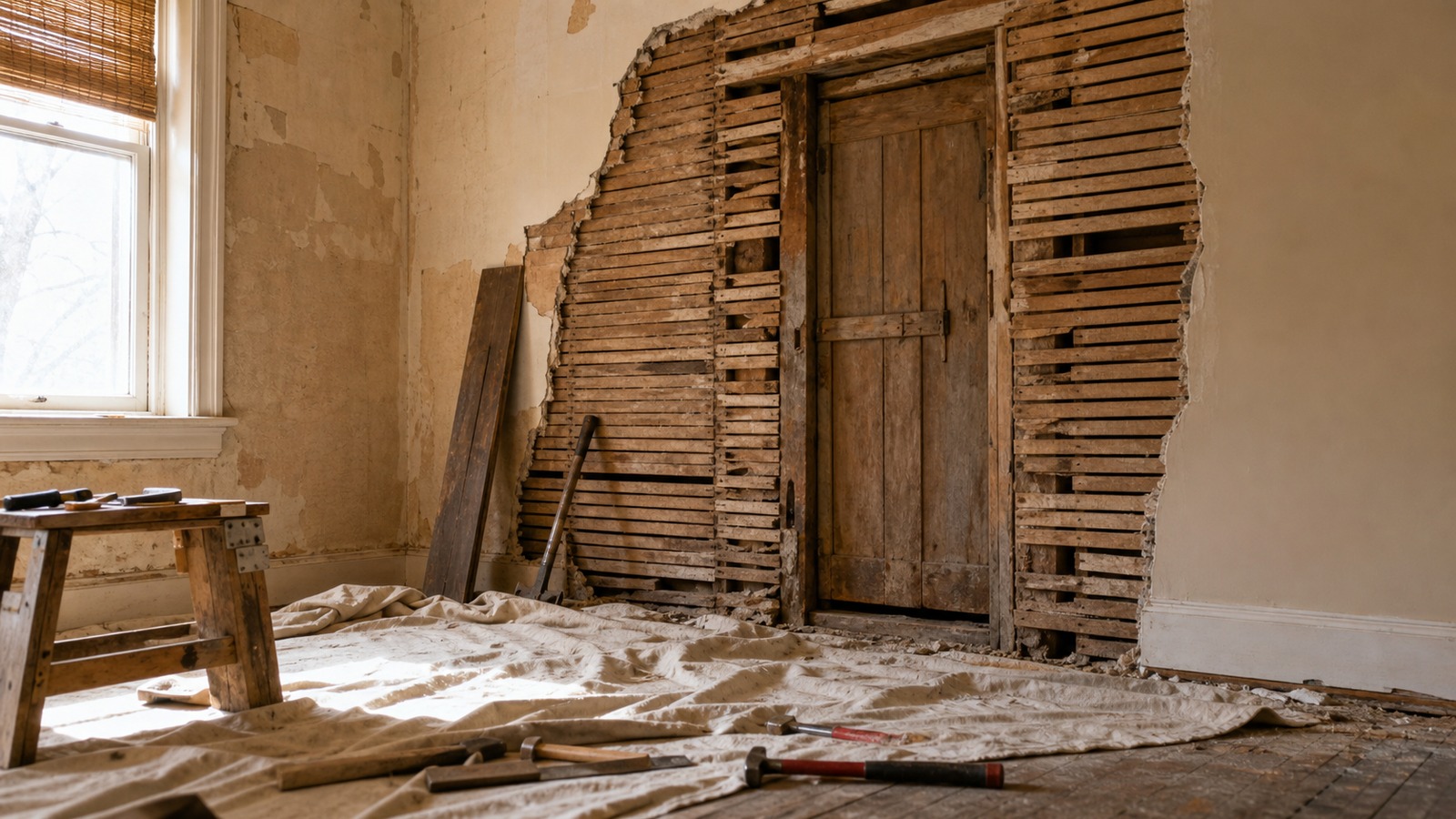
Many hidden doors are discovered during renovation because construction exposes layers that daily life covers. Removing drywall, plaster, paneling, flooring, or built-in cabinets can reveal older openings, blocked stairs, abandoned closets, or passages that made sense in a previous layout. The hidden door appears suddenly, but it may have been waiting behind ordinary finish materials for decades.
These discoveries often raise immediate questions. Was the opening deliberately concealed? Was it closed for safety, privacy, tax, security, or simple remodeling? Did it lead somewhere important, or was it just a practical doorway made obsolete by later changes? The strangest finds are not always the most elaborate; they are the ones that make the building’s timeline feel unexpectedly complicated.
Old Houses Often Contain Changed Circulation
Houses change as families, servants, heating systems, plumbing, and social habits change. A door that once connected a pantry to a service stair may be sealed when the kitchen is remodeled. A bedroom closet may cover an older nursery passage. A formal parlor may hide a door that once led to a side hall. Accidental discoveries often reveal these lost patterns.
That makes the find more useful than a novelty. It can show how people moved through the house, which rooms were public, where work happened, and how privacy was managed. The hidden door becomes a map fragment.
Sometimes the discovery also corrects a family story. A rumored passage may turn out to be a short service opening, or an ordinary closet may reveal a more interesting route than anyone expected. Buildings rarely follow the neat versions people repeat about them.
Commercial Buildings Hide Practical Pasts
Shops, theaters, hotels, restaurants, banks, and offices often contain strange hidden doors because commercial interiors are remodeled repeatedly. A wall may cover an old cashier window, a service corridor, a staff stair, a storage room, or a loading route. What feels mysterious now may once have been practical infrastructure.
Sealed Rooms Create the Strongest Reaction
A sealed room found behind a hidden door can feel especially dramatic. It suggests interruption: something was closed, forgotten, protected, or abandoned. The room may contain nothing more than dust and old framing, but the sealed threshold turns emptiness into a story.
Responsible investigation starts slowly. The space may have structural hazards, mold, pests, damaged wiring, unstable floors, or legal ownership questions. Photographs, documentation, and professional evaluation matter more than rushing inside for a dramatic reveal.
Sometimes the Strange Door Was Just Sensible
The most deflating explanation can also be the most historically interesting. A hidden door may have served coal delivery, laundry movement, domestic service, fire escape, storage, or mechanical access. Later owners may not understand the purpose because the work patterns around it disappeared. The door seems strange only because the building’s old routine is gone.
This is why accidental discoveries reward patience. Before deciding that a hidden door was secret in a romantic sense, it helps to ask what practical problem it solved. Did it shorten a route? Keep staff out of formal rooms? Connect to a cellar? Provide access for repairs? Hide visual clutter? Practical answers often reveal more about real life than dramatic ones.
A door can be ordinary and still be a thrilling discovery. The thrill comes from touching a past arrangement of space that had been covered over.
That makes these finds valuable even when they do not lead to treasure. They let people see how architecture edits itself over time.
Furniture Can Hide What Walls Forget
Built-ins, wardrobes, shelving, and large cabinets are common accidental accomplices. A bookcase installed decades ago may cover an old door. A wardrobe may sit in front of a sealed fireplace passage. A kitchen cabinet may hide a service hatch that no longer has a job. When furniture moves, the building suddenly speaks.
Basements and Attics Invite Big Stories
Basements and attics make accidental discoveries feel more dramatic because they already sit at the edge of daily life. A low door behind stored boxes, a hatch under insulation, or a blocked cellar opening can easily become the start of a larger story. Sometimes that story is true. Often the space is simply leftover structure, service access, or an older storage route.
The best way to handle these finds is to document before disturbing. Dust, fasteners, paint layers, boards, masonry, and debris can all provide clues. A hurried cleanup may remove the evidence that would explain the hidden door.
Safety is just as important. Unknown voids can contain weak floors, exposed nails, asbestos-containing materials, or unsupported masonry. A strange hidden door is exciting, but it is still part of a real building.
Accidental Discoveries Can Change Renovation Plans
A hidden door may become a design opportunity. Owners sometimes restore the opening, preserve it behind glass, adapt it into storage, or use it as a feature in a new layout. Other times the safest or most respectful choice is to document the find and close it again.
The right decision depends on structure, code, history, budget, and the story the owner wants the building to tell. Not every discovery needs to become a showpiece. Some are more powerful as quiet evidence preserved in records and photographs.
The Internet Has Changed the Reveal
Accidental hidden-door discoveries now travel quickly online. A short video of a wall opening or a sealed room can attract millions of views before anyone has verified the history. That speed can be fun, but it can also encourage speculation that outruns evidence.
Good storytelling slows the reveal down. It asks when the building was built, how it was remodeled, what plans survive, and what local historians or contractors can confirm. The discovery is more satisfying when the explanation is earned.
That does not mean removing the wonder. It means giving the wonder a foundation. A hidden door with a real explanation is stronger than one buried under guesses.
The Strangest Finds Combine Clue and Context
The strangest hidden doors are not always the most ornate. They are the ones where a small architectural clue opens a larger story: a family history, a vanished business, a service pattern, a safety decision, or a social habit that no longer exists. The door changes how the building is read.
A Found Door Should Be Treated Like Evidence
Anyone who discovers a hidden door by accident should pause before forcing it open or stripping the surrounding wall. Take photographs, measure the opening, look for paint layers, note hardware marks, and consider professional help if the structure is old or fragile. The first minutes after discovery can preserve information that later excitement might erase.
That careful approach keeps the discovery from becoming only a spectacle. A hidden door is a piece of physical history, even when it turns out to be practical or recent. Treated well, it can teach owners more about their building than a dramatic reveal ever could.
The real pleasure is not simply finding a secret. It is realizing that buildings have memories stored in layers, and that ordinary repairs can briefly make those memories visible again.
The Best Surprise Is an Explained Surprise
An accidental hidden-door discovery is most satisfying when the initial shock leads to a clearer understanding of the building. The first reaction may be delight, confusion, or a rush to imagine dramatic possibilities, but the deeper reward comes from research. A discovered threshold can point to an older kitchen arrangement, a vanished business, a household service pattern, a fire-safety change, or a storage need that belonged to another generation. When the explanation arrives, the door becomes more than a curiosity. It becomes a physical sentence in the building’s biography.
That is why owners should resist the pressure to make every found door into a spectacular reveal. Some discoveries deserve restoration, but others deserve documentation and quiet preservation. A sealed opening may be fragile, structurally unnecessary, or historically meaningful precisely because it shows how the building changed. Leaving evidence visible in a restrained way can be more respectful than turning the find into a novelty feature that erases its context.
Accidental discoveries also remind designers to think generously about future readers of a building. Today’s remodel can become tomorrow’s mystery. Clear documentation, saved photographs, and thoughtful treatment of old openings can help later owners understand what was changed and why. A hidden door found by accident may begin as a surprise, but handled well, it becomes a lesson in patience, evidence, and the layered life of architecture.
The strongest accidental finds also make people more humble about the rooms they use every day. A wall may contain an earlier doorway, a cabinet may cover a vanished service route, and a basement may preserve a clue no listing description ever mentioned. Once that possibility is understood, renovation becomes less like erasing an old room and more like negotiating with it. The building is not a blank surface. It is a record that can still answer back.
Discovery Changes the Owner’s Eye
After one hidden door is found, the whole building can start to look different. A slightly uneven baseboard, an oddly thick wall, a patch in the floor, or a cabinet that feels deeper than expected may suddenly seem worth studying. That new attention is valuable, as long as it stays careful. The goal is not to pry every surface apart, but to recognize that buildings often contain layered decisions rather than one permanent plan.
This changed eye can make future work better. Owners may photograph before demolition, save old hardware, ask about earlier layouts, or preserve a small clue that would otherwise be discarded. The accidental hidden door becomes a teacher. It reminds everyone involved that surprise is not the opposite of good stewardship; sometimes it is the beginning of it. A thoughtful owner can still enjoy the delight of discovery while choosing patience over spectacle. That patience may uncover building permits, old photographs, family memories, or contractor decisions that make the door more interesting than the first guess. In the end, the strangest hidden doors are often strange because they reconnect imagination with evidence. They slow a renovation down just enough for the building to tell a fuller story, one marked by altered habits, forgotten routes, and practical choices that later generations almost missed. That is why a careful discovery can feel stranger, richer, and more durable than a quick online reveal. The real astonishment is learning how much the room remembered all along, quietly.