The modern home has evolved into a multi-functional environment where living, working, relaxing, and entertaining often occur within the same walls. As remote work becomes a permanent reality for many professionals, homeowners are increasingly seeking ways to integrate dedicated workspaces without sacrificing aesthetics, privacy, or spatial harmony. One of the most elegant and innovative solutions to emerge from this shift is the secret office door. These concealed entryways transform ordinary walls, bookshelves, or architectural features into discreet portals that lead to fully functional home offices hidden in plain sight. Secret office doors offer more than novelty. They provide a powerful blend of design sophistication, psychological separation, acoustic control, and spatial efficiency. Whether tucked behind a custom bookshelf, disguised as millwork, or seamlessly integrated into wall paneling, concealed office entrances allow homeowners to maintain the visual integrity of their living spaces while enjoying the focus and privacy required for productive work. As homes become smarter and more design-forward, secret doors are redefining how workspaces coexist with everyday life.
A: Yes, with flush panels, shelves, or architectural disguises.
A: Absolutely when designed for easy access and comfort.
A: Very, with solid cores and proper seals.
A: No—quality hidden offices often increase appeal.
A: Yes, many are retrofit-friendly.
A: Increasingly, especially for privacy and security.
A: Exact wall or millwork matching.
A: From a few hours to several days.
A: No, periodic hardware checks are sufficient.
A: Good lighting and layout prevent that.
Why Hidden Home Offices Are Gaining Popularity
The rise of concealed home offices is closely tied to changing work habits and evolving interior design philosophies. Traditional home offices often feel visually intrusive, breaking the flow of living rooms, hallways, or bedrooms with obvious desks, doors, and office equipment. In contrast, a hidden office allows a space to serve dual purposes without compromise. A living room remains a living room until the moment a concealed door is opened, revealing a professional workspace beyond.
Privacy is another key driver behind the popularity of secret office doors. Video calls, confidential conversations, and focused work sessions benefit from physical separation, especially in households with children or multiple occupants. A concealed entrance reinforces boundaries without requiring a separate wing of the house. When the door closes, work is literally and mentally shut away, helping maintain a healthier work-life balance.
Aesthetic minimalism also plays a role. Modern and transitional interiors often favor clean lines, uninterrupted surfaces, and visual cohesion. Secret doors support this design approach by eliminating obvious transitions between spaces. When executed properly, the office disappears into the architecture, preserving the intended look and feel of the home.
Psychological Benefits of Concealed Workspaces
Beyond physical design, secret office doors have a powerful psychological impact. The act of entering a hidden workspace creates a clear mental shift from home mode to work mode. This ritualized transition can improve focus, productivity, and motivation. Instead of working at a visible desk in a shared space, the homeowner steps through a concealed threshold, reinforcing the sense of entering a professional environment.
Equally important is the ability to disengage. At the end of the workday, closing a hidden door removes visual reminders of unfinished tasks, emails, and deadlines. This separation reduces cognitive overload and helps prevent burnout. In homes where workspaces are fully visible, the boundary between personal time and professional responsibilities often becomes blurred. Concealed offices restore that boundary in a tangible way.
The sense of privacy offered by a secret door also fosters creativity and deep work. Knowing that the workspace is protected from interruptions allows for greater immersion, whether the task involves writing, strategy, design, or analytical thinking. Over time, this dedicated environment can significantly enhance both output and satisfaction.
Common Types of Secret Office Doors
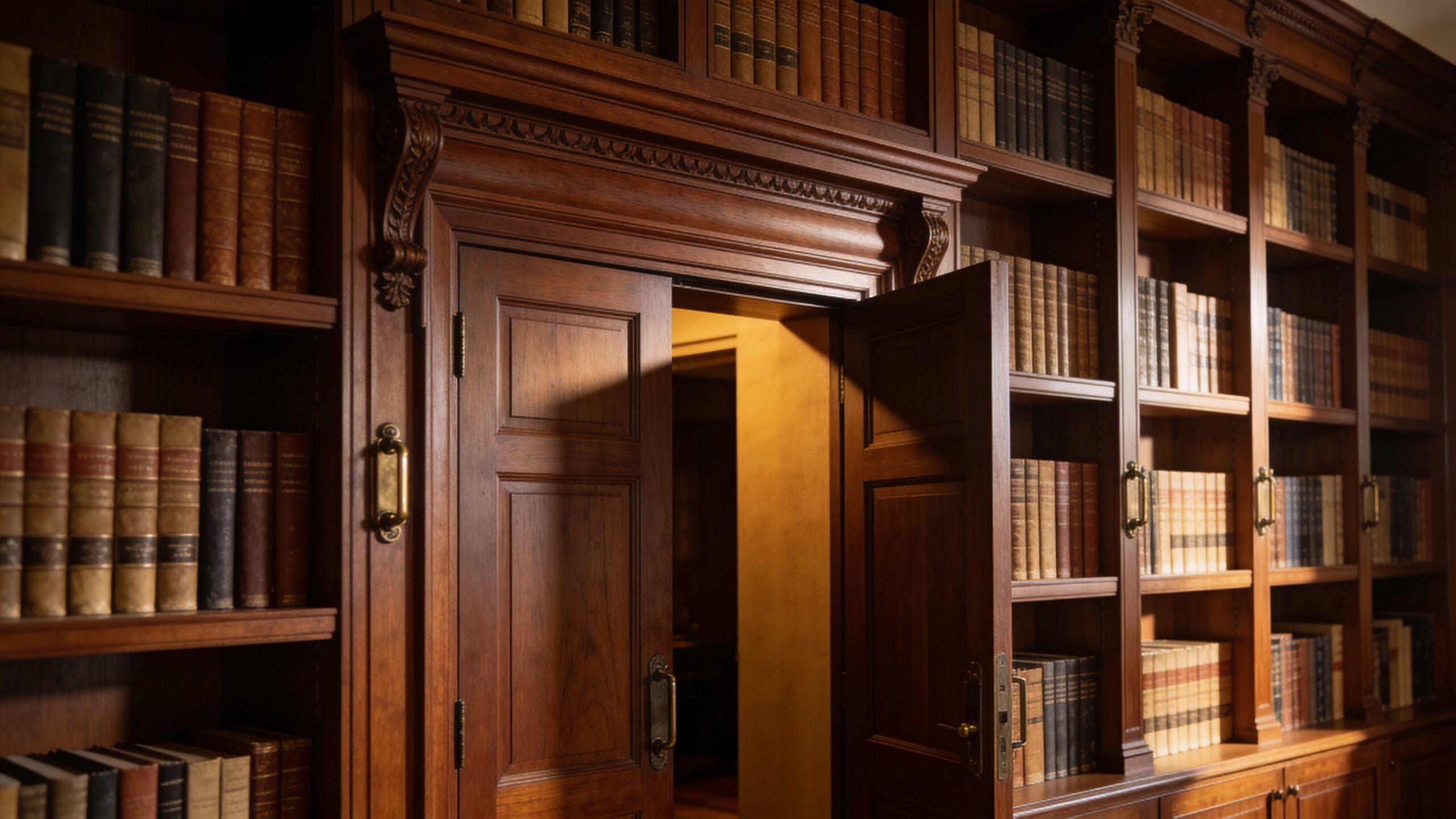
Hidden office entrances come in a wide variety of forms, each offering a different balance of concealment, accessibility, and architectural impact. One of the most popular options is the bookshelf door. These doors double as functional shelving while pivoting or swinging open to reveal the office behind. When filled with books, décor, or personal items, they become virtually indistinguishable from fixed shelving.
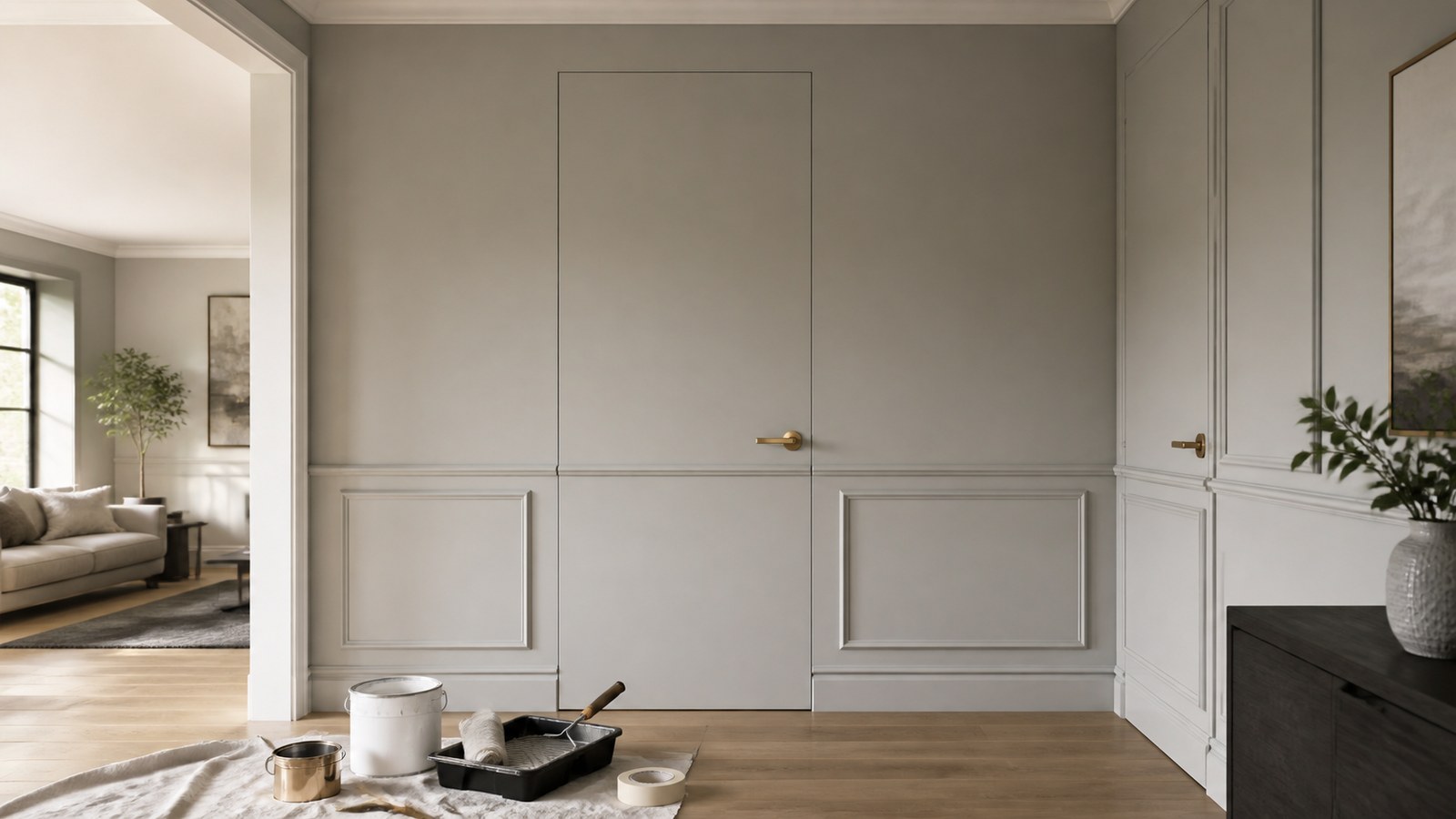
Flush panel doors are another widely used solution. These doors are designed to blend seamlessly with surrounding wall paneling, millwork, or drywall. By eliminating visible trim, handles, and hinges, flush doors create the illusion of a continuous surface. Push-to-open mechanisms or concealed pulls further enhance the hidden effect.
Wall panel and wainscoting doors integrate the entrance directly into decorative wall treatments. In traditional or transitional interiors, this approach allows the door to disappear into symmetrical panel layouts or classic millwork designs. In modern homes, large-scale panels or textured surfaces can conceal doors within bold architectural statements.
Mirror doors offer a unique blend of functionality and concealment, particularly in bedrooms or hallways. A full-height mirror can swing or slide open, masking the office entrance while also reflecting light and visually expanding the space. When properly engineered, mirror doors can feel both luxurious and practical.
Placement Strategies for Hidden Home Offices
The success of a secret office door depends heavily on thoughtful placement. One common strategy is locating the office off a living room, family room, or great room, where traditional office doors might feel intrusive. A concealed entrance preserves the social nature of these spaces while providing quick access to a private work area.
Hallways offer another ideal location for hidden offices, especially in homes with limited square footage. A concealed door integrated into a corridor wall can lead to a compact yet efficient workspace without disrupting traffic flow. In some cases, underused closets or storage areas can be repurposed into hidden offices with surprisingly generous functionality.
Bedrooms can also accommodate secret office doors when designed carefully. Concealing a workspace behind wardrobe panels or custom cabinetry allows the bedroom to remain restful and uncluttered. This approach works particularly well for professionals who need occasional access to an office without dedicating an entire room solely to work.
Basements and attics present additional opportunities for concealed offices, especially when homeowners want to hide stairs or access points. A secret door can transform what might otherwise feel like a secondary or forgotten area into a purposeful and intriguing workspace.
Design Considerations for Seamless Integration
Creating a convincing secret office door requires meticulous attention to detail. Alignment is critical. Panel lines, shelving dimensions, and wall features must remain consistent across the concealed opening to avoid visual giveaways. Even slight inconsistencies can undermine the illusion.
Hardware selection plays an equally important role. Traditional knobs, hinges, and keyholes draw attention and disrupt the hidden effect. Instead, designers often use touch-latch systems, magnetic closures, or recessed finger pulls. In more advanced installations, motorized mechanisms allow doors to open silently with a concealed switch or smart control.
Materials should match the surrounding environment exactly. If the wall is finished in painted MDF paneling, the door should use the same substrate and paint sheen. If the concealment relies on wood veneer, grain direction and color matching become essential. For bookshelf doors, load capacity and structural reinforcement must be carefully engineered to prevent sagging or misalignment over time.
Lighting considerations are often overlooked but highly important. Hidden offices should include adequate task and ambient lighting that activates independently of the surrounding room. This ensures the office remains fully functional without altering the lighting mood of adjacent spaces.
Acoustic and Functional Advantages
One of the most practical benefits of secret office doors is improved sound control. When designed with solid cores, tight seals, and proper framing, concealed doors can significantly reduce noise transmission. This is especially valuable for professionals who conduct frequent video calls or require quiet environments for concentration.
Hidden doors also allow for greater control over office-specific features such as temperature, ventilation, and storage. Because the workspace is physically separated, it can be tailored to individual needs without affecting the rest of the home. Custom shelving, integrated desks, and specialized equipment can be installed without concern for visual cohesion with adjacent rooms.
From a functional standpoint, concealed offices often feel more intentional than open or semi-open workspaces. Every element inside the hidden room is designed for productivity, while everything outside remains dedicated to living. This clarity of purpose enhances both areas.
Smart Technology and Modern Hidden Offices
As smart home technology becomes more prevalent, secret office doors are increasingly incorporating advanced features. Biometric locks, RFID access, and app-controlled opening systems add an extra layer of security and convenience. These technologies are particularly appealing to homeowners who handle sensitive information or simply enjoy the sophistication of intelligent design.
Automation can also extend to lighting, sound, and climate control within the hidden office. When the door opens, the workspace can automatically illuminate, adjust temperature, and activate equipment. When it closes, systems power down, reinforcing energy efficiency and work-life separation.
Sound masking systems, integrated speakers, and acoustic panels can further enhance the hidden office experience, creating a professional environment that rivals commercial workspaces. These features remain invisible from the outside, preserving the illusion of a simple wall or cabinet.
Secret Office Doors and Home Value
Incorporating a concealed office door can positively impact a home’s perceived value when executed thoughtfully. Buyers increasingly value flexible spaces that adapt to changing lifestyles. A hidden office demonstrates creativity, craftsmanship, and forward-thinking design, all of which contribute to a home’s appeal.
Unlike novelty features that may feel gimmicky, secret office doors offer genuine functionality. They solve real problems related to space, privacy, and aesthetics. When integrated seamlessly, they enhance rather than complicate the home’s layout, making them attractive to a wide range of potential buyers.
However, quality matters. Poorly designed hidden doors can feel awkward or confusing, detracting from usability. High-quality materials, smooth operation, and intuitive design ensure the feature feels intentional and premium rather than experimental.
Designing for Different Work Styles
Not all home offices serve the same purpose, and secret doors can be adapted to different work styles. Creative professionals may prefer hidden studios with expansive desks, inspiration boards, and specialized lighting. Concealed doors allow these visually busy spaces to remain out of sight when not in use.
For professionals focused on virtual meetings and administrative work, compact hidden offices can deliver everything needed within a small footprint. Built-in desks, sound-absorbing materials, and controlled lighting create a polished environment without consuming valuable square footage. Some homeowners design hidden offices as hybrid spaces, doubling as reading rooms, libraries, or planning hubs. In these cases, the secret door becomes part of a broader narrative, supporting both work and leisure without sacrificing either.
Balancing Mystery and Practicality
While the allure of a secret door often lies in its mystery, practicality should always guide design decisions. The door must open easily, safely, and intuitively. Emergency egress, accessibility, and building code compliance should never be compromised for the sake of concealment.
Clear sightlines, proper ventilation, and ergonomic design inside the hidden office are just as important as the door itself. The goal is not merely to hide the workspace, but to create an environment that supports long-term comfort and productivity. When mystery and practicality are balanced successfully, the result is a feature that feels both magical and sensible. The office becomes a personal retreat rather than a hidden inconvenience.
The Future of Concealed Home Workspaces
As homes continue to evolve, secret office doors are likely to become even more refined and widespread. Advances in materials, hardware, and smart technology will make concealed entrances easier to implement and more reliable than ever. At the same time, cultural shifts toward flexible living will continue to favor spaces that adapt discreetly to multiple roles. The hidden office represents a broader design philosophy that values intentional transitions, visual calm, and thoughtful separation. Rather than accepting cluttered or compromised spaces, homeowners are choosing solutions that respect both form and function. Secret office doors are not just architectural tricks. They are expressions of how modern life blends work and home, privacy and openness, practicality and imagination. By concealing workspaces at home, these doors allow productivity to coexist gracefully with everyday living, proving that the best design solutions are often the ones you barely notice at all.