Why Secret Doors Matter in Fairy-Tale Storytelling
Secret doors are some of the most memorable devices in classic fairy tales because they turn an ordinary setting into a world of wonder, danger, and possibility. A plain wall, a wardrobe, a staircase, a tree trunk, or a locked chamber becomes more than part of the background. It becomes a threshold. In stories built on transformation, secret doors symbolize the moment when a character crosses from the familiar into the unknown. They mark the place where childhood innocence meets mystery, fear meets courage, and ordinary life gives way to enchantment. Fairy tales have always depended on hidden spaces. These stories are not only about kings, witches, forests, and magical objects. They are also about discovery. A secret door creates suspense before a character even steps through it. Readers understand immediately that whatever lies on the other side will change the course of the tale. That shift gives secret doors a powerful narrative function. They are not decorative details. They are engines of plot, emotion, and meaning.
A: They create mystery, mark transitions, and reveal hidden truths or magical worlds.
A: Not always. They can reveal danger, sorrow, memory, or forbidden knowledge as well.
A: They often symbolize transformation, curiosity, hidden truth, and crossing into the unknown.
A: Yes. In fairy-tale structure, a concealed path can serve the same threshold function.
A: They combine suspense, danger, and revelation in a single dramatic moment.
A: Often, but only after testing their courage, judgment, or willingness to face fear.
A: No. They appeal to all ages because they speak to universal ideas about mystery and discovery.
A: Castles, cottages, towers, forests, hills, caves, and even seemingly ordinary rooms.
A: Because the motif instantly suggests wonder, suspense, and another world nearby.
A: It marks the moment a character moves from surface reality into deeper truth.
Secret Doors as Gateways Between Worlds
One reason secret doors appear so often in classic fairy tales is that the genre thrives on movement between worlds. A child may begin in a cottage, a village, or a castle, but soon crosses into a place ruled by spells, giants, curses, or strange tests. Sometimes the entrance is obvious, like a path into a dark forest. Often, however, the entrance is concealed. That secrecy makes the transition more magical. A hidden opening suggests that another reality exists just beside the ordinary one, waiting to be noticed. This idea gives fairy tales much of their enduring charm. Children and adults alike are drawn to stories that imply the world is deeper than it appears. A locked room in a castle, a tiny door under the stairs, or a hidden entrance inside a tree tells us that wonder may be concealed within the everyday. The physical act of opening the door becomes a metaphor for imagination itself. To enter the fairy-tale world, the hero must notice what others ignore, question what seems fixed, or dare to open what has been forbidden.
The Symbolism of Secrecy and Revelation
Secret doors are rich with symbolism because they embody both concealment and revelation. In classic fairy tales, what is hidden is rarely neutral. Behind the door may be truth, treasure, danger, family history, or forbidden knowledge. The concealed space reflects the moral and emotional layers of the story. It can represent buried memory, hidden fear, unspoken desire, or the deeper reality behind appearances.
This symbolism is especially effective in tales where characters must grow in wisdom. A secret door often appears when the hero is ready to see more than the surface of life. A curious child, a mistreated daughter, a youngest son, or a wandering sibling discovers the entrance at precisely the moment when the story demands transformation. The hidden door rewards courage and perception. It suggests that truth is available, but only to those willing to search, listen, and risk stepping beyond safety.
Castles, Chambers, and Forbidden Rooms
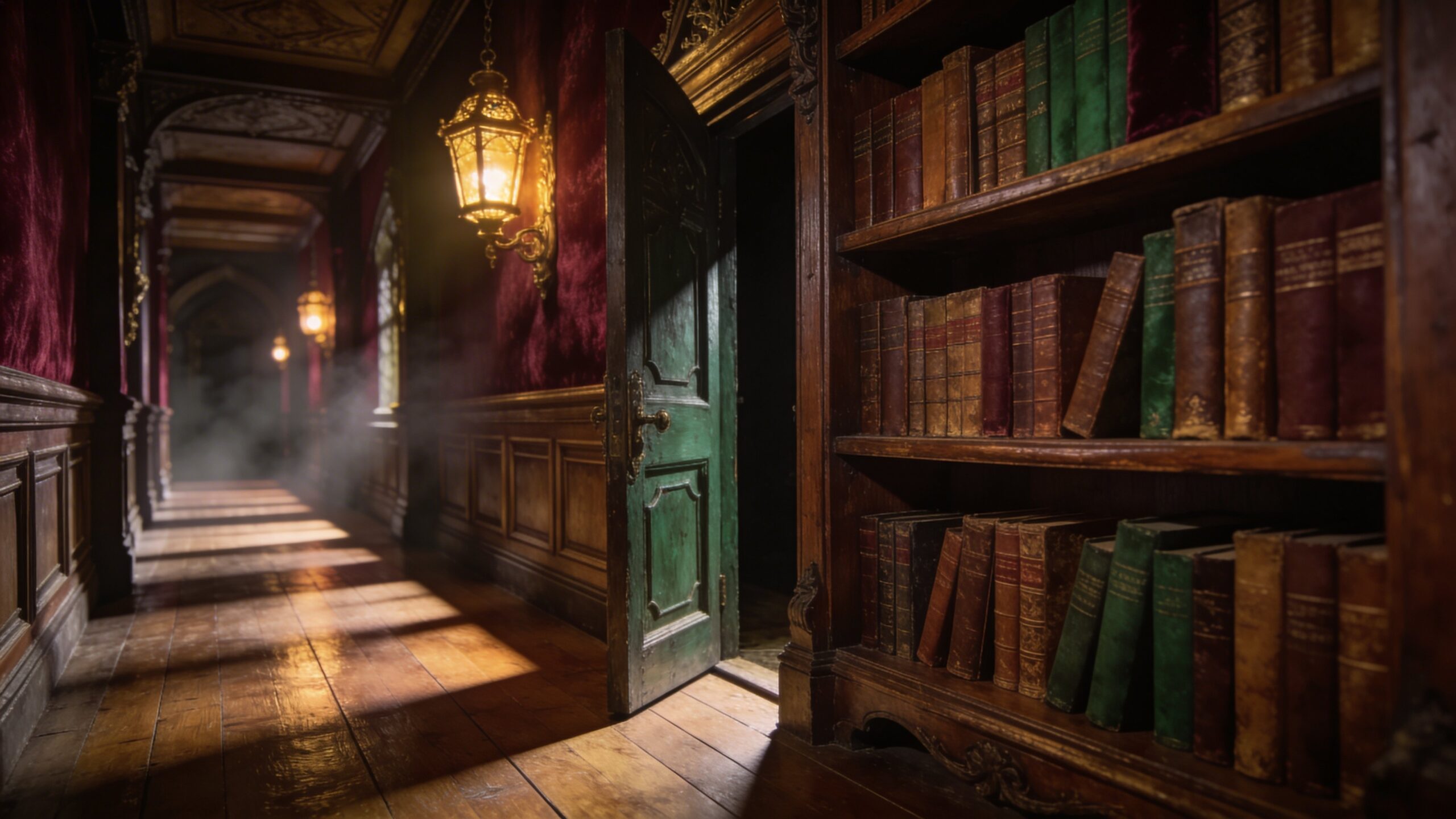
Many classic fairy tales place secret doors within castles, grand houses, or mysterious manors. These structures are ideal settings because they already suggest hierarchy, secrets, and old power. A castle may appear beautiful from the outside, yet contain locked wings, silent corridors, and hidden chambers. The architecture mirrors the fairy tale’s deeper message: appearances can deceive. A glittering kingdom may hide sorrow, a curse, or violence just out of sight.
Forbidden rooms are especially important. In stories such as Bluebeard and related folktale traditions, the concealed chamber carries intense emotional power. It is a place the protagonist has been told not to enter. That command turns the door into a test of obedience, curiosity, and survival. Even when the specific story is dark rather than whimsical, the secret room serves a classic fairy-tale purpose. It exposes what polite surfaces conceal. It brings the heroine face to face with truth. In that sense, the secret door becomes a moral threshold as well as a physical one.
Forest Doors and Natural Entrances
Not all secret doors in fairy tales are built into human structures. Some of the most magical entrances appear in the natural world. Hollow trees, caves, thickets, roots, hillsides, wells, and rocky passages often function like hidden doors. These natural openings blur the line between landscape and architecture. Nature itself becomes a keeper of mysteries.
This is one reason forests loom so large in fairy tales. A forest is already a liminal place, somewhere between civilization and wilderness. Adding a secret entrance within it deepens that sense of crossing over. When a child discovers a hidden path behind vines or a door inside a hill, the story suggests that the natural world is alive with hidden intelligence. It does not merely surround the character. It invites, tests, and transforms them. Secret doors in nature often lead to fairy realms, underground kingdoms, or strange houses belonging to magical beings. They remind readers that mystery is not only built by human hands. It grows in the world itself.
Secret Doors and the Power of Curiosity
Curiosity is one of the great forces in fairy tales, and secret doors are perfect instruments for activating it. A hidden entrance begs to be opened. The character who notices it is almost always different from those around them. They are more observant, more restless, more imaginative, or more willing to question rules. In this way, secret doors often belong to protagonists rather than villains. They reward an active spirit. At the same time, fairy tales rarely treat curiosity as simple or harmless. Opening the door may lead to treasure, but it may also unleash trouble. The secret chamber may contain an answer, yet it may also contain danger. This tension is central to the fairy-tale tradition. Curiosity is necessary for growth, but growth requires risk. Secret doors dramatize that lesson with great clarity. They show that discovery is thrilling precisely because it is uncertain. The hero cannot remain unchanged once the door has opened.
Fear, Danger, and the Unknown
The role of secret doors in classic fairy tales is not limited to wonder. They are equally powerful as symbols of fear. The hidden entrance suggests that danger can be concealed inside familiar places. A home, castle, or woodland glade may not be as safe as it seems. This uncertainty intensifies suspense, especially for young readers. The hidden door turns space itself into a question.
Fairy tales use this fear productively. Rather than avoiding darkness, they give it shape. Behind the door may be a sleeping curse, a beast, a witch’s chamber, or the evidence of a terrible secret. The concealed space allows the story to stage a confrontation with hidden dread. Yet fairy tales usually insist that fear must be faced, not avoided. The door must eventually be opened. In that action, the hero learns that courage does not mean the absence of fear. It means moving through fear toward truth.
Hidden Doors as Tests of Character
Secret doors frequently function as tests. The person who finds or opens the hidden entrance is often being measured in some way. Are they brave enough to continue? Wise enough to interpret what they see? Honest enough to face the truth? Compassionate enough to rescue someone trapped beyond the barrier? Fairy tales often place simple characters in extraordinary situations precisely to reveal their inner qualities.
This is especially true in stories where siblings or rivals are given similar opportunities. One may ignore the clue, another may force the door for selfish gain, and a third may open it with patience, respect, or kindness. The secret door then becomes a storytelling device for revealing who deserves reward. It separates mere boldness from true worth. Fairy tales care deeply about this distinction. The right hero is not always the strongest or highest-born. Often, it is the one who approaches the hidden threshold with humility and heart.
Rescue, Release, and Transformation
A secret door in a fairy tale often leads to someone or something waiting to be freed. A princess may be imprisoned beyond it. A brother may be trapped by enchantment. A hidden room may contain the object needed to break a curse. In these cases, the door represents delayed release. The act of opening it changes not only the hero’s fate but the fate of others.
This pattern gives secret doors a strong association with transformation. What is shut away is often incomplete, wounded, or suspended in time. The hidden room preserves a problem until the right person arrives. Once the barrier is crossed, the story can move from stasis to renewal. This is why secret doors feel so dramatically satisfying. They do not just reveal information. They unlock movement. They allow the story to shift from secrecy to action, from enchantment to resolution, from isolation to reunion.
Secret Doors and the Inner Life
Classic fairy tales are often remembered for their vivid plots, but they also explore inner emotional states. Secret doors help externalize those states. A locked chamber can symbolize grief, shame, memory, longing, or fear that a character cannot yet name. Because fairy tales operate through images and actions rather than psychological explanation, the hidden door becomes a way to show the inner world indirectly.
A child who enters a hidden room is often entering a deeper understanding of self. The journey may not be described in modern emotional language, but the symbolism is clear. Fairy tales suggest that growing up requires opening what has been sealed off. It requires confronting truths that families, kingdoms, or even the self have tried to hide. In this sense, secret doors remain powerful because they reflect a universal human experience. Everyone has inner rooms they fear or long to enter.
Why Readers Never Stop Loving This Motif
The secret door remains one of the most beloved fairy-tale motifs because it speaks to timeless desires. People want to believe there is more to the world than they can immediately see. They want mystery, wonder, revelation, and the hope that the ordinary may suddenly open into the extraordinary. Secret doors satisfy that longing with elegant simplicity.
They also endure because they work on many levels at once. They create suspense. They shape plot. They express theme. They symbolize transformation. They reveal character. They can be thrilling, frightening, beautiful, or tragic depending on the story around them. Few images in folklore are so flexible and so emotionally immediate. A hidden door can signal a grand adventure or a terrible truth, but either way it promises change.
The Lasting Legacy of Secret Doors in Fairy Tales
The role of secret doors in classic fairy tales is ultimately about passage. They are not just wooden panels, stone gates, hidden curtains, or magical thresholds. They are story mechanisms that carry characters from innocence to experience, from blindness to understanding, from fear to courage. Every secret door asks a question: what lies beyond what we can see? Fairy tales answer that question again and again, but never in quite the same way. That is why the image still feels alive today. Modern fantasy, children’s literature, film, and folklore-inspired design all continue to borrow the fairy tale’s hidden portals and concealed rooms. Yet the classic tales remain the foundation. They taught readers that the most important moments often begin quietly, with a hand reaching toward a seam in the wall, a key turning in a forbidden lock, or a child noticing that a door no one else sees has been there all along.