Why Secret Doors Still Fascinate Us
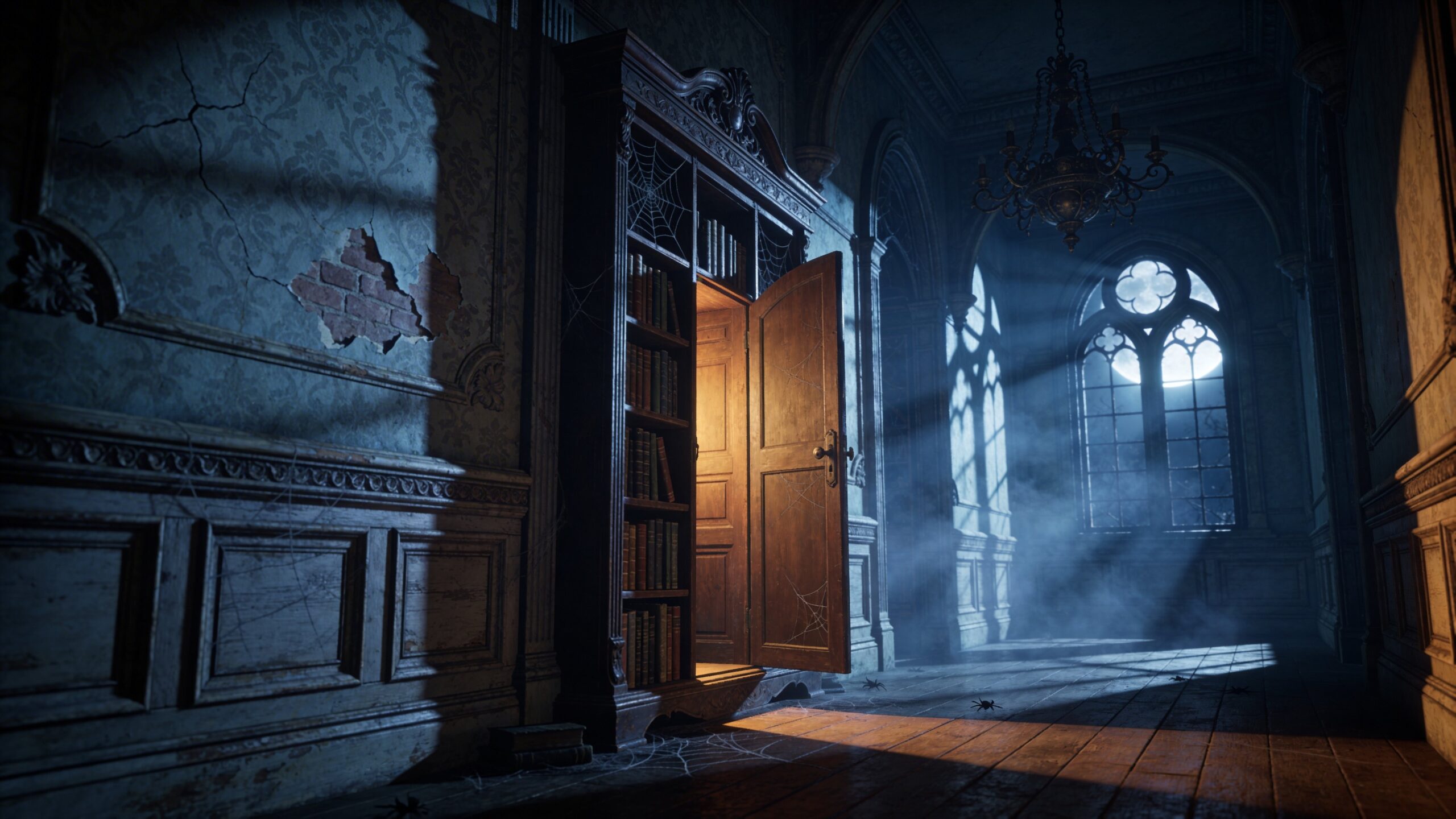
Secret doors have always carried a strange kind of power. They suggest that a wall may not really be a wall, that a hallway may hide another story, and that what looks ordinary could suddenly become theatrical, eerie, or unforgettable. In haunted houses and themed attractions, that power becomes even stronger because a secret door is never just an architectural feature. It is a promise of surprise. It changes the way visitors move, what they expect, and how they remember the experience after they leave. In the world of immersive entertainment, secret doors do much more than create a jump scare. They shape suspense, control pacing, and deepen atmosphere. A concealed entrance behind torn wallpaper, a false bookshelf that swings open into darkness, or a hidden panel in a rotting mansion facade can instantly make an attraction feel more believable. Guests stop feeling like they are walking through a set and start feeling like they are exploring a place with buried history, hidden rooms, and dangerous secrets.
A: They create suspense, surprise, and the feeling that the building itself is hiding something alive or dangerous.
A: Bookshelf and paneled-wall doors remain favorites because they are instantly readable and theatrically satisfying.
A: No. They also support storytelling, pacing, actor access, and immersive world-building.
A: Yes, in some attractions, but many concealed doors are reserved for performers or controlled reveals.
A: Good scenic finishes, minimized seams, proper lighting, and a design that fits the room naturally.
A: Usually yes. Concealed hinges, pivots, magnetic latches, and controlled motion systems are common choices.
A: Absolutely, as long as it is engineered for reliability, controlled movement, and code-conscious operation.
A: Very much so. They turn discovery into a reward and make progression feel magical and memorable.
A: Timing, sound, lighting, and the sense that the opening should not be possible in that location.
A: Because they break expectation and make the environment feel alive, reactive, and full of hidden history.
The Psychology Behind Hidden Passageways
Part of the appeal of secret doors comes from the human instinct to investigate what is concealed. People are naturally drawn to mystery. When they notice a seam in a wall, a picture frame that seems slightly off, or a creaking panel where there should be none, their imagination takes over. In a haunted attraction, that moment of curiosity becomes part of the entertainment. Visitors begin asking silent questions. What is behind that wall? Who used that door? Why was it hidden in the first place? That psychological tension is incredibly useful in haunted design. Fear is often most effective before anything actually happens. Secret doors create anticipation because they introduce uncertainty. Guests do not know whether a hidden panel will reveal a monster, an actor, a passageway, or simply a chilling visual. The best haunted attractions understand this and use concealed doors as narrative devices, not just gimmicks. A secret entrance can signal betrayal, discovery, escape, imprisonment, or supernatural intrusion, all without a word being spoken.
Secret Doors as Storytelling Devices
Every memorable haunted attraction has some kind of story, even if the guests only experience it in fragments. Secret doors help tell that story in a visual, physical way. A hidden servant’s corridor in a haunted manor suggests the house had secrets long before the guests arrived. A chapel wall that opens into catacombs hints at forbidden rituals. A funeral parlor mirror that slides aside into a hidden embalming chamber can instantly make an attraction feel layered and historically rich.
This storytelling value is what separates an effective secret door from a random effect piece. In the best attractions, the concealed door feels like it belongs there. It supports the fiction of the environment. A library might hide a study where a grieving widow kept occult journals. A child’s bedroom might contain a narrow passage to a forgotten nursery. A Victorian hallway may open to reveal a sealed patient ward from a darker era. The door becomes a plot point, and that makes the reveal far more powerful.
Haunted Houses Thrive on Controlled Surprise
Haunted houses succeed when they guide people through a sequence of emotions. Visitors need moments of tension, release, distraction, shock, and recovery. Secret doors are perfect tools for that kind of control. They let designers decide where attention goes and when it shifts. While guests stare at a portrait, a hidden panel may open behind them. While they focus on a flickering candelabra, a section of bookcase may crack open to expose a lurking figure.
Because concealed doors can be opened quietly or dramatically, they offer multiple scare styles. A slow opening can feel ghostly and uncanny. A sudden burst can produce a classic startle. An entrance that seems impossible from the guest’s point of view creates that prized haunted-house sensation that the building itself is alive. This is why secret doors remain such a reliable feature in attractions ranging from traditional walk-through haunts to elaborate escape experiences and theatrical dark rides.
Common Types of Secret Doors in Attractions
Not all secret doors work the same way, and different haunted environments benefit from different types. Some are designed to vanish into the wall completely, relying on paint continuity, panel alignment, and hidden hardware. Others are disguised more theatrically, appearing as bookcases, mirrors, fireplace surrounds, coffin lids, confessionals, wardrobe backs, or crumbling stone slabs. The goal is always the same: conceal the functional nature of the opening until the exact moment it should be revealed.
Swinging doors are among the most common because they are versatile and relatively straightforward to integrate. Pivot systems are useful for larger panels and dramatic reveals, while hidden hinges allow smaller, cleaner applications. Sliding doors can feel especially eerie because they move in an unusual way for old-house settings, creating a supernatural effect when handled properly. Trap-style panels and rotating walls are less common but unforgettable when used well. In all cases, the magic lies in the illusion that the architecture has suddenly broken its own rules.
Materials and Finishes That Sell the Illusion
A secret door only works if it looks convincing before it moves. That is why finish work matters just as much as mechanics. In haunted houses, designers often rely on layered paint treatments, distressed wood, faux plaster, cracked molding, fabric wall panels, or scenic stonework to hide seams and distract the eye. If a reveal line is too obvious, the illusion weakens. If the surface treatment is too clean, guests may identify the door too quickly and lose the sense of mystery.
Texture is particularly powerful in haunted environments because it gives artists more freedom to disguise transitions. A wall dressed with peeling wallpaper, heavy cobweb detail, ornamental trim, or rough timber can hide subtle panel lines more effectively than a smooth modern surface. Dim lighting also helps, but good design should not rely on darkness alone. The best secret doors still look believable under partial illumination. When the finish, geometry, and setting all align, even observant guests can miss the hidden opening until it suddenly comes alive.
Sound, Light, and Timing Make the Reveal Memorable
The reveal of a secret door is not only visual. Sound and light transform it into an event. A low mechanical groan, the scrape of old wood, the click of an unseen latch, or the soft whisper of chains can make a simple door movement feel loaded with dread. Lighting can guide attention, misdirect it, or punctuate the opening itself. A hidden door that opens into total darkness feels ominous. One that releases a shaft of cold blue light or lantern-colored haze feels cinematic.
Timing is where haunted attractions become truly effective. If the door opens too early, the mystery is lost. If it opens too late, the guests may have moved on. Designers often use actor cues, audio triggers, pressure mats, motion sensors, or manual control to match the reveal to guest position. That precise timing creates the illusion that the attraction is reacting to the visitors personally. In a strong haunt, the secret door does not feel like a preset effect. It feels as though the house chose that exact moment to expose one of its hidden sins.
Secret Doors in Different Attraction Styles
Traditional haunted houses use secret doors to produce classic scares, but the concept works across many kinds of attractions. In a gothic mansion haunt, concealed passages support elegance, mystery, and family secrets. In an asylum setting, hidden observation rooms and sealed treatment wards can emphasize unease and confinement. In a carnival haunt, a disguised door in a funhouse mural may create disorienting transitions that feel surreal rather than historical.
Escape rooms also benefit from secret doors because discovery is part of the reward. Instead of only frightening guests, the hidden entrance becomes a moment of triumph and deeper immersion. Themed restaurants, bars, and immersive theater productions use concealed entries to create exclusivity and wonder. Even family-friendly spooky attractions can use secret doors successfully if the tone shifts from terror to fantasy. The technique is remarkably flexible, which is one reason it continues to appear in so many entertainment formats.
Balancing Fear with Safety and Function
No matter how dramatic or mysterious a secret door looks, it still has to function reliably in a public environment. Haunted attractions must balance illusion with safety, crowd flow, accessibility, emergency planning, and durability. A door that sticks, swings too aggressively, pinches fingers, or confuses evacuation routes creates problems no amount of scenic design can fix. Behind every successful hidden panel is practical thinking about clearances, hardware loads, maintenance, and operator control.
This balance is especially important because haunted attractions often run in low light with high emotional intensity. Guests may move unpredictably, hesitate, or startle at the wrong moment. Designers therefore need controlled motion, dependable latching, stable framing, and clear operational plans. Some doors are scenic only and not meant for guest use. Others are performer doors, staff access points, or guided guest transitions. Each type must be built for its exact purpose. The illusion may be spooky, but the engineering behind it has to be calm, intentional, and professional.
Why Audiences Remember Secret Doors
Visitors may forget the exact order of rooms in a haunted attraction, but they rarely forget the moment a wall opened where no door should have existed. Secret doors create memory anchors. They break expectation in a way that feels physical and immediate. Instead of simply seeing a scary scene, guests experience the environment changing around them. That creates a stronger emotional imprint than many standard effects.
There is also a childlike thrill in discovering something hidden. Even adults who know they are inside an attraction still respond to the reveal with genuine excitement. A concealed doorway taps into folklore, adventure stories, old mansions, mystery novels, and cinematic suspense all at once. It speaks to something very old in the imagination: the belief that every house, every hallway, and every locked room might have another layer waiting behind it.
The Future of Secret Doors in Immersive Design
As haunted attractions continue to evolve, secret doors are becoming more sophisticated rather than disappearing. New materials, lighter scenic construction, smarter access systems, automation, and sensor-based timing allow designers to create smoother, quieter, and more convincing reveals. At the same time, audiences expect more immersion, not less. They want environments that feel reactive, detailed, and full of secrets. That demand keeps hidden passageways relevant. Yet the core appeal remains timeless. A secret door works because it combines architecture with imagination. It turns a simple wall into a question mark. In haunted houses and attractions, that transformation is priceless. It creates suspense before the scare, atmosphere before the actor appears, and story before the explanation arrives. Whether it is a disguised mirror, a swinging library shelf, or a stone panel that opens into a cursed corridor, a secret door reminds guests that the most frightening part of any haunted space is not always what they can see. It is what the building has been hiding all along.