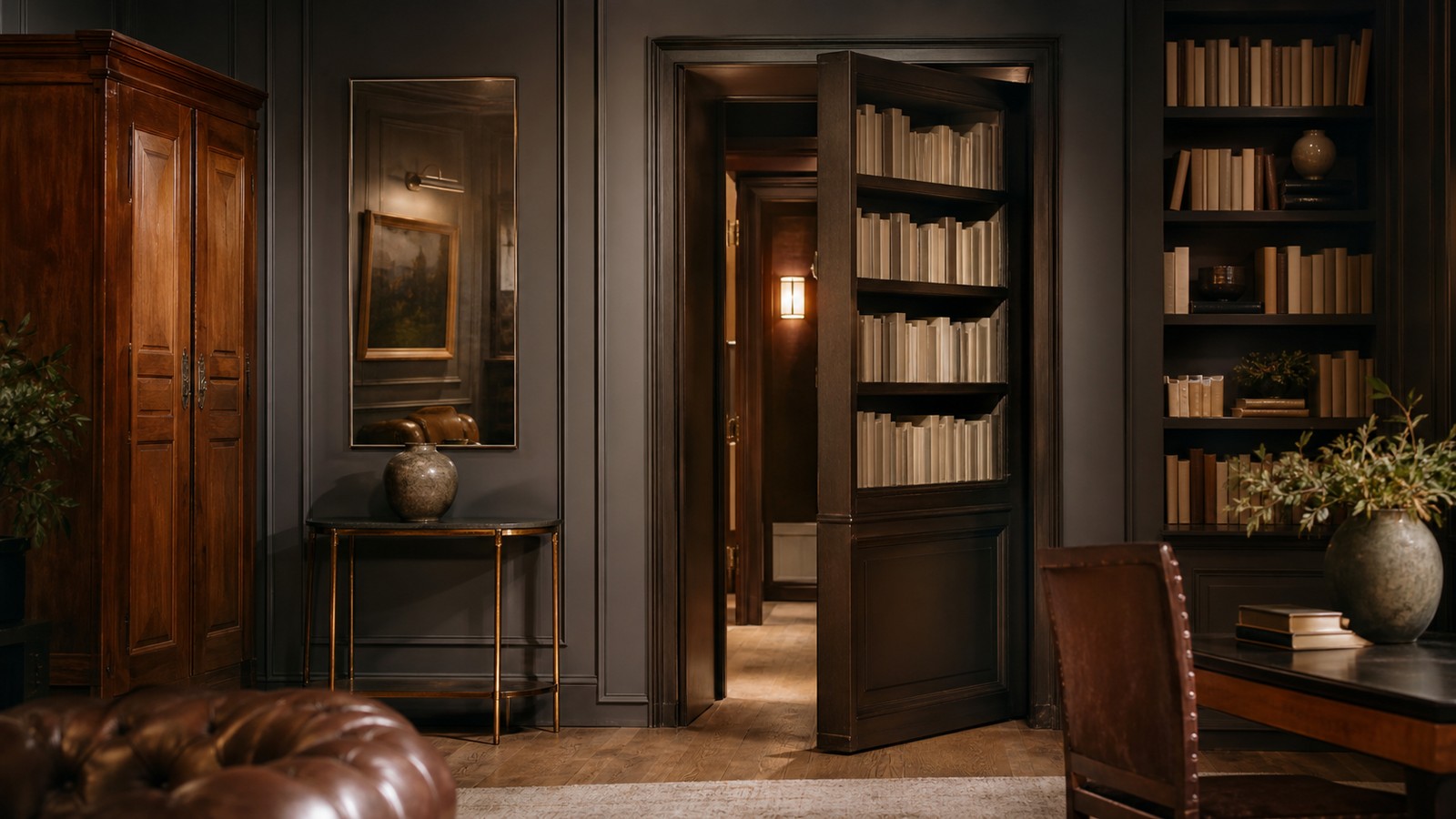
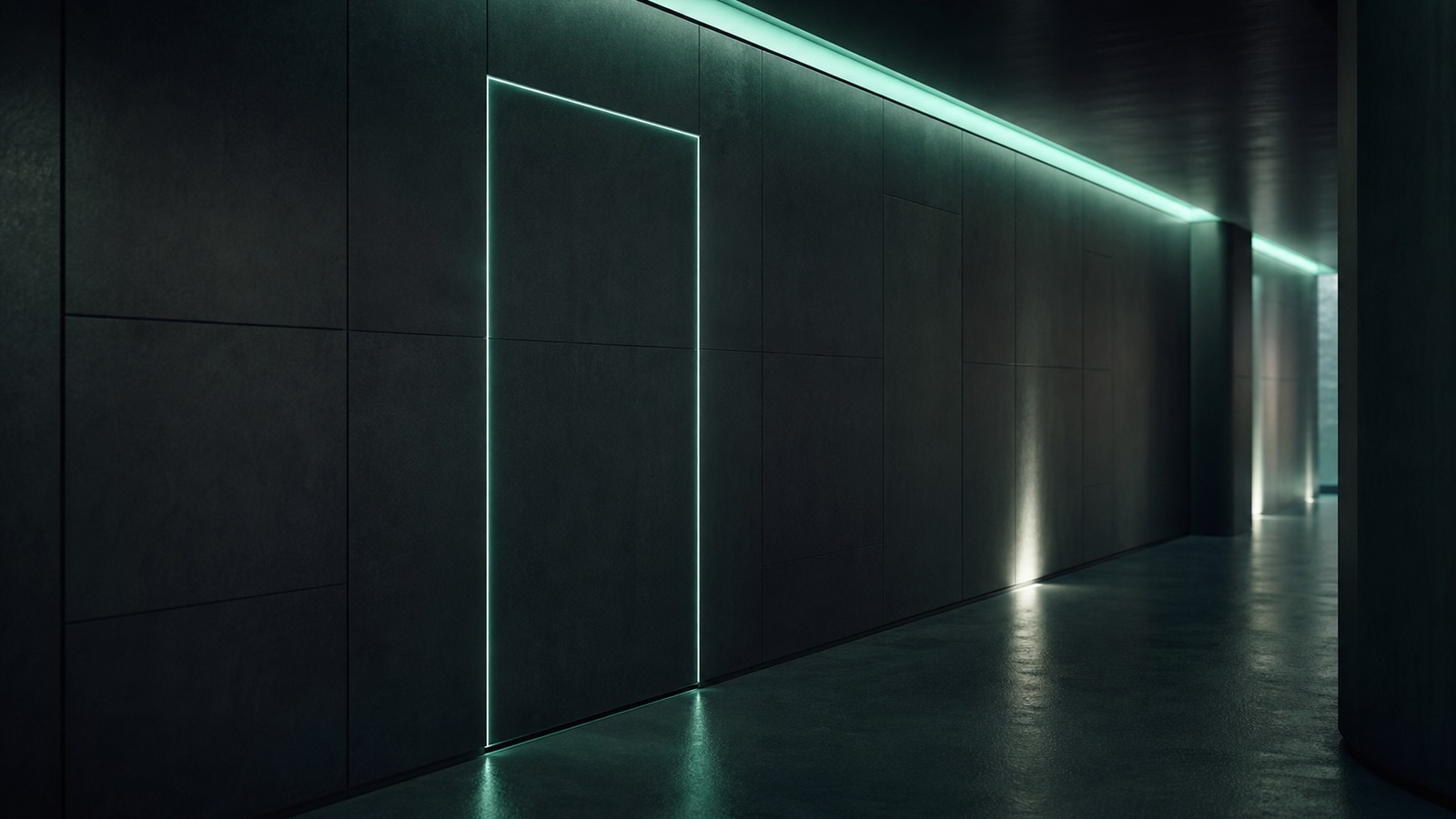
Movie secret doors aren’t just “cool carpentry”—they’re a tight collaboration between production design, construction, props, camera, stunts, and safety. The goal isn’t only to hide an opening; it’s to sell a story beat. A secret door might need to vanish under a spotlight, open silently on cue, reset quickly between takes, and survive dozens of performances without drifting out of alignment. On a film stage, the door is part illusion, part machine, and part choreography. What makes a movie-set secret door special is the speed and repeatability. Real-world hidden doors often prioritize long-term durability, insulation, and security. Set doors prioritize quick build, easy adjustment, and camera-friendly deception. The best ones disappear because the entire wall is built to “help” them: seams are planned around framing, finishes are chosen to bury reveals, and the mechanism is designed to operate the same way every time—so the actor hits a mark, the door moves, and the camera gets the magic.
A: A disguised swing door (bookshelf/panel) because it’s reliable and resets fast.
A: Often no—foam blocks or hollow props keep weight low while staying believable.
A: Sometimes, but often a hidden crew release ensures perfect timing and consistency.
A: With shadow gaps, intentional panel lines, texture, and finishes that break up edges.
A: Pivots often look more like a moving wall, especially for tall, dramatic doors.
A: Dampers, tuned latches, felt pads, and maintenance between takes.
A: Overlapping trims, baffles, gaskets, and careful seam placement away from hot lights.
A: Often yes—reinforced or breakaway builds are used for impact and chase scenes.
A: Service panels on the cheat side, adjustable catches, and accessible hardware.
The Illusion Starts in the Drawing Phase
Secret doors on sets are usually planned early in the art department, long before a saw touches lumber. Designers figure out the narrative function first: Is the door meant to be discovered by the audience, or should it stay invisible until the reveal? That answer changes everything—especially the seam strategy. If the audience is supposed to suspect something, the set might “wink” with a slightly suspicious bookshelf, a repeated panel pattern, or a prop that draws attention. If the door must be truly invisible, the wall pattern gets disciplined: fewer hard lines, fewer obvious joints, and more texture that naturally breaks edges. The next decision is camera reality. A door that looks perfect head-on may betray itself at an angle. Set designers often plan a “hero side,” the direction the illusion must hold best, then engineer the door to cheat for that view. That can mean deeper trim, a shadow gap placed where a natural seam would be, or dressing the wall with props that conveniently interrupt sightlines.
What the Walls Are Really Made Of
A lot of movie walls aren’t structural the way real walls are. Sets are commonly built as flats—framed panels that stand up and brace to the stage floor. Because they’re designed to move, strike, and rebuild, they’re lighter than residential construction. That lightness is great for speed, but it complicates secret doors: a moving part inside a lightweight wall can wobble, rack, or sag unless it’s reinforced.
So builders create “hard points”—hidden framing blocks, doubled studs, steel plates, or thicker plywood backers wherever hinges, pivots, or tracks will live. If the secret door carries weight (like a bookshelf face), the surrounding wall often gets beefed up too, so the whole assembly moves as one convincing object instead of flexing like a stage prop.
The Reveal Line Is Everything
In real architecture, you can sometimes hide a door with precision millwork and razor-thin gaps. On a film set, the reveal line is controlled for the lens, not for a measuring tape. The art department uses shadow, paint, texture, and pattern to bury the seam. A slightly deeper shadow gap can look intentional on camera—like a decorative joint—while a tiny, uneven seam can catch light and scream “trap door” in high resolution. Painters and finishers are the unsung heroes here. They’ll feather paint over a seam, align wallpaper patterns across the door edge, or intentionally distress a surface so the eye stops searching for perfect continuity. Sometimes the most convincing secret door is the one that looks a little imperfect—because real buildings age, and “too perfect” can read as fake.
The Three Most Common Movie Secret Door Types
The classic is the disguised swing door: a door leaf that opens like a normal door but wears a different face—bookshelves, paneling, mirrors, or stone. This is popular because it’s reliable, easy to reset, and can be rigged to open smoothly with hidden latches. Next is the pivot door. Pivots handle tall, heavy “statement” doors and let the face read like a wall panel rather than a conventional door with hinges. Pivots also look cinematic because the rotation feels dramatic and clean, especially when the door has no visible hardware. Third is the sliding or “traveling wall” door—where a section of wall or shelving glides sideways. Sliding doors can feel more magical because the opening appears where a wall was. They’re also trickier: they need hidden track solutions, strong guidance to prevent racking, and enough backstage space for the door to park.
Hidden Hardware That Does the Heavy Lifting
If a secret door is dressed as a bookshelf, weight becomes the villain. Real books are heavy, so sets often use lightweight “book blocks,” foam spines, or hollow props to keep the face believable without overloading the hinges. The door still needs a rigid internal frame—often a torsion-box style build—so it stays flat and doesn’t twist when it moves.
Hardware choices depend on the trick. Concealed hinges can work for lighter doors and short runs, but heavy disguised doors often need pivots or continuous hinge strategies to spread load. For sliders, top-hung tracks keep the floor clean for camera framing and actor movement, while hidden floor guides prevent the wall from drifting. Then there’s latching: magnets, touch latches, spring bolts, and mechanical catches. Film doors often need a latch that an actor can operate naturally—push a candle sconce, pull a specific book, press a panel—while the mechanism actually triggers a reliable release behind the scenes.
How the “Trigger” Trick Is Built
The famous “pull the right book” gag usually isn’t one delicate book on a fragile pin. It’s commonly a reinforced prop with a hidden lever or switch that drives a latch release. The prop department might build a faux book that’s actually a handle, or a book row that pivots as one unit. The actor gets a satisfying tactile moment, and the door gets a consistent mechanical command.
Sometimes the trigger is purely performance: the actor does a gesture, and a crew member off-camera releases the latch via cable, rod, or remote. That’s not “cheating”—it’s the craft. Film magic is about repeatability, and invisible crew solutions can be safer and faster than overly clever self-contained mechanisms.
Staging the Motion for Camera
A secret door doesn’t just open—it performs. If it opens too fast, it feels like a gag. If it opens too slow, it kills pacing. Builders tune the motion using soft-close dampers, counterweights, or friction adjustments so the door glides with intention. Sound matters too: squeaks, rattles, and clicks can ruin a take, so crews add felt pads, lubricate moving joints, and isolate noisy components.
Blocking is designed with the door. An actor needs a clean path, a stable handhold if necessary, and a safe clearance zone. The door’s swing arc is choreographed so it doesn’t clip costume elements, props, or camera gear. When it’s done right, the move looks effortless—like the building itself is cooperating with the character.
The Reset Problem Nobody Thinks About
On set, the door might open fifty times a day. That means reset must be fast and foolproof. A door that requires delicate alignment or a finicky latch will cost time, and time is money. So crews build in adjustment points: hidden shims, slotted hinge plates, tweakable catches, and quick-access panels for maintenance.
They also plan “service access.” If a latch fails, someone must reach the mechanism without ripping the wall apart. Many secret doors have a disguised back panel or a removable trim piece on the off-camera side so the team can fix issues between takes.
Safety, Stunts, and “Breakaway” Versions
If a scene involves impact—someone gets thrown into the secret door, or it bursts open during a chase—there may be multiple door versions. The hero door is the beautiful one for close-ups. The stunt door is reinforced or modified for safe action. Sometimes there’s a breakaway façade designed to fracture predictably while the underlying structure stays safe.
Safety teams care about pinch points, finger clearance, trip hazards, and runaway motion. A heavy door can become dangerous if it’s unbalanced, so counterweights and stops are common. If actors are moving fast, crews mark floor positions, adjust swing speeds, and rehearse timing so the door never surprises anyone.
Sound, Light, and the Secret Door “Tell”
A big giveaway is light leak. Even tiny gaps can glow under strong set lighting. That’s why many set secret doors use gaskets, light baffles, or layered overlaps where the door edge sits behind trim. Another giveaway is sound: hollow walls can sound fake when knocked, so builders add backing material, braces, or “sound deadening” layers to make the wall feel real.
Cinematography also shapes choices. In a dark, moody scene, the seam can hide naturally. In a bright, clean modern set, the seam must be engineered more carefully because the camera will see everything. The craft is knowing whether to hide with darkness and texture—or hide with precision and disciplined design.
The Final Touch: Dressing the Door to Look Lived-In
A secret door is believable when it belongs to the world. That means dust on shelves, slightly uneven books, a scuffed baseboard, or a picture frame that’s been touched a hundred times. Dressers place props to distract from seams and to motivate the trigger. If the door is opened by moving a statue, the statue needs a reason to be there. If the door hides behind paneling, the panel pattern needs to match the building style. Often the most powerful secret door trick is psychological: viewers see what they expect. If the set sells “normal,” the hidden becomes invisible. When the reveal comes, the audience feels delight because the door was always there, hiding in plain sight—exactly where the story wanted it.