A secret door is only as convincing as the hardware that makes it move. You can build a beautiful bookcase face, match the trim perfectly, and paint everything to disappear into the wall—but if the door sags, squeaks, binds, or reveals itself with a clunky latch, the illusion collapses fast. The best secret door setups feel effortless: they swing smoothly, hold alignment year after year, and stay quiet while carrying serious weight. That “it just works” feeling comes from choosing the right hinge system, the right support, and the right latching strategy—then pairing all of it with solid installation practices. Secret doors aren’t one-size-fits-all. A shallow, low-weight panel door tucked into a hallway can use completely different hardware than a 400-pound rotating bookcase. Some secret doors need ultra-tight gaps and invisibility above all else; others need speed and durability for daily use. The good news is that today’s market has mature, professional-grade options—especially if you know what you’re looking for and avoid the common traps. This guide breaks down the best types of secret door hardware and hinges you can buy, what they’re best at, and how to pick the setup that will feel premium rather than “novelty.”
A: A heavy-duty pivot system designed for furniture-weight loads.
A: Only for lighter doors; bookcases need pivots.
A: In tight spaces, yes—especially for concealment.
A: Absolutely—settling and load changes are inevitable.
A: Nearly silent with proper bearings and dampers.
A: Yes, but always include a manual release.
A: Decades with proper installation and maintenance.
A: Not always—many premium systems are off-the-shelf.
A: Underrated hinges or weak framing.
A: Choosing concealment over strength.
What “Best” Really Means for Secret Door Hardware
When people shop for hidden door hinges, they often focus on one feature—usually concealment. But concealment without strength, adjustability, and repeatable alignment is a recipe for frustration. “Best” hardware for a secret door typically checks four boxes: it can carry the weight with a comfortable margin, it stays aligned and adjustable over time, it operates smoothly and quietly, and it disappears visually (or at least doesn’t give the game away).
Weight capacity matters more than you think. Secret doors are often heavier than standard doors because they’re built like furniture: thick plywood, solid wood shelving, books, decor, sometimes even stone veneer or integrated storage. Hardware should be chosen based on the fully loaded weight, not the empty structure. And because real-world loads shift—people grab shelves, kids hang on edges, humidity changes—the best hardware has adjustment built in. Micro-adjustments are the difference between a door that works for a week and one that works for a decade. Smoothness is not optional either. Secret doors that require a shoulder check, scrape the floor, or “pop” through a sticky point announce themselves. Better hinge systems distribute load across engineered pivots and bearings, keeping motion consistent. Finally, invisibility is more than hiding hinge leaves. It’s also about keeping gaps consistent, preventing sag that reveals a telltale wedge-shaped gap, and using latching that doesn’t require a visible knob.
The Hardware Categories That Win in the Real World
Most secret door projects fall into a handful of hardware categories. Once you understand these, you stop shopping blindly and start buying the right mechanism for the door you actually have.
There are concealed hinges used for lighter doors and refined interiors. There are pivot hinge systems designed specifically for heavy hidden doors and bookcases. There are continuous hinges that can be effective in some “hidden in plain sight” applications, especially when you can disguise the hinge edge. There are sliding and pocket mechanisms for doors that don’t swing. And there are latching and access systems—touch latches, magnetic catches, RFID, concealed pulls, and push-to-open setups—that control the “how do you open it?” moment.
For most serious secret bookcase doors, the winners are almost always pivot-style systems or specialty concealed pivots designed for hidden doors. For lighter flush panel secret doors, high-quality concealed hinges can be excellent. For special layouts, sliding mechanisms can be the smartest “invisible” solution of all.
Heavy-Duty Pivot Hinges: The Gold Standard for Bookcase Secret Doors
If you want a secret bookcase door that feels like it belongs in a high-end build—quiet, confident, and smooth—pivot hinges are usually the best purchase you can make. A pivot system supports the door from the top and bottom at offset pivot points rather than hanging everything off a side jamb like a standard butt hinge arrangement. That matters because a loaded bookcase door creates huge leverage. Standard door hinges are fighting gravity while also resisting twisting force, which is why sag and rubbing are so common on DIY hidden bookcase doors.
A good pivot hinge system changes the physics. Instead of concentrating stress at three hinge points on a vertical edge, it distributes force through pivots and often through bearings engineered for load. This is why pivot hinges tend to produce that “it floats” feeling even on heavy doors. Many systems also allow adjustment after installation—so if your floor settles or your shelves gain weight over time, you can tune alignment without tearing everything apart.
When shopping, pay attention to three things: load rating, adjustability, and the geometry of the pivot offset. Load rating should comfortably exceed the loaded door weight. Adjustability is essential; systems that allow vertical and horizontal alignment changes save you later. The pivot offset—the distance from the door edge to the pivot axis—affects how the door swings and how large a gap you need. For secret doors, you typically want a swing that avoids rubbing while still keeping reveals tight. High-end pivot systems are designed with these constraints in mind.
If your project is a “real” bookcase door—one that carries books, bottles, or gear—pivot hinges are the most reliable “best you can buy” category. They’re also the most forgiving. With a standard hinge door, the frame must be nearly perfect. With a pivot system, you can often dial it in even if the opening isn’t museum-grade square.
Concealed Pivots for Flush Secret Doors
Not every secret door is a bookcase. Some of the most convincing hidden doors are flush panels integrated into wainscoting, a library wall, or a run of matching doors. For these, concealed pivots can be an elegant option. They allow a clean face with no visible hinge knuckles and can work beautifully when the door weight is moderate and the design priority is invisibility.
The best concealed pivot systems operate quietly and include durable bearings or engineered wear surfaces. What separates professional-grade pivots from “hardware store pivots” is stability. Cheap pivots often feel gritty, get noisy, or develop slop that causes misalignment. Better pivots keep the swing consistent and hold their settings. When installed correctly, a concealed pivot door can look like a fixed panel until the moment it opens. This category shines for doors disguised as paneling, decorative wall sections, and “no visible trim” modern designs. If you want a secret door in a clean contemporary interior, this is often the most seamless hinge choice you can buy.
High-Quality Concealed Hinges: Best for Light-to-Medium Hidden Doors
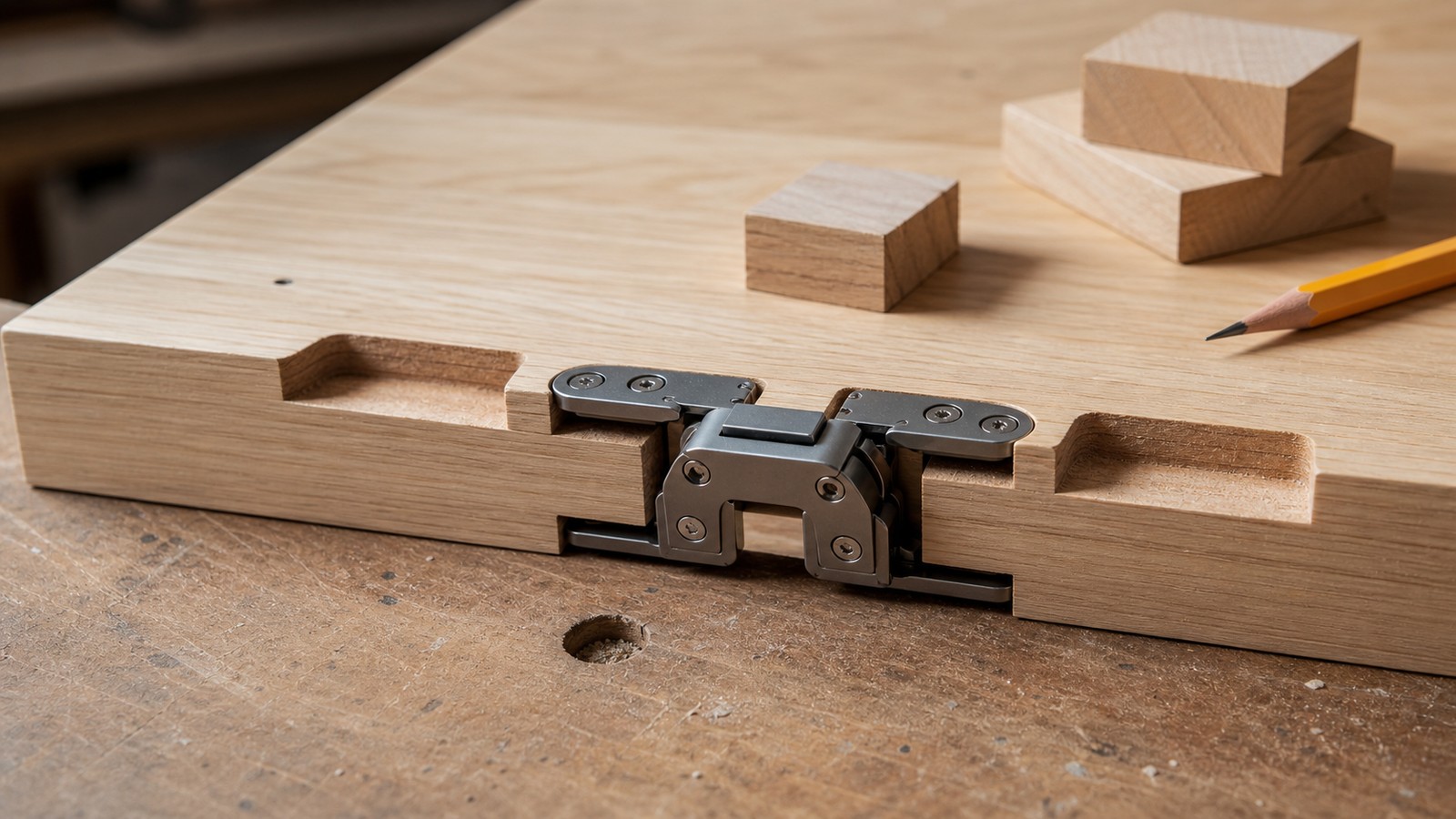
Concealed hinges can absolutely belong in secret door builds—especially when the door is not extremely heavy and you want a traditional swing from a side jamb. They’re common in fine cabinetry, and the better versions deliver excellent adjustability. For hidden doors that are essentially “fancy interior doors” rather than loaded furniture doors, premium concealed hinges can be a great investment. What makes them “best” is not just concealment. It’s the adjustment range and the rigidity under load. Many high-end concealed hinges allow three-dimensional adjustment: in/out, up/down, and side-to-side. This helps you maintain the perfect reveal that makes a hidden door disappear. Look for hinges designed for architectural doors rather than light cabinet applications, because the stress levels are different. If your secret door is disguised as a closet panel, a mirror door, or a wall panel that’s close to a typical interior door weight, concealed hinges can provide a clean look and a very satisfying swing. The key is to avoid using undersized hinges and to ensure the frame is strong enough to anchor them. The hinge is only as good as what it’s screwed into.
Continuous Hinges: When You Want Ultimate Edge Support
A continuous hinge runs the full height of the door. It can be excellent for stability because it spreads load along the entire jamb, reducing sag and keeping alignment consistent. In hidden door applications, continuous hinges can work well when the hinge edge isn’t meant to be invisible or when it can be disguised with trim, shadow lines, or the way the door is integrated. The biggest benefit is durability and alignment under repeated use. If the door is used frequently—like a secret pantry door or a concealed office door—continuous hinges can deliver a long-life, low-maintenance solution. They also help prevent racking, which can be helpful for doors that need to seal tightly.
The downside is that a continuous hinge can be hard to fully conceal. Some designs embrace that and hide the hinge in a shadow gap or use a jamb detail that keeps it out of sight. If your secret door concept includes a reveal or a recessed jamb, a continuous hinge can be one of the best “buy once, cry once” options for stability.
Sliding and Pocket Hardware: The “Secret Door” That Doesn’t Swing
Swinging is not always the best motion for concealment. In tight hallways, small rooms, or where furniture blocks a swing, a sliding secret door can be dramatically more practical. Pocket door hardware, wall-mounted barn-style tracks (hidden behind a valance or built-in), or concealed sliding systems can make a panel vanish without a visible hinge line.
High-quality sliding hardware is defined by smooth glide, solid mounting, and quiet operation. Cheap tracks rattle, drag, and telegraph movement. Better systems feel like a premium drawer: controlled, quiet, and repeatable. If invisibility is the priority, pocket systems are especially compelling because the door disappears completely—no swing arc, no hinge edge to detect, and no awkward clearances.
Sliding secret doors are especially effective for hidden rooms behind paneling, concealed closets, and built-ins where a swing door would reveal itself by needing a handle. With push-to-open or a hidden pull, sliding doors can be among the most convincing secret door solutions you can buy.
Latching That Feels Like Magic Without Being Fragile
A secret door hinge is only half the story. The latch is what determines how the user interacts with the door—and whether the secret feels elegant or gimmicky. The best secret door latching strategies are secure enough to prevent accidental opening, simple enough to operate without fuss, and reliable enough to work every time.
Touch latches and push-to-open mechanisms are popular because they remove the need for a handle. The best versions are strong, adjustable, and designed for repeated use. Weak touch latches can fail under door pressure, especially when a heavy door compresses slightly against the frame. In those situations, stronger mechanical latching or magnetic solutions tend to perform better.
Magnetic catches can work beautifully for light doors, especially when paired with a concealed pull edge or finger groove. For heavier doors, magnets must be sized appropriately, and the door must close precisely to avoid misalignment problems. Another common approach is to use a standard latch mechanism but hide the actuation: a disguised trim piece, a book-trigger, a push panel, or a concealed lever.
If you want “modern secret tech,” RFID locks and hidden electronic latches can be impressive, especially for safe-room vibes or high-security storage. The best approach here is redundancy: include a hidden mechanical release or an emergency override so you’re never locked out by dead batteries or a failed actuator.
The Hidden Secret: Frames, Anchoring, and Load Paths
People blame hinges when a secret door fails, but the real issue is often the frame and anchoring. Secret doors—especially bookcase doors—apply odd forces to the opening. If your jamb flexes, no hinge can compensate forever. The best hardware in the world still needs a rigid structure to mount to.
For pivot hinges, the bottom pivot point needs solid blocking beneath the floor surface if possible, and the top pivot needs a header that won’t twist. For concealed hinges, the jamb must be robust, often with additional framing to prevent screw pull-out. For sliding systems, the track must be secured to structural framing, not just drywall. This is why the “best hardware” often includes adjustability: it gives you a safety net. But the best outcome comes from building a door and frame that behave like a single, rigid unit. When that happens, your door feels expensive, because it moves like something engineered—not improvised.
Choosing the Best Hinges for Your Specific Secret Door
Start by choosing based on door type and load. If it’s a loaded bookcase door, prioritize pivot systems designed for weight. If it’s a flush hidden panel door with moderate weight, consider concealed pivots or premium concealed hinges. If the door is used constantly and you can hide the hinge line, a continuous hinge can offer unmatched stability. If space is tight or you want maximum invisibility, explore sliding or pocket systems.
Next, choose based on usage frequency and “feel.” A secret door that opens a few times a month can tolerate a bit more complexity. A secret pantry door used daily needs industrial reliability and a forgiving latch. Also consider who uses it. If kids or guests might interact with it, avoid finicky triggers that require the perfect press at the perfect spot. The best hardware is invisible in operation, not just invisible in appearance.
Finally, decide your concealment strategy early. If you plan to have no visible handle, your latch must be designed for that. If you plan to disguise the handle as decor, you can use more traditional latching hardware. If you plan to hide the hinge line, choose hinges that support tight reveals and consistent alignment.
Premium Touches That Make Hardware Feel High-End
The “best you can buy” vibe usually comes from small upgrades that improve user experience. Soft-close or controlled-close features prevent a heavy door from slamming and damaging trim. Dampers and bumpers eliminate noise. Adjustable pivots and hinges allow you to fine-tune reveals until the door looks like a fixed panel. High-quality rollers and bearings keep movement smooth. And thoughtfully chosen stops prevent the door from over-rotating and telegraphing the mechanism. Sound is underrated. A secret door that creaks is a secret door that announces itself. High-quality hardware reduces friction noise, but you can also add felt or silicone bumpers in the right places and ensure nothing rubs. When everything is tuned, the door should sound like a high-end cabinet: a gentle click, a soft close, and silence.
Installation Quality: The Factor That Separates “Cool” From “Professional”
Even the best secret door hardware can be made to feel mediocre by sloppy installation. The most common issues are poor alignment, inadequate blocking, and incorrect clearances. Secret doors often require precise reveals and careful hinge geometry. If the door binds, people force it, and forced doors destroy hardware. A perfectly installed mid-tier hinge can outperform a premium hinge installed poorly.
The best approach is to treat alignment like finish carpentry, not rough framing. Keep the opening square, build a rigid frame, provide solid backing for screws, and set clearances based on the hinge system’s specifications. Then adjust. Secret doors almost always require a tuning phase. High-end hardware makes that tuning easier, but it still must be done.
A “Best of the Best” Shopping Mindset
If you want the best secret door hardware and hinges you can buy, think like a builder investing in longevity. Don’t buy to barely meet the weight rating—buy for margin. Don’t buy a hinge without adjustment unless the door is extremely light and the opening is perfect. Don’t rely on weak catches for heavy doors. And don’t ignore the frame and load path.
In practical terms, the best outcomes usually come from pairing a heavy-duty pivot system with a robust, simple latching strategy and a rigid frame. For lighter hidden doors, premium concealed hinges or concealed pivots paired with a reliable push-to-open latch can create a seamless, modern look. For tight spaces, sliding or pocket hardware can deliver the most convincing concealment of all, especially when combined with a hidden pull and quiet rollers.
Final Thoughts: Hardware Is the Illusion
Secret doors are part engineering, part theater. The “theater” is the facade—the bookshelf, the paneling, the mirror, the trim. The engineering is the hardware. When the engineering is right, the theater becomes believable. The door swings smoothly without effort. The gaps stay crisp. The latch opens cleanly with a press, a pull, or a disguised trigger. Nothing squeaks. Nothing scrapes. And nothing hints that there’s a room behind the wall. If you only upgrade one part of your secret door build, upgrade the hinges and support system. It’s the difference between a door that feels like a weekend project and one that feels like a feature in a luxury home. Choose the hinge category that matches your door type, select quality components designed for the load, build a frame that won’t move, and tune everything with care. Do that, and your secret door won’t just look hidden—it will feel inevitable, as if it was always meant to be there.