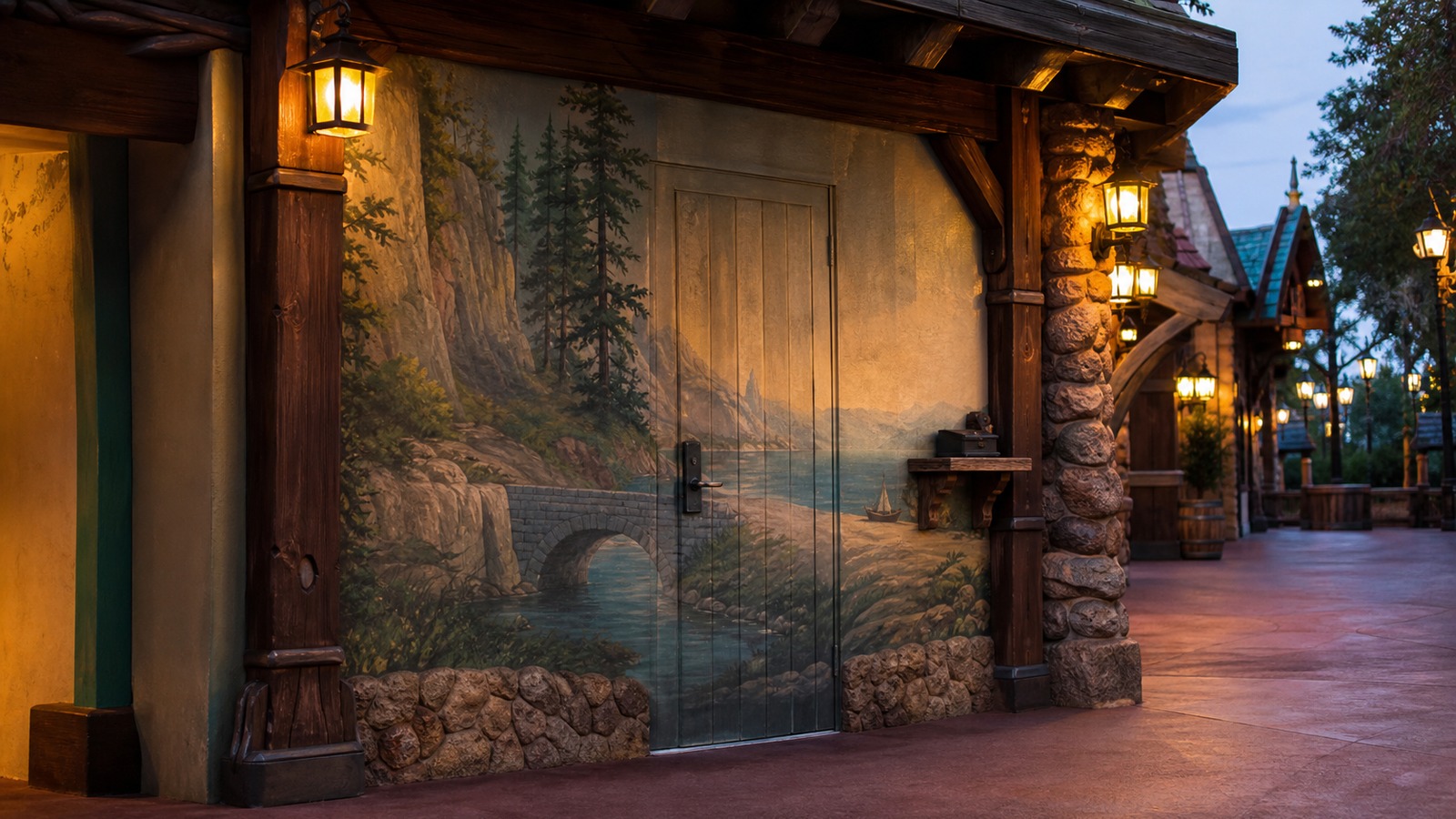
There is something timeless about a hidden passageway. A wall that opens when no one expects it, a bookcase that swings aside, a hallway concealed behind velvet drapes or carved wood paneling—these ideas instantly awaken curiosity. Hidden spaces suggest mystery, privilege, danger, and discovery all at once. In pop culture, they do even more than that. They create atmosphere. They give characters layers. They hint that the world on screen or on the page is larger, stranger, and more alive than it first appears. Few families in pop culture embody that sense of theatrical mystery better than The Addams Family. Their house is not merely a home. It is a stage set for secrets, shadows, odd inventions, and the delightfully unexpected. Passageways, concealed rooms, ominous corridors, and dramatic entrances all feel perfectly at home in the Addams world. Whether audiences encounter the family through classic television, films, animation, comics, or newer reinterpretations, the Addams aesthetic continues to shape how people imagine hidden architecture in fiction.
A: They add mystery, surprise, and the feeling that a story world has deeper layers.
A: Their Gothic mansion, eccentric style, and love of the unusual make secret spaces feel perfectly natural.
A: No. They can be spooky, funny, adventurous, luxurious, or purely theatrical depending on the story.
A: The rotating bookshelf is still the most recognizable and beloved secret entrance in fiction.
A: Yes. Minimal flush panels and seamless wall finishes create a more contemporary version of the same idea.
A: Sometimes, but movies often simplify the mechanics for dramatic effect and smoother reveals.
A: Often yes, though they can also provide privacy, storage, security, or immersive themed design.
A: Continuous paneling, paint-matched drywall, wallpaper wraps, and built-in shelving usually conceal seams effectively.
A: It feels like a complete world—moody, mysterious, funny, and full of unseen possibilities.
A: Strong visual disguise, believable mechanics, and a reveal that serves the story rather than just decoration.
The Addams Family House as a Character
The Addams Family home is one of the most memorable houses in entertainment. Like the great fictional mansions of mystery and Gothic fiction, it feels alive. It creaks, looms, surprises, and invites speculation. It is not simply a backdrop where stories happen. It shapes the emotional texture of every scene. The house tells viewers exactly what kind of family lives there long before a line of dialogue explains anything. In many portrayals, the mansion is layered with winding staircases, dark hallways, peculiar objects, and the suggestion that more lies behind every wall. This design choice is central to the Addams identity. The family thrives in a world of concealed oddities, and their house mirrors that sensibility. It feels old, inherited, and full of private knowledge. That makes hidden doors and passageways feel natural rather than gimmicky. In a sleek modern home, a secret hallway might seem like a novelty. In the Addams mansion, it feels almost necessary. This idea has had lasting impact on the way pop culture designs mysterious homes. Audiences now expect old mansions, eccentric estates, and Gothic residences to contain more than meets the eye. The Addams Family helped cement the mansion as a puzzle box. Every corridor could lead to a forgotten chamber. Every portrait might hide a lever. Every bookshelf might pivot. Even when specific Addams stories do not focus entirely on hidden architecture, the visual language of the franchise encourages that interpretation.
Hidden Passageways as Gothic Tradition
To understand why The Addams Family and secret passageways fit together so well, it helps to look at the Gothic tradition that inspired both. Gothic fiction has long relied on architecture to create suspense. Castles, abbeys, ancestral homes, and decaying estates often contain hidden rooms, secret staircases, sealed wings, and subterranean tunnels. These spaces are never random. They represent concealed truths, family secrets, buried crimes, or emotional repression.
The Addams Family draws from that tradition but transforms it with wit. Instead of presenting hidden spaces only as symbols of horror, the Addams universe reframes them as part of everyday domestic life. What would be terrifying in another story becomes normal, even cozy, in theirs. That tonal shift matters. It turns the secret passageway from a one-note fear device into a playful design element. The result is a world where darkness is stylish, secrets are entertaining, and the unknown feels inviting. That influence can be seen across television, film, gaming, and themed design. Countless fictional homes now use secret spaces to signal intelligence, eccentricity, wealth, legacy, or drama. Some draw more heavily from horror, others from adventure, but the essential appeal remains the same. Hidden passageways promise access to another layer of reality. They tell us that appearances are incomplete. The Addams Family helped popularize the idea that even strange or spooky hidden architecture could be delightful.
The Power of Mystery in Family Entertainment
One of the most impressive things about The Addams Family is how it makes macabre imagery accessible to broad audiences. Hidden chambers, creepy hallways, trapdoors, and unexpected openings could easily feel too dark for family-oriented storytelling. Yet the Addams formula turns these motifs into a source of comedy and wonder. The family moves through unusual spaces with total comfort, and that confidence invites viewers to enjoy the mystery rather than fear it.
This is a major reason hidden passageways became such a durable part of mainstream pop culture. They are thrilling without always requiring violence. They add motion to a scene. They allow for dramatic reveals, comic timing, quick escapes, overheard conversations, and visual surprise. In family entertainment especially, they create high-impact storytelling with very little explanation. A child understands immediately why a wall opening unexpectedly is exciting. The Addams Family makes secrecy feel domestic. Morticia, Gomez, Wednesday, Pugsley, and the rest inhabit a house where the unusual has become routine. That dynamic inspired later stories in which families, schools, and estates all contain secret routes known only to insiders. Hidden passageways become a way of saying that some people live closer to wonder than others. In the Addams universe, that wonder just happens to be draped in cobwebs and candlelight.
Wednesday Addams and the Modern Revival of the Hidden Mansion
Modern reinterpretations of the Addams legacy, especially those centered on Wednesday Addams, have introduced the family’s mysterious sensibility to new audiences. Wednesday herself has become an icon of dark intelligence, emotional restraint, and stylish rebellion. Whenever her character enters a setting filled with secrets, codes, or hidden corridors, it feels entirely consistent with her identity. She is a character built for concealed spaces and layered environments. The renewed popularity of Wednesday has also revived interest in Gothic settings more broadly. Audiences are once again drawn to old buildings, secret societies, cryptic clues, and architecture that conceals more than it reveals. This renewed cultural appetite shows how durable the Addams influence has been. The family does not merely belong to one era of spooky fun. They continue to shape how mystery is visualized for contemporary viewers. In this context, hidden passageways are more than nostalgic set pieces. They are part of a larger trend toward immersive world-building. Fans want environments that feel explorable. They want spaces with history, texture, and surprise. The Addams style gives creators a blueprint for that. A house should not simply look unusual. It should seem capable of hiding stories within its walls.
Hidden Passageways in Film and Television Beyond the Addams Family
The Addams Family may be one of the most recognizable examples, but hidden passageways are everywhere in pop culture. Mystery films, adventure stories, detective shows, fantasy worlds, and children’s fiction all return to the same idea. The secret corridor is one of storytelling’s most versatile architectural tricks.
In haunted house stories, passageways heighten suspense. In detective fiction, they explain impossible movement and hidden motives. In adventure tales, they unlock treasure, clues, and lost histories. In comedy, they enable timing, surprise entrances, and physical humor. In fantasy, they transform buildings into living labyrinths. The Addams tradition sits at a crossroads of all these uses. Their hidden spaces are spooky, humorous, theatrical, and full of personality at once. This broad appeal explains why audiences never seem to tire of concealed doors and secret rooms. They create a promise: there is more to discover. That promise is one of the deepest pleasures in visual storytelling. It invites attention, imagination, and speculation. The viewer starts scanning the environment for possible seams, latches, and disguises. In that moment, architecture becomes interactive.
Why Hidden Doors Work So Well on Screen
Secret passageways are especially effective in visual media because they combine set design with narrative payoff. A hidden door begins as scenery. Then, suddenly, it becomes action. A panel slides. A shelf rotates. A staircase appears where a wall once stood. This transformation gives the audience a small jolt of surprise that feels both visual and emotional. The Addams Family understood this instinctively. Their world often depends on visual punchlines and atmospheric reveals. Hidden architecture supports both. It lets scenes shift tone in an instant. A quiet room becomes a portal. A joke becomes a mystery. A character exit becomes memorable. The mechanism itself becomes part of the performance.
There is also something satisfying about concealed logic. A hidden door is not magic in the pure fantasy sense. It usually has a hinge, latch, spring, pivot, or trigger. That means it sits at the edge of plausibility. Viewers can imagine it existing in real life. This is where pop culture often spills into design culture. Fans do not just enjoy secret passageways on screen. They begin wanting them in their own homes, offices, game rooms, libraries, and themed interiors.
From Fiction to Design Fantasy
The Addams Family has had a quiet but powerful effect on how people dream about interiors. Even viewers who would never describe their style as Gothic often love the idea of a hidden library door, a secret reading room, or a concealed hallway behind paneling. Pop culture turns these architectural features into aspiration. The fantasy is not always about fear or security. Often it is about intimacy, surprise, and storytelling.
Designers and homeowners today frequently borrow from the same emotional vocabulary that makes the Addams house so memorable. Rich wood tones, dramatic wallpaper, antique fixtures, velvet textures, moody lighting, and concealed transitions all evoke a sense of mystery. A hidden passageway in this context becomes less about hiding from the world and more about creating a private narrative within the home. That is part of the genius of The Addams Family. Their house suggests that eccentric design can express love, identity, humor, and continuity. Hidden spaces are not just defensive or secretive. They are imaginative. They say that the home can still contain surprise. In a world increasingly dominated by open plans and visible everything, that idea feels fresh again.
The Symbolism of Hidden Spaces
Beyond aesthetics, hidden passageways endure because they resonate symbolically. They represent the parts of life that remain private, unexplored, or misunderstood. In family stories, they often symbolize inherited memory. In psychological stories, they can suggest repression or buried emotion. In adventure tales, they stand for discovery. In The Addams Family, they often symbolize a kind of proud difference. This family does not fear what others conceal. They live comfortably among mysteries.
That symbolism is powerful because it works on multiple levels at once. A passageway can be literal and metaphorical. It can move a character from one room to another while also moving them deeper into truth, identity, or danger. The best pop culture uses these layers intentionally. Hidden architecture becomes part of the emotional grammar of the story. The Addams aesthetic thrives on this layered meaning. The family appears bizarre to outsiders, but within their own walls, they are deeply coherent. Secret spaces reinforce that contrast. What looks alarming from the outside makes perfect sense from within. That tension between perception and belonging is one reason the Addams mythology continues to resonate.
The Lasting Legacy of the Addams Approach
The Addams Family did not invent hidden passageways in fiction, but it gave them a uniquely charming cultural home. The franchise fused Gothic atmosphere, domestic comedy, and architectural mystery into a style that remains instantly recognizable. In doing so, it helped hidden passageways become more than relics of old castles and melodramas. It made them playful, stylish, and emotionally rich. Today, that legacy can be felt everywhere from streaming series and Halloween design trends to luxury interiors and escape rooms. The idea of a secret door still sparks the same old thrill. It still promises another world behind the visible one. And when that thrill is filtered through the Addams sensibility, it becomes even more compelling. It is not just about what is hidden. It is about how delightfully strange it feels to find it.
Pop culture continues to return to hidden passageways because they offer what great storytelling always offers: mystery, transformation, and the promise that reality is larger than it appears. The Addams Family remains one of the best guides to that enchanted darkness. Their world reminds us that behind every wall may be a story, behind every shadow a joke, and behind every ordinary room the possibility of a wonderfully secret life.
Conclusion
The Addams Family and hidden passageways belong together because both celebrate the irresistible appeal of the unseen. Their mansion, with all its shadows, surprises, and theatrical mystery, helped define a pop culture language that still shapes the way audiences imagine secret spaces today. Hidden doors in fiction are never just pieces of architecture. They are invitations to wonder. That is why they endure. They make stories feel deeper, homes feel stranger, and characters feel more textured. In the Addams universe, they also make darkness feel elegant and fun. That balance is rare, and it is precisely why the family remains such a powerful influence on the pop culture imagination. Long after the door swings shut, the mystery stays with us.