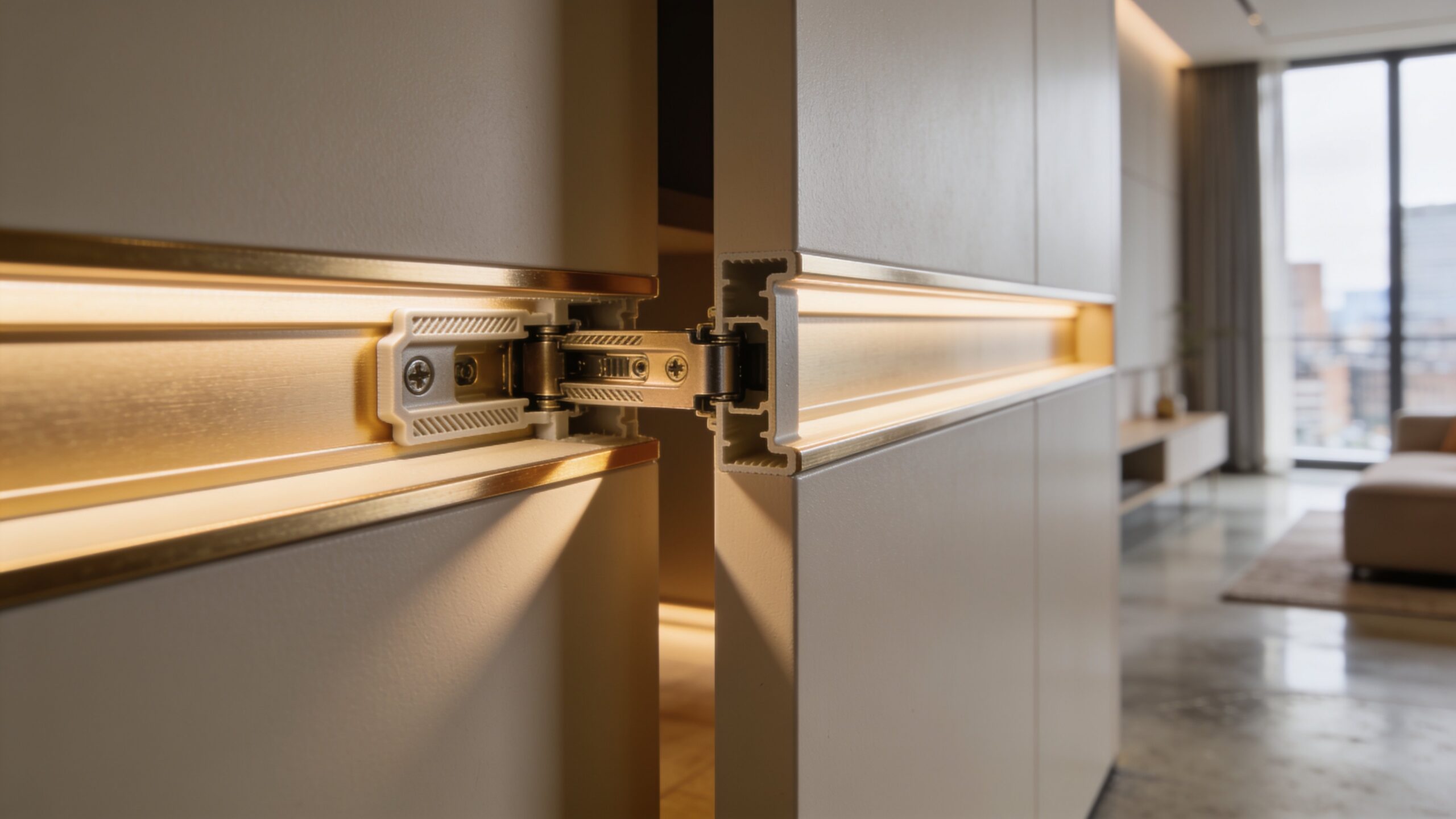
The idea of a secret door has fascinated people for centuries. From hidden passageways in castles to concealed bookcases in classic mystery novels, secret doors have always represented mystery, security, and clever design. Today, that timeless concept has been reimagined for the modern era. High-tech secret doors for smart homes combine advanced materials, intelligent automation, and sleek architectural design to create spaces that are not only hidden, but also responsive, secure, and seamlessly integrated into everyday life. These doors are no longer just novelties. They are functional components of contemporary homes, blending privacy, technology, and style in ways that feel both futuristic and surprisingly practical. At their core, high-tech secret doors are about control and experience. Instead of relying on obvious handles, visible hinges, or traditional locks, these systems respond to digital signals, biometric input, or subtle physical cues. A wall panel slides open at the sound of a voice command. A bookshelf pivots quietly after a fingerprint scan. A flush wall opens only when a specific lighting pattern is activated. For homeowners invested in smart living, secret doors are a natural extension of home automation, offering both enhanced security and an element of personal expression.
A: Yes, when properly installed with manual backups.
A: Battery backups and overrides handle outages.
A: Encrypted systems reduce risk significantly.
A: Yes, though framing and wiring may be required.
A: Soft-start motorized pivots with dampers.
A: Not always—local control is common.
A: Yes, per-user permissions are standard.
A: No—fingerprint, voice, or app access also work.
A: No—the design keeps them visually hidden.
A: From one day to several weeks, depending on complexity.
The Evolution from Hidden Doors to Intelligent Architecture
Traditional secret doors focused primarily on concealment. They were built to blend into walls, furniture, or architectural features, often using mechanical latches and manual operation. While effective, these systems were limited by physical access and simple hardware. Modern high-tech secret doors, by contrast, are part of a larger intelligent ecosystem. They communicate with smart hubs, sensors, and control panels that manage lighting, security, climate, and entertainment.
This evolution reflects a broader shift in residential design. Homes are no longer static structures but adaptive environments. Smart doors fit into this philosophy by responding to users rather than forcing users to adapt to them. A secret door might unlock automatically when a trusted resident approaches, while remaining completely invisible to guests. It might also lock itself during certain hours or integrate with an alarm system when the homeowner is away. In this way, secret doors move beyond novelty and become dynamic architectural elements.
Why Homeowners Are Choosing High-Tech Secret Doors
One of the biggest reasons homeowners invest in high-tech secret doors is privacy. In open-concept homes, it can be difficult to create truly secluded spaces. A concealed door allows a room to exist without advertising its presence. This is ideal for home offices, meditation rooms, personal libraries, or private suites where discretion is valued as much as comfort.
Security is another major driver. Hidden doors add an extra layer of protection by reducing visibility. Even if someone gains access to the home, they may never realize that a secure room exists. When combined with biometric authentication, encrypted controls, and automated locking systems, these doors create highly secure spaces suitable for valuables, sensitive documents, or safe rooms.
Aesthetics also play a significant role. High-tech secret doors appeal to homeowners who want clean lines and minimal visual clutter. By eliminating visible hardware and frames, these doors help maintain uninterrupted surfaces and modern design continuity. The technology works behind the scenes, preserving the illusion of a seamless wall, cabinet, or architectural feature.
Smart Door Mechanics and Hidden Engineering
Behind the smooth motion of a high-tech secret door lies a carefully engineered system of motors, sensors, and structural components. Unlike standard doors, which rely on visible hinges and knobs, secret doors often use concealed pivots, linear actuators, or track-based mechanisms hidden within walls or ceilings. These components must be precisely aligned to ensure quiet operation and long-term durability.
Electric motors are typically low-noise and soft-start, meaning they begin and end movement gently to avoid sudden jolts. This not only enhances the sense of luxury but also reduces wear on the structure. Sensors monitor position, resistance, and alignment, stopping movement instantly if an obstruction is detected. This is especially important in family homes, where safety must be balanced with sophistication.
Structural reinforcement is another critical factor. Because secret doors often carry the weight of shelves, panels, or decorative elements, the framing behind them must be stronger than that of a standard interior door. Steel subframes, reinforced studs, and engineered materials are commonly used to ensure stability without adding visible bulk.
Biometric Access and Personalized Security
One of the most exciting aspects of high-tech secret doors is biometric access. Instead of keys or codes, these doors can be programmed to recognize fingerprints, facial features, or even voice patterns. Biometric systems offer both convenience and security, as they are difficult to replicate and tailored to individual users.
Fingerprint scanners are among the most popular options because they are reliable, compact, and fast. A scanner can be hidden behind a decorative element, embedded in a shelf, or integrated into a smart panel that looks like part of the wall. Facial recognition systems are often paired with cameras used for home security, allowing a door to unlock automatically when a recognized face enters the room.
Voice recognition adds another layer of personalization. When connected to a smart home assistant, a secret door can respond to a specific phrase spoken by an authorized user. Advanced systems can distinguish between voices, ensuring that only approved individuals trigger the mechanism. This creates an experience that feels intuitive and almost magical, while still maintaining strict access control.
Integration with Smart Home Ecosystems
High-tech secret doors are most powerful when integrated into a broader smart home system. Instead of operating as standalone features, they can interact with lighting, security, and automation routines. For example, opening a secret door might automatically adjust lighting levels in the hidden room, turn on ventilation, or disable cameras to protect privacy.
Automation routines allow homeowners to set conditions under which a door operates. A door might only open when the home alarm is disarmed, or it may lock automatically at night as part of a security routine. Some systems also allow remote control through encrypted apps, giving homeowners the ability to monitor and manage access while away.
Integration also enhances reliability. When all components communicate through a central hub, the system can detect issues early and provide alerts if maintenance is needed. This reduces the risk of mechanical failure and ensures that the door remains as functional as it is discreet.
Design Styles and Concealment Strategies
The design possibilities for high-tech secret doors are nearly limitless. Some are designed to disappear completely, blending seamlessly into walls through matching materials, textures, and finishes. Others use architectural features like shelving, cabinetry, or decorative panels to disguise the entrance while adding visual interest.
In modern homes, flush wall panels are especially popular. These panels align perfectly with surrounding surfaces, often using the same paint, wood veneer, or stone finish. When closed, the door is indistinguishable from the wall itself. In more traditional or eclectic interiors, bookshelves, wine racks, or display cabinets provide both concealment and functionality.
Lighting plays a subtle but important role in concealment. Carefully planned light placement avoids shadows that might reveal seams or outlines. In some designs, lighting is also used as part of the activation process, with specific patterns or sequences serving as hidden triggers for opening the door.
Use Cases That Go Beyond the Obvious
While safe rooms and hidden offices are common applications, high-tech secret doors are finding their way into many other spaces. Home theaters benefit from concealed entrances that preserve acoustic performance and visual immersion. Wellness rooms and spas gain a sense of retreat and separation from the rest of the home. Even children’s playrooms can incorporate secret doors to spark imagination while maintaining safety through controlled access.
In luxury homes, secret doors are sometimes used to separate staff areas from living spaces, allowing for discreet movement without disrupting the household. In smaller homes or apartments, they can help maximize space by hiding storage rooms or compact work areas behind everyday features.
What unites these use cases is the desire for flexibility. A secret door allows a room to change its perceived function depending on who is present and how the home is being used. This adaptability is a hallmark of smart living.
Installation Challenges and Planning Considerations
Installing a high-tech secret door requires careful planning. Because these systems are integrated into the structure and technology of the home, they are easiest to install during new construction or major renovations. Retrofitting is possible, but it often involves opening walls, reinforcing framing, and updating electrical systems.
Power supply and wiring must be planned discreetly to avoid compromising concealment. Backup power solutions, such as battery systems or manual overrides, are essential to ensure access during outages. Homeowners should also consider long-term maintenance, as motors and sensors require periodic inspection to maintain optimal performance.
Equally important is coordination between designers, architects, and technology specialists. A successful secret door project balances aesthetics, mechanics, and automation. When these elements are aligned from the beginning, the result feels intentional rather than gimmicky.
Safety, Reliability, and User Trust
As with any automated system, safety is paramount. High-tech secret doors must include safeguards to prevent accidental entrapment or injury. Motion sensors, pressure detection, and emergency release mechanisms are standard features in well-designed systems.
Reliability is closely tied to user trust. A door that fails to open when needed quickly becomes a liability rather than a luxury. For this reason, high-quality components and professional installation are essential. Many homeowners also choose systems that allow both automated and manual operation, ensuring access even if technology temporarily fails.
Clear communication within the household is also important. Everyone who uses the home should understand how the door operates, including emergency procedures. When properly implemented, these systems are not only safe but also intuitive and reassuring.
The Psychological Appeal of Hidden Spaces
Beyond practical benefits, high-tech secret doors tap into something deeply human: the desire for private worlds and personal sanctuaries. A hidden room creates a sense of ownership and control that open spaces cannot always provide. It offers a retreat from noise, expectations, and visibility.
In smart homes filled with connected devices and constant interaction, a secret door represents selective access. It reminds us that technology can serve discretion as well as convenience. By allowing homeowners to decide what is seen and what remains hidden, these doors restore a sense of intentional boundaries within highly connected environments.
Future Trends in Smart Secret Doors
As smart home technology continues to evolve, secret doors are likely to become even more sophisticated. Artificial intelligence may enable doors to learn usage patterns, opening proactively at certain times or adjusting access based on context. Materials science could introduce lighter, stronger panels that improve concealment and efficiency.
We may also see greater integration with augmented reality interfaces, where homeowners manage hidden spaces through virtual overlays or gestures. Sustainability will likely play a role as well, with energy-efficient motors and recyclable materials becoming standard. Despite these advances, the core appeal will remain the same. A well-designed secret door blends mystery with functionality, offering both practical benefits and emotional satisfaction.
High-Tech Secrecy as a Modern Luxury
High-tech secret doors for smart homes represent a unique intersection of design, technology, and lifestyle. They are not merely about hiding rooms but about enhancing how a home functions and feels. By combining intelligent automation with thoughtful architecture, these doors create environments that are secure, adaptable, and deeply personal. For homeowners who value privacy, innovation, and design excellence, secret doors are more than a trend. They are a statement about how technology can quietly support everyday life while preserving a sense of wonder. In a world where so much is visible and connected, the ability to conceal, control, and customize access may be one of the most meaningful luxuries of all.