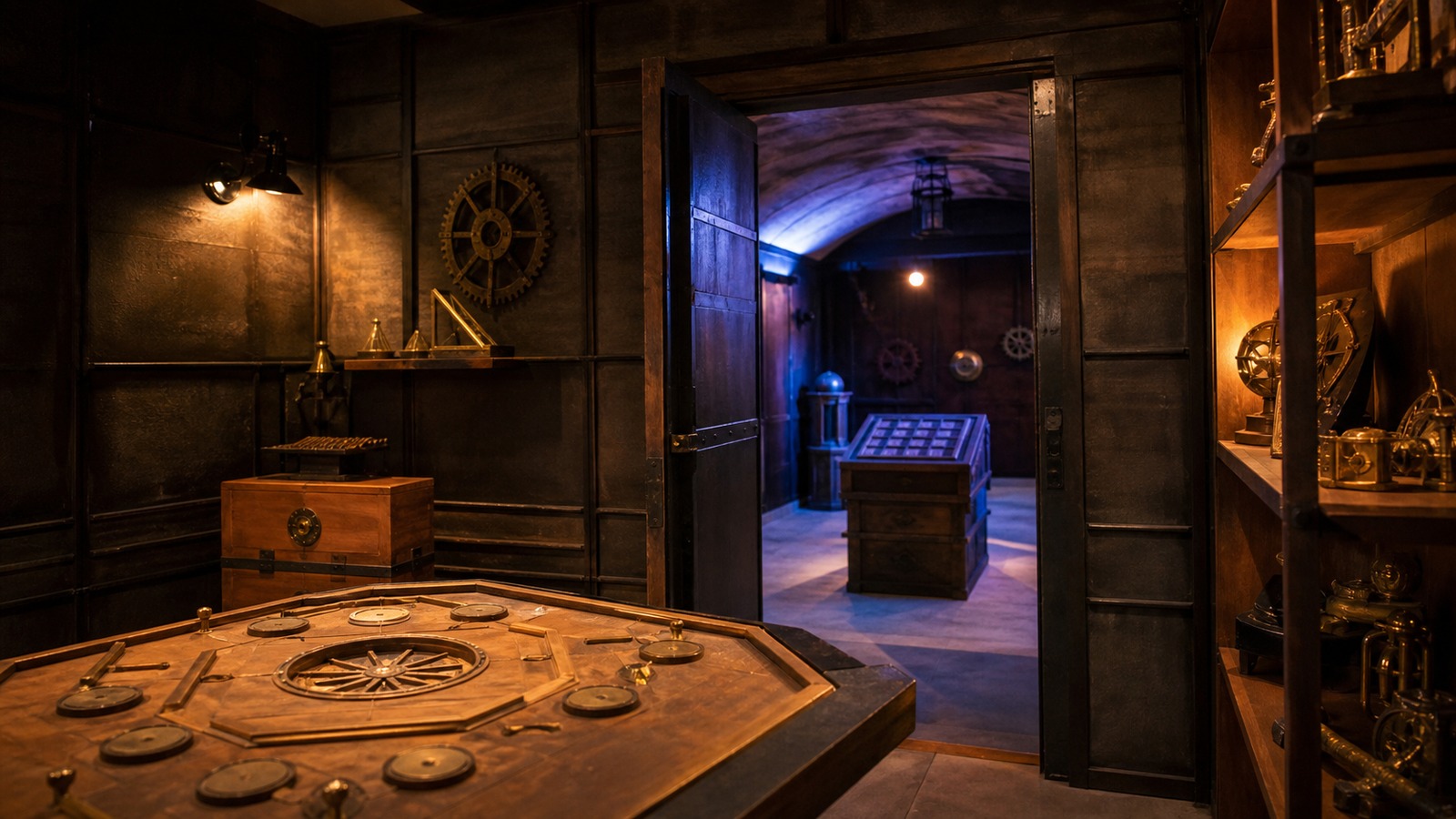
Escape rooms live and die by the moment your brain clicks into a new reality. One second you’re staring at a bookshelf; the next, the shelf shifts, a seam appears, and the room seems to inhale as a hidden passage reveals itself. That emotional “no way” is not an accident—it’s engineered. Secret doors are among the most powerful tools in an escape room designer’s kit because they create a physical twist that feels like magic while still being logical, safe, and repeatable for hundreds or thousands of teams. Designing those doors is a balancing act between theater and engineering. They must hide in plain sight, survive constant use, and open reliably when a puzzle is solved—without confusing staff, slowing resets, or risking injury. Great secret doors also support story: a detective’s office that becomes a speakeasy, a museum exhibit that reveals a vault, or a spaceship corridor that folds into a maintenance tunnel. When done well, they don’t just connect rooms. They connect your players to the fantasy.
A: A disguised swing panel with a strong latch and a simple release trigger.
A: Some do, but many are released by a latch or lock when a puzzle is solved.
A: Reed switches, simple contact sensors, and well-protected physical switches tend to be dependable.
A: Hide seams with texture and lighting, and control clues so attention arrives on schedule.
A: They can—escape rooms are high-cycle environments, so strong hardware and routine checks matter.
A: Yes—use lightweight props, proper pivots/hinges, and stops to prevent slam and sag.
A: Sync the unlatch with a sound cue and a lighting change that points to the opening.
A: Self-aligning latches, consistent stops, and hidden access points speed resets between groups.
A: Designs should include manual overrides so staff can open doors instantly.
A: No—secrecy helps, but real security needs proper locks, frames, and controlled access.
The Design Brief: What the Door Must Do
Every secret door starts as a list of requirements, not a drawing. Designers ask practical questions: How many players will pass through at once? How quickly does it need to open after the trigger? Will the reveal be silent and spooky or loud and celebratory? What happens if the game needs to be paused or ended early? The answers shape everything from the hinge choice to the trigger logic to how wide the opening must be. Then comes the most important design decision: what role will the door play in the game’s emotional rhythm. A secret door can be a reward after a long puzzle chain, a mid-game surprise that changes the map, or a finale reveal that makes the last room feel like a “boss level.” Designers often place the door where players naturally gather—near a central prop, a “main” wall, or the most story-rich object—because a reveal is most powerful when everyone can see it.
Illusion First: How Designers Hide the Seam
The best secret doors are invisible until they’re not. That invisibility usually comes down to managing reveal lines—the tiny gaps that give away a movable panel. In typical construction, a door announces itself with trim, casing, and hardware. In escape rooms, those cues are removed or disguised. The face might be a bookshelf, a carved stone slab, a wall panel, a mirror, or even a section of metal grating. The finish is carried across the door and the surrounding wall so the eye reads it as one continuous surface.
Texture is a secret weapon. Busy surfaces—brick, stacked stone, slatted wood, layered wallpaper, ornate molding—break up sightlines and make micro-gaps harder to detect. Designers also control lighting to support the illusion. A spotlight can “frame” the area they want players to focus on, while softer ambient lighting can hide subtle seams. Even sound matters. If a door rattles when someone leans on it, the room gives itself away. A great build feels solid even when it’s secretly a moving part.
The Story Prop That Becomes the Portal
Most escape room secret doors aren’t “doors” at all. They’re story props with a second job. A wardrobe belongs in a haunted manor. A wall of crates belongs in a smugglers’ den. A museum display belongs in a heist. When the object is believable, players accept it without suspicion—until the design invites curiosity through puzzle clues.
That’s the paradox: you want the door to be invisible, but you also want players to find it at the right time. Designers solve this by using narrative logic. A clue might reference a “forbidden library,” a “service corridor,” or “the captain’s hidden route.” Players then begin to look at certain objects with new meaning. The door was always there, but now it feels discovered rather than revealed.
The Most Common Secret Door Types
Swing doors remain the workhorse of escape rooms because they’re simple, robust, and familiar to reset crews. They can be disguised with a full-size bookshelf face, a hinged wall panel, or a large prop that pivots away. The trick is engineering the weight and motion so it doesn’t feel like a flimsy stage flat. When players push on it, the panel should feel like a real wall—until it opens cleanly. Sliding doors are popular when designers want a “panel glides aside” reveal, which reads as high-tech or cinematic. A sliding bookcase can look like a movie moment, but it must be guided precisely to avoid binding. Top-hung systems reduce floor friction, while bottom guides keep the motion straight. Pocket-style slides can vanish completely, creating a satisfying sense of space “appearing” from nowhere. Pivot doors are used when a large, dramatic piece needs to move smoothly—especially oversized panels, stone “slabs,” or tall architectural elements. A pivot can carry heavy loads and create a premium feel, but it requires careful alignment. In escape rooms, pivot hardware also helps eliminate visible hinges, which supports the illusion.
Triggers: How the Door Knows It’s Time to Open
In a modern escape room, the door usually opens because a signal says it should, not because someone finds a hidden handle. That signal can come from a puzzle solution (like entering a code), a physical interaction (placing an object), or a game master who triggers the moment at the perfect time. The goal is reliability: the door must open when it’s supposed to, and never open accidentally.
Magnetic reed switches are common for detecting whether a prop has been placed correctly. When the magnet aligns, the system reads “solved.” Pressure mats can sense when something heavy is set down. Rotary sensors can detect a dial turning to the right position. RFID readers can confirm an object’s identity without needing visible wiring. These triggers feed into a controller that can activate a lock release, a motor, a lighting cue, and a sound effect in one synchronized beat. Some rooms still use purely mechanical triggers because they’re elegant and low-tech. A correctly aligned gear might physically unlatch a panel. A hidden latch might release when a puzzle box is opened. The tradeoff is that mechanical solutions must be built to handle enthusiastic players who pull, twist, and test everything.
Locks and Latches: Keeping the Door Closed Until the Moment
A secret door’s “closed” state must be convincing. That means it can’t drift open, bounce, or rattle. Many rooms use magnetic latches for quiet, clean holding power, especially when no handle is visible. For stronger retention, designers use deadbolts, cam latches, or electric strikes that unlock on command. In high-traffic rooms, the latch must survive constant cycles without loosening.
The most important hidden feature is the override. Staff need a way to open the door instantly for safety, for troubleshooting, or when time runs out. That might be a keyed bypass, a concealed manual release, or a control panel button. Great systems also fail gracefully: if power is lost, the door should not trap players.
Materials: Building for Durability and Believability
Escape rooms punish props. Players lean, push, tap, and occasionally body-check anything that looks suspicious. Secret doors must be built like set pieces with real-world resilience. Designers commonly use plywood and framing lumber for strength, then layer scenic materials for realism: faux stone, textured panels, foam carving with hard coats, or lightweight decorative trim. Weight is the silent enemy. A bookshelf door packed with real books can become dangerously heavy and hard to align. Many builders use hollow “book” shells, foam books, or lighter prop substitutes to keep the face believable without turning the door into a moving boulder. For stone effects, lightweight scenic finishes can look convincing while protecting hinges and pivots from overload.
Motion Design: The Door’s Personality
How a secret door moves communicates genre. A slow, silent swing feels eerie, like a haunted house breathing. A sharp click and quick pop feels like a spy gadget. A smooth slide with a pneumatic hush feels futuristic. Designers decide the “personality” of the reveal and then choose hardware and cues to match it.
Sound and lighting often do half the work. A subtle rumble, a rising musical sting, a mechanical whir, or a sharp “clunk” can make the opening feel intentional and satisfying. Lighting can guide players toward the new path with a glow from the doorway, a sweeping spotlight, or a color change in the room. The best reveals choreograph attention: players should instantly understand something changed and where to go next.
The Reset Reality: Designing for Staff, Not Just Players
A secret door can be brilliant and still fail as a business asset if it’s hard to reset. Between groups, staff must restore the room quickly and consistently. That means the door should return to its exact closed position every time. Alignment marks, self-centering latches, and durable stops keep the “illusion seam” consistent. If the door closes slightly differently each reset, the gap will grow or shift, and observant players will spot it.
Designers also think about maintenance. Hinges loosen. Screws back out. Scenic finishes chip. Sensors drift. A smart build includes access panels for repairs and wiring, avoids burying critical components behind permanent scenery, and uses hardware rated for repeated cycles. Reliability is the difference between “mind-blowing” and “we had to get a hint because the door wouldn’t open.”
Safety: The Non-Negotiable Layer
In escape rooms, safety design is part of the magic. Players should feel like they’re discovering danger while actually being protected from it. Secret doors must avoid pinch points where fingers can be caught, and they should not require excessive force to open. If a door swings, its arc must be clear. If it slides, it must not crush hands against a jamb. If it’s motorized, it needs a safe speed and a way to stop immediately. Egress is a core concern. Rooms must allow a quick exit in an emergency. Even if a door is “secret,” building and fire safety expectations still apply. Many venues include clearly marked emergency exits and staff procedures so players can leave quickly if needed. Designers also avoid locking players in a way that depends on perfect electronics. The theme can be “trapped,” but the reality must be “always escapable.”
Testing the Illusion: How Designers Know It Works
A secret door succeeds when it’s discovered at the right time by the right amount of effort. Designers test with fresh eyes—people who don’t know the solution—because insiders can’t unsee the seam. They watch where players look first, what they touch, and how quickly they interpret clues. If everyone finds the door too early, the disguise needs strengthening or the clue path needs tightening. If nobody finds it even after solving the puzzle, the reveal moment needs a stronger cue, like a sound, a light, or a partial movement that calls attention without spoiling.
Playtesting also reveals durability problems fast. A door that feels sturdy to a builder might flex under a group’s pressure. A latch that works in quiet conditions might fail when a room is vibrating with excited players. Great escape rooms aren’t built once—they’re tuned like instruments.
Why Secret Doors Keep Getting Better
As escape rooms evolve, secret doors are shifting from simple “hidden panels” to integrated storytelling machines. Modern builds combine physical engineering with show control: synchronized audio, lighting, and motion that makes a reveal feel like a movie scene. At the same time, the best designers remember that the most advanced technology still needs a human-friendly experience. Players want a door to feel discoverable, satisfying, and safe. They want the world to react to them in a way that feels earned. In the end, a secret door is a promise. It tells players that the world is deeper than it looks, that curiosity is rewarded, and that every object might have a second meaning. That promise is why people come back—because for a moment, reality becomes a puzzle, and a wall becomes an invitation.