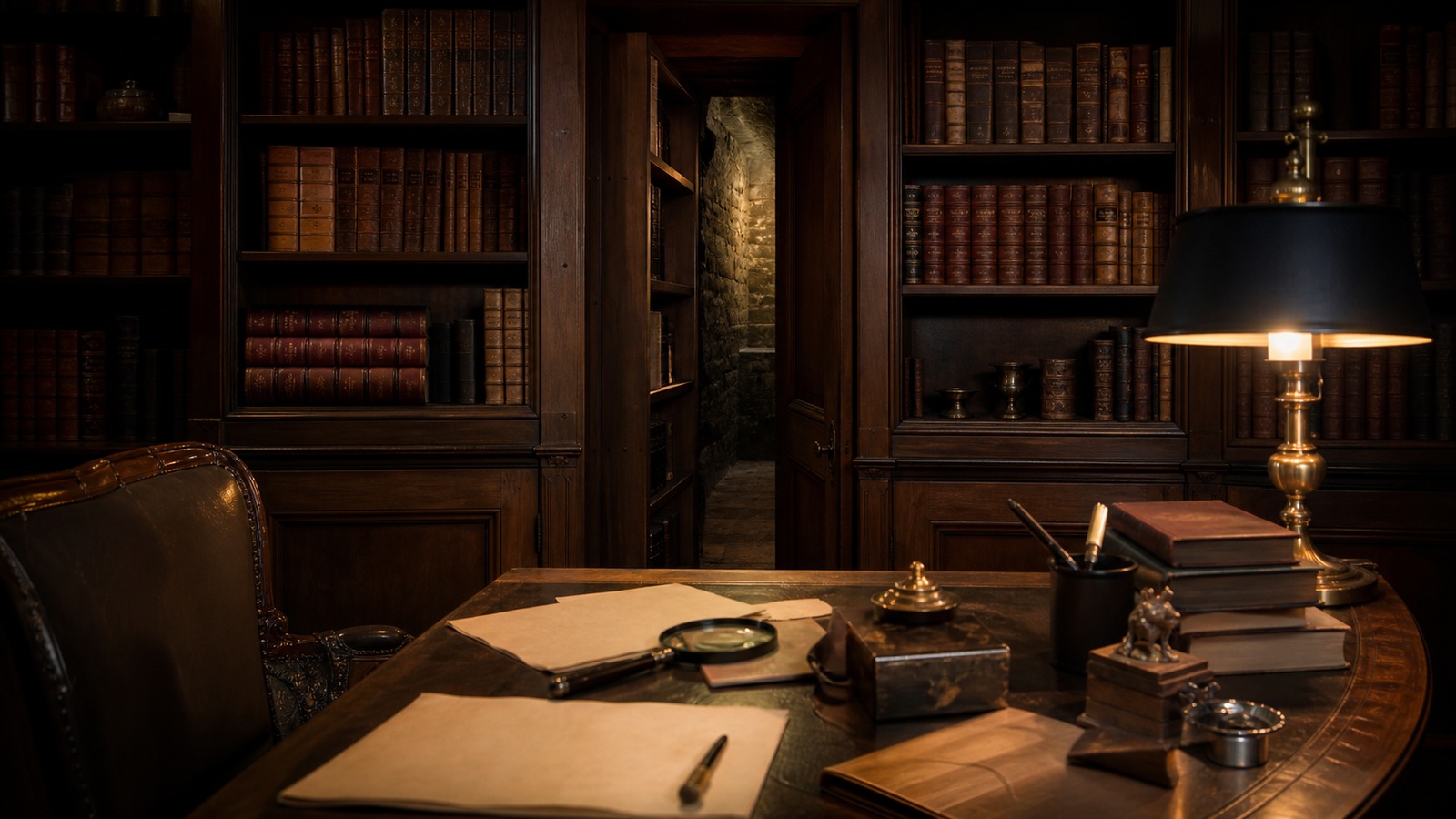
Castle Concealment Was Defensive Before It Was Decorative
Concealed doors in medieval castles and fortresses were shaped by survival, work, and control. A hidden or understated opening could let guards move along walls, allow defenders to launch a sudden sortie, provide service access, protect stores, or support escape when a main gate was threatened. These doors were not always secret panels in the romantic sense. Many were small posterns, mural passages, stair doors, or shadowed openings positioned so that attackers, visitors, or even lower-status occupants would not easily understand the full circulation system.
A: No, many served defense, service, storage, guard movement, or privacy.
A: A smaller secondary gate that could support controlled access away from the main gate.
A: Ditches, slopes, cliffs, outworks, and shadows could make openings hard to see or reach.
A: Yes, mural passages and wall stairs supported defense and circulation.
A: Lost floors, roofs, plaster, and timber can expose once-hidden routes.
A: They were practical openings for controlled defensive movement.
A: Yes, household labor often used visually quiet secondary routes.
A: Some have roots in real architecture, but evidence must guide the claim.
A: No, they worked alongside walls, guards, terrain, and supplies.
A: It usually served tactical flexibility and controlled movement under pressure.
Main Gates Drew Attention for a Reason
A fortress main gate was a statement and a vulnerability. It concentrated defense through towers, portcullises, murder holes, bridges, and heavy doors. Smaller concealed openings offered different possibilities: movement without exposing the main entry, access to outer works, or communication with service areas.
Because the main gate dominated attention, small doors elsewhere could remain visually secondary. Concealment often began with scale and placement.
Postern Gates Were Practical Hidden Access
Postern gates were small secondary gates that could serve defense, supply, communication, or escape. Some were hidden in walls, tucked near ditches, angled away from obvious approach, or shielded by terrain. Their value came from being less visible and less predictable than the main gate.
Not every postern was deeply secret. Some were known parts of the castle plan. But in a defensive setting, even a modestly concealed secondary gate could matter.
Attackers who did not know every opening faced uncertainty, and uncertainty helped defenders.
Sally Ports Supported Sudden Movement
A sally port could allow defenders to move out quickly for a raid, counterattack, or repair under pressure. Concealment protected the timing and location of that movement. The door did not need to be elegant; it needed to be controlled.
Mural Passages Hid Movement Inside Walls
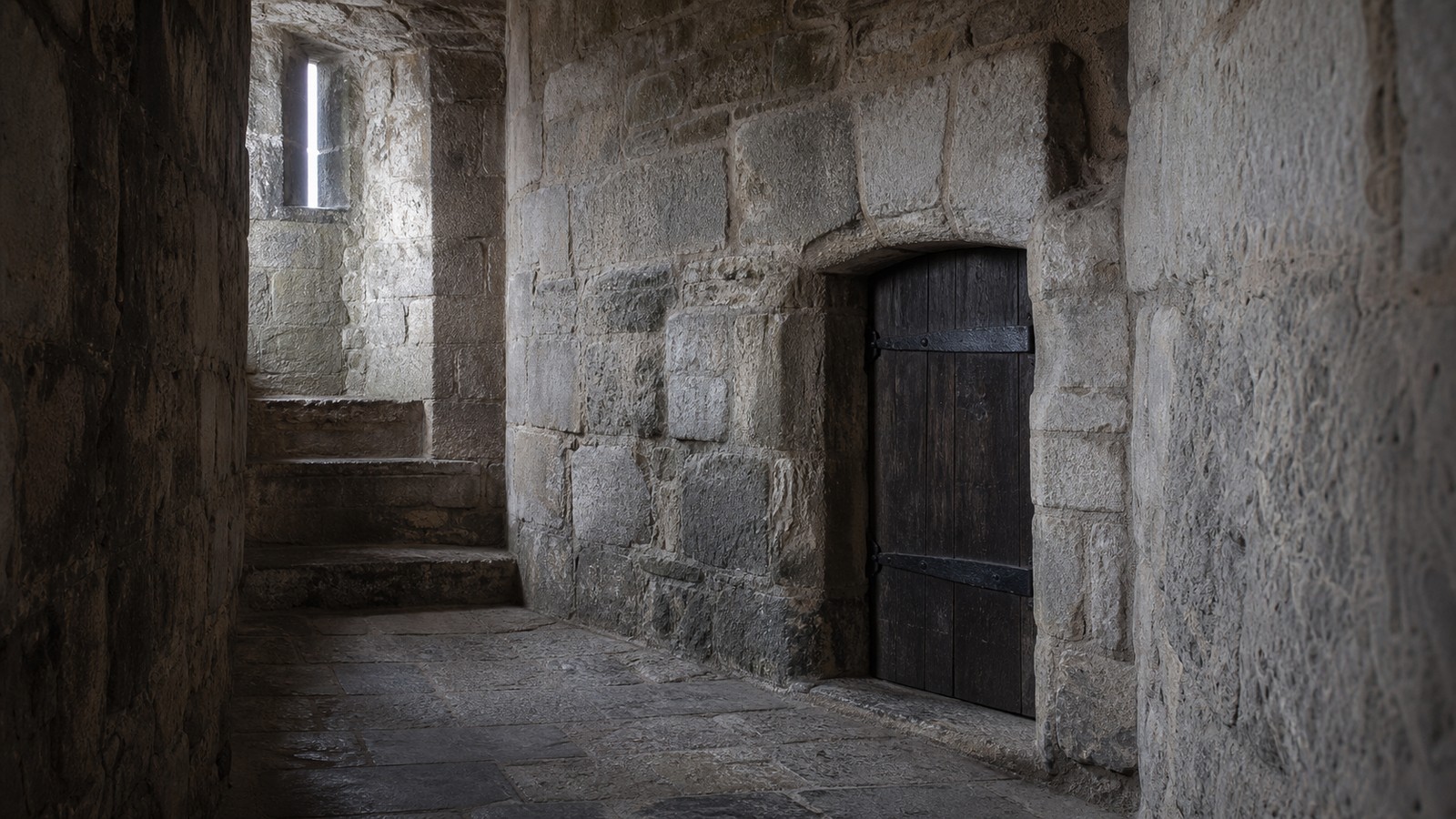
Thick castle walls often contained passages, stairs, chambers, and guard routes. Doors into these mural spaces could be small, shadowed, or tucked behind turns. They let defenders move within the defensive shell without crossing public courtyards.
Mural circulation also helped guards reach arrow loops, towers, wall walks, and storage areas. Hidden doors were part of a larger defensive machine.
Service Doors Kept the Castle Working
Castles were homes, military sites, storehouses, courts, and workplaces. Kitchens, pantries, stables, stores, workshops, chapels, and private rooms all needed access. Concealed or secondary doors helped servants and staff move without interrupting ceremony or defense.
A door that was invisible to a noble visitor might be ordinary to the household staff. Castle concealment often depended on status and role.
The hidden route could be social as much as military.
Stairs Were Often More Secret Than Doors
Spiral stairs, wall stairs, narrow steps, and tower passages could be tucked behind plain openings. A small door might conceal vertical movement to battlements, private chambers, garderobes, or storage. The stair beyond was the real secret.
Terrain Helped Hide Openings
Castles used cliffs, ditches, water, wooded slopes, outer walls, and rocky ground as part of defense. A small door set into a shaded wall above a ditch or behind an outwork could be hard to see or reach. Concealment was environmental as well as architectural.
Modern ruins can make these openings look exposed because surrounding earthworks, wooden structures, gates, and vegetation have changed. The medieval view may have been very different.
Private Chambers Needed Controlled Access
Beyond battlefield defense, castles also managed privacy. Lords, ladies, guests, guards, clerks, and servants moved through different social spaces. Concealed or discreet doors could link chambers, garderobes, chapels, or service areas without forcing everyone through public rooms.
Privacy in a castle was not the same as privacy in a modern house. It was tied to rank, security, and household organization.
A hidden door could protect status as well as safety.
Storage Required Protection
Food, arms, documents, valuables, and siege supplies needed controlled access. Small doors to stores, cellars, or armories could be placed away from obvious traffic. Concealment limited casual knowledge of resources.
Defensive Doors Were Built for Control
A concealed fortress door had to be secured, watched, and used carefully. An unknown opening could help defenders, but a poorly controlled opening could help enemies. Locks, bars, guards, visibility from inside, and narrow approaches all mattered.
Security came from layers. The door’s location, construction, approach, and supervision worked together.
Legends Turn Small Doors Into Great Escapes
Medieval castles attract stories of secret tunnels and dramatic flights. Some stories may have roots in real posterns, drains, service passages, or later smugglers’ routes. Others are romantic additions. The architecture should be read before the legend is repeated.
A genuine concealed door may be less dramatic than the story, but more interesting because it shows how the castle actually functioned.
Practical details are often the strongest evidence.
Ruins Can Mislead the Eye
When roofs, floors, timber doors, plaster, and adjacent buildings disappear, former hidden doors may look obvious. A passage that once sat behind a screen, gatehouse, lean-to, or shadowed turn can become exposed in a ruin. The visitor sees the skeleton, not the lived building.
Castle Doorways Changed Over Time
Fortresses were altered for new weapons, comfort, politics, and ownership. A door may have been opened, blocked, widened, hidden, or repurposed across centuries. What appears medieval may include later changes.
This makes dating and context essential. A concealed door in a castle is part of a sequence, not always a single original design choice.
Concealment Was One Defense Among Many
Hidden doors did not make castles safe on their own. They worked alongside walls, towers, guards, supplies, terrain, intelligence, and social control. Their power came from adding options: another path, another controlled threshold, another way to move without giving the whole plan away.
That strategic flexibility is why concealed doors belong naturally in fortress design.
A castle with more controlled movement could respond better to pressure.
The Medieval Hidden Door Was Usually Useful First
Modern imagination loves the romance of the secret castle door, but the medieval reality was grounded in use. A small door could feed a garrison, move a guard, protect a chamber, serve a kitchen, or open a defensive route. Its value came from function under real constraints.
That usefulness does not make it less fascinating. It makes it more human. Concealed doors in castles show how architecture managed fear, labor, status, and strategy one threshold at a time.
Follow the Defender’s Line of Movement
Castle hidden doors make the most sense when traced from the defender’s point of view. A guard might need to reach a wall walk, tower, postern, store, or stair quickly while staying protected. A concealed door was valuable when it shortened that route or kept it from being obvious to attackers.
This approach shifts attention away from romance and toward pressure. Under siege, movement needed to be fast, controlled, and known to the right people.
The door’s value was measured by whether it helped the castle respond.
Think in Defensive Layers
A fortress rarely relied on one barrier. Ditches, walls, towers, gates, courtyards, murder holes, stairs, and inner wards all created layers. Concealed doors belonged to that layered system by adding less predictable movement.
Do Not Forget Domestic Castle Life
Even strong fortresses contained kitchens, chapels, chambers, stores, workshops, and living spaces. Concealed or secondary doors helped daily life continue under the shadow of defense. A door that served servants or guards was not less important than one tied to battle.
This domestic layer is easy to lose when castles are viewed only as military machines. They were also crowded households with routines, rank, discomfort, and work.
Read Small Doors With Big Consequences
A narrow, plain door in a stone wall may not look dramatic, but its consequences could be large. It might let defenders exit quietly, protect food stores, move messages, or separate high-status rooms from common traffic. Small openings can carry strategic meaning.
Medieval builders often used modest features with serious intent. The castle’s strength came from many such decisions working together.
That is why a concealed door should be studied with the whole fortress plan.
Castle Secrets Often Began as Procedures
The location of a postern or stair mattered, but so did the rules for using it. Who held the key, who guarded the passage, when it could open, and how it was barred were part of the secret. Architecture and procedure worked together.
Use and Secrecy Changed in Peacetime
A door built for defense might later serve storage, servants, tourists, or repair crews. Castles moved between war, residence, administration, ruin, and preservation. A once-sensitive entrance could become ordinary, while an ordinary service door could become mysterious after its context vanished.
This changing use is why medieval concealed doors should be read over time. Their meaning did not freeze when the first mason finished the wall. Each generation could reinterpret, block, reopen, or retell the route.
Fortress Doors Teach Practical Imagination
The best way to appreciate castle hidden doors is to imagine the practical problem first. How do defenders leave without opening the main gate? How does a servant reach a kitchen? How does a guard climb to the wall walk? How does a household preserve rank in crowded rooms?
Those questions make the doors more vivid than generic mystery. They connect stone openings to fear, hunger, duty, fatigue, and strategy.
Concealed doors in fortresses were useful because medieval life was pressured from many directions. They answered pressure with controlled movement. That is why a small hidden threshold in a castle wall can still feel charged centuries later.
A Fortress Door Was a Decision Under Pressure
Every concealed or secondary door in a fortress created both opportunity and risk. It could help defenders move, but it also needed guarding. It could protect supplies, but it also marked a vulnerable threshold. It could support an escape, but it could not be allowed to become an easy way in. Medieval builders and commanders had to balance those possibilities with stone, timber, iron, keys, guards, and habit. This is what makes castle concealed doors so interesting: they are not just secret architecture, they are strategic compromises. A small hidden opening embodies a question every fortress had to answer. How much movement can be allowed without weakening the wall that movement depends on? The best doors solved that question quietly, giving defenders another option while still respecting the brutal logic of siege, surveillance, and control.
Ruined Castles Still Teach Movement
Even when only fragments survive, the position of a small doorway can suggest how people once moved under pressure. Its relationship to a ditch, tower, stair, store, or courtyard may explain more than its appearance alone.
That movement is the real subject. Concealed doors in fortresses are traces of decisions made for defense, labor, rank, and survival, not simply picturesque details in stone. They remind us that a castle was planned for action as much as display, and that every hidden threshold had to earn its place in a dangerous military system where hesitation could carry real cost for defenders, servants, and commanders alike during moments of real pressure.