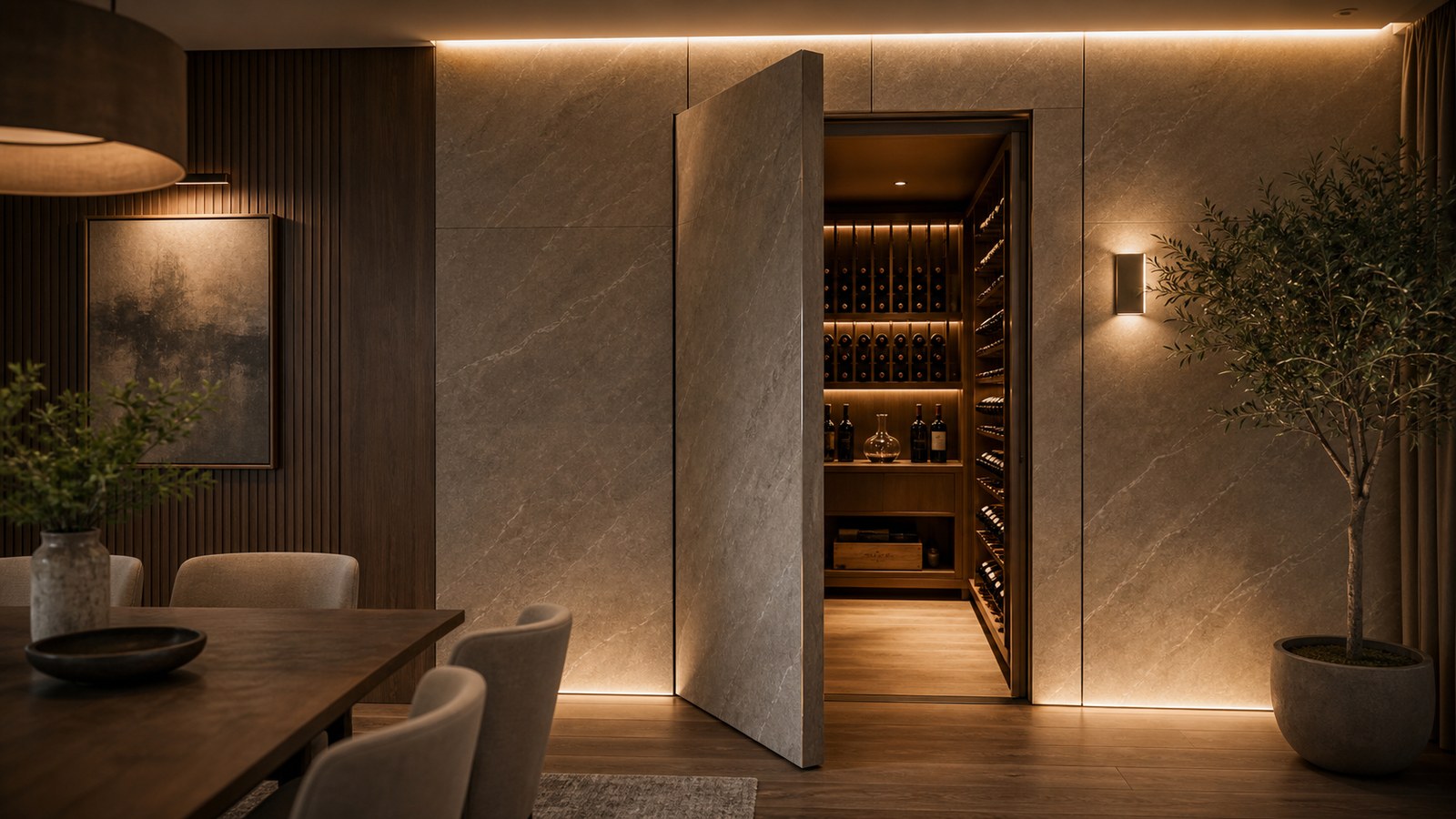
The modern home has evolved far beyond traditional design expectations, embracing clean lines, open concepts, and hidden functionality that enhances both aesthetic and spatial efficiency. At the forefront of this transformation are invisible sliding doors — a revolutionary alternative to conventional hinged doors. By blending architectural ingenuity with advanced materials and mechanisms, invisible sliding doors redefine how we move through and perceive space. These sleek installations don’t just close off rooms; they shape the flow, preserve privacy, and expand the feeling of openness that defines contemporary design.
A: Concealed top tracks, trimless jambs, and continuous finishes that erase reveals.
A: Pocket for full disappearance (requires cavity); overlay when walls are load-bearing or utilities block a pocket.
A: Yes—overlay systems; add a shallow valance or ceiling recess to hide hardware.
A: No, but seals, heavier cores, and drop-seals can markedly improve isolation.
A: Size for live load + door weight + hardware; follow the track manufacturer’s span tables.
A: Typically just a guide; bottom-rolling rails are a fallback when headers can’t carry loads.
A: Use privacy latches, soft-close, and moisture-resistant finishes; confirm local ventilation and clearance rules.
A: DIY overlay kits: low hundreds; premium concealed systems or automation: mid-to-high thousands.
A: If you pre-wire power and sensor lines now, most systems can be upgraded to motorized later.
A: Maintain shadow gaps, touch up flush finishes, and vacuum tracks to prevent rumble and rub.
The Rise of the Invisible Door Concept
Invisible sliding doors stem from the architectural philosophy of “continuity and concealment,” a principle that aims to make functional elements disappear into the background. Designers began experimenting with concealed hinges, flush panels, and frameless installations to create walls that seemed seamless. The invisible sliding door takes that idea further by eliminating the swinging radius of traditional doors — an often-overlooked spatial limitation in small apartments, minimalist lofts, or luxury homes where every square inch matters. The result is a sleek, space-saving solution that glides silently into a wall cavity or along a nearly invisible track, leaving only clean lines behind. No protruding frames. No visible hardware. Just uninterrupted architecture. The growing interest in open-concept living, modular design, and integrated materials like glass, wood veneer, and aluminum composites has made invisible sliding doors not just a niche product but a symbol of high-end, forward-thinking interiors.
How Invisible Sliding Doors Differ from Hinged Doors
Traditional hinged doors rely on a swing arc — a radius that requires clearance on one side of the frame. This design is functional but restrictive. Hinged doors interrupt visual flow, occupy valuable floor space, and create movement barriers in compact or high-traffic areas. Invisible sliding doors solve all of these issues through linear motion. Instead of swinging open, they glide smoothly along or inside the wall, maintaining both accessibility and aesthetic simplicity. The mechanisms that drive invisible sliding doors are precision-engineered to operate quietly and effortlessly. High-quality models feature soft-close systems, hidden top rails, and concealed rollers that eliminate visible tracks. The seamless design makes them ideal for minimalist interiors, modern offices, and boutique spaces that emphasize fluid movement and continuity. From a design standpoint, the invisible sliding door can also blend perfectly with surrounding materials. Whether finished with the same paint as the wall, covered in decorative paneling, or rendered in frosted glass, the door can vanish until motion brings it to life.
Architectural and Spatial Benefits
One of the most significant advantages of invisible sliding doors is the liberation of space. By removing the swing clearance requirement, designers can reclaim several feet of usable area in every room. This allows for closer furniture placement, improved circulation, and greater adaptability in multifunctional environments. Invisible sliding doors also enhance natural light distribution. When crafted from glass or semi-transparent materials, they allow light to flow freely between rooms, reducing the need for artificial lighting during the day. In open-plan spaces, they serve as flexible dividers — closing off rooms when privacy is needed and disappearing entirely when openness is desired. For architects, the invisible door represents an opportunity to maintain architectural continuity. Flush installation eliminates visual clutter and supports a sense of uniformity across walls, ceilings, and floors. The result is a living environment that feels larger, calmer, and more intentional — where the absence of visual interruptions heightens the impact of design elements like texture, tone, and light.
Mechanics Behind the Magic
At the core of every invisible sliding door is a highly engineered system that combines smooth mechanics with discreet design. The most common configurations include wall-mounted systems, pocket doors, and flush-to-wall sliding systems. Pocket doors are among the most popular, designed to slide into a cavity hidden within the wall. This configuration is ideal for renovations or new builds where wall depth can be adjusted. Wall-mounted sliding systems, on the other hand, mount the track above the door opening, allowing the door to slide along the exterior of the wall — a practical choice when retrofitting an existing space. The hardware is often crafted from lightweight yet durable materials like anodized aluminum or stainless steel, designed to carry the weight of heavy panels without warping. Soft-close dampers and concealed ball-bearing rollers ensure that motion remains nearly silent. Many high-end systems integrate magnetic seals or automatic locking mechanisms for enhanced privacy and security. Invisible sliding doors can be operated manually or automated through touchless systems and smart home integration. In luxury installations, motion sensors or smartphone controls can open or close the door seamlessly, blending design innovation with cutting-edge technology.
Material Innovations and Design Variations
The beauty of invisible sliding doors lies in their versatility. They can be constructed from a wide range of materials to match the personality of any space. For a minimalist look, flush wall panels can be painted or plastered to match the wall’s exact finish, creating the illusion of a continuous surface. In contrast, glass doors — either clear, frosted, or tinted — bring sophistication and transparency, ideal for offices, living rooms, or bathrooms where light and privacy must coexist. Wood veneer or laminate finishes offer warmth and texture, balancing modern sleekness with organic appeal. For more industrial or futuristic aesthetics, aluminum and composite materials add strength and a metallic edge. Some designs even combine materials, such as wood-framed glass or mirrored panels that expand light and spatial perception. Beyond materials, door movement can be configured horizontally or vertically. While horizontal sliding doors are most common, vertical lift or pocket systems are emerging as creative alternatives, particularly in ultra-modern architecture.
Applications in Residential Design
Invisible sliding doors are rapidly becoming the go-to feature in luxury residences and compact urban dwellings alike. In apartments or condos, where every inch counts, they create flexible partitions that maximize space efficiency. Bedrooms, home offices, and ensuite bathrooms benefit from the clean separation they offer without visually fragmenting the floor plan. In high-end homes, invisible sliding doors enhance the drama of open living areas. They can conceal pantries, laundry rooms, or even entire entertainment systems behind sleek panels that blend seamlessly with the decor. Designers often use them to hide transitional spaces — turning hallways, closets, and utility areas into hidden compartments that maintain a minimalist aesthetic. Sliding glass models are particularly effective in connecting indoor and outdoor spaces. A floor-to-ceiling invisible sliding glass door can dissolve the boundary between a living room and patio, creating a continuous environment that feels both expansive and natural.
Commercial and Office Integration
In the commercial world, invisible sliding doors redefine modern workspaces. Open-plan offices benefit from their adaptability — they can open for collaboration and close for privacy, all without altering the visual integrity of the room. Conference rooms, executive suites, and lounges can seamlessly transition between private and communal zones. Retail spaces use invisible sliding doors to conceal storage or fitting areas, maintaining visual cohesion on the sales floor. In hospitality design, hotels employ them to create hidden wardrobe systems, compact bathrooms, and multifunctional living zones within suites. Their aesthetic appeal also extends to wellness and spa environments, where smooth, quiet operation complements serene atmospheres. The absence of hinges or frames contributes to a calming sense of order, aligning perfectly with modern biophilic and minimalist interior philosophies.
Acoustic and Thermal Considerations
While invisible sliding doors are often praised for their visual appeal, their functional performance is equally impressive. High-quality models feature acoustic seals that reduce sound transmission between rooms, a vital feature for offices, bedrooms, and shared living areas. Advanced systems also incorporate insulated cores or double-glazed panels that improve thermal efficiency, preventing heat loss and reducing energy consumption. Unlike conventional pocket doors, today’s invisible sliding systems are engineered with precision gaskets and sealing tracks that minimize gaps. This means they can achieve near-hinged-door levels of soundproofing — without compromising on aesthetics.
Installation and Structural Requirements
Installing invisible sliding doors requires careful planning and precision. Pocket systems, in particular, demand adequate wall depth and structural support for the concealed cavity. Contractors must ensure perfect alignment between the door panel, track, and wall to achieve a flush finish. Even minor deviations can cause friction or visible gaps that undermine the illusion of invisibility. Modern installation kits simplify the process, offering preassembled frames and adjustable tracks. Many brands also provide modular systems designed to integrate with drywall or plasterboard, minimizing the need for major reconstruction. Still, proper installation often involves coordination between carpenters, drywall installers, and electricians — especially when incorporating lighting or automation features. Maintenance is minimal but essential. Tracks should be cleaned regularly to prevent dust buildup, and rollers may need occasional lubrication to maintain smooth operation. When maintained properly, an invisible sliding door system can last decades with no degradation in function or appearance.
Invisible Sliding Doors in Smart Homes
Technology is reshaping every corner of modern living, and invisible sliding doors are no exception. Smart integration allows users to control door operation via remote, voice command, or mobile app. In connected homes, sensors can automate door movement in response to motion, occupancy, or time of day. Some systems even integrate with lighting and HVAC automation — for example, closing automatically when a room’s climate control activates or opening when a user enters with a smartphone signal. These capabilities add both convenience and energy efficiency, merging minimalist design with futuristic function.
Sustainability and Environmental Impact
Invisible sliding doors also support sustainable architecture. Many manufacturers now produce doors from recycled aluminum, sustainably sourced wood, and low-emission finishes. By enhancing natural light flow and ventilation, they reduce dependency on artificial lighting and air conditioning. In compact homes or green-certified buildings, every design decision contributes to efficiency — and invisible sliding doors fit perfectly into that philosophy. Furthermore, their long lifespan and low maintenance requirements make them an environmentally responsible choice. Unlike cheap hinged alternatives that often need replacement or repair, invisible sliding doors are engineered for durability and adaptability, ensuring they remain functional even as design trends evolve.
The Aesthetic Philosophy Behind Invisible Sliding Doors
At their core, invisible sliding doors represent a philosophy of design restraint — the idea that true beauty lies in what you don’t see. They celebrate simplicity, material purity, and functional perfection. The visual continuity they offer transforms interiors into cohesive compositions rather than collections of individual rooms. Architects often describe them as the “quiet luxury” of modern interiors: subtle, sophisticated, and powerful in their understatement. They enable walls to act as canvases, uninterrupted by frames or hardware, while still offering full spatial control. This harmony between visibility and concealment captures the essence of modern architecture — an aesthetic that values clarity, balance, and flow over ornamentation.
Redefining the Future of Interior Movement
Invisible sliding doors are more than just architectural features — they are symbols of how modern design continues to evolve toward seamless integration and intelligent use of space. Their ability to merge beauty with functionality, privacy with openness, and craftsmanship with technology makes them a defining element of contemporary architecture. Whether they glide between rooms in a minimalist apartment, divide zones in an open office, or blur the line between indoors and outdoors in a modern villa, invisible sliding doors embody the art of subtle transformation. As architecture and interior design continue to prioritize flexibility, efficiency, and elegance, the invisible sliding door stands poised as the door of the future — one that redefines how we enter, exit, and experience space itself.