Closets have always been one of the most functional elements in a home, yet their design is rarely celebrated. They serve as the backbone of organization, holding everything from clothes and shoes to seasonal storage and household essentials. But while closets provide critical storage, they also come with a visual challenge. Traditional closet doors can take up unnecessary space, disrupt the flow of a room, or clash with carefully curated interiors. Enter invisible doors—an innovative architectural solution that transforms closets into discreet, space-saving features that enhance rather than detract from your home’s design. Invisible closet doors blend seamlessly into walls, disguising storage spaces behind smooth, uninterrupted surfaces. With concealed hardware and flush finishes, they eliminate the bulky frames and protruding trims of conventional doors. The result is a minimalist look that maximizes floor space, creates cleaner sightlines, and elevates the overall atmosphere of a room. For small apartments, modern homes, or luxury interiors, invisible closet doors provide the perfect marriage of style and practicality.
A: A flush slab on heavy-duty concealed hinges with push latches.
A: It needs a swing envelope; use top-hung sliders or pockets in tight rooms.
A: Align reveals to panel grooves or slat spacing and use matte finishes.
A: Yes—replace with a single tall leaf or twin slabs; add blocking and re-skin to match.
A: Add perimeter gaskets and soft-close latching to eliminate glow lines and rattles.
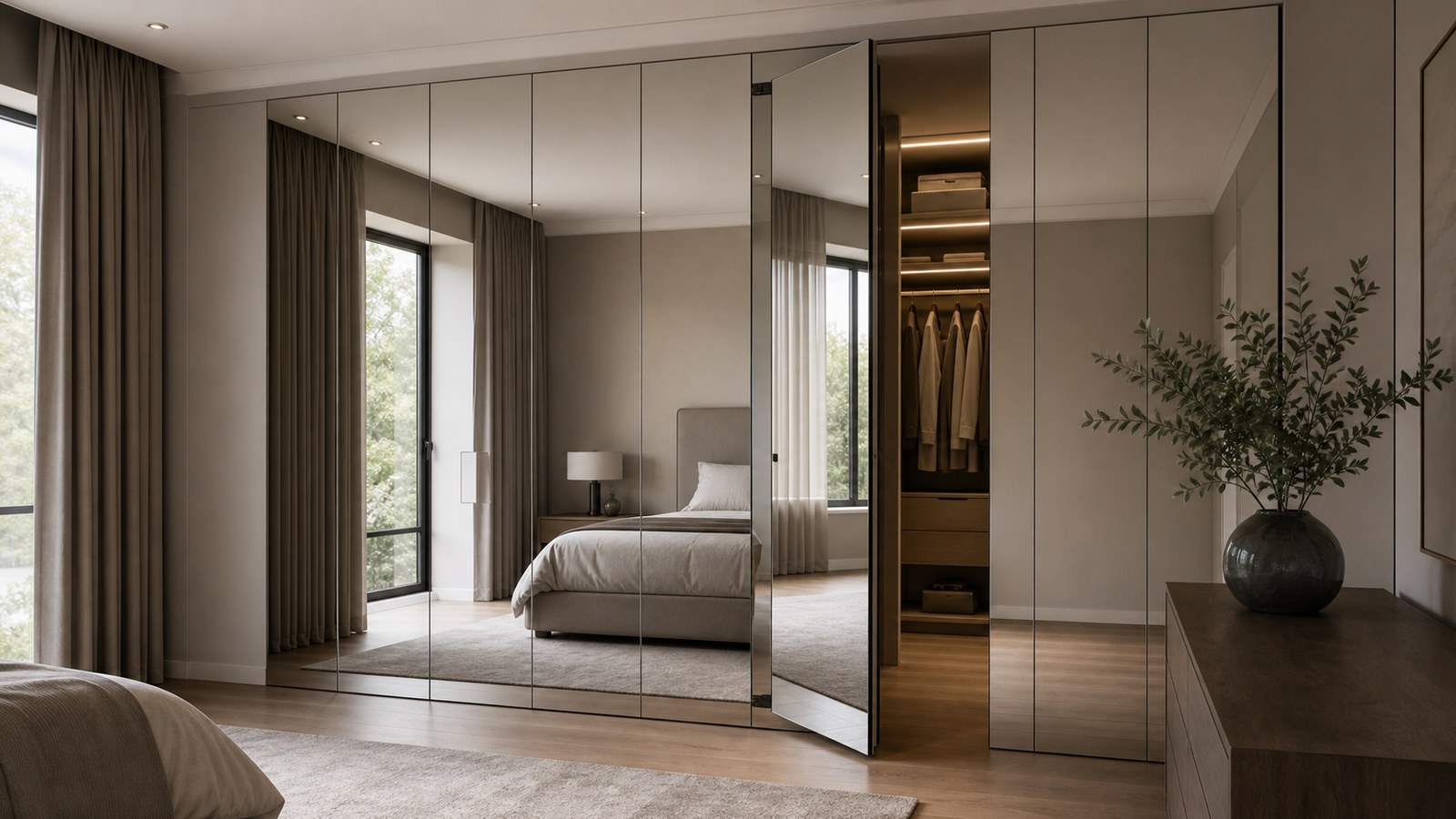
A: Yes—frame-less mirrors can read as wall art while hiding a closet.
A: $300–$1,000 DIY (slab/hinges/paint); $1,800–$6,000+ custom pivot/pocket with matched millwork.
A: 8–10′ with proper cores and pivots; add stiffeners to resist bowing.
A: Use hidden toe-kick vents or louvered returns disguised in slat lines.
A: Retrofit slabs: half to full day; custom pivot/pocket + paneling: 2–4 days, finish-dependent.
What Are Invisible Closet Doors?
Invisible closet doors, sometimes referred to as hidden doors or flush doors, are designed to disappear into the wall when closed. Unlike traditional closet doors that draw attention, these are crafted to camouflage themselves with the surrounding wall or paneling. The hinges and frames are concealed, and the surface is often finished in the same material, paint color, or wall covering as the rest of the room. The result is a wall that looks unbroken, as if there were no door at all. Yet with a subtle push or pull, the hidden closet reveals itself. Invisible doors aren’t only about aesthetics—they also improve functionality by saving space. Because they do not rely on visible frames or protruding handles, they allow rooms to feel larger, tidier, and more unified.
The Design Philosophy: Minimalism Meets Functionality
Invisible doors for closets embody the philosophy of minimalist design, where less is more, and functionality is disguised within simplicity. In homes where every inch counts, such as urban apartments or compact bedrooms, visible closet doors can overwhelm the space. Sliding mirrored panels, accordion doors, or bulky hinged frames often take up valuable square footage or interrupt the flow of design. Invisible doors solve this by turning storage into an integrated element of the room. Minimalist design emphasizes clean lines, open space, and visual calm. Invisible doors contribute to this by reducing visual noise, ensuring closets remain fully functional without drawing attention to themselves. Instead of making the closet a feature, invisible doors allow the room’s decor, lighting, and architecture to shine. This makes them especially valuable in contemporary interiors where seamless transitions between spaces are essential.
Materials and Finishes: Creating Seamless Continuity
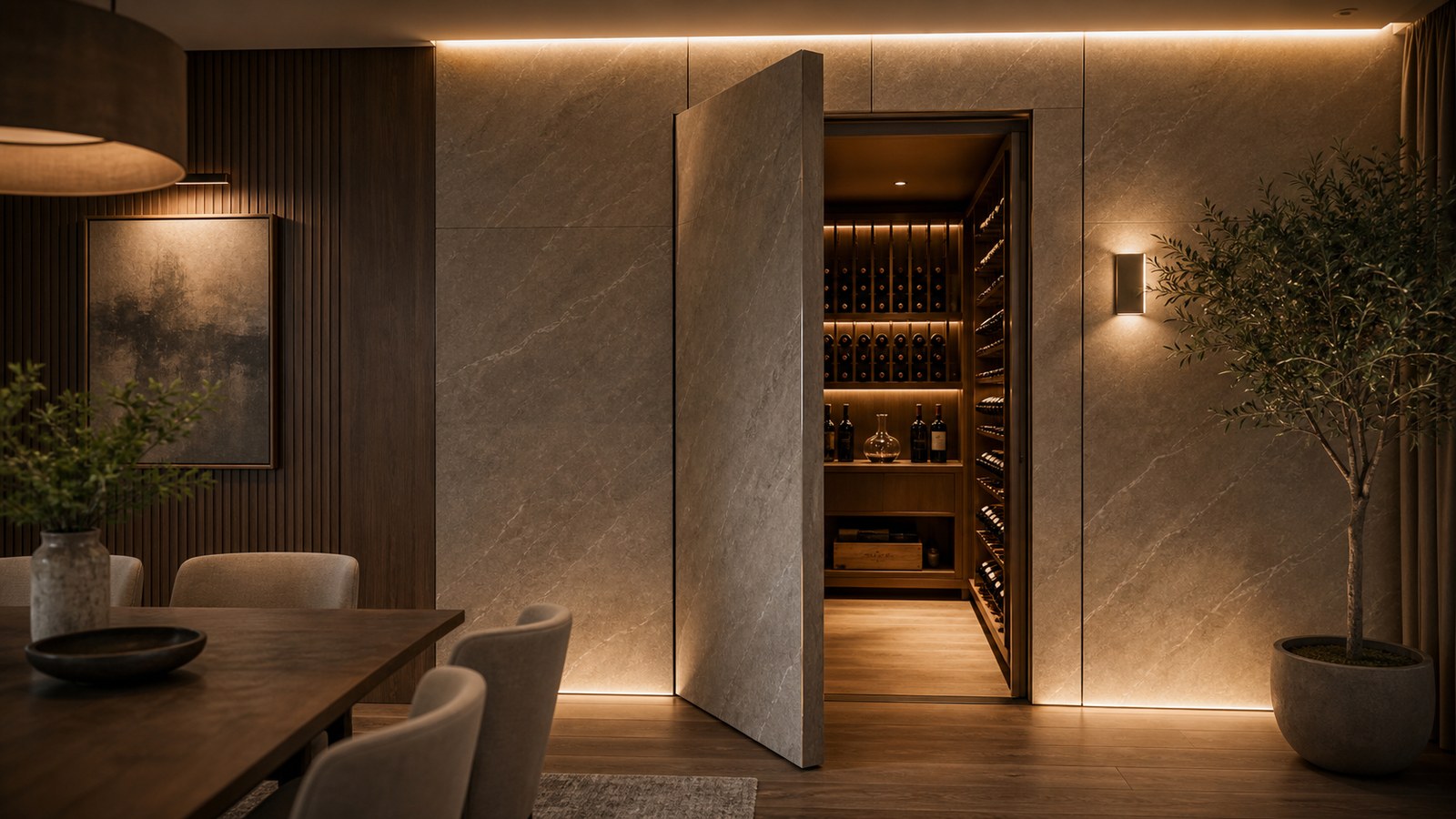
The magic of invisible doors lies in their ability to blend perfectly into their surroundings, and this depends heavily on the choice of materials and finishes. For closets, designers often match the door surface to the adjacent wall or cabinetry, ensuring complete visual continuity. Painted invisible doors are common in bedrooms and hallways, where the door surface is finished in the same color and sheen as the surrounding wall. In more luxurious designs, wood veneers create a sophisticated look, turning an entire wall into a seamless panel of rich grain, with the closet tucked invisibly behind it. For bold interiors, wallpaper can be extended across the door, disguising it within a patterned wall for a playful, artistic effect. Some designs even take it further by incorporating mirrors, fabric panels, or textured finishes. The choice depends on the overall mood of the room. A minimalist studio may benefit from matte paint that makes the closet vanish, while a penthouse suite may opt for pivot-style invisible doors with polished wood veneer, turning the hidden closet into a subtle yet upscale feature.
Engineering and Hardware: The Technology Behind the Disguise
Invisible doors depend on clever engineering to achieve their seamless look. Concealed hinges are the most important element, designed to remain hidden within the door and frame. These hinges are often adjustable to ensure perfect alignment, which is critical since any uneven gap can break the illusion of invisibility. For closets, push-to-open latch systems are a popular choice. Instead of handles, the door opens with a gentle press, springing forward for access. This ensures the door surface remains flush with the wall. For larger closets, magnetic catches or soft-close hinges may be added to improve usability and prevent slamming. Some homeowners opt for pivot invisible doors, where the door rotates around a hidden vertical axis rather than swinging from a hinge. This creates a dramatic effect and works well in large walk-in closets. Sliding invisible doors, which disappear into wall cavities, are another option, particularly in tight spaces where a swinging door would take up too much room.
Types of Invisible Closet Doors
Invisible closet doors can be tailored to fit different home layouts and personal preferences. The most popular styles include:
Single Flush Invisible Door – The most common design, where a single panel opens into a closet or wardrobe. It is simple, sleek, and perfect for bedrooms or hallways.
Double Invisible Doors – A pair of doors that open outward or inward, ideal for wider closets where greater accessibility is required.
Sliding Hidden Doors – These glide into wall cavities, making them space-saving and perfect for compact rooms or apartments.
Pivot Invisible Doors – A bold design statement, pivot doors rotate around a concealed axis and work beautifully for walk-in closets.
Panel-Style Invisible Doors – These mimic cabinetry, allowing an entire wall to appear as built-in storage while concealing closets seamlessly.
Benefits of Invisible Closet Doors
Invisible closet doors aren’t just stylish; they provide a range of practical benefits that make them superior to traditional closet solutions. The most obvious benefit is space-saving functionality. Without protruding frames or bulky handles, rooms feel larger and more open. This is particularly valuable in small bedrooms, narrow hallways, or compact apartments. Invisible doors also create visual calm, eliminating cluttered sightlines caused by multiple doors breaking up wall space. Another advantage is versatility in design. Invisible doors can be customized to suit modern, rustic, industrial, or even classical interiors by simply adjusting finishes. They also provide privacy and security, as closets blend so seamlessly into walls that they are often overlooked by guests. Some homeowners even use invisible doors for concealed safes or hidden storage areas within closets. Finally, invisible closet doors can enhance home value. Buyers are often impressed by seamless design features that suggest high-quality craftsmanship and modern architecture. For those seeking luxury, hidden doors are an instant mark of sophistication.
Invisible Doors in Bedrooms and Beyond
While closets in bedrooms are the most obvious candidates for invisible doors, they are by no means the only option. Invisible closet doors can also transform hallways, entryways, and living rooms. In hallways, they can disguise linen closets or coat storage, creating a clean and uninterrupted corridor. In entryways, they can conceal shoe storage or cleaning supplies, keeping clutter hidden from guests. Some designers extend the concept even further by using invisible doors to conceal home offices, small libraries, or media closets. A sleek wall in a living room may hide everything from bookshelves to entertainment equipment, turning practical storage into a hidden surprise.
Installation Considerations: Planning for Perfection
Installing invisible doors for closets requires precision and professional expertise. Unlike standard doors, which can tolerate minor imperfections, invisible doors demand exact alignment to maintain their seamless effect. Walls must be perfectly straight, frames must be flush, and finishes must be continuous. Even a small gap or misaligned hinge can ruin the illusion. Ventilation is also important. Closets with airtight invisible doors can trap humidity, which may damage clothing or stored items. Including discreet ventilation panels or using breathable materials helps prevent this issue. Lighting can further enhance invisible closet doors—LED strips or motion-activated lights create convenience and highlight the hidden elegance inside. Homeowners should also consider daily usability. Push-to-open doors are convenient, but they may not be ideal in homes with small children who could accidentally trigger the mechanism. For walk-in closets, pivot systems offer drama but require more clearance. Consulting with an experienced installer ensures the right system is chosen for each specific room.
Cost and Investment: Balancing Style with Budget
Invisible doors for closets are typically more expensive than standard doors due to their specialized hardware, custom finishes, and precise installation requirements. A simple flush invisible door may cost several hundred dollars, while custom sliding or pivot invisible systems can run into the thousands. However, the investment pays off in terms of both design and value. Invisible doors elevate the sophistication of a home and can increase resale appeal by presenting a more modern and luxurious aesthetic. They also reduce long-term maintenance costs since high-quality concealed hardware is often more durable than standard hinges.
The Future of Invisible Closet Doors
Invisible closet doors are not a passing fad; they represent a larger design movement toward minimalism, hidden functionality, and clean architecture. As homes become smarter, we can expect invisible doors to integrate with technology. Imagine closets that open with a voice command or fingerprint recognition, or doors that reveal themselves with hidden LED outlines. In the future, invisible closet doors will likely expand beyond bedrooms and become a standard feature in all areas of the home, offering concealed storage solutions for everything from laundry rooms to entertainment systems. They align perfectly with modern living, where functionality and beauty must coexist without compromise.
Style Meets Smart Storage
Invisible doors for closets represent a revolutionary shift in how we design and experience our living spaces. They go beyond mere aesthetics, delivering practical benefits such as space-saving design, visual calm, and long-term value. By blending seamlessly into walls, they turn ordinary storage into a hidden luxury. Whether used in bedrooms, hallways, or entryways, invisible closet doors transform homes into organized, sophisticated, and effortlessly elegant spaces. They prove that true design genius lies not in what is seen, but in what is cleverly concealed. For homeowners seeking a balance of form and function, invisible closet doors are the ultimate space-saving solution.