
The Trend Toward Quieter Walls
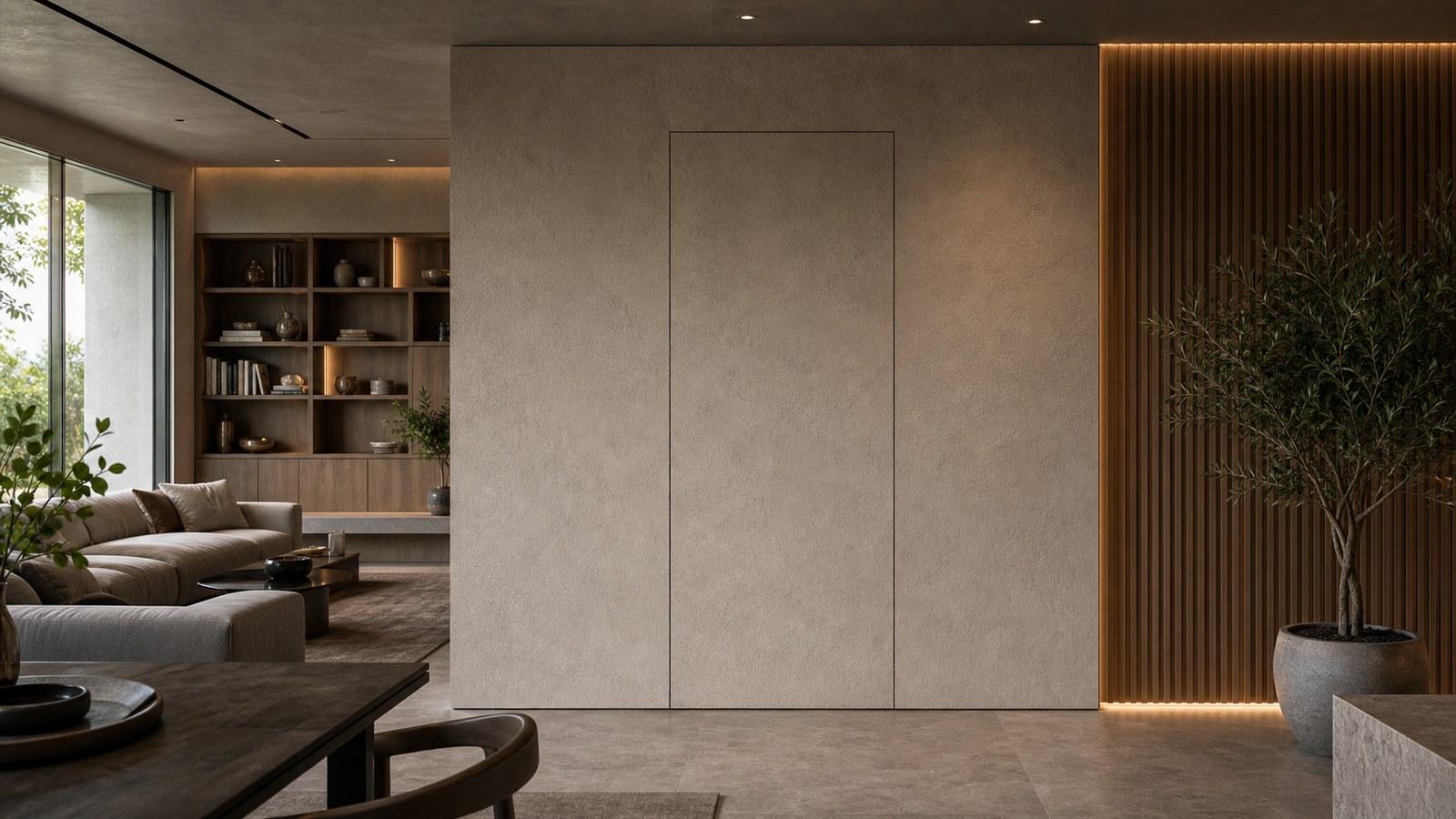
Invisible doors have become one of the clearest signs that interior design is moving toward calmer, more integrated spaces. Instead of treating every doorway as a separate object with casing, hardware, and contrast, designers are letting some openings dissolve into the wall. The result is not emptiness. It is a more deliberate hierarchy: important views, furniture, art, and materials can lead the room, while closets, pantries, powder rooms, offices, and utility areas step back. Invisible doors now appear in minimalist apartments, warm contemporary homes, boutique renovations, and luxury custom interiors because they solve both aesthetic and practical problems.
A: No, they are also useful for storage, offices, pantries, and smaller homes.
A: Flush painted and millwork-integrated doors are especially common.
A: Yes, when the idea is adapted to existing trim, paneling, or wallpaper.
A: They help, but some designs can hide well with careful standard hardware choices.
A: Important guest doors should include a subtle cue or intuitive pull.
A: Texture gives the eye a surface to read instead of focusing on the door seam.
A: Often yes, because alignment, hardware, and finish tolerances matter more.
A: Storage, offices, pantries, powder rooms, media rooms, and closets benefit often.
A: It can, but warm materials and texture make invisible doors more livable.
A: Likely, because it solves real visual clutter and storage problems.
Minimalism Has Become Warmer
Invisible doors used to be associated mainly with stark white walls and ultra-minimal houses. That look still exists, but the trend has broadened. Today, invisible doors often appear inside warm wood walls, limewash finishes, fluted panels, soft neutrals, and textured plaster. The door disappears not because the room is empty, but because the surface around it is carefully composed.
This warmer version feels more livable. Homeowners can enjoy clean lines without giving up character. A hidden powder room might sit inside a clay-colored plaster wall, while a pantry door might vanish into oak cabinetry. The trend is less about erasing personality and more about reducing visual interruption.
That shift matters because many people want homes that feel calm without feeling sterile. Invisible doors offer a way to organize practical spaces while keeping the main rooms emotionally softer and more restful.
The most successful projects still leave evidence of human use. A perfectly hidden door can feel cold if the surrounding room has no texture, shadow, or touchable material. Designers are learning to pair concealment with warmth: a linen sofa near a flush wall, a handmade pendant beside a hidden pantry, or a wood floor that keeps the room grounded. The door disappears, but the home does not lose its sense of welcome.
Flush Surfaces Are Leading the Look
The most common invisible-door trend is the flush wall door. The slab aligns with the surrounding surface, the frame is minimized, and the hardware is reduced or concealed. When the paint, sheen, and texture match, the doorway becomes a quiet seam rather than a framed interruption.
Flush doors work especially well in hallways and open-plan spaces, where multiple visible doorways can make the home feel busy. They also support contemporary furniture and lighting because the wall becomes a cleaner backdrop. The challenge is precision: uneven gaps, mismatched sheen, or bulky hardware can ruin the effect. Baseboards, floor transitions, and ceiling lines have to be considered at the same time, because the eye often finds a hidden door through the details around it rather than the middle of the slab.
Millwork Walls Are Doing More
Another major trend is the millwork wall that hides doors inside paneling, cabinetry, or shelving. These walls can contain storage, media equipment, pantries, closets, and private rooms while still reading as one built-in composition. The invisible door becomes one panel among many.
Designers like this approach because it makes practical storage look architectural. A family room can hide toys and electronics. A kitchen can conceal a pantry. A bedroom wall can absorb closet doors. The home gains function without looking chopped into small utility openings.
The best millwork designs use consistent panel spacing and durable hardware. If the hidden panel sags, rubs, or breaks the rhythm, the whole wall starts to look less intentional.
This trend also changes the budget conversation. Instead of buying a dramatic door as a single object, the homeowner is often investing in a complete wall. That can be more expensive, but it can also solve several needs at once: storage, acoustic control, media concealment, lighting integration, and a cleaner view from the main room. The invisible door becomes part of a larger design move rather than a novelty added at the end.
Texture Is Replacing Ornament
Invisible doors work well with the broader trend toward textured surfaces. Slatted wood, plaster, linen wallcovering, microcement, and subtle relief panels create depth without traditional trim. A door can hide inside that texture if the pattern or finish continues across the opening.
This is especially useful in rooms where a blank wall would feel too plain. Texture gives the eye something to enjoy while disguising the outline of the door. The surface becomes interesting enough that the opening no longer needs to announce itself.
Texture must be planned with maintenance in mind. A plaster wall may need careful touch-ups around the latch side, while slatted wood can trap dust if it runs through a high-use doorway. Wallcovering has to be wrapped or trimmed cleanly so the edge does not fray. These details are less glamorous than the finished photo, but they decide whether the door still looks invisible after a year of real use.
Hardware Is Becoming Less Visible
Hardware trends are also changing. Instead of large knobs and contrasting levers, invisible doors often use recessed pulls, edge pulls, magnetic latches, touch releases, or hardware finished to match the wall. Concealed hinges are common where the budget and door type allow them.
The point is not always total invisibility. The hardware should support the room’s level of discretion. A guest powder room may need a subtle but understandable cue. A private storage door can hide more completely. The trend is toward hardware that feels considered rather than automatic.
Comfort still matters. If a door is hard to open, the design will feel precious. Invisible hardware has to work naturally in real hands.
Specifying hardware early prevents many disappointments. A touch latch may need more door clearance than expected, an edge pull may require a thicker slab, and concealed hinges may limit trim or panel depth. When the hardware is chosen after the wall finish, the installer may have to compromise the clean reveal. Treating the latch and hinge as design elements, even when they are hidden, keeps the final wall from feeling improvised.
Hidden Storage Is Driving Demand
Modern homes need storage, but many people do not want storage doors dominating every wall. Invisible doors answer that tension. They can hide linen closets, under-stair compartments, utility rooms, pantry overflow, cleaning supplies, media gear, and seasonal items.
This trend is especially strong in smaller homes and apartments. When square footage is limited, every visible surface matters. Concealing storage doors can make a compact room feel larger and more organized without reducing function.
Home Offices Are Becoming Easier to Hide
Remote work has made invisible office doors more appealing. Many households want a dedicated workspace during the day and a calmer living space at night. An invisible door can let a home office disappear behind a flush wall, bookcase, or cabinet run.
The trend is practical as much as visual. A hidden office door can provide acoustic separation, privacy, and a psychological boundary. When the door closes, the workday feels more contained, and the surrounding room can return to its original purpose.
Designers are increasingly planning these offices from the beginning rather than squeezing desks into leftover corners. The invisible doorway becomes part of a healthier work-home boundary.
That planning also affects furniture placement outside the office. A door that disappears into a living room wall should not force the sofa, sideboard, or artwork into awkward positions. The exterior wall still has to behave like a finished room surface. When the closed doorway supports the furniture plan, the work zone feels intentionally tucked away instead of hidden behind a compromised wall.
Luxury Design Is Using Subtlety
In luxury interiors, invisible doors often signal restraint. Instead of relying on ornate trim or dramatic hardware, the design shows confidence through exact alignment, continuous materials, and smooth movement. The door is impressive because it does not need to shout.
This approach suits wine rooms, dressing rooms, media rooms, private suites, and service areas. Guests may notice the quality of the wall before they realize it opens. That delayed discovery creates sophistication without making the house feel theatrical.
Older Homes Are Adapting the Idea
Invisible doors are not limited to new modern homes. Renovations can use the same idea in gentler ways. A paneled wall in a historic home might hide a powder room. A painted bookcase might conceal storage. A wallpapered hallway might make a closet recede.
The key is respecting the architecture. A perfectly frameless slab may look wrong in a traditional house, but a concealed panel within existing trim can feel natural. The trend succeeds when invisibility is translated into the language of the home.
Contractors may also need to protect existing details. Old floors can be uneven, plaster walls may not be flat, and trim profiles may be difficult to match. Those conditions do not rule out an invisible door, but they call for a softer definition of invisible. In an older home, the goal may be a door that feels quiet and integrated rather than a laboratory-perfect surface.
Planning Is More Important Than the Trend
Invisible doors look simple, but they require careful planning. Wall thickness, framing, hinges, latches, finish depth, baseboards, lighting, and movement all affect the outcome. A hidden door added late may work, but it rarely looks as seamless as one designed early. Early planning also protects the budget because the framing, panel depth, and finish transitions can be coordinated before installers are forced into field fixes. That coordination is often what separates a refined invisible door from a standard door painted to match the wall.
Homeowners should also think about who needs to find the door. Total concealment may be perfect for storage but frustrating for guests. The best invisible doors hide visual clutter while keeping everyday use clear.
The Trend Is Really About Control
Invisible doors are popular because they give homeowners more control over what a room communicates. A wall can be calm even when it contains storage. A living room can feel finished even when an office sits behind it. A hallway can feel longer, cleaner, and more intentional.
That control is why the trend is likely to last. Invisible doors are not only stylish; they solve real design problems. They let homes hold more function with less visual noise, which is exactly what many contemporary interiors are trying to achieve.
A useful way to judge the trend is to ask what the room gains when the door stops competing for attention. If the answer is better storage, easier hosting, calmer circulation, or a clearer focal point, invisibility has a real purpose. If the answer is only surprise, the effect may age quickly. The lasting projects use the hidden door to make everyday rooms work and feel better. That is why invisible doors now appear in modest renovations as well as high-end custom homes: they give ordinary support spaces a quieter place in the overall composition. The strongest versions feel almost obvious after they are finished, as if the room was always meant to work that way. They make the house feel simpler without asking the household to live with less function. That practical calm is the design trend underneath the hidden detail.


