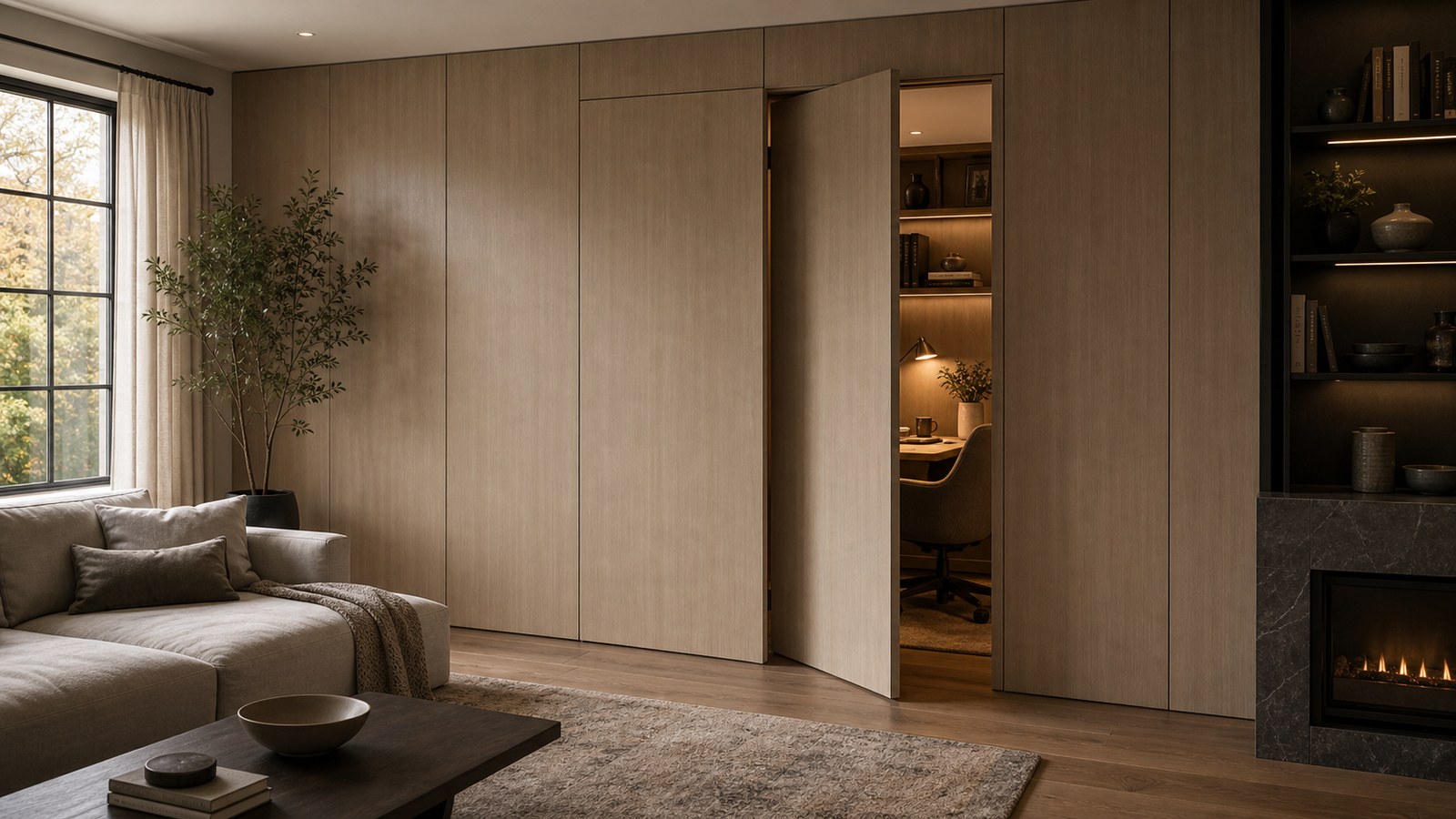
Luxury homes and mansions are defined not only by size or opulence but by the subtle details that elevate design into art. In recent years, one architectural element has quietly become the signature of refined elegance: the invisible door. Also known as hidden doors, flush doors, or concealed passageways, these features merge seamlessly into walls, cabinetry, or paneling, creating mystery, sophistication, and uninterrupted architectural flow. Far more than a design gimmick, invisible doors represent the pursuit of perfection where every line, surface, and shadow is intentional. In this article, we will explore how invisible doors are transforming luxury residences, the design principles behind them, and the many ways they enhance both aesthetics and functionality in some of the world’s most stunning homes.
A: From ~$5k–$15k for premium hinge sets and finishes to $25k–$75k+ for tall, stone-clad, motorized pivots.
A: Yes—engineer leaf cores and pivot loads; use honeycomb or laminated panels to reduce weight.
A: With pattern alignment, shadow joints, and micro-reveals, seams become imperceptible in casual viewing.
A: Combine concealment with multi-point latching and maglocks; add reinforced frames for hardening.
A: Mass + perimeter seals + drop seals achieve luxury-level hush; full isolation needs rated assemblies.
A: Integrate with Crestron/KNX/Lutron scenes; specify power transfer at pivots and obstruction sensing.
A: Pivots for tall/heavy cladding and grand swing; concealed hinges for lighter, standard-height doors.
A: Possible with weather management: thresholds, gaskets, drainage planes, and UV-resistant skins.
A: Custom assemblies often 6–12+ weeks fabrication; installation 2–10 days depending on complexity.
A: Use removable skins/panels and color-matched repair kits to maintain the illusion over time.
The Allure of the Invisible Door in Luxury Design
Invisible doors resonate with the very essence of luxury: exclusivity, innovation, and flawless execution. In grand spaces where every detail is curated, a conventional door frame can feel disruptive, breaking the rhythm of sleek walls or opulent paneling. Invisible doors resolve this tension, offering clean, unbroken surfaces while concealing entrances to private rooms, galleries, or hidden amenities. They also tap into the timeless appeal of secrecy and surprise, recalling palatial estates and castles with hidden chambers. For modern mansions, however, the focus is on blending cutting-edge technology with architectural artistry to create doors that are as functional as they are mesmerizing.
Flush Wall Doors: Seamless Sophistication
The flush wall door is the purest form of invisibility. Designed to align perfectly with surrounding walls, these doors eliminate frames, moldings, and protrusions, creating a surface so seamless it appears uninterrupted. In luxury settings, flush wall doors are often finished with high-gloss lacquer, textured stone, or wood veneer that mirrors the surrounding wall treatments. In a grand hallway, for example, a flush wall door might lead discreetly into a private library without disturbing the flow of marble or paneling. The elegance lies in restraint: the door becomes part of the wall, reducing visual clutter and allowing the architecture itself to breathe.
Panel-Matched Hidden Doors for Opulence
Panel-matched hidden doors take invisibility to a new level by replicating surrounding materials exactly. In mansions with wood-paneled salons or marble-clad walls, the door panels are cut from the same slabs or crafted from the same wood. The continuity creates the illusion of a flawless surface, leaving guests astonished when a section of the wall opens to reveal another room. This design approach is especially powerful in luxury homes where craftsmanship is paramount. The precision required to align grains, veins, or finishes demonstrates the artistry and detail that define true luxury. Panel-matched hidden doors are not just functional elements—they are living proof of bespoke design.
Hidden Doors as Statements of Privacy
Luxury homes often include private retreats—wine cellars, art galleries, home theaters, or personal wellness suites. Invisible doors become gateways to these sanctuaries, ensuring they remain exclusive and intimate. For instance, a mirrored wall in a penthouse might conceal a discreet entrance to a spa, while a bookcase in a manor library could open into a cigar lounge. This interplay between visibility and concealment adds theatricality to the home, heightening the sense of privacy and exclusivity that wealthy homeowners value. Beyond aesthetics, hidden doors safeguard security by keeping private areas out of sight. In this way, they serve both emotional and practical needs.
Pivot Invisible Doors for Grand Entrances
Pivot doors are already associated with grandeur, but when designed to appear invisible, they achieve dramatic effect. Unlike traditional hinged doors, pivot doors rotate on offset hinges, allowing larger and heavier surfaces to swing with ease. In luxury residences, an oversized pivot invisible door might be clad in stone or metal, blending into the wall until it rotates open with cinematic flair. These doors often act as thresholds into extraordinary spaces—a grand salon, an indoor pool, or a private gallery. Their size and seamless design create both surprise and spectacle, embodying the drama that defines mansion living.
Mirrored Hidden Doors for Illusion
Mirrored hidden doors offer luxury homes an additional dimension: illusion. By concealing doorways within expansive mirrored walls, designers create spaces that appear larger, brighter, and more fluid. Guests see an endless reflection of a glamorous dining room or ballroom, unaware that one section opens into a private suite. These mirrored designs are particularly effective in spaces where grandeur is amplified by scale, such as opulent dressing rooms, corridors, or home gyms. They combine the functionality of hidden access with the visual impact of reflective surfaces, enhancing both beauty and mystery.
Invisible Doors for Luxury Kitchens
The kitchen, even in mansions, has shifted toward minimalist design, often blending into living areas rather than standing apart. Invisible doors are frequently used to conceal pantries, wine storage, or service areas. A wall of elegant cabinetry may contain an invisible pivot door leading to a fully equipped chef’s kitchen or scullery, maintaining the sleek aesthetic of the main space. In open-concept luxury homes, this approach allows homeowners to entertain guests in immaculate spaces while keeping functional areas discreet. Invisible kitchen doors embody the balance between hospitality and practicality that defines modern luxury living.
Secret Bookcase Doors: Timeless and Playful
While sleek minimalism dominates modern design, the timeless charm of secret bookcase doors remains irresistible in mansions. These doors nod to tradition and storytelling, evoking mystery and delight. In luxury homes, bookcase hidden doors are elevated with fine materials: leather-bound volumes, hand-carved woodwork, or custom lighting. They often conceal private studies, vaults, or hidden staircases. Although playful, these doors are crafted with the same precision and elegance as any other element of the mansion, making them a beloved feature among homeowners who value both heritage and imagination.
Invisible Bathroom Doors for Serenity
In luxury master suites, invisible bathroom doors maintain serenity by blending into bedroom walls or custom cabinetry. Instead of breaking the tranquility of a bedroom with obvious entrances, hidden bathroom doors allow seamless transitions. When finished in the same tone or texture as the surrounding space, the door becomes invisible, preserving the calming ambiance. In wellness-focused homes, this detail elevates the spa-like feel of en-suite retreats, ensuring that functional elements do not disturb the experience of peace and balance.
Acoustic Hidden Doors for Quiet Luxury
Luxury is as much about comfort as it is about aesthetics. Acoustic invisible doors serve this need by combining design with advanced soundproofing. These doors are particularly valued in home theaters, music rooms, or offices where quiet is essential. By blending into the surrounding architecture, they protect the home’s clean lines while also creating cocoon-like environments. Residents enjoy privacy and serenity, shielded from noise without sacrificing beauty. In luxury homes where every detail is designed for ultimate living, invisible acoustic doors represent thoughtful refinement.
Invisible Doors for Security and Discretion
High-net-worth individuals often seek discretion in their homes, and invisible doors serve as subtle guardians. They conceal panic rooms, safes, or secure passageways without drawing attention. Unlike traditional reinforced doors, which can look imposing, invisible security doors disappear into the architecture, preserving the luxury aesthetic while protecting residents. In mansions with sprawling layouts, hidden doors may also provide private shortcuts between wings, allowing discreet movement for staff or family. Security and style, often at odds, coexist effortlessly in the design of invisible doors.
Materials and Finishes that Define Luxury Invisible Doors
In mansions, materials are chosen not just for functionality but for statement. Invisible doors are often clad in rare woods, exotic stones, or hand-applied Venetian plaster to match the grandeur of the surrounding architecture. High-gloss lacquers or brushed metals can transform them into reflective design elements, while leather or suede panels add warmth and tactility. Handles, when used, are often replaced by push-to-open mechanisms or disguised hardware. The craftsmanship lies in ensuring that the door disappears until needed, while still meeting the exacting standards of durability and elegance that luxury homes demand.
Invisible Doors in Exterior Architecture
Invisible doors are not confined to interiors. On the exteriors of luxury homes, concealed garage doors or hidden garden entrances elevate architecture into art. Imagine a façade of cedar planks where a massive pivot door is indistinguishable from the wall until it opens, or a stone wall in a courtyard that hides a discrete passage to private gardens. These invisible exterior doors maintain the integrity of bold architectural statements while preserving privacy and security. They demonstrate that invisibility is not just about surprise but about maintaining uninterrupted beauty across every surface of a mansion.
Psychological Impact: Mystery and Prestige
Invisible doors in luxury homes go beyond utility—they create an emotional response. There is an undeniable thrill in opening what seems like a solid wall to reveal a hidden chamber. For homeowners, this adds layers of intimacy and discovery to their environment. For guests, it conveys prestige and exclusivity, offering an experience reserved only for those invited behind the façade. This interplay of visibility and secrecy creates a home that feels alive, full of narrative and intrigue. In luxury design, where experience is as valuable as appearance, invisible doors deliver an unforgettable sense of wonder.
Future Innovations in Invisible Door Design
The future of invisible doors in luxury homes will likely merge traditional craftsmanship with advanced technology. Already, magnetic locking systems, biometric access, and motorized pivots are being integrated into hidden doors. Glass doors that shift from transparent to opaque with a touch are becoming possible, offering invisibility with flexibility. Sustainability will also influence design, with eco-friendly materials and energy-efficient mechanisms ensuring that invisibility aligns with environmental responsibility. The future promises doors that are not only hidden but intelligent, adapting dynamically to the homeowner’s needs.
Invisible Doors as the Ultimate Luxury Detail
In the grand tapestry of luxury architecture, it is often the smallest details that leave the deepest impression. Invisible doors embody this truth. They transform functional necessities into works of art, merging utility with beauty, privacy with drama, and secrecy with sophistication. From flush wall entries in marble halls to panel-matched passages in wood-paneled libraries, invisible doors enhance the experience of living in a mansion. They elevate the ordinary act of moving between rooms into something extraordinary—an elegant dance of discovery and design.
The Timeless Power of the Unseen
Invisible doors represent the future of refined living, where design transcends function to create emotion, mystery, and unforgettable beauty. In luxury homes and mansions, they embody the balance between elegance and practicality, turning walls into canvases and thresholds into experiences. Whether used for privacy, security, or sheer artistic intrigue, these doors speak to the heart of luxury: perfection in detail and delight in the unexpected. For homeowners seeking to transform their residences into masterpieces, invisible doors are more than architectural elements—they are a statement of vision, refinement, and the timeless allure of the unseen.