
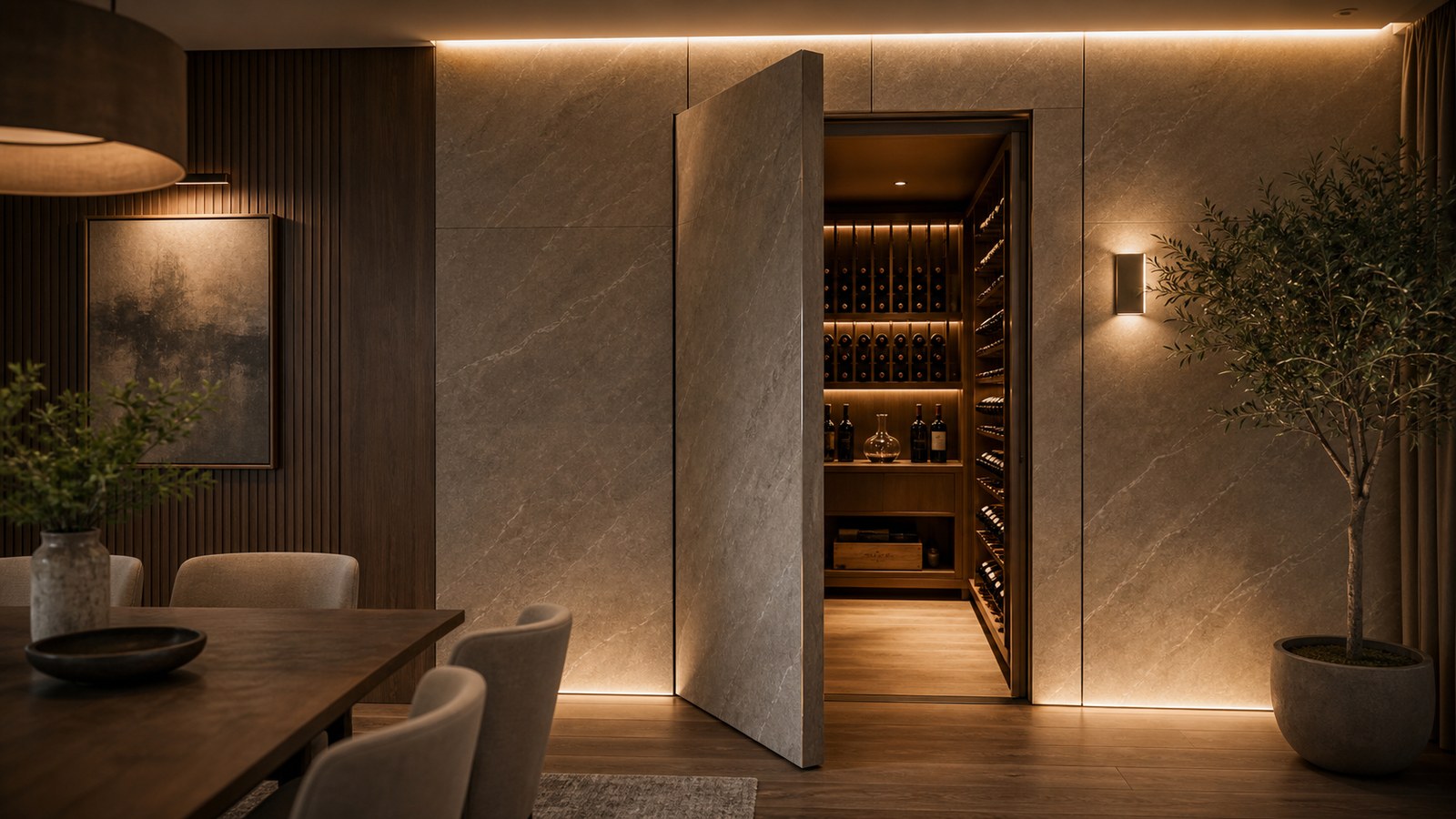
A Cellar Entrance That Protects the Collection
An invisible wine cellar door has to do more than create a dramatic reveal. It must protect temperature, humidity, darkness, security, and the atmosphere of the room around it. The entrance may hide behind wood paneling, stone, millwork, a mirror, or a flush wall, but behind the elegance is a working climate boundary. A well-designed invisible wine door makes the collection feel exclusive without making the cellar difficult to use. It invites discovery, keeps the dining or lounge area polished, and treats the wine room as both a showpiece and a carefully controlled storage environment.
A: Yes, but the door must still meet climate, security, and access needs.
A: Wood, plaster, stone veneer, cabinetry, mirror, or glass can work depending on the room.
A: Conditioned cellars often need insulated and well-sealed door assemblies.
A: It can be integrated or mirrored, but climate and UV exposure must be addressed.
A: Valuable collections often benefit from quiet locking, alarm contacts, or smart access.
A: Use warm, controlled lighting that reveals the room without heating or overexposing bottles.
A: Some can, but hinged insulated doors usually seal more easily.
A: It should clear furniture, racks, steps, and hosting paths.
A: For serious collections, climate and cellar specialists are strongly recommended.
A: Discreet materials, quiet movement, stable climate, and a reveal that feels effortless.
Start With Climate Requirements
Wine cellars need stable conditions. Temperature, humidity, insulation, vapor barriers, and seals matter before the door style is chosen. An invisible panel that leaks air may look beautiful and still harm the collection. The door has to be part of the climate envelope.
For serious storage, work with a cellar specialist or mechanical professional. The door may need insulated glass, weatherstripping, magnetic seals, or a heavier core. Concealment should support preservation, not fight it.
Even small display cellars benefit from better sealing. A stable environment protects labels, corks, and flavor over time.
The surrounding room also affects performance. A cellar entry near a sunny dining window, exterior door, fireplace, or busy kitchen may face heat swings that a simple hidden panel cannot manage. Planning the entrance means studying both sides of the wall. The visible side should look refined, but the hidden side has to behave like part of a controlled storage system.
Choose Materials That Suit the Room
Invisible cellar doors often sit near dining rooms, lounges, kitchens, or entertainment areas. The visible side should match those materials. Wood paneling, stone veneer, plaster, cabinetry, or mirror can all disguise the opening while making the room feel complete. The material should also fit the tone of hosting. A formal dining room may call for refined paneling, while a relaxed basement lounge may suit textured plaster or darker wood. The door works best when it feels like the natural extension of the room, not a theatrical prop.
The cellar side may need different priorities: moisture resistance, insulation, easy cleaning, and hardware access. A good design resolves both sides rather than treating one as an afterthought.
Wood Panel Doors Add Warmth
Wood is a natural choice for wine spaces because it feels warm and connected to cabinetry, barrels, and dining furniture. A wood-paneled invisible door can blend into a feature wall while hiding the cellar beyond.
Grain matching and panel spacing are important. If the door breaks the rhythm of the wood wall, it becomes visible. If the grain and joints continue naturally, the opening feels integrated.
Wood also needs stability. Cellar humidity and temperature differences can affect panels, so construction should resist warping.
Finish selection should respect touch and temperature. A high-gloss wood door may show fingerprints near the release, while an open-grain finish may need more protection from humidity changes. Many homeowners prefer a satin finish because it feels warm, hides minor handling, and still looks refined under dining-room light. The quieter the finish behaves, the more convincing the concealed cellar becomes.
Stone and Plaster Create a Hidden Vault Feeling
Stone, plaster, and mineral finishes can make a wine cellar entrance feel substantial. A hidden panel in a stone-look wall can suggest a vault or private tasting room. This works especially well in dining rooms, basements, and lounge spaces with richer materials.
Weight is the challenge. Stone veneer, tile, or thick plaster finishes may require stronger hinges or pivots. The door should move easily despite the solid appearance. The substrate behind those finishes matters just as much as the visible material. A heavy surface on a flexible slab can crack, telegraph movement, or fall out of alignment. A convincing vault-like door starts with engineering, then earns its atmosphere through finish.
Glass Can Be Concealed or Revealed
Some wine cellars are meant to be seen. Others are meant to be discovered. An invisible door can still include glass if the glass is integrated carefully, such as a mirrored panel, smoked glass, or a glass door hidden behind a secondary wall treatment.
Glass must meet climate and safety needs. Insulated glass may be required for conditioned cellars. UV exposure should be controlled, and lighting should not overheat the collection.
The choice depends on whether the owner wants secrecy, display, or a mix of both. Invisible does not always mean opaque.
A hybrid approach can be especially effective. The public side might read as millwork, while the cellar side includes glass for a view once the door is opened. Another design might use smoked or mirrored glass that looks solid from the dining room but reveals depth from certain angles. These choices should be tested with lighting because glass can shift from discreet to obvious quickly.
Lighting Makes the Reveal
Wine cellar lighting should be gentle, warm, and controlled. When an invisible door opens, a soft glow from racks or floor-level lighting can create a memorable reveal without overwhelming the wine. Avoid harsh light that shines directly into bottles or the dining area. Lighting should also make labels, steps, and thresholds readable so the cellar is safe to use during dinners. A beautiful reveal loses its charm if guests cannot see where to stand or the host has to reach awkwardly for a bottle. Lighting should flatter the cellar, but it should also make the host feel unhurried and in control during the small rituals of choosing, presenting, and returning bottles.
Door-triggered lighting can work beautifully if it is subtle. The light should make the cellar inviting and safe, not theatrical in a way that feels out of step with the home.
Security Should Stay Discreet
Wine collections can be valuable, so security matters. Invisible doors already provide some discretion, but the door may also need a lock, reinforced frame, alarm contact, or smart access. These features should be integrated without turning the entrance into a visible security device.
Inside release and emergency access should still be considered, especially if the cellar is large enough to enter. Security and safety need to work together.
Discreet security also means planning how people use the home. A keypad placed beside a hidden panel can announce exactly what the wall contains, while a remote release may frustrate a host carrying bottles. Locks, sensors, and access controls should fit the hosting routine as well as the value of the collection. The best systems feel calm from the room and dependable behind the finish. For larger collections, security can also include inventory habits, controlled guest access, and clear records of who can open the space.
Plan for Frequent Use
A wine cellar door may be opened often during dinners or gatherings. The release should be intuitive for the owner, the swing or pivot should clear nearby furniture, and the door should close reliably after use. A dramatic hidden entrance that is awkward during hosting will lose its charm.
Consider carrying bottles in and out. The threshold should be safe, the lighting should reveal steps, and the handle or release should work with one hand. Hospitality is part of the design.
The quieter the operation, the more refined the reveal feels.
Frequent use also changes finish priorities. A cellar door near a dining table may be touched during dinners, opened by trusted guests, and closed with one hand while someone holds glasses or a decanter. Durable edges, forgiving surfaces, and predictable latching matter as much as the first dramatic impression. A door that is easy to use will be enjoyed more often.
Racking and Door Placement Work Together
The door should not open into valuable racks, narrow aisles, or fragile displays. Plan the entry with the cellar layout. Guests should be able to step in, turn, and view the collection without bumping bottles or blocking the door.
If the cellar is compact, a sliding or pivoting invisible door may save space. If the cellar needs a stronger seal, a hinged insulated door may be better. The layout should decide the movement.
Maintenance Access Is Essential
Climate systems, lights, locks, seals, and hinges need maintenance. An invisible wine cellar door should allow access to the components that keep the room working. If a seal fails or a hinge drops, the door should be adjustable without damaging the finish.
Keep records of hardware, finish materials, and climate equipment. Future service will be easier, and the hidden entrance can remain polished.
Maintenance planning should include the threshold and gasket areas, which do much of the preservation work. These parts may need cleaning, replacement, or adjustment as the door ages. If they are impossible to reach, the cellar can slowly lose performance while still looking beautiful. A hidden wine door succeeds when the invisible details remain serviceable. Owners should know how to inspect seals, what normal condensation looks like, and when to call a specialist before a small issue affects the collection.
Design the Reveal Around the Experience
The best invisible wine cellar doors create a moment. A dining room wall opens, a warm glow appears, and the collection feels private and special. That moment works because the practical details are settled: climate, security, lighting, clearance, and storage. The reveal should feel effortless from the dining side and orderly from the cellar side. When both experiences are considered, the door becomes part of hospitality rather than a trick that interrupts it.
When those details are ignored, the reveal becomes a problem. When they are resolved, the invisible door adds luxury without compromising the wine.
Discretion Can Be the Luxury
A wine cellar does not need to announce itself to feel impressive. Sometimes the most luxurious approach is a room that stays hidden until the right moment. Invisible doors support that feeling by letting the home remain elegant and restrained.
The collection is protected, the hosting experience is enhanced, and the surrounding room stays calm. That is the value of an invisible wine cellar door: it guards both the wine and the atmosphere around it.
That restraint can make the reveal more personal. Instead of turning the cellar into a constant display, the host chooses when to share it. The door protects the bottles, preserves the mood of the room, and gives the collection a sense of ceremony. For many homes, that quiet control is more memorable than a cellar that is visible at every moment. It also allows the dining room, lounge, or kitchen to remain beautiful on ordinary days, while the cellar becomes a deliberate part of special ones. In that sense, the invisible door protects more than climate and security; it protects the timing of the experience. The room can be calm until the moment the collection is meant to become part of the evening. That is a quieter kind of luxury, and it suits wine especially well. A collection built over years deserves an entrance that feels patient, capable, and considered. The door should honor the care already invested in every bottle. Details carry respect.


