
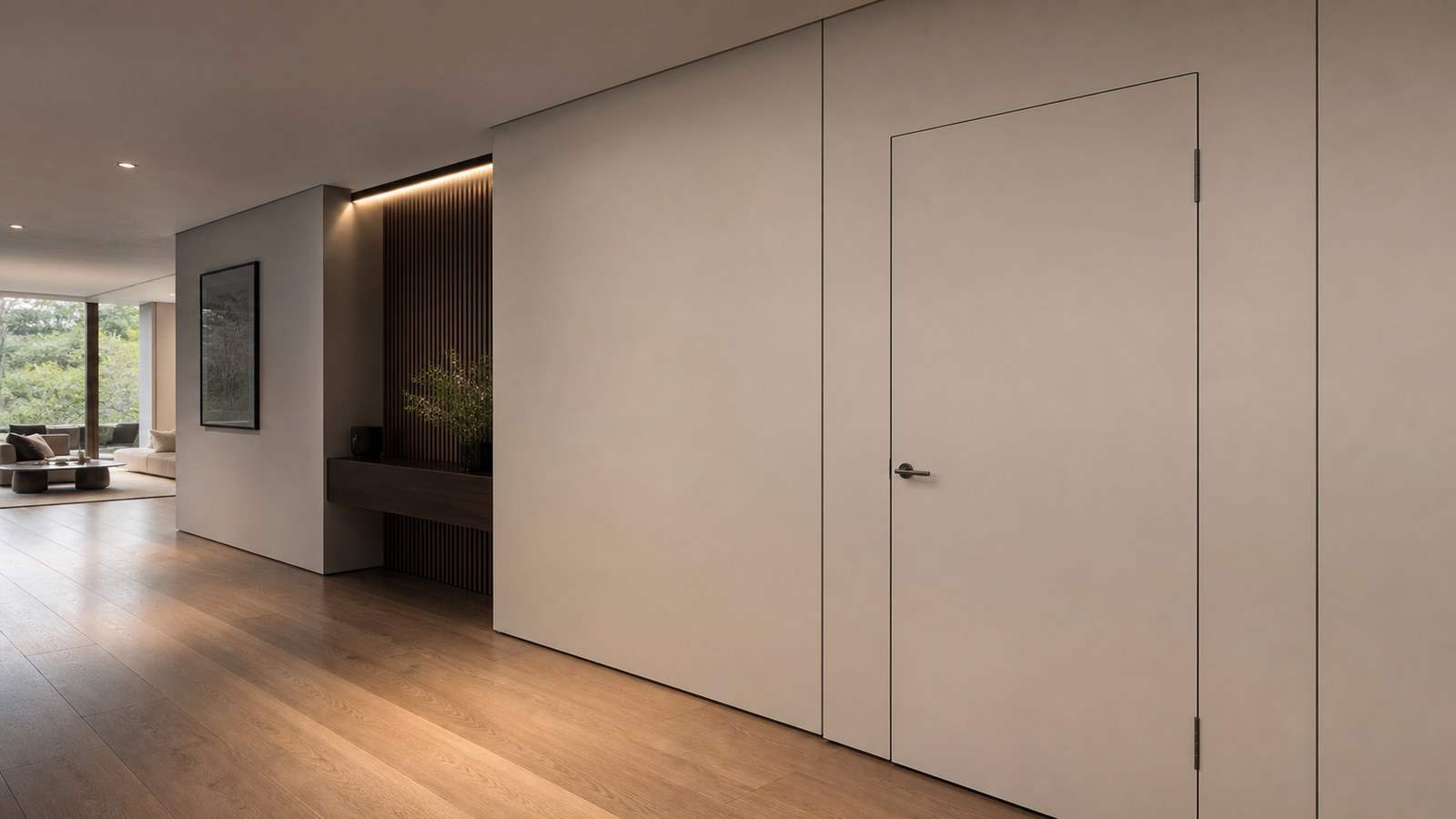
Safety That Does Not Interrupt the Room
A fire-rated door does not have to look heavy, industrial, or out of place in a refined home. Flush-mount fire-rated doors are designed to protect a required opening while keeping the wall calm and architectural. The challenge is that safety comes first. The rating, frame, seals, hardware, clearances, wall assembly, and installation details must work together before the door can disappear visually. When those requirements are respected, the result can feel quiet and elegant without weakening the protection the door is meant to provide.
A: Yes, when the rated door, frame, hardware, and wall details are specified as a compatible assembly.
A: No, many rated doors can use refined paint, veneer, or metal finishes.
A: Only if the code and listed assembly allow it, which is often not the case.
A: Some systems allow them, but the hinge must suit the rating and door weight.
A: Usually positive latching is needed, so verify before choosing minimalist hardware.
A: Required identification should remain available according to local inspection expectations.
A: Uneven reveals, bulky unplanned hardware, and paint buildup around seals.
A: Yes, operation, seals, latch, and closer performance should be checked over time.
A: Sometimes, but the detail must not interfere with rating, swing, or seals.
A: An architect, door supplier, contractor, or code professional should confirm the rated assembly.
Start With the Rating, Not the Look
Fire-rated doors exist because a wall, corridor, garage entry, mechanical room, stair connection, or unit separation needs a protected opening. Before choosing a flush look, identify the required rating and the reason it applies. A door meant for a garage-to-house connection may not have the same requirements as a corridor door in a multifamily building.
The rating affects the slab, frame, hinges, latch, closer, seals, glazing, and sometimes the wall itself. A beautiful flush panel cannot simply be added to a rated opening if the assembly no longer matches its tested condition. Style has to be coordinated with the listed door system.
This is why early code review matters. Local requirements, building type, occupancy, and inspection expectations can vary. A contractor, architect, door supplier, or code professional can help confirm what is required before finishes are ordered.
Once the performance target is clear, the design conversation becomes easier. The flush-mount door can be detailed around real constraints instead of being redesigned after an inspector or installer flags a problem. That sequence also protects the look, because the frame, rating label, closer, and seals can be integrated before the wall finish is treated as complete.
Why Flush Fire Doors Need Careful Detailing
Flush-mount design reduces visual trim and shadow, but fire-rated assemblies often rely on exact clearances and components. The reveal around the door cannot be treated casually. If gaps are too large, seals are missing, or the frame is altered incorrectly, the safety intent can be compromised.
That does not mean the door has to look bulky. It means the concealed frame, rated core, gasketing, latch, and hinges need to be selected as a coordinated package. A clean wall is possible when the technical parts are allowed to do their work.
It also means the design team should decide which side of the door deserves the flush expression. In some openings, one side faces a refined hallway while the other faces a garage, stair, or service room. The protected assembly may be able to look very quiet on the public side while remaining more conventional where appearance matters less.
Frame, Gap, and Seal Requirements
The frame is one of the most important parts of a rated flush-mount door. It carries the slab, holds the reveal, and contributes to the tested assembly. Concealed or trimless frames may be available for some rated systems, but they should be specified for that purpose rather than improvised from standard parts.
Gaps around the door deserve close attention. A flush reveal that looks sleek in a photo may be unacceptable if it exceeds the allowed clearance. The bottom gap, hinge-side reveal, latch-side reveal, and head clearance all need to be checked after installation and after finish work.
Smoke seals, intumescent strips, sweeps, or perimeter gasketing may be required depending on the door and location. These details can often be integrated discreetly, but they should not be omitted to make the door look cleaner.
Lighting also affects the visual result. Strong side light can reveal a slightly uneven frame or inconsistent reveal. A rated door should be adjusted for both performance and appearance before the project is considered finished.
Materials That Can Carry the Rating
Rated flush doors may use mineral cores, solid cores, metal skins, wood veneers, or specially constructed composite assemblies. The visible finish can be warm and residential, but the inside of the door is doing serious work. Choose materials from available rated products, not from appearance alone.
Wood veneer, paint, laminate, and some panel treatments can be compatible with rated doors if they are applied within the manufacturer’s limits. Heavy decorative overlays, field-cut openings, or unapproved modifications can create problems. The safest path is to choose the rated product first, then select finishes that the system allows.
Hardware That Stays Quiet but Compliant
Fire-rated doors usually need positive latching. That requirement can conflict with the desire for handle-free minimalism if it is ignored until late in the project. A push latch or magnetic catch may not be appropriate for a rated opening unless it is part of an approved system.
Hinges, pivots, closers, locks, viewers, seals, and thresholds should be chosen with the rating in mind. Concealed hinges may be available, but they need to be rated for the assembly and the door weight. Closers can sometimes be concealed as well, though they require planning inside the frame or slab.
Hardware finish matters visually. Matching levers, edge pulls, or closer arms to nearby metalwork can help the door feel intentional. If the hardware must remain visible, it should look precise rather than apologetic.
Ease of use still matters. A rated door that slams, sticks, or requires force will frustrate the people who use it every day. Compliance and comfort should be tuned together during adjustment.
Where Fire-Rated Flush Doors Make Sense
Common residential uses include garage entries, mechanical rooms, stair connections, accessory dwelling unit separations, and certain apartment or condominium corridors. In custom homes, rated doors may also appear near utility spaces, workshops, or concealed service areas where safety and design both matter.
The flush-mount approach is especially helpful when a rated door sits in a finished hallway or main living zone. Instead of making the protected opening the most visible part of the wall, the door can blend into the surrounding architecture while still performing its required job.
Coordinate With Walls and Baseboards
A flush fire-rated door has to meet more than the door schedule. It has to align with the wall finish, baseboard detail, flooring transition, and nearby panels. If the wall is thickened for a concealed frame, electrical boxes, trim, and adjacent openings may need adjustment.
Baseboards can be tricky. Interrupting them at a rated door may look awkward, but continuing them across the slab may interfere with operation, seals, or the tested assembly. Some projects use recessed bases, shadow lines, or carefully stopped trim to keep the wall clean.
Flooring transitions also need planning. A raised threshold may be required in some assemblies, while other doors can use low-profile details. The right choice depends on rating, smoke control, accessibility, and the rooms on both sides.
Do Not Hide Required Function
Minimalism should not make the door confusing or unsafe. A required fire-rated opening may need to be obvious enough for normal use, emergency access, or inspection. Hiding every cue can create a wall that looks elegant but behaves poorly.
Users need to know how the door opens. If the door protects a garage, stair, or mechanical space, the handle, closer, or latch should be understandable. A subtle lever or edge detail is often better than a mystery release.
Do not remove labels, alter cores, cut unapproved glazing, or cover required components without guidance. Some labels may be on the edge or hinge side, but the assembly still needs to remain identifiable for inspection and future maintenance.
The best stylish rated doors are not trying to hide safety. They are trying to integrate safety into a room that also deserves good design.
Finishes Should Survive Heat and Traffic
Rated doors often sit in practical locations that receive hard use. Garage entries, corridors, utility rooms, and stair doors may be touched, bumped, and cleaned frequently. The finish should handle that traffic without revealing every mark.
Painted doors need durable coatings and careful sheen matching. Veneer doors need protected edges and stable construction. Metal doors need a finish that feels appropriate to the home rather than purely commercial. A flush door only stays stylish if it ages cleanly.
Installation Quality Decides the Result
Even a well-specified rated door can look wrong if it is installed casually. The frame must be plumb, square, and securely anchored. The slab must close reliably and latch fully. The reveal should be even without grinding against the wall finish.
Finishing trades should understand the assembly before mud, plaster, paneling, or paint covers the frame. Overbuilding the finish around a rated frame can interfere with hardware or seals. Protecting the door during construction also prevents damage before adjustment.
Final commissioning is worth the time. Open and close the door repeatedly, check the latch, inspect the gaps, verify seals, and look at the door under actual lighting. A flush fire-rated door is successful only when it passes both safety and design checks. The installer should also confirm that the door works for real household movement, such as carrying groceries from a garage, moving laundry through a corridor, or closing a utility space quietly at night.
Maintenance Keeps the Rating Honest
Fire-rated doors are not set-and-forget objects. Hinges loosen, closers drift, seals wear, and paint can build up around moving parts. A door that once latched properly may stop doing so after years of use or after repainting.
Homeowners should keep records of the door system and avoid field changes that could affect the rating. If the door rubs, fails to latch, or has damaged seals, repair it with compatible parts. The clean look depends on the door remaining functional. Repainting should be done with the same care: thick paint on the frame, latch edge, or seals can quietly create performance and appearance issues.
Style Works Best When Safety Leads
The appeal of a flush-mount fire-rated door is that it refuses the false choice between protection and polish. A home can have required safety measures without turning every protected opening into a visual interruption. That is especially valuable in modern interiors where quiet walls are part of the design language.
Safety still leads the process. The rating, frame, latch, seals, and installation requirements decide the boundaries of the design. Within those boundaries, there is room for beautiful materials, subtle hardware, and careful alignment.
When the door is planned this way, it feels calm rather than compromised. It protects the opening, supports the inspection, and lets the surrounding room keep its intended style. That combination is the real promise of flush-mount fire-rated doors. They show that code-driven details do not have to be visually crude when the design team treats performance as part of the architecture from the beginning.
For homeowners, that approach also makes future decisions easier. If repairs, repainting, or hardware changes are needed later, there is a known system to maintain. The door is not a decorative workaround; it is a safety assembly with a carefully designed face. That clarity is what lets safety and style keep working together.


