Plain-Sight Concealment Works by Looking Unimportant
To hide a door in plain sight, you do not always need a secret lever or dramatic moving wall. You need the opening to stop reading as a door. That usually means controlling seams, color, trim, hardware, lighting, texture, and the surrounding visual story so the eye accepts the surface as part of the room. The best plain-sight concealment feels calm. It gives the viewer no reason to pause, because every line appears to belong to a wall panel, bookcase, mirror, cabinet, or architectural rhythm that would make sense even if no door were there.
A: A believable surface pattern that gives seams a reason.
A: Yes, if hardware, color, trim, and sightlines are handled well.
A: No; gaps should look intentional and consistent.
A: People recognize handle-height shapes and shadows quickly.
A: It can, especially when pattern alignment is careful.
A: Grazing light can trace seams and uneven edges.
A: Yes, if it frames only the hidden opening.
A: Paneling is forgiving because it repeats useful lines.
A: Yes, purpose makes the reveal feel worthwhile.
A: Maintenance, touch-ups, quiet hardware, and stable alignment.
Give the Surface a Believable Reason
A hidden door should look like something the room already needs. It might be a wall panel, shelving bay, mirror, wardrobe face, slat wall, wainscot section, or flush cabinet. If the disguise feels like a random decoration placed only around one opening, people will look closer.
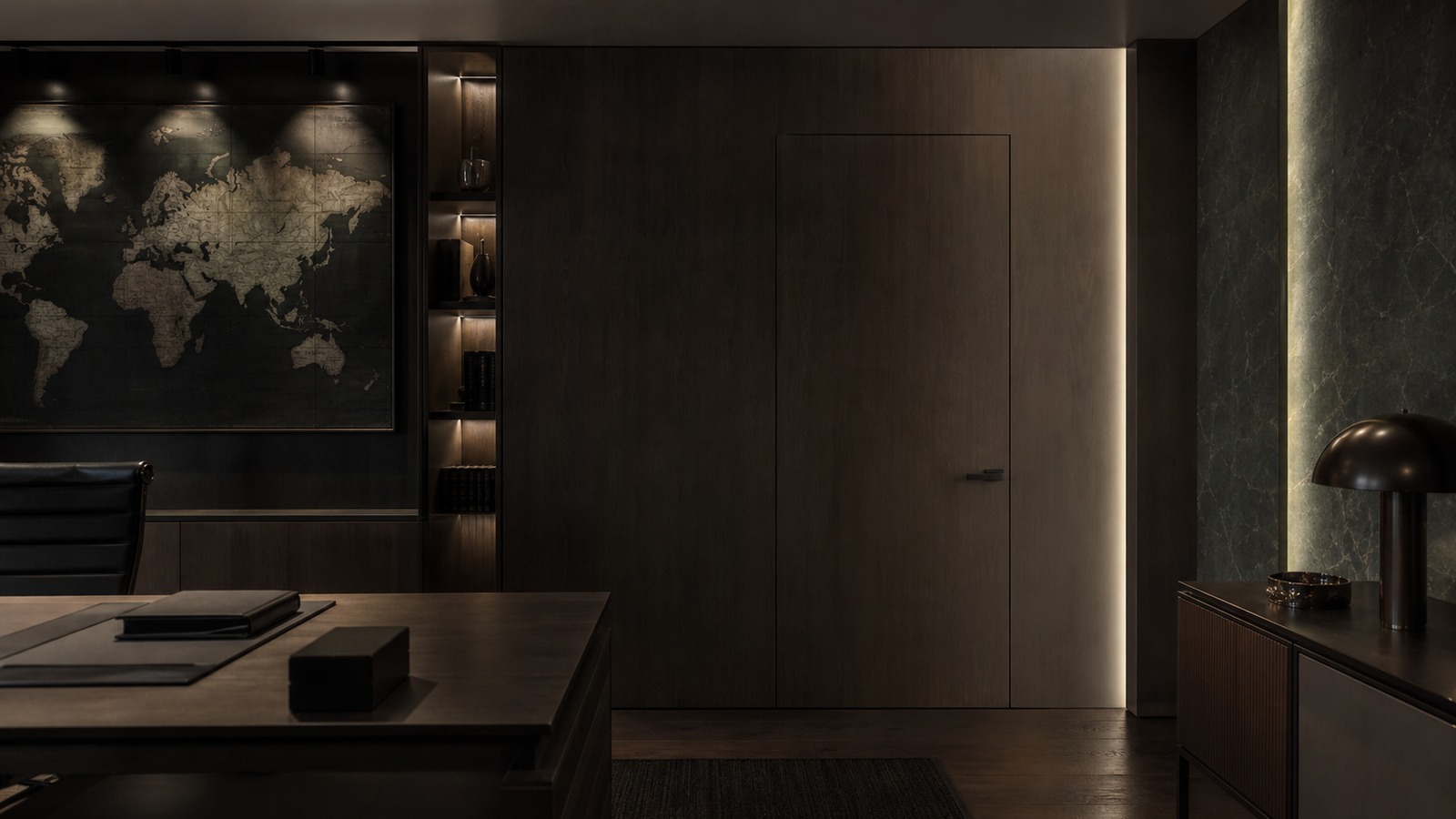
The strongest approach starts with the room’s existing language. In a paneled hallway, hide the door in panels. In a library, use shelves. In a minimalist space, use flush planes and shadow gaps.
Control the First Sightline
Most people notice a door from the angle where they enter the room. Stand in those normal approach points and study what catches the eye. A latch shadow, casing line, hinge barrel, floor gap, or color change may be more obvious from one direction than another.
Make Seams Look Intentional
You cannot eliminate every seam, but you can give seams a reason. Align the door perimeter with panel joints, shelf divisions, vertical battens, tile lines, or shadow grooves. A seam that repeats elsewhere becomes part of the pattern instead of evidence of a door.
Consistency matters more than invisibility. If the wall has quarter-inch shadow grooves, a matching door reveal may disappear. If the rest of the wall is flat, that same reveal may look suspicious.
Reduce Hardware Shadows
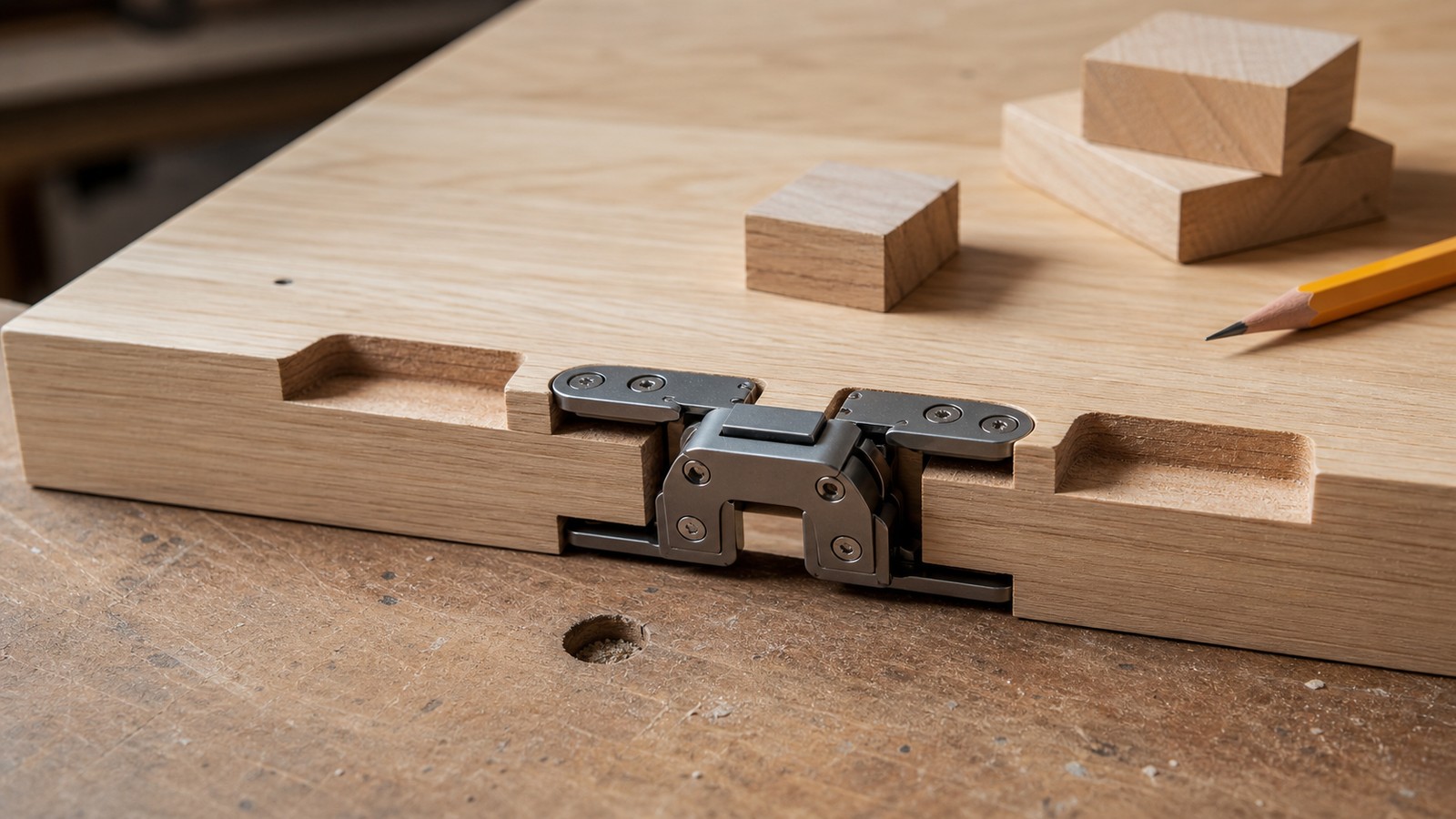
Hardware often gives away a hidden door before the outline does. Knobs, levers, hinges, strike plates, and door stops all create small shapes the eye recognizes. Replace, relocate, recess, paint, or simplify hardware where safety allows.
Do not make operation confusing for people who need the door. Plain-sight concealment should reduce visual noise, not create a puzzle during everyday use.
For occupied rooms, the inside hardware should remain obvious enough to use quickly.
Match Color and Sheen Together
A perfect paint color can still fail if the sheen is wrong. Doors often receive more durable finishes than walls, which can create glare. If the hidden door is meant to read as wall, test color and sheen under the actual room light.
Use Trim as Camouflage
Trim can either reveal or hide a door. Traditional casing says door immediately, while repeated wall battens or rails can absorb the opening. The trick is to extend the trim pattern beyond the door so it does not frame the secret too neatly.
Plan trim around movement. Pieces attached to the door must clear fixed pieces, and fixed pieces must not block the swing. A beautiful pattern that rubs itself apart will not stay concealed.
Texture Can Break Up the Outline
Wallpaper, wood slats, fabric panels, acoustic felt, tile, plaster texture, and book spines can soften the visual edge of a door. Texture gives the eye more information to process, which can make the operating perimeter less dominant.
Choose texture that belongs to the room’s purpose. Acoustic panels make sense in a media room. Slat walls fit some modern hallways. Wallpaper may suit a powder room or closet passage. Believability is the quiet engine of concealment.
Keep durability in mind. Moving edges receive wear, and fragile textures can fray, chip, or peel at the very line you hoped to hide.
Lighting Should Not Trace the Gap
Grazing light across a door face can make even fine gaps visible. Downlights, sconces, windows, and shelf lighting all affect how the disguise reads. If possible, avoid placing strong light so it skims directly across the operating seam.
Hide the Door Inside a Larger Composition
A lone secret panel on an empty wall invites attention. A door hidden within a larger composition has more cover. Built-ins, repeated wall panels, gallery walls without readable labels, or storage fronts can make the opening one piece of a broader design.
This does not mean cluttering the wall. It means giving the surface enough context that the door is not the only interesting feature.
Use Proportion to Avoid Suspicion
People recognize door proportions quickly. A tall rectangle with a handle-height detail reads as a door even if it is painted well. Adjust the composition so the operating panel is broken by horizontal rails, shelves, or surrounding modules that change the expected outline.
When the full rectangle cannot be broken, use alignment. Let the top, bottom, and side lines correspond to nearby architectural features so the proportions feel designed rather than hidden.
The surface should look balanced when closed. If everything around the opening seems arranged to excuse one panel, the disguise weakens.
Sound Is Part of Plain-Sight Hiding
A hidden door that rattles, scrapes, clicks loudly, or slams heavily reveals itself through use. Bumpers, catches, hinge adjustment, and careful clearances make the door feel more like the surface it imitates. Quiet operation supports visual concealment.
Keep Maintenance in the Plan
Paint chips, dirty pull edges, loose hinges, and sagging panels slowly expose a concealed door. Plan access for adjustment and choose finishes that can be touched up. A hidden door is not a one-day trick; it is a moving part in a lived-in room.
Maintenance is easier when the design is restrained. Simple panels, clear finish schedules, and accessible hardware are easier to repair than elaborate disguises with fragile edges.
The Door Should Reward Discovery
Hiding a door in plain sight is not only about making it vanish. The room beyond should justify the effort. A pantry, office, library, safe room, playroom, or storage area gives the reveal purpose. Without purpose, concealment can feel like a gimmick.
When the purpose is clear, the design becomes more satisfying. The surface stays calm until someone needs it, then the room changes in a way that feels useful and intentional.
That is the real secret of plain-sight concealment. The door hides best when it behaves like a natural part of the architecture, opens without fuss, and leads somewhere worth finding.
Think Like a Visitor, Not the Builder
After working on a hidden door for days, you will see every seam. A visitor will see the room in a different order. They may notice the art, light, furniture, or path of travel before they notice the wall. Use that difference to your advantage by designing for normal attention, not builder obsession.
Stand where guests stand and ask what the room appears to be about. If the hidden door is the most visually demanding element, it may need to calm down. Plain-sight concealment often improves when the wall has a more natural focal point elsewhere.
Let Furniture Help Without Blocking Access
Furniture can support the disguise by making a wall feel occupied, but it should not make the door annoying to use. A console table, chair, plant, or shelf nearby can draw attention away from the seam. Too much furniture in the swing path turns concealment into a daily obstacle.
Match the Door’s Behavior to Its Disguise
If the door looks like cabinetry, it can open with a cabinet-like pull. If it looks like a wall panel, it should move quietly and return flush. If it looks like a mirror, its weight and swing should feel deliberate. The motion should not contradict the surface story.
This is where many plain-sight doors fail. The closed face may look convincing, but the opening action feels flimsy, loud, or awkward. A believable disguise needs believable operation.
Small hardware details help here. Stops, bumpers, catches, and hinge adjustment make the movement match the visual promise.
Keep the Secret From Looking Lonely
A single unusual panel can draw more attention than a visible door. Repeat shapes, finishes, or vertical lines in nearby fixed surfaces so the operating area has company. The hidden door should be one participant in a larger rhythm.
That rhythm does not have to cover the whole house. It only needs enough presence in the room that the hidden surface feels expected. The eye relaxes when patterns repeat with purpose.
Plain Sight Works Best With Restraint
Every extra trick creates another chance for the door to announce itself. Overly clever triggers, dramatic seams, heavy decorations, or conspicuous feature walls may attract the very attention you hoped to avoid. Restraint is often more convincing than spectacle.
The best hidden door in plain sight is easy to overlook, easy to operate, and easy to maintain. It lets the room remain itself until the moment access is needed. Then the ordinary surface changes roles, and the reveal feels satisfying precisely because it was not begging to be noticed.
Restraint also helps future repairs. A simple painted panel, repeated trim grid, or quiet flush surface can be touched up without rebuilding the entire disguise. Elaborate surfaces may impress once but become fragile under daily contact.
When in doubt, remove one visual idea before adding another. If the door still hides, the simpler version is usually stronger.
Give the Reveal a Natural Pause
Even a plain-sight hidden door benefits from a small moment of transition. The user should be able to approach, operate the release, and enter without awkward body movement. A reveal that requires stepping around furniture or pulling from a strange angle feels less intentional.
That pause can be subtle. A clear standing spot, a comfortable reach, and a door that opens smoothly are enough. The surface may be hidden, but the human action should feel natural.
The Best Plain-Sight Door Looks Inevitable
A hidden door in plain sight succeeds when people believe the surface would exist even without the secret. The paneling, shelving, mirror, or flush wall should feel inevitable in the room. If the design seems to be explaining itself too loudly, the secret becomes easier to suspect.
Inevitable does not mean boring. It means the door participates in the architecture so naturally that the reveal feels like a bonus rather than a correction. The room still makes sense when the door is closed.
That is why the best examples are often quiet. They hide by belonging. The reveal still has delight, but the closed surface does not demand constant admiration. It simply supports the room until someone needs the route behind it, which is exactly what makes plain-sight concealment feel sophisticated rather than showy. A restrained door can surprise once and then keep serving the room gracefully for years. Its ordinary composure is what lets the secret age well. The longer it blends in, the better the design proves itself to everyone who passes by without noticing the route at all in ordinary daily life at home each day, even up close, year after year.