Escape Room Doors Make Solving Physical
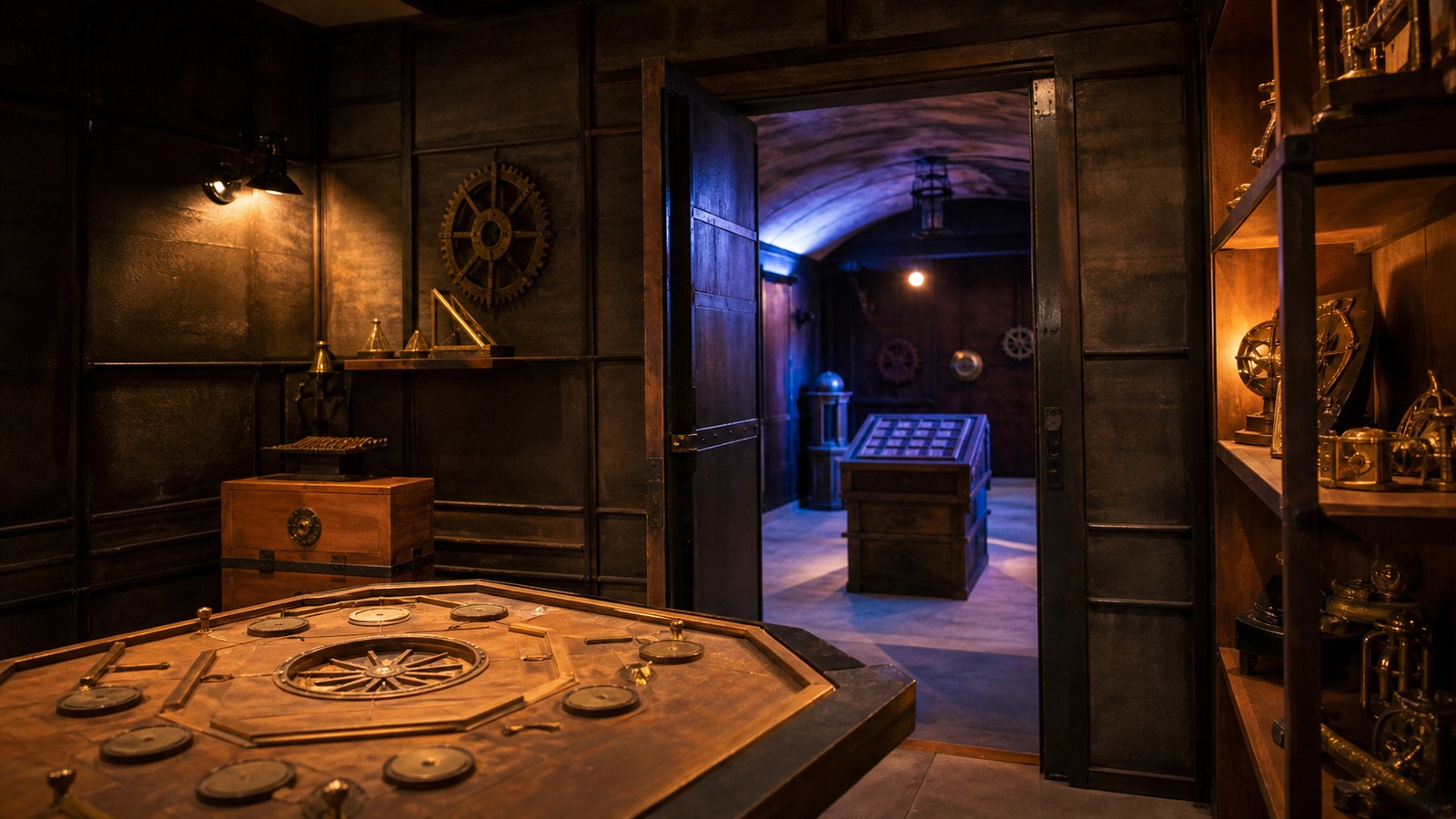
Concealed doors in escape rooms are special because they turn thinking into movement. A team solves a pattern, aligns objects, opens a lock, completes a circuit, presses a hidden switch, or interprets a clue, and then the room itself changes. A wall opens, a shelf swings, a panel releases, or a new chamber appears. The hidden door is the moment when abstract progress becomes visible. Done well, it gives players a jolt of shared triumph and proves that the puzzle was not only on paper; it was built into the space.
A: They make puzzle progress physical, memorable, and shared.
A: Players should have clues that connect their actions to the reveal.
A: The room must be restored quickly and reliably between groups.
A: They can block exits, pinch, swing into players, or lack staff overrides.
A: It confirms progress and tells the team the room has changed.
A: No. Good rooms teach boundaries and avoid random force.
A: A pacing purpose, useful content, and enough time to enjoy it.
A: They monitor, override, troubleshoot, and protect safety.
A: Yes, if the reveal is safe, simple, and clearly clued.
A: A concealed door is best when it turns teamwork into visible progress.
The Door Is a Reward Beat
An escape room concealed door should feel like a reward for solving, not a random surprise. Players need to understand, at least afterward, what action caused the reveal. When the wall opens, the team should be able to connect the movement to their own discovery.
This connection is central to satisfaction. A hidden door that opens because a staff member decides the team is ready can feel hollow if the cause is not built into the puzzle. The room should appear to respond to the players’ intelligence.
Fairness Starts With Clue Language
Players need a clue language that prepares them for hidden access. A repeated symbol, unusual hinge line, floor mark, magnetic object, sound cue, or map gap can suggest that a surface has another role. The clue does not have to shout. It has to be learnable.
Escape rooms become frustrating when concealed doors depend on random force or blind searching. If the players have to shove every wall, the room has failed to communicate.
The best hidden doors reward observation and reasoning before physical testing.
Team Discovery Is Part of the Fun
A concealed door reveal often becomes the moment everyone remembers because the whole group reacts together. One person may solve the code, another turns the object, someone hears the latch, and everyone pivots toward the opening. The reveal converts separate effort into shared energy.
Mechanisms Must Be Reliable
Escape room doors operate many times a week, often under impatient hands. A mechanism that works in a workshop can fail under real players who pull, lean, twist, or celebrate too hard. Designers need hardware, sensors, magnets, hinges, and releases that survive repeated use.
Reliability also protects the game master. If staff have to intervene constantly, the illusion weakens and operations slow down.
Safety Limits the Fantasy
Escape rooms are entertainment spaces, not actual traps. Concealed doors must respect emergency exit rules, fire safety, accessibility needs, visibility for staff, and clear release procedures. A hidden passage can feel exciting while still being safe and supervised.
Players should never be endangered by a puzzle reveal. Moving panels need safe clearances. Doors should not pinch, slam into players, block required exits, or depend on strength that not everyone has.
The best rooms make danger fictional and safety real.
Reset Time Shapes Design
Every escape room has to be reset between groups. A concealed door that requires delicate realignment, complex repairs, or hidden staff crawling can become a burden. The reveal may be wonderful once and terrible for daily operation.
The Hidden Room Needs a Pacing Purpose
A concealed door often changes the size of the game. It may reveal a second room, bonus chamber, final puzzle area, shortcut, or dramatic object. That expansion should arrive at the right time in the experience.
If the hidden door appears too early, the room may feel scattered. If it appears too late, players may not have time to enjoy what lies beyond. Good designers place the reveal where it renews momentum.
Sound Confirms Progress
A click, thud, chime, magnetic release, or sliding sound helps players understand that something changed. In a busy team environment, sound can be the first signal that the puzzle worked. It turns success into a room-wide event.
Sound should be meaningful. A hidden door that releases silently may be missed, while an exaggerated sound can make a small reveal feel more important than it is.
Balanced feedback keeps players oriented and excited.
Not Every Secret Should Require Searching
Escape rooms can include hidden compartments, but overusing them can push players into destructive behavior. If every object might be a concealed door, teams may start pulling apart scenery instead of solving. The room needs boundaries.
Themed Disguise Makes the Door Feel Earned
A hidden door should fit the story world. A detective office might use bookcases or filing cabinets. A spaceship might use panels and hatches. A temple might use stone blocks. A magician’s room might use mirrors or cabinets. The disguise should make sense inside the fiction.
When the surface belongs to the theme, the reveal feels designed rather than arbitrary. Players enjoy realizing that the set was communicating all along.
Game Masters Need Control
Behind the scenes, staff need ways to monitor and override concealed doors. If a sensor fails or a team gets stuck, the game master must be able to help without creating risk. Manual releases, cameras, and clear control procedures are part of responsible design.
This operational layer is invisible to players when everything works. It is crucial when something does not.
A good hidden door creates magic for the team and calm options for staff.
False Doors Can Mislead Fairly
Some escape rooms use apparent hidden doors as misdirection. A panel may look important but lead only to a clue, or a visible door may be locked while the true route hides elsewhere. Misdirection is fair when it teaches, redirects, or supports theme.
Home Puzzle Rooms Can Borrow the Idea
People building home escape rooms, game rooms, or themed play spaces can use concealed doors carefully. A hidden cabinet, puzzle-activated shelf, or secret reading nook can create delight without needing commercial complexity.
The same principles apply: safe movement, clear exits, simple reset, and a clue that makes the reveal feel earned.
The Best Door Turns a Team Into One Reaction
Concealed doors in escape rooms endure because they create a rare social moment. Several people may be thinking differently, searching differently, and solving different pieces, but when the wall opens, everyone shares the result at once. The room changes, and the team changes with it.
That is why the hidden door should be treated as more than a mechanism. It is a reveal beat, a proof of progress, a pacing tool, a safety responsibility, and a memory maker. A good escape room door does not simply open a passage. It lets players feel that their combined attention has moved the world.
That feeling is fragile. If the door opens without clear cause, if it sticks, or if staff have to explain too much, the team loses the clean connection between thought and motion. The reveal succeeds when players can say, with delight, that their solve made the room answer.
The Reveal Should Change Search Behavior
After a concealed door opens, players usually search differently. They become more alert to depth, seams, repeated objects, and environmental logic. Designers can use that shift carefully, offering new kinds of puzzles that build on the team’s fresh understanding. The door teaches the group that the room may still have layers.
Durability Keeps the Illusion Invisible
A hidden escape room door lives a hard life. Players lean on scenery, celebrate loudly, pull with uncertainty, and sometimes misunderstand what should move. The build has to survive that behavior without looking reinforced.
Durability is not only a maintenance concern. It protects immersion. If players see exposed screws, loose trim, sagging panels, or repair patches, the door starts to look like a facility problem instead of a secret. Strong construction lets the fiction remain intact.
The best escape room fabricators design for honest use. They know the door will be touched by excited people who are under time pressure, so the mechanism must forgive enthusiasm without rewarding force.
Accessibility Belongs in Puzzle Design
Concealed doors should not assume every player can crawl, push hard, read tiny visual cues, or hear a quiet latch. Accessible design can use multiple feedback channels, staff support, alternate routes, safe clearances, and puzzles that value thinking over physical ability. A hidden door can be dramatic without excluding players unnecessarily.
A Great Door Feels Inevitable Afterward
The best escape room concealed door surprises players in the moment and makes sense a second later. They look back at the clue, surface, prop, or sound and realize the room had been pointing toward the reveal. That combination of surprise and inevitability is hard to achieve, but it is the heart of fair puzzle design.
When the reveal feels inevitable, players trust the rest of the game more. They believe that odd details may matter, that the room plays honestly, and that careful teamwork will be rewarded. The concealed door opens more than space; it opens confidence.
The Door Should Change the Emotional Tempo
Escape room designers think about emotional tempo as much as puzzle order. A concealed door can release tension after a difficult solve, create urgency by revealing a final chamber, or revive energy when a team has been stuck. The room gets a new rhythm because the physical space has changed.
That tempo shift should be intentional. If the new space contains only more of the same puzzle style, the reveal may feel smaller than expected. If it introduces a new scale, sound, object, or collaboration pattern, the hidden door becomes a turning point.
Teams often remember tempo more than mechanism. They remember the moment the room seemed to expand, the timer felt different, and everyone started moving with new purpose.
Good Clues Protect the Set
Clear clue design is also a form of set protection. When players understand which objects are relevant, they are less likely to yank scenery, pry trim, or test every panel with force. A fair concealed door reduces destructive behavior by giving curiosity a path. The safest hidden mechanisms are often the ones that communicate best.
The Final Memory Is Often the Opening
Players may forget the exact code they solved, but they remember the door opening. The physical reveal becomes the shorthand for the whole room’s intelligence. It tells them that the puzzles were connected to a place, not merely scattered across props.
That memory is why concealed doors deserve careful design attention. They carry the emotional proof that the game worked. A strong reveal can make the team forgive an earlier struggle because it converts effort into a shared, visible change. The best escape room doors therefore earn their drama through clarity, safety, and timing. They also give the room a story players can retell in one sentence: we solved it, the wall opened, and suddenly the game became bigger than we thought. That story is valuable marketing, but more importantly, it is the emotional receipt players carry away from the room, replaying the instant their teamwork became architecture and the set answered back with a new space to explore together under pressure before time ran out for good at last, triumphantly and loudly together in memory later after leaving the building with friends afterward again.