Flat-Pack Furniture Can Hide a Door If the Structure Is Honest
Concealed door designs with IKEA furniture hacks are popular because modular cabinets, wardrobes, shelves, and fronts make it easier to imagine a hidden opening that looks like ordinary storage. The key is to treat the furniture as part of the visual disguise, not as a substitute for proper door structure. Flat-pack components can create a convincing face, a repeating wall of storage, or a light bookcase effect, but the moving assembly still needs correct support, safe clearances, reliable hardware, and dimensions checked against current product documentation before anything is purchased or cut.
A: Yes, if it is used as a visual system with proper structure behind it.
A: Usually no; a hidden frame should carry significant door loads.
A: Yes, verify current documentation and measure actual parts before building.
A: Use lightweight fronts around an already reliable door opening.
A: Only if hardware and structure are sized for the added weight.
A: They absorb uneven walls and make the installation look built in.
A: Push latches, edge pulls, or repeated storage pulls can work depending on use.
A: Only with reversible choices and landlord permission for any fastening.
A: Consistent reveals, matching finishes, light styling, and safe operation.
A: Use help for heavy doors, structural changes, or code-sensitive spaces.
Use Modular Furniture as the Visual Language
The best furniture-hack concealed doors begin with a wall that already makes sense as storage. A run of cabinets, wardrobe fronts, shelves, or utility panels gives the hidden opening a believable reason to exist. When the moving section looks like one module among many, the eye accepts it more easily.
Do not rely on the brand identity to carry the design. A concealed door should work even if nobody recognizes where the components came from. Proportion, repetition, and finish matching matter more than the source of the parts.
Confirm Dimensions Before Designing Around Any Product
Flat-pack lines can change, and dimensions may vary by region or generation. Before you design a hidden door around any shelf, cabinet, door front, or wardrobe unit, verify the current measurements from the product documentation and measure the actual pieces after purchase.
This step prevents a frustrating mismatch between a carefully planned opening and a component that is slightly thicker, taller, deeper, or more flexible than expected. Concealed doors have small tolerance windows.
It is also smart to buy spare trim, fronts, or panels if the look depends on a specific finish. Replacement availability is never guaranteed forever.
Separate the Moving Door From the Fixed Storage
A common mistake is trying to make an entire furniture system move. A better approach is often to build one strong moving door and surround it with fixed storage that looks related. The fixed modules create the pattern, while the door carries only the weight it needs.
Keep the Moving Section Light
Many modular furniture parts are engineered for stationary use. Once you put them on hinges or pivots, weight and leverage become serious. Use lightweight fronts, shallow shelves, or decorative panels rather than deep loaded cabinets whenever possible.
If the door must hold objects, keep them light and secure. A hidden cabinet face that spills decor every time it opens will feel like a stunt instead of a useful feature. The disguise should not fight the function.
Build a Real Frame Behind the Hack
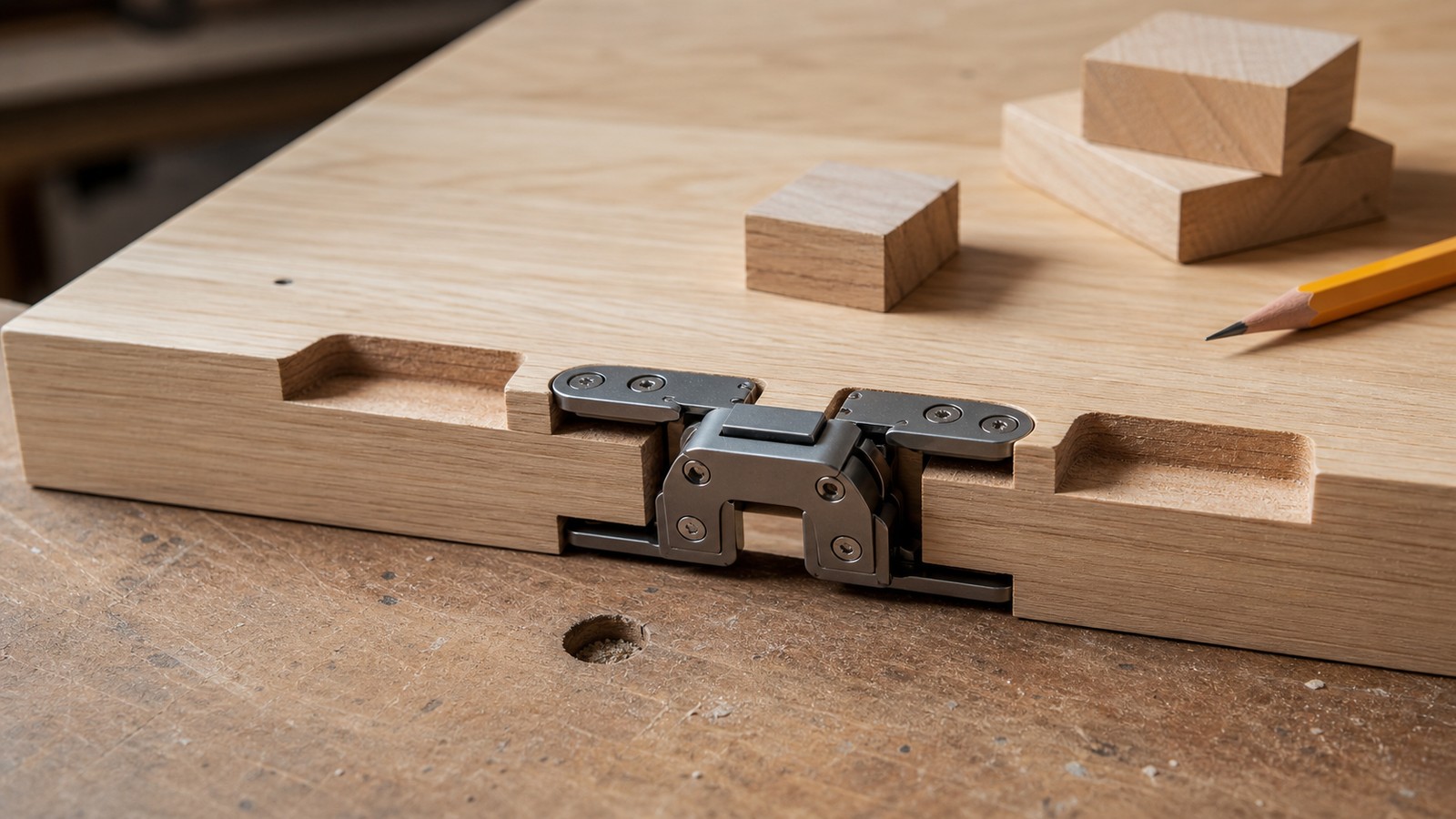
The furniture pieces may create the look, but the moving panel needs a frame that can carry hardware. That frame might be plywood, hardwood, metal, or a custom-built door core depending on the size and weight. Fasten hinges or pivots into structure, not just thin furniture panels.
This hidden frame also helps keep the face flat. Modular fronts can look clean when stationary, but a door needs stiffness across the whole moving leaf. Without it, gaps can widen and seams can telegraph the trick.
The frame does not need to be visible. It simply needs to make the decorative face behave like a door.
Use Repetition to Hide the Operating Joint
Concealed furniture doors work best when the operating seam lands where a seam would naturally exist. Align it with cabinet divisions, wardrobe door gaps, shelf uprights, drawer lines, or vertical filler strips. The joint should look like part of the furniture system.
Avoid Overloading Particleboard Edges
Many flat-pack furniture pieces use engineered boards that do not love repeated load at unsupported edges. Screws can loosen if they are asked to carry too much moving weight. Reinforce behind the visible parts and use hardware suited to the real material.
When in doubt, treat visible panels as skins rather than structural members. A strong hidden substrate can carry the movement while the furniture front creates the disguise.
Plan Hardware Access Before the Wall Is Finished
Hidden hardware still needs adjustment. If a hinge screw, pivot plate, or latch becomes unreachable behind a finished cabinet face, future tuning may require damaging the design. Removable shelves, magnetic cover strips, or accessible service pockets can protect the clean look while keeping the door maintainable.
Think through how the door would be repaired after a year of use. That exercise often changes where fixed panels, filler strips, and trim should land.
Service access is not a failure of concealment. It is what keeps concealment from becoming disposable.
Let Handles Disappear Into the Storage Pattern
Handle choices should match the furniture language. Push latches, edge pulls, integrated grooves, or repeated cabinet pulls can all work. The safest choice depends on how often the door is used and whether someone might need to open it quickly from the hidden side.
Use Filler Panels to Solve Uneven Walls
Most rooms are less square than flat-pack furniture expects. Filler panels let you absorb uneven wall gaps, adjust visual spacing, and avoid forcing a module into a crooked corner. They can also provide better locations for operating reveals.
Painted or matched filler is often the difference between a hack that looks built in and one that looks pressed into place. Do not treat filler as an afterthought.
Keep Safety Clear of the Hack Aesthetic
If the hidden door leads to an occupied room, closet big enough to enter, office, or passage, the inside release must be obvious and dependable. Decorative disguise should never trap someone or make emergency access confusing.
Also consider ventilation, lighting, and clear floor space beyond the door. Furniture fronts can make a hidden entrance charming, but the room behind still has to be safe and usable.
For structural changes, unusual loads, or code-sensitive rooms, bring in a qualified professional rather than relying on furniture instructions meant for stationary use.
Finish the Hack Like Built-In Storage
Caulk fixed joints, align reveals, repeat toe-kick heights, match lighting, and keep shelves styled consistently. The concealed section should not look more perfect, more crowded, or more dramatic than the fixed pieces around it. Built-in calm helps the door disappear.
The Best Hack Looks Less Like a Hack
A good concealed door made with modular furniture does not scream that it was clever. It looks like a storage wall that happens to open. That restraint is what makes the reveal enjoyable without making the closed wall suspicious.
Use flat-pack parts where they help: repeated fronts, predictable sizes, affordable surfaces, and familiar storage language. Then add the custom work where it matters: structure, hardware, safety, service access, and final fit. The result can feel personal, polished, and realistic instead of improvised.
The goal is not to prove that every piece came from a modular system. The goal is to make the room feel finished, useful, and quietly surprising. When the hidden door looks like one calm part of a larger storage idea, the hack becomes design rather than disguise alone.
Plan Around Real-Life Cleaning
Storage walls collect dust, fingerprints, and scuffs. A concealed section will collect them too, especially near the release point and lower edge. Choose finishes that can be cleaned without changing sheen or exposing the operating seam.
Account for Furniture Tolerances
Flat-pack systems are precise enough for their intended use, but hidden doors add another layer of expectation. Slight variations in panel flatness, door-front alignment, and wall squareness can show up when the moving section sits beside fixed modules. Build adjustment into the installation instead of expecting perfect factory geometry to solve the room.
Dry assembly helps. Set the furniture pieces in place, check shadow lines, and operate a mock panel before committing to final trim. The extra patience can keep a promising hack from becoming a wall of uneven gaps.
Use the Hidden Room to Decide the Level of Secrecy
A pantry behind modular cabinets does not need the same secrecy as a safe room or office. Match the disguise to the use. A lightly concealed storage door may prioritize convenience, while a private office might justify a more integrated release and quieter hardware.
This decision affects everything from handle choice to shelf styling. The more often the door is used, the less fussy the secret should be.
Daily-use hidden doors succeed when they feel normal to the household. Occasional-use doors can afford a bit more ceremony.
Budget for the Parts Nobody Sees
The visible furniture may be affordable, but concealed-door success often depends on hidden spending: better hinges, stronger framing, filler panels, finish samples, catches, bumpers, fasteners, and professional help where needed. Underbudgeting those parts can make the hack look cheaper than the furniture itself.
Plan the full assembly before celebrating the price of the visible panels. A hidden door is an operating object, not a static furniture display.
Make the Final Reveal Feel Useful
The best furniture-hack concealed door opens to something worth the effort. A tidy pantry, compact office, laundry zone, play nook, or media storage area gives the reveal a practical payoff. That usefulness keeps the project from feeling like a novelty wall.
Blend New Parts With Existing Architecture
Flat-pack pieces often have crisp, contemporary lines, while the surrounding room may have older baseboards, door casing, or ceiling trim. A concealed door looks better when those worlds are reconciled. Add filler, scribe strips, or transitional trim so the furniture wall appears to belong to the house.
This blending is especially important near floors and ceilings. Gaps at the top or toe-kick can reveal that the system was placed in front of the wall rather than integrated with it.
Decide How Much Storage Should Actually Open
Not every visible cabinet door or shelf needs to function. Some panels can be fixed, some can open normally, and one can serve as the concealed passage. Mixing fixed and moving parts can make the wall easier to build and safer to operate.
The trick is making all zones look equally intentional. If only the secret section has different depth, hardware, or spacing, the eye may find it. Consistent visual rules let different functions share one face.
Think like a cabinetmaker rather than a stage designer. The wall should make sense as storage first.
Use the Hack to Reduce Visual Clutter
A concealed furniture wall can hide a door while also calming a busy room. Closed storage fronts can reduce the view of pantry supplies, office gear, toys, or laundry overflow. That everyday improvement helps the hidden feature justify its footprint.
When the room looks better closed and works better open, the furniture hack has done more than create a secret. It has improved the plan. That is the strongest argument for using modular furniture thoughtfully: the hidden opening becomes part of a practical storage strategy instead of an isolated trick, and the room gains order even before anyone discovers the passage behind it during daily routines at home. The furniture earns its place before the surprise ever happens.