
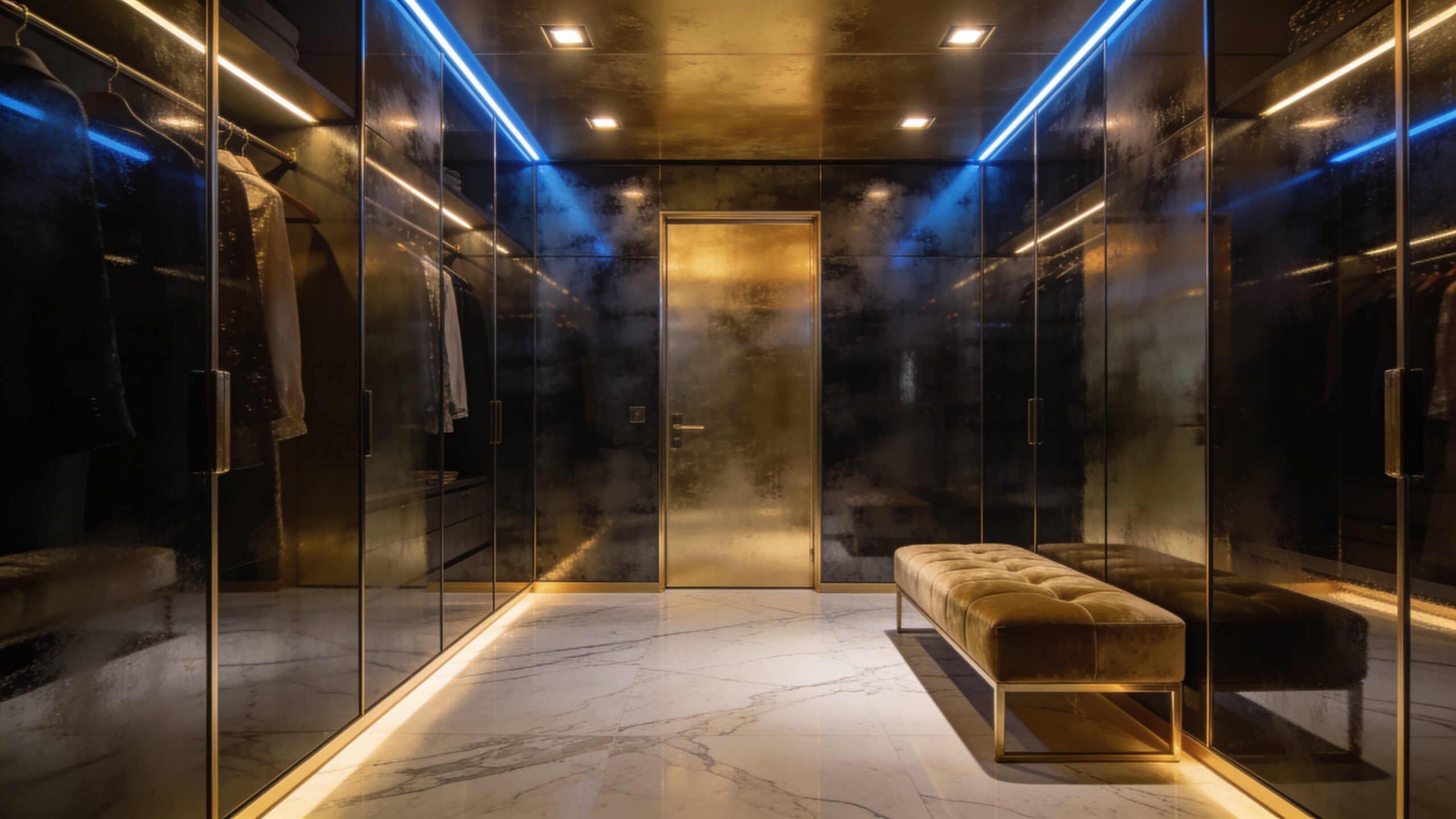
The Art of Making a Door Disappear
A concealed door is one of the most satisfying design tricks in architecture because it changes how a room feels without shouting for attention. Instead of treating a doorway as an interruption, it turns the wall into a continuous visual experience. When mirrors and panels are used well, the door becomes part of the room’s rhythm, reflecting light, stretching the sense of space, and hiding access behind a polished surface. The beauty of concealing a door with mirrors and panels is that it can feel luxurious, practical, mysterious, or minimalist depending on the materials you choose. A mirrored hidden door can make a hallway feel wider, a dressing room feel brighter, or a compact apartment feel more open. A paneled hidden door can blend into wainscoting, a modern slat wall, a library wall, or a dramatic feature wall. The method works because the eye follows patterns, reflections, and repeated lines before it notices a seam.
A: Use a flush door and continue the wall’s trim, slats, or panel pattern across the door face.
A: Yes, but check weight, door stability, adhesive type, hinge strength, and edge safety first.
A: Divided mirror grids, smoked mirror, bronze mirror, and antique mirror are especially forgiving.
A: Not always. Push latches, magnetic catches, and recessed edge pulls can keep the face clean.
A: They can be when built with proper backing, safe glass options, protected edges, and rated hardware.
A: Vertical slats, fluted panels, shaker grids, and geometric trim can all disguise reveal lines.
A: Yes. Mirrors can make small rooms feel larger while panels can reduce visual clutter.
A: Uneven gaps, sagging hardware, mismatched patterns, visible hinges, and poor alignment.
A: Standard swing doors work for lighter builds; pivot hardware is often better for tall or heavy designs.
A: Simple panel concealment can be DIY-friendly, but large mirror doors are usually best handled professionally.
Why Mirrors and Panels Work So Well
Mirrors are powerful because they confuse depth perception. A mirrored wall reflects the room back to itself, which makes the surface feel less solid and less like a door. When the mirror is framed, divided into grids, or placed among matching mirrored panels, the entry point becomes even harder to spot. The door no longer reads as a single object. It becomes one piece of a larger composition. Panels work in a different but equally effective way. They rely on repetition. A wall with vertical wood slats, shaker panels, geometric trim, fluted MDF, or upholstered panels already contains lines, gaps, and shadows. When the door seam is hidden inside that pattern, it stops looking suspicious. The reveal line becomes part of the design instead of evidence of an opening.
Start With the Door Type
Before choosing mirrors or panels, decide how the door will move. A hinged door is the most familiar option and can work beautifully when the swing path is clear. A pivot door is often better for heavier mirrored or paneled designs because it handles weight more gracefully and creates a clean architectural opening. Sliding and pocket doors can also be disguised, especially when panels continue across the wall and door face.
The movement matters because mirrors add weight, and decorative panels add thickness. A standard light-duty hinge may not be enough for a full-height mirrored door. A concealed pivot, heavy-duty hidden hinge, or commercial-grade soft-close track may be needed depending on the size and finish. The illusion only works if the door opens smoothly, closes flush, and stays aligned over time.
Plan the Wall as One Complete Composition
The biggest mistake is designing the door first and the wall second. A concealed door should be planned as part of the full wall elevation. That means measuring the entire wall, deciding where the panel breaks will land, and making sure the door width feels intentional within the pattern. If the wall has five mirrored sections, for example, the hidden door might become one of those sections instead of standing alone.
With panels, the same rule applies. If you are using vertical slats, the spacing should continue evenly across the door. If you are using rectangular molding, the rectangles should align across both fixed wall sections and the moving door leaf. When the pattern breaks at the door edge, the hidden effect weakens. When the pattern flows across the seam, the eye accepts the wall as a single surface.
Choosing the Right Mirror Style
A full mirror slab creates a sleek and modern look, but it can also reveal door movement if the edges are too obvious. Antique mirror, smoked mirror, bronze mirror, and divided mirror panels can be more forgiving because they introduce tone, texture, and visual softness. These finishes feel less like a bathroom mirror and more like a designer wall feature.
Grid mirrors are especially effective because their seams become camouflage. A concealed door can sit inside a larger mirror grid where the real door reveal blends with decorative divisions. For traditional interiors, beveled mirror panels can feel elegant and classic. For modern interiors, frameless smoked panels or slim black metal dividers can create a gallery-like wall that quietly hides a closet, pantry, office, or private suite.
Choosing the Right Panel Style
Panels offer endless design directions. Shaker panels create a clean traditional look and work well in bedrooms, dining rooms, and hallways. Flat painted panels feel minimalist and can hide a door inside a smooth modern wall. Fluted panels and vertical slats are popular because their repeated grooves naturally conceal narrow shadow lines.
Wood veneer panels bring warmth and sophistication, especially when the grain runs continuously across the wall and door. Upholstered panels can soften acoustics in bedrooms, theaters, and lounges while hiding an entrance behind a plush surface. Even faux stone, ribbed plaster, and decorative laminate can work if the material is installed carefully and does not interfere with door movement.
The Secret Is in the Reveal Line
Every concealed door still needs a gap. The goal is not to eliminate the reveal but to control it. A narrow, consistent reveal looks intentional. A crooked or uneven reveal gives the door away immediately. This is why framing, hinge placement, and door adjustment matter as much as the finish.
For mirrored doors, the reveal can be hidden inside mirror divisions or along a frame line. For paneled doors, it can disappear inside a groove, trim joint, or slat gap. Dark shadow lines are often helpful because they make all the joints look similar. If only one line looks different, the secret is exposed.
Hardware That Keeps the Illusion Clean
Visible knobs and hinges ruin the disguised effect unless they are part of the design. Push-latch hardware is one of the cleanest solutions because it allows the door to open with pressure instead of a handle. Magnetic latches, touch latches, recessed finger pulls, hidden edge pulls, and concealed hinges are also common choices.
For heavier mirror doors, hardware must be chosen carefully. Mirror-backed MDF, plywood, or glass panels can add serious weight. Heavy-duty concealed hinges or pivot hardware rated for the exact door weight should be used. Soft-close hardware can make the door feel premium while protecting the mirror or panels from slamming.
Framing and Backing Materials
A concealed mirrored door usually needs a stable base. Mirrors should not be attached directly to a flimsy hollow-core door without considering weight, flex, and adhesive compatibility. A solid-core door or properly built slab provides a better foundation. The surface must be flat, clean, and strong enough to hold the mirror without warping. Panel doors also need careful backing. Thin decorative strips can be applied to a door face, but thicker panels may create clearance problems. If the paneling continues across the wall and door, the door must be planned so it does not scrape the jamb, floor, or adjacent trim when opened. Sometimes the best solution is to build the wall and door as one custom assembly rather than adding decoration to an existing door.
Mirror Safety Matters
Mirrors are beautiful, but safety should come first. Tempered mirror, safety-backed mirror, or professionally installed mirror panels are smart choices, especially for doors that will move frequently. The adhesive must be suitable for mirrors because some construction adhesives can damage the silver backing over time.
Edges should be polished, protected, or framed to reduce chipping. If the door is in a family home, high-traffic hallway, closet, gym, or children’s space, the mirror should be installed with extra care. A concealed door should feel magical, not fragile.
Best Rooms for Mirror-Concealed Doors
Mirror-concealed doors work especially well in dressing rooms, walk-in closets, bedrooms, bathrooms, hallways, home gyms, and boutique-style retail spaces. In a dressing area, the mirror is useful as well as decorative. In a narrow hallway, it can make the passage feel wider. In a bedroom, it can hide a closet or ensuite entrance while making the room feel calmer and more polished.
Mirrors are also excellent for small rooms because they multiply light. A concealed mirrored door can brighten a dark corner, reflect a window, or visually double a feature wall. The trick is to consider what the mirror reflects. A mirror facing clutter will amplify clutter. A mirror facing art, windows, lighting, or clean architecture will amplify beauty.
Best Rooms for Panel-Concealed Doors
Paneled concealed doors are ideal for living rooms, dining rooms, libraries, media rooms, offices, pantries, basements, and luxury corridors. They are especially useful when you want a refined wall instead of a visible utility door. A pantry can vanish inside kitchen paneling. A home office can hide behind a wood slat wall. A storage room can disappear inside painted wainscoting.
Panels also offer more privacy than mirrors in some settings. A mirrored door attracts attention as a design feature, while a paneled door can fade into the architecture. If the goal is subtlety, panels often win. If the goal is drama and brightness, mirrors may be the better choice.
Combining Mirrors and Panels
The most sophisticated concealed doors often use mirrors and panels together. A mirrored panel can sit inside wood trim. A wall can combine fluted wood sections with smoked mirror inserts. A hidden door can be framed like a decorative wall panel with mirror in the center, making the opening feel intentional and elegant. This hybrid method works because the mirror provides depth and light while the panels provide structure and camouflage. It also gives you more flexibility for hiding hardware and reveal lines. A frame, trim strip, or panel groove can conceal the functional gap while the mirror adds the wow factor.
Installation Tips for a Cleaner Result
Precision is everything. The door must be level, plumb, and stable before the decorative finish is installed. If the door sags after the mirrors or panels are added, the seams will shift and the illusion will fail. Always test the swing or slide movement before final finishing.
Dry-fit panels before attaching them permanently. Check clearances at the top, bottom, latch side, and hinge side. With mirrors, confirm that the door can open fully without the mirror edge hitting adjacent walls or trim. With paneled designs, make sure the added thickness does not block the door from closing flush.
Lighting the Hidden Door
Lighting can either reveal the secret or enhance the illusion. Strong side lighting may cast shadows into the reveal line, making the door easier to spot. Soft, even lighting is usually more forgiving. In mirrored designs, lighting should be planned to avoid harsh glare or awkward reflections.
For a dramatic effect, LED strips can be placed inside the hidden room or along the reveal so the door glows when opened. This turns the entry into a cinematic moment. The outside can remain quiet and seamless, while the inside reveals warmth, color, or atmosphere.
Common Mistakes to Avoid
One common mistake is using materials that are too heavy for the hardware. Another is ignoring the swing clearance after panels are added. Poorly aligned trim, mismatched mirror sizes, uneven gaps, and visible hinges can also weaken the design. Even a beautiful finish will not hide a door if the proportions are off. Another mistake is forgetting function. A hidden door should still be easy to open, safe to use, and practical for everyday life. If guests cannot figure out how to access a bathroom, or if a pantry door takes too much effort to open, the design has gone too far. The best concealed doors balance mystery with convenience.
DIY or Hire a Professional?
A simple paneled door may be a realistic DIY project for someone comfortable with measuring, cutting, sanding, and installing trim. A lightweight flush panel door with a push latch is one of the easiest starting points. Mirror doors are more demanding because glass adds risk, weight, and precision requirements.
For full-height mirror installations, heavy pivot doors, large custom panels, or doors that affect required exits, a professional is usually worth it. Carpenters, glass installers, and finish specialists can help the door look intentional rather than improvised. Concealment is a detail-driven craft, and small imperfections are easy to notice.
The Final Reveal
Concealing a door with mirrors and panels is about more than hiding an opening. It is about creating a room that feels smoother, brighter, cleaner, and more intentional. Mirrors bring reflection, depth, and elegance. Panels bring rhythm, texture, and architectural control. Together, they can transform an ordinary doorway into a quiet design surprise. The best concealed door does not beg to be discovered. It simply belongs to the wall. Then, when it opens, the room gains a moment of wonder: a private closet, a hidden office, a tucked-away pantry, or a secret passage revealed through craftsmanship, proportion, and imagination.


