
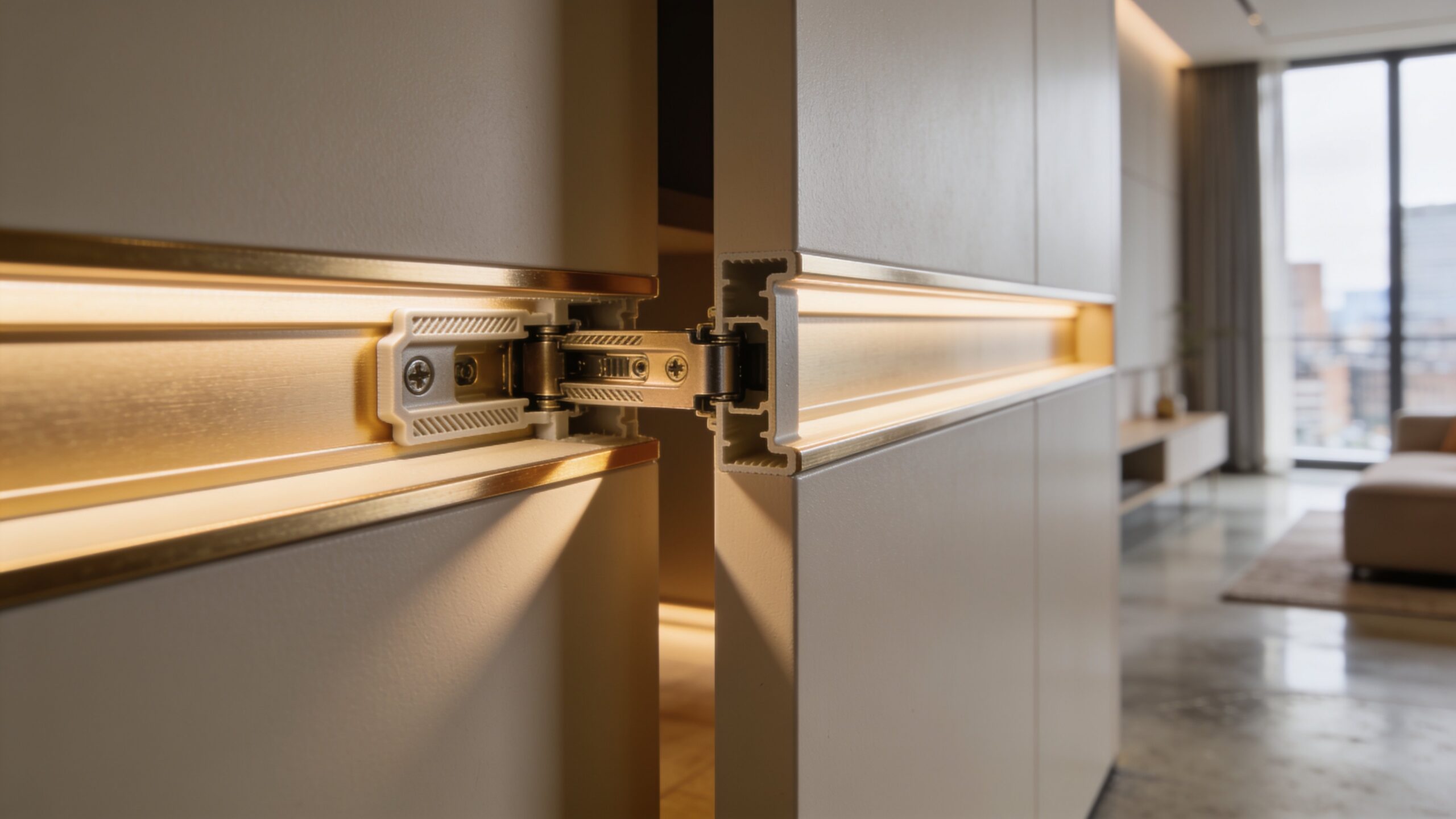
Introduction: Where Hidden Doors Meet Modern Making
Secret doors have always carried a special kind of magic. They turn ordinary walls into possibilities, bookshelves into passageways, and quiet rooms into architectural surprises. For centuries, hidden doors depended on skilled carpentry, custom metalwork, and clever mechanical tricks. Today, 3D printing is changing that world by making custom secret door parts, hinge covers, latch pieces, trim guides, prototypes, brackets, spacers, and decorative disguises easier to design and produce. Using 3D printing for secret door parts and hinges does not mean replacing every piece of structural hardware with plastic. The best approach is smarter than that. It means using 3D printing where it shines: customization, prototyping, precision fitting, concealment, decorative blending, and low-load mechanical support. When used correctly, a 3D printer can help builders create cleaner reveals, better disguised access points, smoother installation templates, and one-of-a-kind components that would be expensive or frustrating to fabricate by hand.
A: For light prototypes or small panels, sometimes; for heavy doors, use rated metal hinges and print covers, jigs, or support accessories.
A: PLA is great for prototypes, while PETG, ASA, nylon, or reinforced filaments are better for functional parts.
A: They can help align, conceal, and accessorize it, but the main load should usually be carried by metal hardware.
A: Start with a reveal spacer, hinge cover, magnetic catch mount, or drill template.
A: Sand them, use filler primer, paint them to match, or cover them with veneer or texture.
A: They can be for light-duty uses, but repeated testing and proper material choice are essential.
A: Yes, custom magnet holders and trigger housings are excellent 3D printing projects.
A: Only with suitable materials like ASA or other weather-resistant options, plus proper hardware and sealing.
A: Yes, printed jigs and templates can improve hole placement, hinge alignment, and reveal consistency.
A: Downloaded files can help, but custom secret doors usually benefit from parts designed for the exact wall, hinge, and latch layout.
Why 3D Printing Makes Sense for Secret Doors
A secret door is not just a door. It is a puzzle of weight, motion, alignment, finish, access, and illusion. The door must open reliably, but it also has to disappear when closed. That often requires custom parts that do not exist on a hardware store shelf. Maybe the bookshelf door needs a special magnetic catch mount. Maybe a pivot hinge needs a cover that blends into wall trim. Maybe a false panel needs a printed spacer that keeps the reveal perfectly consistent. This is where 3D printing becomes powerful. Instead of forcing a project to fit standard hardware, makers can design parts around the exact project. A small bracket can match the thickness of a wall panel. A latch housing can hide inside a decorative molding profile. A hinge jig can help drill repeated holes with accuracy. Even if the final load-bearing hardware is steel, the supporting printed pieces can make the entire installation cleaner and more refined.
Understanding What 3D Printed Parts Should and Should Not Do
The most important rule is simple: 3D printed parts should be used thoughtfully. They are excellent for covers, trim adapters, cable guides, sensor mounts, non-critical latch accessories, mockups, handle disguises, templates, bump stops, magnetic catch holders, and low-stress alignment pieces. They are not always appropriate as the main load-bearing hinge for a heavy secret door, especially if the door is large, solid, frequently used, or supporting shelves and books.
That does not make 3D printing weak or impractical. It simply means the material must match the job. A printed PLA decorative cap is very different from a carbon-fiber-reinforced nylon bracket. A display panel latch is very different from a hinge carrying a 150-pound bookcase door. The smartest secret door builds combine traditional hardware with custom printed parts, using each material where it performs best.
Prototyping Secret Door Hinges Before Final Installation
One of the greatest advantages of 3D printing is rapid prototyping. Secret doors often fail because the swing path, pivot point, or clearance was not fully tested before installation. A door that looks perfect on paper can scrape the floor, hit trim, bind against the wall, or reveal a visible gap when opened. By printing small-scale hinge models, pivot mockups, or full-size test pieces, builders can experiment before committing to expensive hardware or finished materials.
Printed prototypes can help answer practical questions early. How much clearance does the door need at the hinge side? Will the trim collide during the swing? Does the concealed latch line up with the strike plate? Is the finger pull comfortable? Does the magnetic release sit at the right depth? Each test part reduces guesswork and helps the final door feel intentional rather than improvised.
Custom Hinge Covers and Concealment Pieces
In many secret door projects, the hinge itself is not the problem. The problem is hiding the evidence that a hinge exists. Even high-quality concealed hinges may leave screw holes, shadow gaps, adjustment pockets, or exposed hardware edges. 3D printing allows builders to create custom hinge covers that match the surrounding design language.
A printed hinge cover might look like part of a baseboard, a carved trim detail, a slat wall spacer, a faux stone edge, or a clean architectural cap. When painted, sanded, wrapped, or finished to match the surrounding wall, it can transform mechanical hardware into part of the disguise. This is especially useful in themed rooms, hidden pantries, bookcase entries, entertainment walls, and secret office doors where the illusion depends on surface continuity.
Printing Latch Housings, Magnetic Catches, and Release Details
Secret doors often rely on hidden ways to open them. Push latches, magnetic catches, reed switches, RFID triggers, spring releases, and mechanical touch points can all be integrated into a hidden door design. However, these components rarely fit perfectly into custom trim or unusual wall assemblies. A 3D printed housing can hold a magnet at the correct angle, cradle a sensor, align a push latch, or create a clean recess for a hidden release.
These small printed parts can make the difference between a door that feels clever and one that feels clumsy. A magnetic catch mounted at the wrong depth may not hold properly. A push latch that is slightly misaligned may fail to release. A printed spacer or bracket can position the mechanism precisely, giving the secret door a smooth and satisfying feel.
Designing for Strength, Motion, and Real-World Use
When printing functional secret door parts, design matters as much as material. A weak design printed in a strong material can still fail. Rounded corners, thickened stress points, proper infill, correct layer orientation, and reinforced screw zones all help printed parts perform better. Parts that experience pulling, twisting, or repeated impact should be designed with generous wall thickness and mechanical redundancy.
Layer direction is especially important. 3D printed parts are often weaker between layers than along them. A bracket that looks strong in one orientation may split under load if the stress pulls the layers apart. Builders should think about how force travels through the part and orient the print so the layers support that force. For critical components, printed parts should be tested, inspected, and treated as part of a larger hardware system rather than the only line of support.
Best Materials for 3D Printed Secret Door Components
PLA is popular because it is easy to print, affordable, and clean-looking. It works well for prototypes, covers, templates, decorative pieces, and low-stress components. However, PLA can soften in heat and may become brittle over time, so it is not ideal for demanding mechanical parts.
PETG is a strong everyday choice for secret door accessories because it offers better toughness and heat resistance than PLA while remaining relatively easy to print. ABS and ASA can also work well, especially where impact resistance or temperature stability matters, though they require better ventilation and print control. Nylon, polycarbonate, and fiber-reinforced filaments can be excellent for stronger functional parts, but they demand more advanced printing setups. For most hidden door projects, a practical workflow is to prototype in PLA, test the shape, then print the final functional version in PETG, ASA, nylon, or another suitable material depending on the load and environment.
Secret Bookcase Doors and Printed Support Details
Bookcase doors are among the most popular hidden door styles, but they are also among the most demanding. A bookcase door can become heavy quickly, especially when loaded with real books, decor, or storage items. The main pivot or hinge system should usually be metal and properly rated. However, 3D printed parts can still play a valuable role.
Printed shelf stops, cable channels, false book panels, magnetic closure mounts, reveal spacers, trim clips, decorative screw covers, and alignment templates can make a bookcase door cleaner and easier to use. A printed false book pull can act as a disguised handle. A hidden magnet holder can make a specific shelf item trigger the door release. A custom bumper can stop the door quietly without leaving a visible mark.
Flush Wall Panels and Invisible Door Details
Flush hidden doors depend on precision. The door face needs to sit perfectly in the wall plane, with reveal gaps that look intentional rather than accidental. Printed spacers and installation jigs are extremely helpful here. They can maintain consistent gaps during installation, position concealed hinges accurately, and help align panels before final fastening.
3D printed trim returns can also help blend the door into wall paneling. In a modern home, this might mean clean shadow-line pieces. In a traditional space, it might mean small molding adapters that continue the pattern across the door. In a themed room, it might mean textured caps that mimic stone, wood grain, or industrial hardware.
Hidden Electronics and Smart Door Integration
Modern secret doors often include sensors, lights, locks, and access controls. 3D printing is ideal for organizing these hidden electronics. A printed bracket can hold a reed switch behind a panel. A small housing can hide a low-voltage connector. A cable guide can keep wires from rubbing against a pivot point. A custom LED channel can illuminate the reveal when the door opens.
These details may seem small, but they improve reliability. Loose wires and poorly mounted sensors can cause intermittent problems that are difficult to diagnose after the door is finished. Printed mounts make the system cleaner and easier to service.
Finishing 3D Printed Parts So They Disappear
A raw 3D printed part often looks like a 3D printed part. Layer lines, plastic shine, and slight texture differences can reveal the secret. Finishing matters. Sanding, filler primer, paint, epoxy coating, veneer wrapping, or textured spray can help printed pieces blend into the surrounding surface. For hidden doors, the finish should match the environment. A hinge cover on a painted wall should be primed and painted with the same sheen. A trim adapter should follow the same profile and color as the surrounding molding. A bookshelf trigger should look like part of the shelf rather than a gadget. The best secret door parts are not noticeable because they feel like they have always belonged there.
Safety and Code Considerations
Secret doors are exciting, but they should never create unsafe spaces. A hidden door must not block required emergency exits, trap people inside, interfere with fire-rated assemblies, or create dangerous pinch points. If the door leads to a bedroom, basement, safe room, or any space that may be occupied, the release should be accessible from the inside. A hidden door should be mysterious, not hazardous.
For load-bearing hardware, follow manufacturer ratings and local building requirements. Use metal hinges, pivots, fasteners, and structural framing where needed. Printed parts can enhance the system, but they should not replace engineered safety unless they have been properly designed, tested, and approved for the application.
The Creative Future of 3D Printed Secret Doors
The future of secret doors is not just about hiding a room. It is about personalization. 3D printing allows homeowners, designers, makers, and builders to create doors that respond to the exact story of a space. A fantasy reading room can open with a printed dragon-scale latch. A modern office can use a flush magnetic release hidden inside a wall slat. A home theater can reveal itself with a printed Art Deco trim piece that doubles as a touch trigger.
The best projects will combine craftsmanship with technology. Wood, steel, magnets, sensors, lighting, and printed parts can all work together. The secret is not simply that the door exists. The secret is how beautifully it is integrated.
Conclusion: Printing the Parts That Make the Secret Work
Using 3D printing for secret door parts and hinges opens a new world of custom problem-solving. It helps builders prototype faster, conceal hardware better, integrate smart mechanisms more cleanly, and create design details that would be difficult to buy off the shelf. While heavy structural loads still call for properly rated metal hardware, printed parts can elevate the entire experience around that hardware. A great secret door is part engineering, part illusion, and part storytelling. 3D printing gives modern makers a new set of tools for all three. With the right materials, careful design, and respect for safety, printed components can turn a hidden door from a clever idea into a polished architectural feature.


