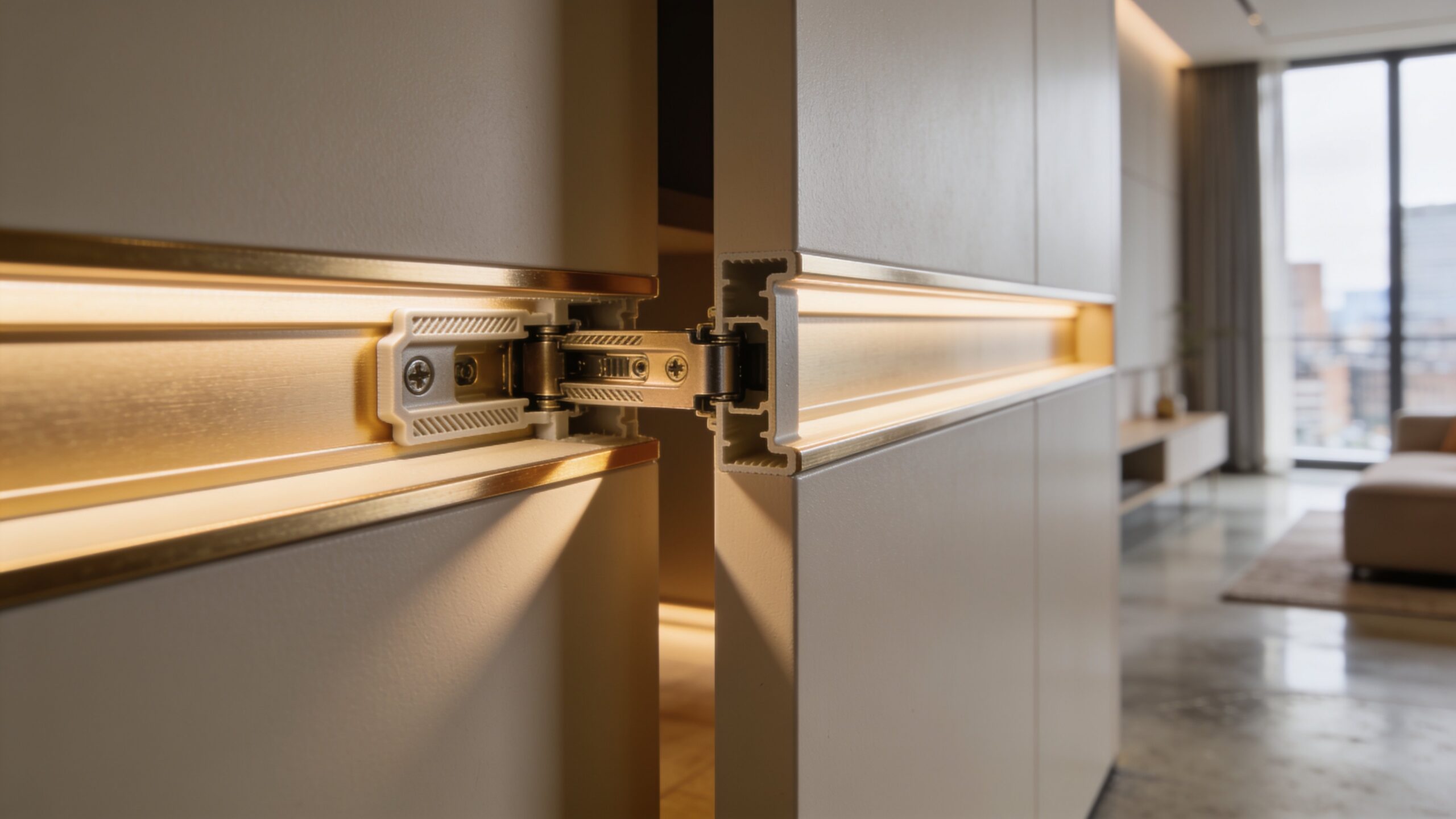
A great home theater doesn’t start when the lights dim—it starts the moment you approach the room. Secret doors turn that approach into an experience, transforming an ordinary hallway, library, or lounge into a cinematic threshold. For homeowners who care as much about atmosphere as audio fidelity, a concealed entrance elevates the theater from a room with a screen to a destination with drama. When done right, a secret door heightens anticipation, preserves acoustic integrity, and keeps technology elegantly out of sight, all while adding serious architectural intrigue.
A: Yes, when built with mass, seals, and proper hardware.
A: Absolutely—flush designs and gaskets help.
A: No, but it enhances the cinematic experience.
A: The reveal can be subtle or obvious—your choice.
A: Usually yes, due to custom hardware and finishes.
A: In most cases, yes with proper framing.
A: A well-designed door improves overall performance.
A: Yes, if weight and swing are properly engineered.
A: High-quality hardware lasts decades.
A: For immersion and impact, absolutely.
Why Secret Doors Are a Perfect Match for Home Theaters
Home theaters thrive on immersion. You want the outside world to disappear, distractions to melt away, and the environment to feel intentional. Secret doors support that goal by hiding light leaks, muffling sound transfer, and maintaining visual continuity in adjacent spaces. They also solve a practical problem: theaters often demand heavy soundproofing, thick walls, and specialized hardware that can look bulky or out of place elsewhere in the home. A concealed entry disguises that complexity, presenting a clean facade while delivering a purpose-built interior beyond it.
The Psychology of the Hidden Entrance
There’s a reason speakeasies, private clubs, and classic cinemas leaned into mystery. A hidden door signals exclusivity and story. For a home theater, that narrative effect primes viewers for the cinematic journey ahead. The act of opening a bookcase, pressing a disguised latch, or pushing through a panel that looks like part of the wall creates a ritual—one that cues your brain that you’re stepping into a different mode. That psychological shift enhances engagement with the film itself, making the entire experience feel deliberate and memorable.
Popular Secret Door Styles for Home Theaters
Designers favor certain concealment strategies because they balance reliability with visual disguise. The most iconic is the bookcase door, which blends seamlessly into libraries, offices, or media lounges. Wall panel doors disappear into millwork or acoustic treatments, ideal for minimalist homes. Art panel doors hide behind large frames or fabric-wrapped panels that double as sound absorbers. For ultra-modern spaces, flush pivot doors vanish into shadow lines and continuous surfaces, relying on precision rather than ornament to remain hidden. Each style can be tuned to match the home’s architecture while supporting the theater’s technical needs.
Bookcase Doors: Classic Theater Drama with Modern Precision
Bookcase doors are timeless for a reason. They’re intuitive to use, visually rich, and structurally capable of hiding thick, insulated door cores. In a home theater context, they often carry real books or decor, which helps mask sound reflections in the adjoining room. Modern hardware allows these doors to swing smoothly despite their weight, and magnetic or concealed latch systems keep the illusion intact. When aligned carefully with surrounding shelving, a bookcase door reads as furniture rather than architecture—a perfect disguise for a private cinema.
Wall Panel and Millwork Doors: Seamless and Sophisticated
For homeowners who prefer understatement, wall panel doors offer near invisibility. These doors are skinned with the same materials as the surrounding wall—wood panels, painted MDF, or acoustic fabric—so the seams vanish at a glance. In theaters, this approach pairs beautifully with acoustic paneling, allowing the door itself to function as part of the sound treatment. The result is a cohesive envelope that prioritizes performance without sacrificing elegance.
Acoustic Considerations That Shape Door Design
Sound is the heart of any home theater, and doors are one of the most critical weak points. Secret doors for theaters must address sound leakage with mass, seals, and isolation. Solid-core or laminated doors with internal damping reduce transmission, while perimeter gaskets and automatic drop seals close gaps when the door shuts. Concealment doesn’t mean compromise; in fact, hidden doors often outperform standard interior doors because they’re designed specifically for isolation and weight.
Light Control and Visual Isolation
Stray light can ruin a cinematic moment, especially in high-contrast scenes. Secret doors help by eliminating visible frames, glass panes, and transoms that might leak light. Many designs incorporate light traps—offset seams or shadow gaps—that block illumination without drawing attention. When the door blends into a dark wall treatment or textured panel, the theater remains a true black box once the movie starts.
Hardware That Makes the Magic Possible
Behind every convincing secret door is precision hardware. Heavy-duty hinges, pivot systems, and linear bearings support the door’s weight while keeping movement smooth and silent. Touch-latch mechanisms, RFID triggers, or disguised pulls allow entry without visible handles. In high-end installations, doors integrate with home automation systems, unlocking or unlatching when a scene starts or when lighting cues activate. The hardware does the heavy lifting quietly, preserving the illusion.
Automation and Smart Home Integration
A secret door can be more than a physical element—it can be part of the show. Integration with smart home systems allows the door to respond to lighting scenes, voice commands, or pre-movie routines. Imagine pressing “Movie Night” and watching sconces dim, the projector warm up, and the concealed door unlatch with a subtle click. Automation adds convenience, but it also reinforces the cinematic narrative by coordinating movement, light, and sound.
Safety, Codes, and Practical Realities
While secrecy is fun, safety is non-negotiable. Home theater doors must comply with local building and fire codes, especially if the theater is in a basement or has limited egress. Many designs include quick-release mechanisms on the theater side to ensure easy exit, even in low light. Clear pathways, emergency lighting integration, and fail-safe hardware ensure that the door remains intuitive and safe without advertising its presence.
Choosing Materials That Serve Both Design and Performance
Material selection influences aesthetics, acoustics, and durability. Dense woods, engineered cores, and composite laminates add mass for sound isolation. Fabric-wrapped panels can double as absorptive surfaces, while painted finishes allow the door to disappear entirely. In luxury builds, designers may layer materials—wood over MDF over acoustic membranes—to fine-tune performance. The goal is harmony: the door should look like it belongs while quietly doing a demanding technical job.
Customization and Thematic Storytelling
Secret doors offer a rare chance to lean into theme without overwhelming a space. A classic cinema room might hide its entrance behind vintage posters or velvet-draped panels, while a sci-fi theater could use sleek, segmented walls with hidden seams. Custom detailing—subtle inlays, lighting reveals, or textured finishes—can hint at what lies beyond without breaking the disguise. When the door reflects the theater’s theme, it becomes part of the storytelling rather than a mere utility.
Installation Challenges and Why Precision Matters
Installing a secret door for a home theater is not a casual weekend project. Tolerances are tight, especially when acoustic seals and flush alignments are involved. Walls must be plumb, frames reinforced, and hardware calibrated to prevent sagging over time. Professional installation ensures that the door remains quiet, aligned, and convincing long after the novelty wears off. Precision at this stage protects both the illusion and the performance.
Long-Term Durability and Maintenance
A well-built secret door should feel solid for decades. Quality hinges and latches reduce wear, while adjustable hardware allows for seasonal movement in wood or subtle shifts in framing. Maintenance is typically minimal, but periodic checks keep seals effective and motion smooth. Unlike novelty features that age poorly, a thoughtfully designed concealed door tends to grow more satisfying over time as it continues to surprise guests and delight owners.
The Value Add: Beyond the Theater Itself
Secret doors don’t just enhance the viewing experience—they add architectural value. They signal craftsmanship, intentionality, and a level of customization that sets a home apart. For resale, a hidden theater entrance becomes a talking point that elevates the property’s story. Even for homeowners who never plan to sell, the daily enjoyment of a space that feels special is a return on investment that goes beyond numbers.
Designing the Perfect Reveal
The moment of discovery matters. Some homeowners prefer the door to be truly invisible, revealed only when someone knows exactly where to push. Others enjoy a subtle hint—a line of books that swings, a panel that responds to touch. Deciding how obvious or secretive the entrance should be is a personal choice, but aligning that reveal with your overall design philosophy ensures it feels intentional rather than gimmicky.
Secret Doors as Part of the Full Theater Experience
A home theater is a system: acoustics, visuals, seating, and ambiance working together. The door is the first and last interaction with that system. When it’s concealed, substantial, and thoughtfully designed, it reinforces the idea that the theater is a destination, not just another room. The transition matters, and secret doors make that transition unforgettable.
The Future of Concealed Theater Design
As materials, hardware, and automation continue to evolve, secret doors are becoming more refined and accessible. What was once a novelty reserved for luxury estates is now a sophisticated design option for anyone serious about their home theater. The trend is moving toward subtler, more integrated solutions—doors that disappear completely while outperforming traditional entries in sound and light control.
Final Takeaway: Where Design Meets Drama
Secret doors for home theaters sit at the intersection of architecture, engineering, and storytelling. They enhance immersion, protect performance, and add a sense of occasion that ordinary doors simply can’t match. Whether hidden behind books, panels, or seamless walls, a concealed entrance transforms a home theater into an experience that begins before the opening credits and lingers long after the screen goes dark.