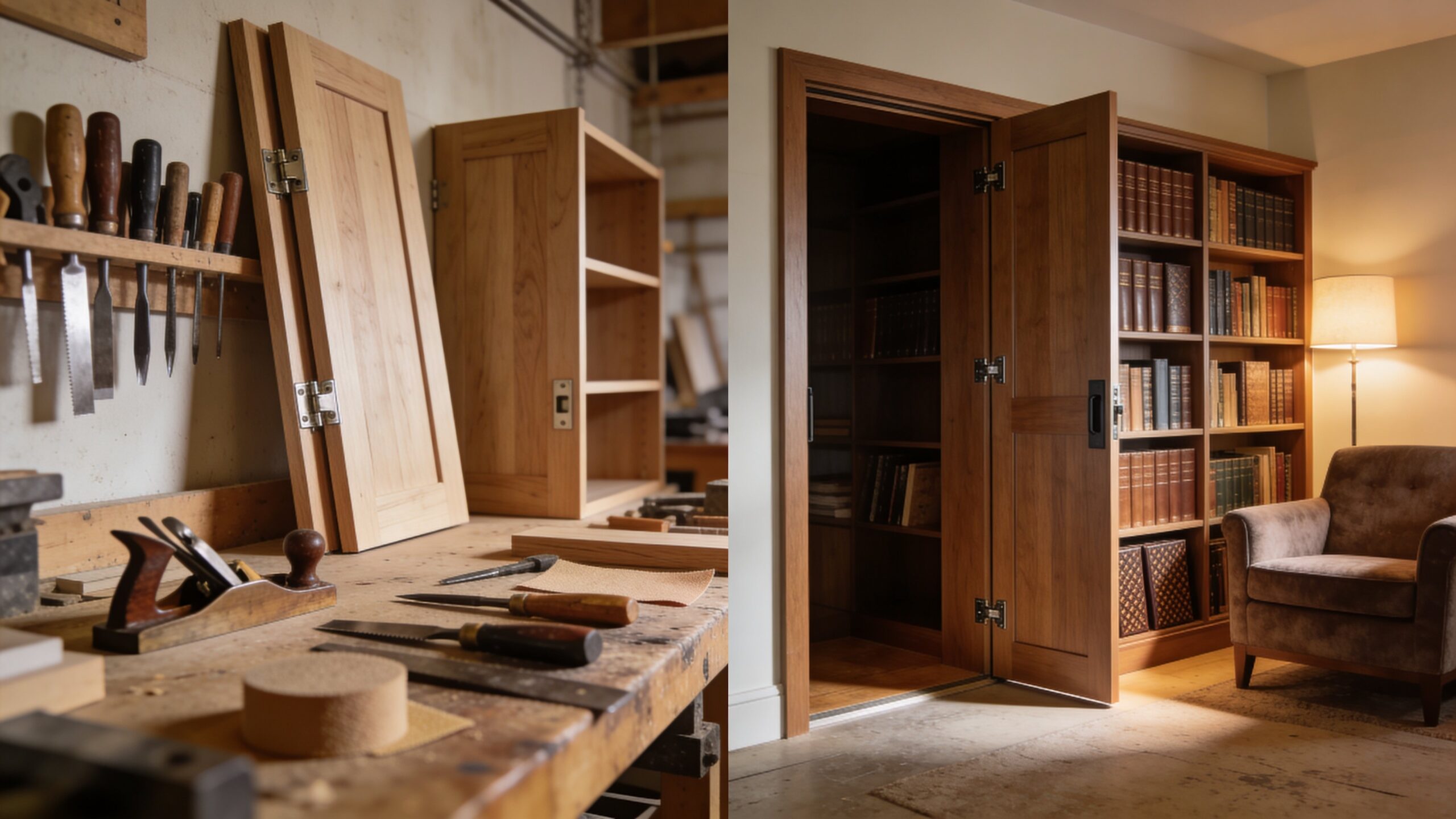
Secret doors have always fascinated homeowners, architects, and storytellers alike. From medieval castles with hidden passages to modern mansions with discreet panic rooms, the concept of a secret door represents both mystery and ingenuity. Today, the desire for secret doors is not just about intrigue; it’s also about blending functionality, design, and security into spaces that delight and surprise. Whether you want to add a hidden pantry, a disguised office, or a luxurious secret wine cellar, the possibilities are endless. This guide explores the best secret door ideas for any home, showcasing creative approaches that combine style, innovation, and practicality.
A: Costs range from DIY projects under $500 to luxury builds in the thousands.
A: Yes, but framing and finishes need careful planning.
A: Bookshelf pivot doors or flush-mount panels with magnetic latches.
A: Yes—when combined with strong locks and reinforced frames.
A: Seals, insulation, and heavy cores improve sound isolation.
A: Yes, but weatherproofing and UV resistance are crucial.
A: Matching wall treatments like wallpaper, paneling, or stone veneers.
A: Yes, if they don’t block required emergency egress routes.
A: Absolutely—smart locks, remotes, and biometrics are popular options.
A: From a day for simple builds to weeks for custom luxury installs.
The Enduring Allure of Secret Doors
There’s something timeless about the idea of a door that doesn’t appear to be a door at all. Secret entries appeal to our sense of curiosity and adventure. They remind us of fantasy novels, detective mysteries, and old-world mansions filled with hidden stories. But in modern design, they’ve evolved beyond gimmickry.
Secret doors today offer homeowners real benefits:
Concealing cluttered areas like utility rooms.
Providing discreet entries to private spaces.
Enhancing home security with panic rooms or vaults.
Creating dramatic, conversation-worthy focal points.
What makes them particularly compelling is the way they integrate seamlessly into everyday life. A guest walking through your living room sees a bookcase or a paneled wall—only you know that a simple push reveals an entire world behind it.
Bookshelf Secret Doors: The Timeless Classic
Perhaps the most iconic of all secret doors is the bookshelf entrance. Immortalized in films and novels, the bookshelf door is equal parts functional and whimsical. It allows a room to transform instantly, offering both storage and a hidden passage. Modern bookshelf doors are no longer the clunky, obvious constructions of decades past. Today, advanced hinges and pivot systems allow entire shelves laden with books to swing open effortlessly. Designers can integrate them into studies, libraries, and even family rooms. The key lies in seamless construction: carefully aligned spines, concealed hinges, and trim details that blend perfectly with the surrounding wall. A bookshelf door can lead to a home office, a cozy reading nook, or even a wine cellar. With clever design, it becomes more than a passage; it becomes a statement of character and creativity.
Mirror Doors: Reflection Meets Concealment
Another highly effective method of disguising an entryway is through a mirror-faced secret door. Mirrors not only hide what’s behind but also amplify light and create a sense of space in the room. In bedrooms, a mirrored secret door can conceal a walk-in closet or dressing room. In hallways, it can serve as both a practical reflective surface and a gateway to a hidden pantry, office, or powder room. The reflective finish confuses the eye, making it nearly impossible to distinguish a door seam from the rest of the mirror. With full-length mirrored panels and flush mounting, the effect is elegant and modern. Some homeowners even combine mirrors with sliding or pivot systems, so the door glides open with a gentle push, maintaining the illusion of uninterrupted surface.
Panel and Flush-Mount Doors: Minimalist Magic
For those who prefer minimalist design, flush-mount secret doors are among the most effective. These doors align perfectly with the surrounding wall, often finished with the same paint, veneer, or wallpaper. The result is a clean, modern look that hides the entry completely. Flush-mount doors are popular in contemporary interiors where sleek lines dominate. They can be constructed with concealed hinges, magnetic latches, and touch-to-open mechanisms to eliminate the need for handles. Imagine a living room wall that appears as a seamless expanse of plaster or wood—until a gentle push reveals a private home theater beyond. Because these doors are subtle, they work beautifully in modern lofts, minimalist apartments, or high-end homes where architectural detailing emphasizes purity of form.
Artwork as Entry: The Gallery Illusion
Few ideas are more captivating than a painting or artwork that doubles as a door. Imagine a large framed canvas or sculpture panel swinging open to reveal a secret office or wine bar. This approach blends functionality with artistry, making the secret passage part of the décor itself. In practice, this can be executed in two ways. The artwork may be mounted on a concealed panel that swings like a door, or it may cover a flush entryway that opens behind it. Large abstract paintings, decorative wall sculptures, or even framed mirrors can serve as functional disguises. This idea is especially suited to creative homeowners who love the element of surprise. Guests are dazzled by the transformation of a beautiful piece of art into a gateway to another world.
Secret Pantry Doors: Hiding Clutter with Elegance
In many modern homes, kitchens are the heart of activity. But behind every perfect kitchen lies the chaos of storage. Secret doors offer the chance to conceal pantries and utility spaces without disrupting the sleek lines of cabinetry. A secret pantry door might be disguised as another cabinet panel or as part of the wall. When closed, it appears identical to the rest of the kitchen design. When opened, it leads to a spacious walk-in pantry where all the supplies and clutter remain hidden. This solution is both practical and beautiful. It maintains the clean aesthetic of the kitchen while giving homeowners functional access to everything they need. It’s a design that combines everyday convenience with architectural sophistication.
Home Offices Behind Hidden Doors
As remote work has become more prevalent, so too has the desire for home offices that are private, quiet, and out of sight. Secret doors offer the perfect solution. Instead of having an office dominate a living space, a concealed entry allows it to be tucked away behind a wall, bookcase, or cabinet. This is especially appealing for multipurpose rooms where homeowners want flexibility. During the day, a hidden door leads to a professional workspace. At night, it vanishes into the wall, restoring the room’s original purpose. Secret office doors can also double as acoustic barriers, reducing noise from other areas of the house. For those who value privacy and focus, this idea is both elegant and effective.
Secret Wine Cellars and Bars
Nothing impresses guests more than a wine cellar hidden behind a secret door. These entries are often disguised as bookshelves, wood panels, or decorative cabinetry. When revealed, they open onto a climate-controlled room filled with fine vintages and glass displays. For smaller spaces, a secret bar behind a mirrored door or sliding panel can provide similar drama. Imagine pressing a panel in the living room wall, only for it to swing open and reveal a fully stocked bar with ambient lighting. Secret wine rooms combine luxury, hospitality, and the thrill of discovery. They add a sense of exclusivity to any home while keeping valuable collections secure.
Safe Rooms and Security Doors
While many secret doors are designed for style, others serve a serious purpose: security. Panic rooms and safe rooms are often concealed behind disguised entries, ensuring that they remain undetected in emergencies. These doors are engineered with reinforced frames, multi-point locking systems, and ballistic-rated materials. From the outside, they may look like a simple bookshelf or wall panel. On the inside, they offer a fortified refuge. Homeowners value these not only for peace of mind but also for the psychological advantage of concealment. A hidden safe room buys precious time in an emergency, making the secret door more than a design feature—it’s a lifesaving measure.
Hidden Staircases and Attic Access
Sometimes, secret doors lead not to rooms, but to entire levels of the home. Concealed staircases are particularly dramatic, often hidden behind paneling or under hinged floorboards. In historic homes, hidden staircases were used for servants or as escape routes. In modern design, they provide discreet access to attics, basements, or lofts. A staircase hidden behind a pivoting wall or cabinet panel adds undeniable intrigue. It also saves space and keeps secondary areas visually unobtrusive. With careful engineering, even heavy stair doors can swing open with ease, maintaining both safety and elegance.
Bathrooms Behind Secret Doors
Another practical application for secret entries is in bathrooms, especially powder rooms in public areas of the home. Instead of drawing attention to a bathroom door, designers create flush or disguised entries that maintain the continuity of the space. A hallway lined with decorative panels may hide a door that leads to a chic powder room. In bedrooms, a mirrored closet door might swing open to reveal a private en-suite. This approach allows homeowners to maintain design flow while providing necessary functionality. It’s a subtle way to elevate the experience of everyday spaces.
Secret Doors in Children’s Rooms
For families, secret doors bring magic to everyday life. Children’s bedrooms and playrooms are perfect opportunities for hidden entries. Behind a wardrobe or bookcase, a secret passage might lead to a playroom, reading nook, or small hideaway. These doors fuel imagination and creativity, turning ordinary rooms into places of adventure. They can also provide practical benefits, offering discreet storage areas for toys or seasonal items. For safety, children’s secret doors should be designed with soft-close hinges, pinch protection, and sturdy construction. The result is a feature that sparks wonder while remaining safe and reliable.
Outdoor Secret Doors and Garden Gates
The concept of secret doors doesn’t have to be limited to interiors. Outdoor landscapes offer amazing opportunities for disguised garden entries. Imagine a stone wall with a concealed archway leading to a hidden courtyard. Or a green wall covered in vines that swings open to reveal a tucked-away patio. Fences and gates can be designed with panels that appear continuous until a hidden latch is pressed. These outdoor secret doors add romance and discovery to gardens, making them feel like living fairytales. They also provide practical privacy, separating entertaining areas from storage or service zones.
How to Choose the Right Secret Door for Your Home
With so many possibilities, how do you choose the best secret door idea? The answer lies in balancing aesthetic goals with functional needs. First, consider the purpose of the door. Is it purely for fun, or does it serve a practical function like storage or security? Next, look at the style of your home. Modern interiors may favor flush panels or mirrors, while traditional spaces might embrace bookshelves or paneled disguises.
Budget and complexity also matter. A simple flush panel with concealed hinges may be achievable as a DIY project. A climate-controlled wine room with reinforced pivot doors may require professional design and engineering. Ultimately, the right secret door will not only hide an entry but will also enhance the atmosphere of your home, adding both utility and a touch of wonder.
The Future of Secret Doors: Smart Homes and Innovation
As smart home technology evolves, so too does the world of secret doors. Modern systems now integrate smart locks, hidden keypads, biometric readers, and motion-activated lighting. This means secret doors are no longer just passive concealments; they are intelligent, responsive, and customizable. Imagine walking up to a seamless wall panel that unlocks as your phone approaches, or saying a voice command that causes a mirror to swing open. The integration of technology makes secret doors even more magical while ensuring safety and security. Looking ahead, designers predict an increase in demand for sustainable materials, energy-efficient seals, and multifunctional disguises. Secret doors are no longer niche—they’re becoming an exciting part of mainstream architectural design.
Unlocking the Magic of Secret Doors
The best secret door ideas for any home combine style, imagination, and practicality. From classic bookshelves to flush minimalist panels, from hidden staircases to disguised garden gates, these doors transform spaces into experiences. They serve as functional solutions for storage, privacy, and security while captivating our imagination with a sense of mystery. Whether you dream of a hidden wine cellar, a secret playroom, or a discreet safe room, secret doors offer endless ways to personalize and elevate your home. A well-designed secret door doesn’t just conceal—it tells a story. It invites discovery, sparks conversation, and enhances the very character of your home. In the end, adding a secret door is about more than architecture. It’s about creating moments of surprise, delight, and wonder that turn a house into something truly unforgettable.