
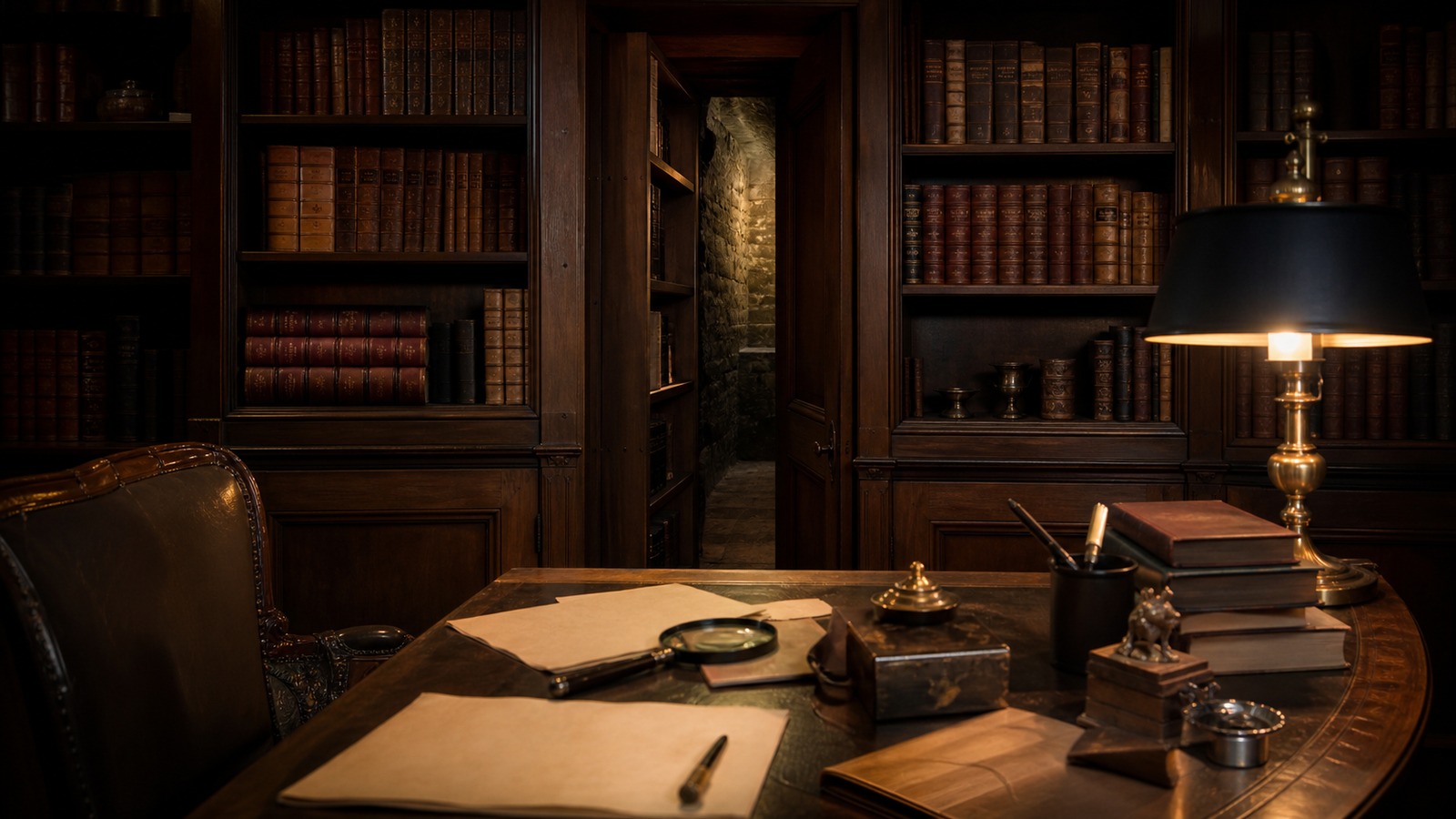
Mystery Passageways Make Buildings Testify
Concealed passageways in mystery novels work because they turn the setting into a witness. A house, inn, abbey, theater, library, or country estate may appear to be a backdrop, but a hidden route can change every alibi, footprint, sound, locked door, and timeline. The passageway is not only a place to move through. It is a piece of evidence waiting to be understood. When used well, it lets the reader realize that the building has been holding back part of the truth.
A: They let architecture change evidence, movement, and alibis.
A: It feels unfair when it appears without planting or physical logic.
A: They plausibly contain renovations, forgotten routes, and layered history.
A: Yes. It may protect someone, preserve privacy, or hide an old family matter.
A: Drafts, measurements, sounds, plans, and behavior can all prepare the reveal.
A: It should reframe earlier scenes and solve more than one odd detail.
A: Yes, through service routes, secure rooms, shafts, and renovated buildings.
A: They combine puzzle logic with the thrill of hidden depth.
A: Yes. Excessive tricks can make the setting feel arbitrary.
A: The building should hide the answer honestly enough that discovery feels earned.
The Passage Alters the Crime
A concealed route can transform an impossible crime into a solvable one. A suspect who seemed unable to enter a room may have used a hidden corridor. A locked study may not have been locked in the way everyone assumed. A sound heard in one place may have traveled through a wall instead of across a hallway. The passageway changes the facts without needing to change the crime itself.
Fair-Play Mysteries Need Planting
Readers usually accept a hidden passage when the novel has planted it fairly. The clue might be an odd draft, a mismatched measurement, a servants’ stair no one mentions, a hollow panel, a repeated family rumor, or a floor plan that does not quite add up. The reader may not understand the clue at first, but it should feel legitimate after the reveal.
This is the difference between surprise and convenience. A passageway revealed with no preparation can feel like the author escaping a plot problem. A passageway suggested through setting details becomes part of the puzzle.
The best mystery writers let architecture behave like testimony. The house does not shout the answer, but it leaves enough traces for an attentive reader to suspect that space is lying.
Old Houses Invite Suspicion
Country houses, monasteries, castles, townhomes, and old hotels are natural homes for concealed passageways because they carry layers of history. Servants’ routes, priest holes, closed wings, renovations, family secrets, smuggling stories, and inherited floor plans all give the writer plausible reasons for hidden circulation.
The age of the building also supports atmosphere. A creaking wall or sealed panel feels more persuasive when the place has been altered by generations.
Locked Rooms Depend on Spatial Assumptions
Locked-room mysteries are built on what characters believe about space. They assume that doors, windows, and corridors define possible movement. A concealed passageway attacks that assumption. It adds another route while preserving the appearance of impossibility.
Passages Can Protect or Incriminate
A hidden route may allow a murderer to move unseen, but it can also protect an innocent person, preserve a family secret, or hide someone in danger. Mystery novels gain depth when the passageway is morally flexible. It is not automatically sinister. Its meaning depends on who uses it and why.
That flexibility keeps the device from becoming stale. A passage may be old, but the motive connected to it can be fresh. It can represent fear, inheritance, shame, survival, greed, care, or revenge.
Atmosphere Comes From Partial Knowledge
The reader does not need to see the whole passage immediately. Often the best suspense comes from partial knowledge: a panel that may move, a cold current near a wall, a muffled footstep, a missing candle, or a character who knows the house too well. The building becomes uncanny because it seems to contain more routes than the narrator understands.
This partial knowledge creates a special kind of tension. The reader begins to suspect the map is incomplete. Every room can feel slightly less secure.
That is why concealed passageways pair so well with nighttime scenes, storms, old portraits, corridors, and libraries. The atmosphere is not just decorative; it reflects uncertainty about the structure itself.
The Floor Plan Becomes a Puzzle
Some mystery novels invite readers to think almost architecturally. Distances, wall thicknesses, stair positions, windows, chimneys, and room arrangements begin to matter. A concealed passageway is most satisfying when it fits that physical logic rather than appearing wherever the plot needs it.
Servants’ Routes Add Social Meaning
In historical mysteries, hidden or semi-hidden circulation often reflects class and labor. Servants, staff, and workers may know routes that wealthy residents ignore. A passageway can therefore reveal not only a crime solution but also the social structure of the house.
This can make the mystery richer. The person who understands the building may not be the person with official power. Access becomes a kind of knowledge, and knowledge becomes leverage.
Red Herrings Can Use Architecture Too
A suspicious panel does not always need to be the answer. Writers can use hidden routes as red herrings, partial clues, or emotional distractions. A passageway might explain one small mystery while concealing a larger one elsewhere.
Red herrings work best when they are not arbitrary. If the passage has history, use, or thematic meaning, it can mislead the reader while still feeling like a legitimate part of the story.
The danger is overloading the building with tricks. Too many secret routes can make the setting feel like a puzzle box without weight. Mystery fiction needs enough concealment to intrigue, not so much that space loses credibility.
Discovery Changes Character Relationships
Finding a concealed passageway can shift trust among characters. Someone knew about it and lied. Someone used it and is exposed. Someone inherited knowledge and kept silent. The physical discovery becomes emotional evidence.
Modern Mysteries Use New Kinds of Concealment
Concealed passageways are not limited to manor houses. Contemporary mysteries can use service corridors, maintenance shafts, hotel staff routes, hidden elevators, basement links, data-center access, secure rooms, and renovated commercial spaces. The principle remains the same: the visible map is incomplete.
Modern settings also raise new questions about cameras, keycards, alarms, and building systems. A hidden route has to account for technology if the story is grounded. That can make the puzzle more complex and more interesting.
The passageway survives because it adapts. It is no longer only a candlelit tunnel behind a bookcase. It can be any route that changes what movement seemed possible.
The Reveal Should Reframe Earlier Scenes
A satisfying passageway reveal sends the reader back through the book mentally. A strange noise, a missing interval, a character’s unexplained arrival, or an alibi that seemed airtight suddenly looks different. The hidden route reorganizes the evidence.
This retrospective pleasure is one of the device’s strengths. The reader does not only learn something new; they understand old scenes differently.
Real Hidden Doors Borrow the Romance
Many people love concealed doors in real homes because mystery fiction made hidden rooms feel charged with story. A bookshelf door or panel passage carries a faint echo of clues, estates, maps, and private knowledge. The practical use may be a pantry or office, but the emotional appeal is older.
The Best Passageway Respects Logic and Mood
Concealed passageways remain useful in mystery novels because they join two pleasures: rational puzzle-solving and atmospheric unease. The reader wants the answer to make sense, but also wants the building to feel deeper than it first appeared.
That balance is the art. If the hidden route is too convenient, the solution feels cheap. If it is too obvious, the suspense drains away. When the passage is planted carefully, fits the floor plan, carries emotional meaning, and changes how the reader understands earlier evidence, it becomes more than a trick. It becomes the moment when the house finally tells the part of the story no witness would admit.
Point of View Controls What the Reader Sees
A concealed passageway is especially effective when filtered through limited perception. A narrator may notice a draft but dismiss it. A detective may see a room only after several people have disturbed it. A frightened character may hear movement but misjudge the source. Point of view lets the author place clues in plain sight while preserving uncertainty.
This control is different from hiding information unfairly. The reader can be given the same sensory evidence as the character and still misunderstand it. The pleasure comes later, when the clue becomes legible. A cold wall, odd echo, or unexplained delay suddenly becomes part of the architecture of the solution.
Concealed passageways therefore reward careful narration. The writer does not have to pause the story for technical diagrams. Small observations, repeated honestly, can make the hidden route feel inevitable once it is found.
The Passageway Can Carry Family Memory
Many fictional hidden passages matter because they belong to the past. A route built for war, religion, servants, smugglers, inheritance, or scandal may outlast the people who created it. Later characters inherit the architecture without fully understanding the circumstances that shaped it.
Discovery Should Change the Stakes
The moment a hidden passage is found should do more than solve geography. It should change what characters fear, suspect, or desire. A safe room may become a prison. A romantic legend may become evidence of coercion. A family boast may turn into proof that someone had opportunity all along.
This is why the best mystery passageways have emotional consequences. They make people revise stories about the house and about one another. A route through the wall can become a route into buried motive, and that is where architecture becomes truly useful to the novelist.
Misuse Can Break Reader Trust
The concealed passageway is a tempting device because it solves many plot difficulties at once. Used carelessly, it can also damage trust. If a hidden corridor explains every impossible movement, every missing object, and every overheard conversation, the reader may feel that the author is relying on architecture instead of detection.
Restraint keeps the device sharp. The passageway should answer specific questions and raise human consequences, not erase the need for motive, character, and evidence. A mystery still needs people making choices. The hidden route only matters because someone chose to use it.
That is why the best passageway reveals often arrive with a second revelation about character. The route explains how, but the person explains why. Without both pieces, the solution can feel mechanical.
The House Should Still Feel Real
Readers enjoy elaborate buildings, but they need enough realism to believe in them. A concealed passage should respect structure, history, and use. When the house still feels livable after the secret is known, the mystery has done its work well.
That realism does not require architectural drawings. It requires proportion. The route should seem like something earlier owners might have built, forgotten, guarded, or misused. If the reader can imagine dust, hinges, distance, and consequence, the passage becomes part of the house rather than a trapdoor dropped into the plot for convenience.
The Final Map Should Feel Inevitable
At the end of a strong mystery, the reader should be able to redraw the building in the mind and feel the hidden route settle into place. The map becomes fuller, not stranger. What once seemed impossible becomes a solved arrangement of rooms, motives, habits, and old decisions preserved in walls, so the final explanation feels like recognition rather than rescue, with the reader newly aware of how carefully the space was listening all along in silence.


