Museum Hidden Entrances Protect the Public Experience
Concealed entrances in museums usually serve quiet work rather than theatrical mystery. They help staff move art, artifacts, equipment, crates, conservation materials, lighting tools, and security resources without disrupting galleries. They can protect collections, preserve the visual calm of exhibitions, separate public and staff circulation, and support emergency planning. A visitor may see a serene room with carefully spaced objects, while just behind a discreet wall or panel the museum is functioning as a workplace. The hidden entrance is where display and labor meet.
A: They support staff movement, collection care, security, installations, and calm galleries.
A: Usually no; they are practical tools for display and preservation.
A: Storage, conservation, offices, handling areas, security routes, or equipment spaces.
A: Visual quiet helps visitors focus on objects instead of operations.
A: Yes, former houses, palaces, and civic buildings often bring inherited circulation.
A: Yes, controlled routes can reduce handling risk and unauthorized access.
A: Some have secure storage, though stories often exaggerate the mystery.
A: Movable walls and changing layouts can require flexible concealed routes.
A: Staff-only thresholds, collection security, and preservation boundaries.
A: It helps the museum reveal objects while protecting the work behind the reveal.
Galleries Need Calm Surfaces
Museum galleries are designed for attention. Walls, lighting, sightlines, benches, cases, and floor paths all encourage visitors to look closely at selected objects. A visible service door in the wrong place can interrupt that focus, so museums often make staff access visually quiet.
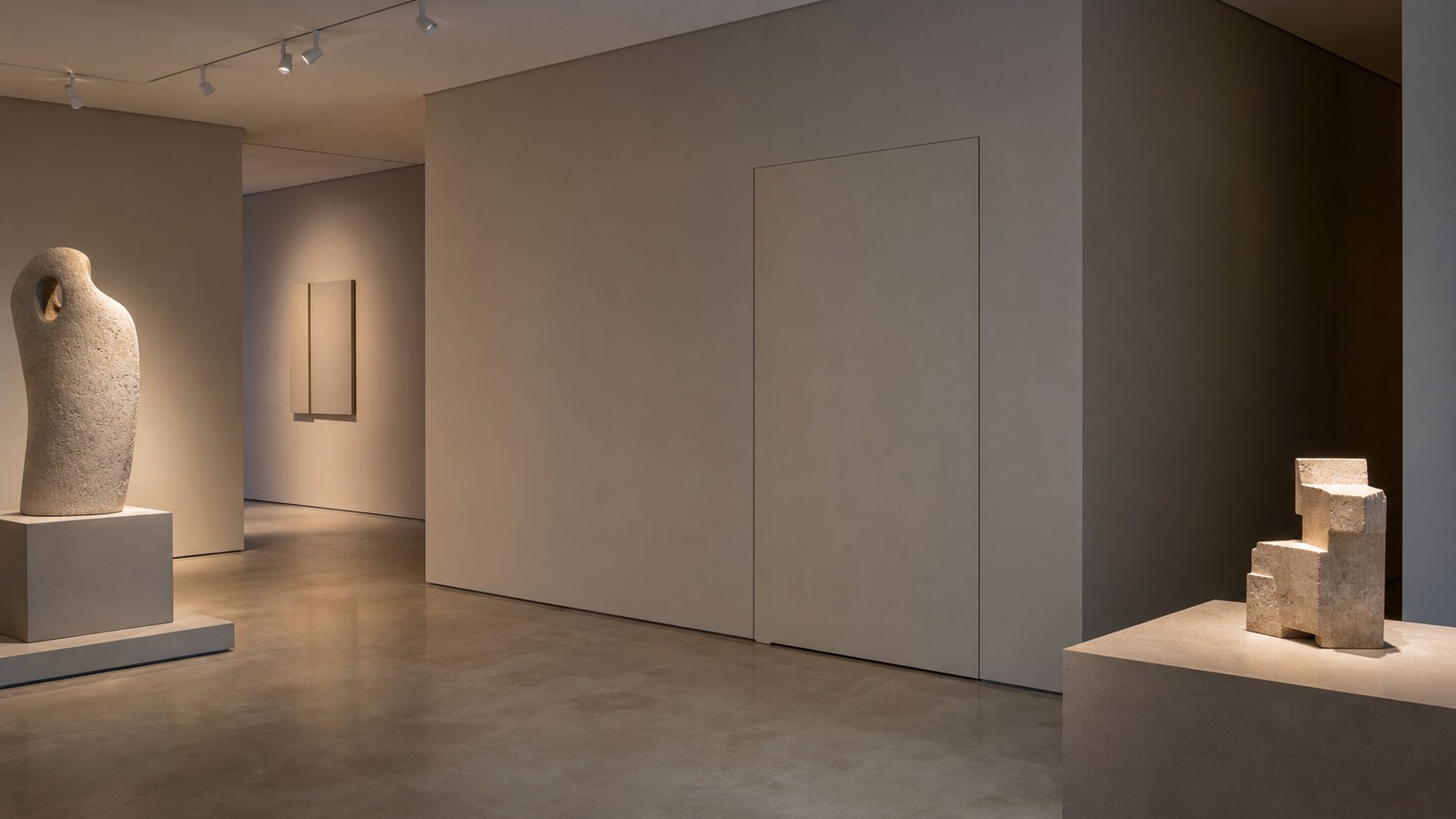
A concealed entrance might blend into a wall, sit behind a panel, hide within millwork, or disappear beside a temporary exhibition surface. The purpose is not to trick visitors for fun. It is to protect the gallery’s visual discipline.
This quietness helps the objects remain central. The door disappears so the collection can speak.
Collections Move Behind the Scenes
Museums are constantly moving objects: preparing loans, rotating displays, returning artifacts to storage, sending works to conservation, and installing new exhibitions. Concealed or discreet entrances let that movement happen without turning public galleries into loading zones.
Object movement also requires careful scale. A hidden entrance may need wider clearances, smooth floors, protective thresholds, and routes to elevators or storage. A door that looks minimal from the gallery side may hide a highly practical path behind it.
Conservation Requires Controlled Access
Conservation work often needs clean rooms, stable climate, specialized equipment, photography stations, quarantine areas, and secure storage. Entrances to these spaces are controlled because the objects are vulnerable and the work can be delicate. A discreet door helps manage that boundary without turning the gallery into a restricted-looking zone.
The hidden threshold can also protect the visitor experience. People come to see finished displays, not every repair, crate, or examination table. The museum must balance transparency about care with the need for safe working conditions.
That balance is not deception. It is stewardship. Museums hide certain routes so collections can be handled responsibly.
The concealed entrance is therefore part of preservation, not merely security.
Security Can Stay Visually Subtle
Visible security can reassure visitors, but too much visible control can make galleries feel tense. Concealed entrances allow guards, technicians, and staff to reach areas quickly while preserving a calm public atmosphere. The museum remains welcoming while still maintaining control.
Visitor Flow Shapes Hidden Doors
Museums think carefully about how people move. A door placed in a key sightline can cause confusion, invite accidental entry, or break the rhythm of an exhibition. Concealed entrances can reduce those problems by making staff-only access visually secondary.
Temporary exhibitions add another layer. Walls are built, moved, repainted, and reconfigured. A museum may need flexible hidden access that works with changing layouts while still meeting safety and accessibility rules.
The best museum hidden doors feel calm because they are planned around both visitors and staff.
Historic Buildings Add Constraints
Many museums occupy palaces, houses, factories, banks, stations, churches, or civic buildings that were not originally built for museum work. Concealed entrances may be adapted from old service routes, domestic corridors, loading doors, stairways, or blocked openings. The museum inherits history and has to make it serve modern care.
Preservation can limit what can be changed. A concealed door might protect historic fabric by avoiding a visually disruptive alteration, or it might be retained because it tells part of the building’s earlier story.
Backstage Routes Invite Stories
Because museums hold rare and valuable objects, hidden doors can inspire stories of secret vaults, forbidden rooms, and unknown masterpieces. Some restricted areas really do protect extraordinary collections. Others contain offices, crates, climate equipment, cleaning supplies, or staff lockers.
The contrast between romance and routine is part of museum life. The public gallery is polished, while the back-of-house is practical and busy. Concealed entrances sit exactly at that edge.
Good interpretation should respect both sides. The hidden door may lead to a masterpiece, but it may also lead to the labor that keeps the masterpiece safe.
Either destination is meaningful if it helps explain how museums work.
Installation Days Reveal the Hidden Network
During an exhibition changeover, the museum’s concealed entrances become especially important. Crates arrive, walls are adjusted, lighting is reset, mounts are tested, and objects move carefully through routes visitors may never see. The calm gallery depends on this temporary burst of organized backstage motion.
Door Scale Follows Object Scale
A concealed museum entrance may look minimal from the gallery, but its dimensions often reflect the objects and equipment that pass behind it. A small decorative panel cannot serve a large sculpture, rolled textile, framed painting crate, or conservation cart. Practical scale shapes the hidden design.
That scale must be handled without breaking the room. Designers may use broad flush doors, removable panels, pivoting wall sections, or nearby service corridors to keep large access visually controlled. The concealed entrance is a compromise between object care and exhibition appearance.
Climate Control Adds Another Reason
Collections can be sensitive to humidity, temperature, light, dust, pests, and vibration. Concealed entrances often connect to buffered spaces where environmental change can be controlled. A door may separate the public gallery from storage or conservation areas with stricter conditions.
This environmental role is easy to overlook because it is invisible when everything works. Visitors notice the object, not the climate strategy that keeps it stable. The hidden entrance belongs to that quiet protective system.
In museums, the best door may be the one no visitor thinks about at all.
Security Routes Support Response
Discreet staff access can help a museum respond to alarms, crowding, medical incidents, or object concerns without sending every staff member through the public path. The route is not there to make the museum secretive. It is there to keep the institution responsive.
Historic House Museums Feel Especially Layered
House museums often retain servant corridors, butler doors, secondary stairs, storage rooms, and private family routes. When these become part of a museum, their concealed quality can reveal old social structures as well as practical circulation. A hidden door may tell a story about labor, class, privacy, and domestic performance.
That makes the entrance interpretive, not merely operational. Visitors can learn how a house was staged for guests while staff moved behind the scenes. The museum’s hidden route becomes evidence of how the original building organized visibility.
Modern Museums Still Need Disappearing Doors
Even a new museum with clean walls and open galleries needs staff-only routes. Designers may integrate doors into acoustic panels, movable walls, storage cores, or service spines. The style changes, but the need remains.
Contemporary concealed entrances can be extremely restrained. A shadow gap, flush pull, or continuous wall finish may be enough. The aim is to prevent staff access from becoming visual noise.
The result is a quiet partnership between design and operations. Visitors experience stillness because the working museum has places to move.
Care Is the Real Secret
The most important hidden layer in a museum is not a forbidden treasure room. It is the continuous care behind the exhibition: documentation, cleaning, climate monitoring, conservation, research, security, and installation. Concealed entrances let that care continue without overtaking the visitor’s encounter with the objects.
Visitors Rarely See Preparation
A finished gallery can make exhibition work look effortless. In reality, every object may have required condition checks, mounts, transport planning, lighting tests, label placement, security review, and careful timing. Concealed entrances help keep that preparation from spilling into the public experience.
That hidden preparation gives museums their distinctive calm. The visitor encounters a composed room because staff had routes for all the practical movement that came before. The door is quiet because the work behind it is not.
Hidden Entrances Make Exhibitions Flexible
Museums change constantly. A gallery that holds paintings one season may hold sculpture, textiles, archaeological objects, or contemporary installations the next. Concealed access gives staff more flexibility as those needs shift. The room can evolve without revealing every operational seam.
Flexible access also protects the visitor’s sense of orientation. A gallery should not feel like a warehouse simply because it must occasionally function like one. Hidden entrances let the institution switch between public display and technical work.
This flexibility is especially valuable in museums with limited space. Staff routes, storage connections, and equipment access may have to fit behind clean surfaces. Concealment becomes a way to make a compact building perform several jobs at once.
The result is not fake simplicity. It is carefully managed complexity.
The Door Carries Institutional Trust
A museum asks visitors to trust that the unseen work is real: objects are researched, stored, protected, and handled with care. Concealed entrances quietly support that trust by separating vulnerable collections from casual access while allowing the public to enjoy the visible result.
The Hidden Door Serves the Object
The most successful museum concealed entrance does not draw attention to itself. It supports the object, the visitor, and the staff at the same time. It makes movement possible, protection quieter, and galleries more focused.
That is why museum hidden doors can feel elegant even when they are completely ordinary. They represent the institution’s larger promise: to reveal culture carefully while hiding enough of the machinery to keep that revelation safe.
Seen this way, the concealed entrance is not a trick at the edge of the gallery. It is a working part of the museum’s care for memory, beauty, and evidence.
That care gives the hidden museum door a different kind of romance. It may not lead to a forbidden treasure, but it may lead to the workbench where an object is stabilized, the route where a fragile painting is carried, or the storage room where future exhibitions wait. The visitor’s moment of wonder depends on a building full of controlled thresholds, and the concealed entrance is one of the quietest.
Once that is understood, the blank wall or nearly invisible panel becomes part of the exhibition’s integrity. It protects the difference between looking and handling, between public encounter and professional care. The hidden door lets the museum stay generous without becoming careless.
That is the museum version of mystery: not a denial of access, but a carefully managed promise. The public is invited into meaning while the vulnerable work behind that meaning remains protected. A concealed entrance helps hold those two commitments together. It lets the museum welcome curiosity in the gallery while reserving other spaces for the patient, technical, and sometimes invisible work that keeps objects available for future visitors. The hidden door is part of that generosity because it protects the conditions that let wonder stay public without asking fragile collections to bear unnecessary risk.
That is why the most successful museum hidden entrances feel almost invisible. They are not trying to compete with the art, artifacts, or stories on display. They succeed by giving staff a route to care for those things while allowing the visitor to remain absorbed in them.